Industrial Stacking
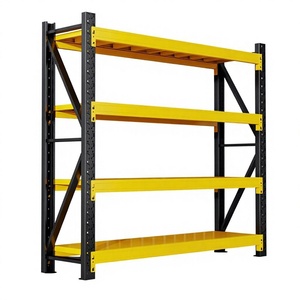
Precision-manufactured to EN 15512 and FEM 10.2.02 international load tolerance standards. Fully customisable bay configurations, deck profiles, and high-tensile upright frames.
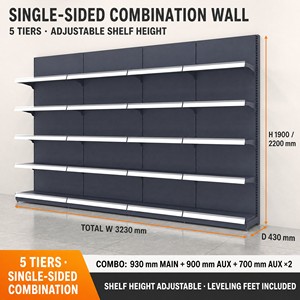
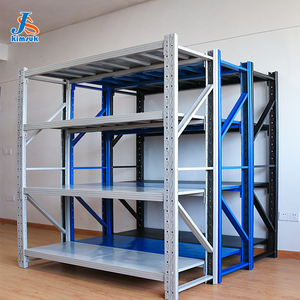
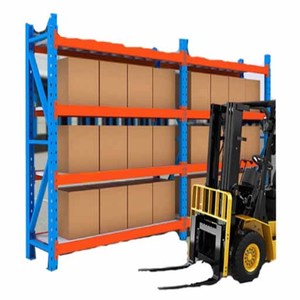
Modern international supply chains are experiencing structural strain driven by rapid omnichannel distribution, nearshoring, escalating land rental prices, and the requirement for rapid-velocity picking. Consequently, selecting an enterprise-level industrial pallets and racking manufacturing partner has shifted from a mere hardware commodity purchase to a strategic civil-structural engineering engagement.
A failed upright, an improperly cold-formed box beam connector, or substandard anchor bolting can precipitate catastrophic progressive structural collapse, operational shutdown, and catastrophic asset liability. Engineering directors, logistics project architects, and global procurement officers must evaluate pallet racking manufacturers against strict international benchmarks: European Standard EN 15512 (Steel static storage systems – Adjustable pallet racking systems – Principles for structural design), FEM 10.2.02, American RMI (Rack Manufacturers Institute) MH16.1, and strict ISO 9001 quality process compliance.
Crucial Procurement Takeaway: Tier-1 racking manufacturers are differentiated not by gross steel tonnage alone, but by integrated finite element analysis (FEA), metallurgical consistency (low phosphorus-sulfur high-tensile steels like Q235B, Q355B, and SS400), automated multi-station roll-forming lines, certified robotic welding of beam connectors, and verified anti-corrosion pre-treatment processes such as zirconium/iron phosphating prior to electrostatic powder coating.
Below is a comparative breakdown of the top 10 industrial racking manufacturers and exporters serving the global marketplace. This evaluation balances manufacturing scale, technical engineering certifications, automation capabilities, export shipping logistics, and custom OEM/ODM flexibility.
| Rank & Manufacturer | HQ & Primary Plant | Core Structural Specialization | Engineering Compliance | Export Footprint | Procurement Advantage |
|---|---|---|---|---|---|
|
1
Mecalux, S.A.
|
Spain (Barcelona) / Global | Automated High-Bay AS/RS, Clad-Rack Warehouses | EN 15512 ISO 9001 | Europe, North America, LATAM | Extensive global software (WMS) integration with proprietary automated stacker cranes. |
|
2
SSI SCHAEFER
|
Germany (Neunkirchen) | Intralogistics Systems, High-Density Dynamic Pallet Flow | EN 15620 DIN Norms | Worldwide (100+ Offices) | Complete turnkey intralogistics ecosystems; industry benchmark for pharmaceutical automation. |
|
3
Guangzhou HEDA Shelves
|
China (Guangzhou) | Selective, Radio Shuttle, Mezzanines, OEM/ODM Heavy Duty Racks | CE 2435-CPR ISO 9001:2015 | 120+ Countries (EU, US, Middle East, SEA) | Factory-direct pricing, fast CAD/3D turnarounds, high modular customisation, 30,000t/mo capacity. |
|
4
Daifuku Co., Ltd.
|
Japan (Osaka) | Mega-Distribution Centers, Cleanroom Racks, Unit Load AS/RS | JIS ISO 14001 | Global Asia-Pacific & Americas | Pioneering automated material handling with high structural seismic dampening. |
|
5
Stow Group
|
Belgium (Dottignies) | Standard Pallet Racking, Silo Racking, Movu Shuttle Subsystems | EN 15512 FEM 10.2.02 | Europe, North America | Standardised modular upright roll-forming systems with autonomous mobile robot (AMR) compatibility. |
|
6
Dexion (Constructor Group)
|
Norway / Germany | Slotted Angle, Speedlock Pallet Racks, Cantilever Bars | EN 15635 RAL-RG 614 | Europe, Middle East, Africa | Historical pioneer in slotted beam design with strong structural inspection service networks. |
|
7
Frazier Industrial Company
|
United States (New Jersey) | Structural Steel Pallet Racking (Hot-Rolled Channels) | RMI MH16.1 AISC | North America, Central America | Heavy structural steel C-channels delivering extreme resistance to forklift impact damage. |
|
8
Nedcon B.V.
|
Netherlands (Doetinchem) | Complex Mezzanine Structures, System Integrator Racking Frames | EN 1090-1 ISO 3834 | Europe, Americas | Tailor-engineered cold-formed profiles designed for high-density multi-tier picking towers. |
|
9
Interlake Mecalux Inc.
|
United States (Illinois) | Teardrop Racking, Drive-In, Push-Back Cart Systems | RMI Certified | North & South America | Ubiquitous teardrop hole punch pattern standard across traditional US distribution networks. |
|
10
Jungheinrich AG
|
Germany (Hamburg) | Integrated Material Flow, Narrow Aisle (VNA) Heavy Racking | EN 15620 ISO 9001 | Worldwide | Synergised dimensioning between specialized turret trucks/VNA forklifts and rail-guided rack bays. |
The structural longevity and load capacity of modern pallet racking systems are dictated by advancements in cold-formed thin-walled steel metallurgy and robotic continuous roll-forming. Historically, warehouses relied on standard hot-rolled structural steel or rudimentary cold-rolled channels prone to premature torsional twisting under eccentric pallet loading.
Today, leading factories utilize high-yield, cold-rolled micro-alloyed carbon steels (such as Q235B and Q355B with verified yield strengths of 235 MPa to 355 MPa, and European equivalents S235JR and S355JR). The structural optimization of upright columns involves complex multi-bend omega (Ω) or proprietary teardrop/trapezoidal geometric profiles. By engineering up to 12 longitudinal cold-formed bends within a single upright profile, manufacturers dramatically increase the cross-sectional moment of inertia, radius of gyration, and critical buckling resistance while reducing tare steel consumption.
Continuous 18-to-24 stage cold roll-forming lines preserve structural steel grain boundary integrity. Computerized punch tooling ensures slot pitch tolerances within ±0.1mm along a 12-metre column length.
Multi-claw connector brackets welded to interlocking step or box beams via automated robotic MIG welding eliminate human thermal fatigue variances, ensuring flawless shear load capacity under maximum span deflection.
Automated 8-stage pre-treatment, including pickling, degreasing, and ultrasonic phosphating, capped with TGIC-free electrostatic polyester powder curing at 180°C–200°C, providing superior 500-hour salt spray corrosion defense.
Procurement directors at Fortune 500 third-party logistics (3PL) conglomerates, FMCG brand manufacturers, and cross-border cold chain operators are adjusting their master facility specifications. The era of static, low-density warehouse storage has closed. Next-generation warehouse infrastructure procurement is dominated by four structural shifts:
With industrial land acquiring premium valuation globally, logistics hubs are expanding vertically. Standard 6-metre clear height buildings are routinely replaced by 12-metre to 24-metre clear-height facilities. Procurement teams require heavy-duty upright frames capable of sustaining extreme cumulative axial loads exceeding 20,000 kg per bay, demanding robust baseplates with chemical anchor embedments rated for seismic acceleration.
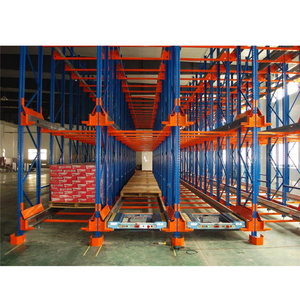
Traditional Drive-In racking is progressively being superseded by High-Density Radio Shuttle Systems. Although Drive-In racking offers high spatial density, it exposes upright columns to continual forklift mast collisions inside narrow channels. Radio shuttle systems remove forklifts from the racking lanes entirely: an automated, battery-powered shuttle trolley navigates deep structural channels on integrated guide rails, delivering extreme throughput speed and eliminating human collision hazards, especially in energy-intensive sub-zero cold storage facilities (-25°C to -30°C).
Environmental, Social, and Governance (ESG) criteria are deeply entrenched in international logistics tenders. European and American enterprises require cradle-to-gate Life Cycle Assessments (LCA) and Environmental Product Declarations (EPD). Exporters must provide documented steel coil mill test certificates (MTC) certifying low carbon emission smelting methods (electric arc furnace EAF versus blast furnace BOF) and fully recyclable powder coating materials conforming to RoHS and REACH directives.
Founded over two decades ago, Guangzhou Heda Shelves Co., Ltd. operates a sprawling 30,000 square metre advanced manufacturing base with over 300 technical engineers and production specialists, achieving a monthly steel processing capacity of 30,000 tonnes for export across Europe, North America, Oceania, and the Middle East.
Full CE Certificate No. 2435-CPR-8605159 and ISO 9001:2015 accreditation (No. 18624Q00169R0M). Every structural beam and column meets EN 15512 static load calculations.
Our in-house structural engineering department provides complimentary DWG CAD layouts, 3D structural visualisations, and static deflection calculations tailored to your exact pallet and forklift specs.
Strategic export coordination through Guangzhou, Shenzhen, and major international hubs. Professional seaworthy bundle packing, steel strap protection, and custom nesting to minimize cube freight costs.
From heavy-duty selective pallet racks, drive-in systems, and radio shuttle channels to complex multi-tier mezzanine floor platforms and integrated warehouse wire mesh decking.
Essential technical considerations, international engineering standards, and logistical guidelines for industrial storage purchasers.
The global storage manufacturing industry is governed primarily by three major regional design standards:
Reliable exporters will provide structural engineer-signed calculation packages documenting beam deflection limits (typically L/200 according to EN standards, where total vertical deflection under full uniform load must not exceed 1/200th of the span length) and baseplate soil bearing pressures.
Euro pallets (EUR 1: 1200 mm × 800 mm or EUR 2: 1200 mm × 1000 mm) require different beam spans and frame depths than North American standard GMA pallets (48 in × 40 in / 1219 mm × 1016 mm). For example, a bay designed to hold two EUR 1 pallets requires an 1800 mm or 1850 mm clear beam span with a 1000 mm or 1100 mm frame depth, allowing a standard 50 mm to 75 mm pallet overhang front and rear. For GMA pallets, standard spans are typically 96 in (2438 mm) or 108 in (2743 mm) with a 42 in (1067 mm) frame depth. During our CAD consultation, our engineering team custom-sizes beam cross-sections and frame spacings to ensure correct center-to-center clearances and flue space compliances.
Roll-formed racking is fabricated from high-strength sheet steel cold-rolled through multi-stage dies. It is highly cost-effective, modular, lightweight, and adjustable on 50 mm or 75 mm (or 2-inch) hole pitches. It is the dominant choice for 85%+ of commercial warehousing. Structural steel racking, by contrast, is manufactured from hot-rolled structural steel C-channels and I-beams assembled with heavy bolted connections. Structural racking provides superior resistance to catastrophic forklift impacts and is primarily specified for demanding heavy manufacturing environments, outdoor timber yards, and high-abuse freezer warehouses.
In earthquake-prone regions (such as the Pacific Rim, Southern Europe, or US West Coast), pallet racking must be engineered as an independent civil building structure according to seismic hazard maps (such as IBC / Eurocode 8). Seismic configurations utilize enlarged, heavy-duty floor baseplates, double or triple chemical anchor bolts per upright, heavy-gauge horizontal and diagonal frame bracing, and reinforced beam end-connectors with 4-to-5 locking pins to resist seismic shear, ground acceleration, and lateral torsional sway without dislodgement.
Local building officials and occupational health and safety inspectors (such as OSHA in the US or HSE in the UK) require: 1) Structural load capacity plaques clearly displayed at every bay stating maximum beam level load and maximum bay load; 2) Approved engineering layout drawings showing compliant aisle widths and egress routes; 3) Steel Mill Test Certificates (MTC) proving raw material yield strength; and 4) Manufacturer CE / ISO 9001 compliance credentials. All HEDA Shelves projects ship with serialized load signage and structural documentation packages ready for municipal engineering sign-off.
For standard custom-manufactured pallet racking orders (1 to 10 forty-foot high-cube containers), the standard factory production lead time is 15 to 25 days following signed CAD layout approval and deposit. Ocean freight transit from our factory through Guangzhou or Shenzhen ports ranges from 18 to 28 days to the US West Coast, 30 to 38 days to European base ports (Rotterdam, Hamburg, Valencia), and 12 to 18 days to Australia or the Middle East. Complete component labeling, color-coded installation maps, and hardware packing lists are provided to ensure seamless unloading and fast on-site erection.
Send our structural engineering department your warehouse floor plan (DWG or PDF), clear ceiling height, pallet load parameters, and forklift truck specifications for a comprehensive load calculation, 3D visualization, and competitive pricing analysis.
Get a Quote