Featured Industrial Storage & Heavy-Duty Racking Systems
Factory-direct manufacturing of structural pallet racks, automated shuttle corridors, and modular mezzanine tiers calibrated for heavy dynamic logistics, maximum payload rigidity, and seismic stabilization.
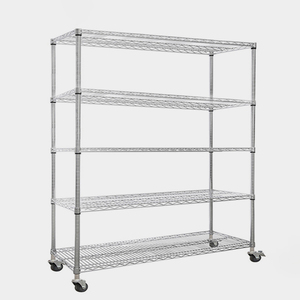
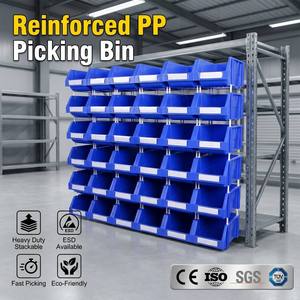
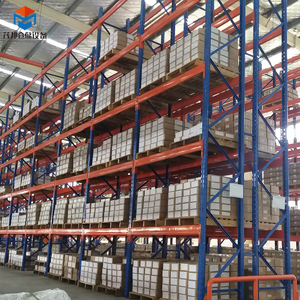
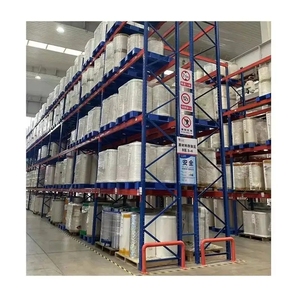
Guangzhou Heda Shelves Co., Ltd.: Engineering Direct-to-Site Structural Racking
As an established Tier-1 Chinese structural steel rack fabricator, Guangzhou Heda Shelves Co., Ltd. has delivered more than 10,000 integrated warehouse storage projects worldwide since its founding in 2001.
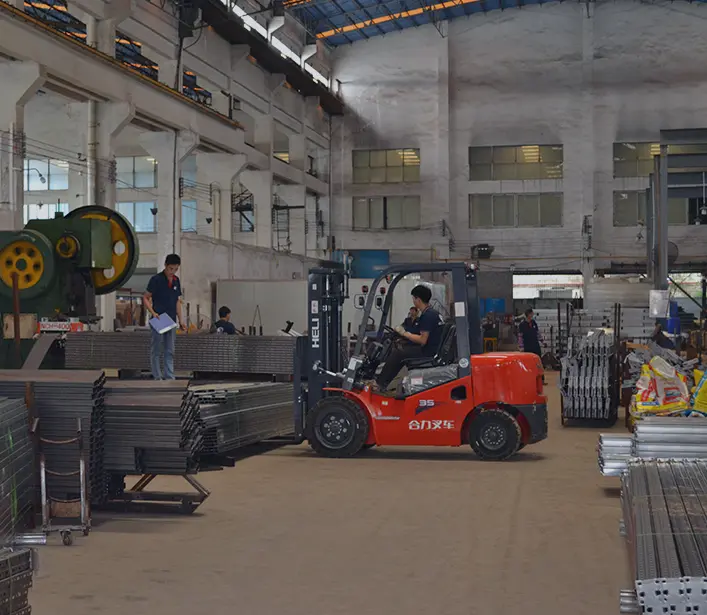
Operating from our dedicated 30,000 m² heavy-gauge production headquarters in Guangzhou with over 300 technical engineers and manufacturing technicians, HEDA provides complete accountability across the intralogistics supply chain. From preliminary finite-element modeling (FEM) and free 3D CAD facility layouts to automated continuous roll-forming, automated robotic beam welding, and electrostatic epoxy curing, our processes minimize project lead times while eliminating intermediary markup.
Every storage installation conforms strictly to European standards (EN 15512:2020 limit state principles, EN 15620 operational tolerances, EN 15635 structural safety validation) and North American RMI MH16.1 guidelines. Our technical team ensures full mechanical traceability from raw certified steel coils through finished export bundles.
Verified Certifications
Fully accredited with CE Certificate No. 2435-CPR-8605159 (execution class according to EN 1090 structural steel), ISO 9001:2015 Quality Management Certificate No. 18624Q00169R0M, and RoHS lead-free environmental compliance.
Free 3D & CAD Layouts
Our structural engineering department generates comprehensive DWG/BIM floor plans, dynamic 3D warehouse simulations, beam deflection profiles, and loading calculation reports before order confirmation.
Metallurgical Quality Control
Fabricated using premium Baosteel and Shougang certified hot-rolled and cold-formed structural steel (Q235B & Q355B). Automated punching lines maintain precise pitch tolerance across 11-meter single upright sections.
Turnkey Export Logistics
Strategically positioned close to Guangzhou and Shenzhen deepwater ports. Specialized container SKD flat-packing reduces volumetric freight costs to major European hubs (Rotterdam, Hamburg, Antwerp, Valencia).
Industrial Storage Racking: Engineering Decision Matrix
Selecting optimal warehouse racking requires cross-referencing pallet accessibility, structural density, handling machinery clearance, and capital expenditure per storage position.
| Racking Architecture | Volumetric Efficiency | Pallet Selectivity | Handling Machinery | Payload Rating (Per Level) | Inventory Logic | Typical Industrial Deployment |
|---|---|---|---|---|---|---|
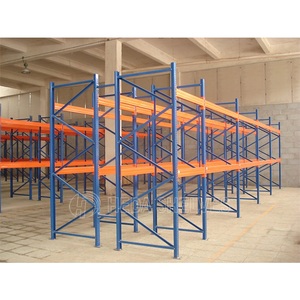
| Selective Pallet Racking | Baseline (40%–50%) | 100% Immediate | Counterbalance / Reach Truck | 1,000 kg – 4,500 kg | FIFO / LIFO | 3PL hubs, diverse SKU retail, FMCG transit buffers |
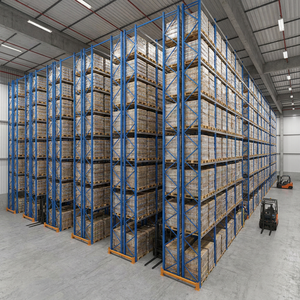
| Double-Deep Pallet Racks | High (+30% vs Selective) | 50% Direct Access | Pantograph Deep-Reach Truck | 1,000 kg – 3,200 kg | LIFO | Bulk dry goods, multi-pallet per SKU distribution |
| Drive-In / Drive-Through | Very High (Up to 75%) | Lane Dependent | Standard Counterbalance | 1,000 kg – 2,000 kg/pallet | LIFO (Drive-In) / FIFO | Cold storage, beverage manufacturing, seasonal inventory |
| Push-Back Cart Racking | High (2 to 6 deep) | Lane Face Accessible | Standard Reach Truck | 1,000 kg – 1,500 kg/pallet | LIFO | Food processing buffers, middle-turnover warehouses |
| Radio Shuttle Automation | Maximum (80%–85%) | Lane Automated | Battery Shuttle + Standard Truck | 500 kg – 2,000 kg/pallet | FIFO or LIFO | Deep freezer facilities, high-velocity pharmaceutical hubs |
| Very Narrow Aisle (VNA) | High (Up to 65%) | 100% Immediate | Wire/Rail Guided Turret Truck | 1,000 kg – 3,500 kg | FIFO / LIFO | High-bay distribution centers up to 16m ceiling clearance |
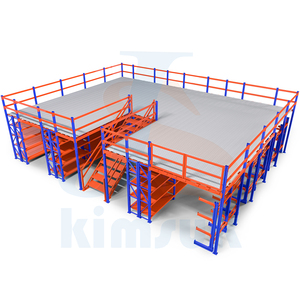
| Rack-Supported Mezzanine | Cubic Multiplying (2x–3x) | Tiered Shelving/Pallet | Vertical Lifts / Forklifts | 300 kg – 1,200 kg/m² | Mixed SKU | E-commerce fulfillment centers, automotive spare parts |
Future Warehouse Rack Procurement Trends (2026–2030)
Shifting macroeconomic pressures, land constraints, and carbon disclosure directives are transforming how global supply chain leaders design and procure heavy-duty storage infrastructure.
1. High-Bay Verticalization
With prime industrial logistics real estate costs surging across Europe, North America, and Southeast Asia, warehouse footprints are extending vertically. Procurement is shifting rapidly from standard 6-meter configurations to 12-to-18-meter high-bay VNA and automated rack-clad building structures where racking frames double as the facility's load-bearing skeleton.
2. Semi-Automated Shuttle Hybridization
Pure manual warehousing is giving way to semi-automated radio shuttle corridors. By retrofitting traditional drive-in tunnels with autonomous motorized shuttles, enterprises retain low operating capital while reducing forklift transit times by up to 60%, drastically minimizing rack impact collisions in cold storage and FMCG facilities.
3. Low-Carbon Steel & ESG Traceability
Cross-border carbon border adjustment mechanisms (EU CBAM) and global ESG compliance mandate low-emission steel sourcing. Tier-1 buyers require manufacturers to provide certified scrap-ratio verification, emission certificates, and zero-VOC electrostatic powder curing that resists delamination under severe industrial cleaning cycles.
Technological Advancements in Industrial Storage Engineering
Modern heavy-duty racks have evolved from passive steel shelving into high-precision, instrumented structural ecosystems engineered to dissipate seismic energy and interface seamlessly with robotics.
Micro-Alloyed High-Yield Steels
Through advanced micro-alloying (incorporating precise quantities of Vanadium, Niobium, and Titanium), our Q355B and high-yield cold-rolled sections achieve yield strengths exceeding 355 MPa. This allows a 12% to 18% reduction in deadweight while elevating frame buckling resistance and beam torsional rigidity under concentrated pallet loads.
Seismic Energy Dissipating Baseplates
In accordance with Eurocode 8 (EN 1998-1) and FEMA 460 earthquake design specifications, modern upright columns incorporate engineered ductile baseplates with calibrated floor-anchor yield zones. These absorb seismic shear stress and moment rotations, preventing catastrophic structural collapse during dynamic ground accelerations.
Cold-Formed Omega Upright Profiles
State-of-the-art roll-forming geometry has shifted from basic C-channels to multi-ribbed modified Omega sections featuring continuous return flanges and up to 12 cold-bent work-hardened corners. This internal stiffening profile multiplies polar moments of inertia against accidental forklift impacts.
Robotic Laser Slotted Beam Claws
Upright-to-beam connectors utilize 4-prong and 5-prong stamped cold-drawn alloy claws with precision robotic continuous seam welding. Equipped with spring-steel safety locks, these high-connection moment joints eliminate dynamic beam dislodgement under aggressive forklift loading cycles.
HEDA 10-Stage Precision Manufacturing Workflow
Guangzhou Heda Shelves enforces stringent ISO 9001:2015 inspection checkpoints across each fabrication stage to ensure millimeter-accurate bay tolerances and flawless surface protection.
Spectroscopic Steel Verification
Chemical spectrometer testing of hot-rolled coils for carbon, manganese, and phosphorus content.
Precision CNC Slitting
High-speed rotary shear decoiling to exact profile strip widths within ±0.2mm tolerance.
Continuous CNC Column Punching
Automated punching of 50mm / 75mm teardrop and diamond adjustment pitches.
Multi-Pass Cold Roll Forming
Gradual 18-to-24 station roll forming to shape complex multi-flanged upright and box-beam profiles.
Automated Flying Shear Cut
Hydraulic flying cut-to-length operation ensuring frame sections up to 12 meters remain burr-free.
Robotic Connector Welding
Multi-axis robotic GMAW welding connecting beam tubes with stamped steel claws for uniform penetration.
Shot Blasting & Surface Cleaning
Mechanical descaling and degreasing to achieve Sa 2.5 profile surface anchor depth.
7-Stage Chemical Pre-Treatment
Phosphating and silane passivation baths maximizing paint bonding and anti-corrosion properties.
Electrostatic Powder Curing
Automated electrostatic epoxy-polyester powder spraying cured at 200°C for durable film thickness (60–90µm).
SKD Export Seaworthy Packing
Components strapped with steel edge protectors, moisture barrier wrapping, and pallet-blocked for container shipping.
Frequently Asked Questions: Sourcing Heavy-Duty Racks from China
Authoritative answers to technical engineering, compliance verification, and international export logistics questions commonly raised by project developers and procurement directors.
1. What structural and chemical differences distinguish Q235B from Q355B steel in racking systems?
In contrast, Q355B is a low-alloy, high-strength structural steel delivering a minimum yield strength of 355 MPa (over 50% stronger). It is engineered specifically for tall high-bay upright columns (exceeding 8–10 meters), heavily loaded Drive-In base frames, and multi-tier structural mezzanine support columns where high axial compression and buckling loads occur. Specifying Q355B reduces overall steel deadweight while maintaining required deflection safety margins ($L/200$ deflection under maximum design loading per EN 15512).
2. How does Guangzhou Heda Shelves ensure compliance with European standards EN 15512, EN 15620, and EN 15635?
• EN 15512:2020 (Limit State Design of Racking Systems): Our structural design incorporates semi-rigid joint behavior (moment-rotation curves of beam-to-column connections determined via stub test simulations), calculating ultimate limit state (ULS) and serviceability limit state (SLS) under partial safety factors.
• EN 15620 (Tolerances, Deformations, and Clearances): Our fabrication guarantees strict geometric tolerance on upright pitch, beam bow, and diagonal cross-brace perpendicularity to prevent operational binding with high-reach turret trucks and automatic guided vehicles (AGVs).
• EN 15635 (Application and Maintenance of Storage Equipment): Every installation ships with certified capacity rating plates detailing beam tier heights, maximum uniformly distributed loads (UDL), and structural inspection maintenance protocols.
3. What essential project data are required to prepare a free 3D and CAD layout proposal?
1. Architectural DWG or PDF: Floor plan highlighting perimeter walls, column grid spacing, building expansion joints, overhead obstructions (HVAC, lighting, dock doors), and emergency escape lanes.
2. Clear Ceiling Height: Lowest underside point of the overhead roof truss, fire sprinkler drop heads, or light fittings.
3. Pallet Specifications: Length × Width × Overall Height (including cargo overhang), along with maximum gross pallet weight (e.g., EUR/EPAL 1200×800mm or industrial 1200×1000mm).
4. Material Handling Equipment (MHE): Make and model of forklifts, minimum required aisle width (AST), maximum lifting height, and mast closed height.
5. Operational Velocity: Total SKU count, target pallet positions, and inventory handling principles (FIFO vs. LIFO).
4. What are the typical production lead times, and how does ocean freight to Europe and North America work?
Shipping directly out of Guangzhou (Nansha port) or Shenzhen (Yantian/Shekou ports):
• Major European Ports (Rotterdam, Hamburg, Antwerp, Valencia): Transit time approximately 28 to 38 calendar days.
• North American West Coast (Los Angeles, Long Beach, Oakland): Transit time 14 to 20 days; East Coast (New York, Savannah): 28 to 35 days.
• Incoterms Supported: FOB China ports, CIF destination port, or full DDP (Delivered Duty Paid) with customs clearance and door delivery straight to your job site.
5. How does semi-automated radio shuttle racking compare with conventional drive-in systems?
Radio shuttle systems eliminate the need for lift trucks to enter storage lanes. An autonomous motorized shuttle runs along internal galvanized guide rails at speeds up to 1.0 m/s to position and retrieve pallets. This setup:
• Cuts pallet retrieval and staging times by up to 50%–60%.
• Supports both FIFO and LIFO operations, whereas standard drive-in systems are strictly LIFO.
• Eliminates recurring upright repair and replacement costs.
• Delivers superior energy efficiency in refrigerated and sub-zero cold chain environments down to -25°C.
6. How are racking components protected against ocean transit corrosion and on-site impact damage?
For deep ocean container transport, components are bundled with moisture barrier film, desiccants, heavy strapping, and molded timber block supports. To address operational forklift impacts on-site, we supply wrap-around heavy-duty column guards, heavy steel end-of-aisle horseshoe barriers, and pallet guide rails anchored directly into the concrete slab.
7. Can HEDA Shelves manufacture customized OEM/ODM components for racking distributors and integrators?
We provide customized roll-forming dies to match existing proprietary upright hole pitches (such as 50mm, 75mm, or 76.2mm teardrop styles), custom corporate RAL powder coating colors, private-label brand stamping on beam clips, and retail-ready barcode packaging for modular shelving assemblies.
8. What on-site installation guidance and post-installation support do you provide?
Our bilingual project engineering team provides live remote video installation supervision to guide local rigging crews. For major turn-key distribution projects exceeding 10,000 pallet positions, HEDA can deploy certified senior installation project supervisors to your job site to direct assembly and oversee final safety load sign-off.