Featured Catalog
High-Efficiency Warehouse Racking & Multi-Tier Storage
From versatile light-duty modular decking to extreme-density double-deep and rack-supported mezzanines, explore engineered structural systems tailored for high-throughput logistics.
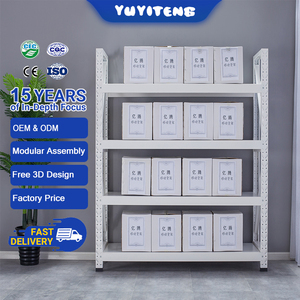
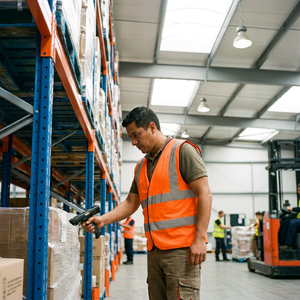
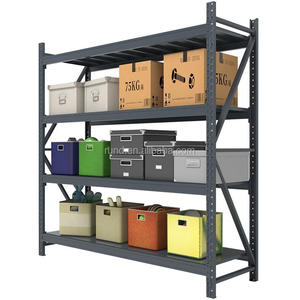
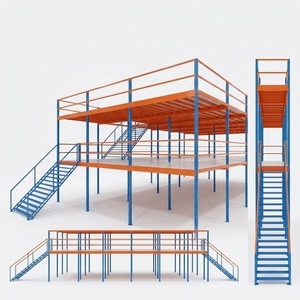
Operational Excellence
Manufacturing Infrastructure, Rigorous QC, and Engineering Competence
Operating a 30,000 m² state-of-the-art facility producing up to 30,000 tonnes monthly to power distribution infrastructure across 120+ nations worldwide.
In modern industrial logistics, static storage is no longer merely a structural assembly of cold-formed profiles; it is an active variable determining floor productivity, asset safety, and return on capital. As one of China's premier racking exporters, our operation integrates continuous coil profiling, CNC-controlled automated multi-head punching, robotic beam welding, and multi-stage surface treatment to eliminate physical failure modes under dynamic warehouse loads.
Certified under CE (Certificate No. 2435-CPR-8605159) and ISO 9001:2015 (Certificate No. 18624Q00169R0M), our metallurgical processing mandates strict tensile testing of high-grade Q235B and Q355B structural steel coils. Every upright and load beam is structurally engineered with verified deflection coefficients meeting or exceeding FEM 10.2.02, EN 15512, and ANSI MH16.1 specifications, providing enterprise distributors and project developers uncompromising stability.
2001
Founded with 25+ years of dedicated structural steel engineering
30,000 m²
Dedicated high-capacity heavy fabrication manufacturing plant
30,000 t
Consistent monthly processing capacity across high-speed roll lines
120+
Export destinations across the EU, North America, EFTA, and APAC
Strategic Intelligence
Product Procurement Trends Reshaping Global Warehousing
Analysis of macro-procurement shifts and the structural requirements driving next-generation fulfillment hubs.
01
Nearshoring & Buffer Storage Scaling
Global supply chain volatility has accelerated a transition from Just-In-Time (JIT) to Just-In-Case (JIC) inventory models. Procurement managers are prioritizing high-cube, narrow-aisle (VNA) and drive-in systems that maximize volumetric density within existing geographical warehouse footprints to mitigate ocean shipping delays and port congestions.
02
E-Commerce & Multi-Tier Mezzanine Hybridization
SKU proliferation caused by omni-channel fulfillment requires dynamic pick faces. Procurement is shifting towards multi-tier, rack-supported industrial mezzanines that integrate standard selective pallet bases at grade with high-density flow shelving and pick modules above, effectively multiplying active picking area without building expansion.
03
Corrosion Resilience & Coating Chemistry
With massive capital deployment into cold chain logistics and coastal intermodal zones, buyers now mandate strict salt-spray testing, pickling and phosphating pre-treatments, and lead-free thermoset powder coatings that prevent micro-fracturing in sub-zero freezer environments (-30°C) and high-humidity maritime regions.
Innovation Vector
Engineering Trajectories & Technological Evolution
The convergence of robotics, structural metallurgy, and digital twins in high-density pallet storage.
A
Automation-Ready Racking Tolerances
Modern pallet systems are evolving into precision structural skeletons for Autonomous Mobile Robots (AMRs), Automated Guided Vehicles (AGVs), and 2D/4D Radio Shuttles. Deflection standards for floor runners and beam profiles have shifted to strict millimeter tolerances (< L/300) to ensure continuous sensor alignment.
B
High-Strength, Thin-Wall Metrology
Advanced finite element analysis (FEA) has empowered cold-roll profiles with strategically engineered longitudinal stiffeners and multi-bend upright geometry. By migrating to optimized micro-alloy steels, modern systems lower deadweight steel tonnage while improving dynamic seismic resilience.
C
Digital Twin Integration & Structural Health
The integration of RFID asset tracking directly into upright protectors, combined with strain-gauge sensors on critical cross beams, represents the frontier of storage engineering. Operations teams can now monitor impact fatigue and static overload in real time, preventing progressive structural collapse.
Clarity & Compliance
Frequently Asked Questions by Industrial Sourcing Teams
Technical, logistical, and structural clarifications for procurement directors and logistics engineers.
How do you guarantee frame stability under localized seismic conditions?
Every racking layout is modeled with engineering software assessing specific soil acceleration, live loading factors, and seismic zones (equivalent to Eurocode 8 or RMI seismic categories). Base plates, anchor bolt patterns, and vertical bracings are dimensioned per structural site calculations.
Are your racking systems compatible with EUR/EPAL and ISO industrial pallets?
Yes. Beam clear spans, bay depths, and guide rails are designed specifically around 1200 x 800 mm (Euro), 1200 x 1000 mm (Industrial UK/US), or custom pallet geometries, accommodating appropriate operating clearances and safe forklift overhang.
What certifications accompany export shipments to ensure customs and safety clearance?
Shipments include complete Quality Certificates, Mill Test Certificates (MTC) proving steel grades, CE conformity documents under Certificate No. 2435-CPR-8605159, and verified third-party load table compliance documentation for local regulatory building permits.
What surface treatment ensures longevity in corrosive or sub-zero environments?
Profiles undergo an automated chemical process including degreasing, pickling, and phosphating, followed by high-voltage electrostatic epoxy-polyester powder application cured at 180°C–200°C. For extreme humidity, external yards, or brine exposure, hot-dip galvanizing is fully supported.
What data is required from our engineering team to generate a free layout quote?
We require your architectural warehouse CAD drawing (.DWG) showing building columns, clear ceiling heights, floor slab load capacities, pallet dimensions including max cargo weight, and details on handling equipment (forklift lift height and minimum aisle width requirements).
How are large structural components protected against damage during containerized sea transit?
Frames, beams, and uprights are bundled with steel strapping over corner guards, wrapped in moisture-barrier film, and cushioned with customized timber dunnage. Components are systematically labeled according to the erection drawings to accelerate warehouse installation on arrival.
Accelerate Your Warehouse Capacity with Engineered Certainty
Connect directly with our senior application engineers to receive custom 3D CAD system modeling, load deflection analysis, and competitive factory-direct export quotations within 24 hours.
Get a Quote