Precision-Manufactured Industrial Storage Systems
Constructed from cold-formed high-tensile structural steel (Q235B & Q355B), our modular rack systems are load-certified, earthquake-resilient, and optimized for global 3PL, e-commerce, and heavy industrial distribution hubs.
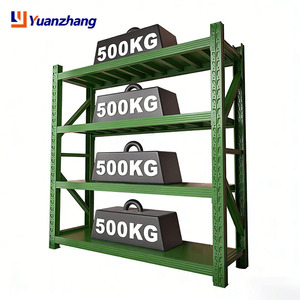
Boltless Adjustable Heavy Duty 300kg/Layer Steel Racks Industrial Shelving System
- Boltless Lock-In
- 50mm Pitch Adjustment
- High Q235B Grade
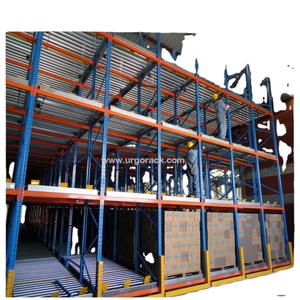
High Efficiency Order Picking Racking System, Gravity Flow Roller Racking System
- Gravity Rollers
- FIFO Rotation
- Split Picking Lines
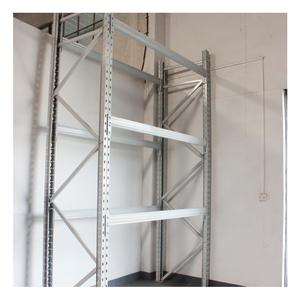
Heavy Duty Boltless Shelf Rack Adjustable Metal for Warehouse Storage Steel Low Price
- Rapid Assembly
- Powder Coated
- Multi-Tier Ready
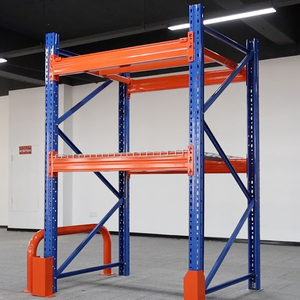
Warehouse Storage Rack Modular Design Pallet Racking Wholesale Distribution Center
- Euro/ISO Pallets
- Custom Upright Profiles
- EN 15512 Safety
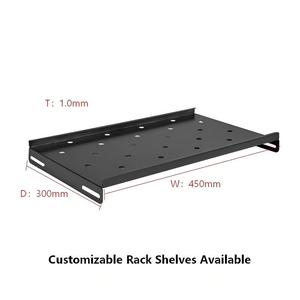
OEM Custom 19" Rack Shelf 1U 2U 3U 4U Cantilever Fixed Server Cabinet Tray 1.5mm SPCC
- SPCC Carbon Steel
- 1U–4U Profiles
- Vented Ventilation
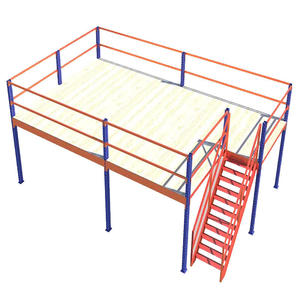
Mezzanine Platform Attic Loft Rack 2-Layer 500kg Load Solid Steel Flooring Protection
- Double Floor Density
- Integrated Staircases
- Safety Railings
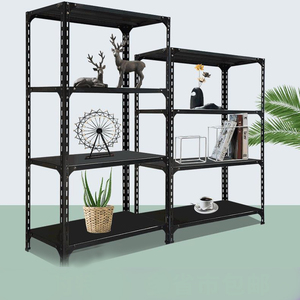
Adjustable Multi-layer Iron Steel Corner Shelving Unit Narrow Freestanding Rack Assembly
- Space Optimizer
- Anti-Rust Finish
- Modular Toolless
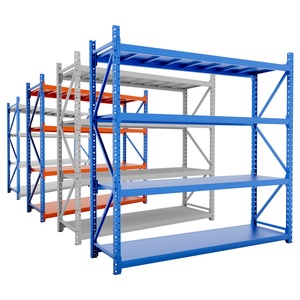
Factory Direct 4-Layer 800kg Medium Heavy Duty Pallet Racking Adjustable Longspan Racks
- 3200kg Bay Total
- Heavy Box Beams
- Forklift Integrated
Why Global Supply Chains Rely on China's Leading Pallet Racking Mills
Industrial warehouse pallet racking is not merely structured steel; it is critical structural life-safety infrastructure. Choosing the right Chinese manufacturer requires an audit of material traceability, automated forming tolerances, and international building code certification.
In modern high-throughput distribution environments, pallet racking forms the physical skeleton of intralogistics operations. Operating continuously under tens of thousands of metric tons of dynamic and static structural loads, an industrial racking installation must withstand not only static vertical dead-loads, but also forklift impacts, seismic shear waves, and thermal contraction cycles in cold storage conditions. Guangzhou Heda Shelves Co., Ltd. (operating since 2001) has spent over two decades engineering, fabricating, and exporting custom structural warehouse racking systems that bridge factory-direct cost efficiencies with certified European and North American engineering compliance.
Core Structural Standard Notice: All upright frames, load beams, and bracing geometries manufactured by HEDA Shelves adhere strictly to EN 15512:2020 (Steel static storage systems – Adjustable pallet racking systems – Principles for structural design), EN 15620 (Tolerances, deformations and clearances), and American RMI (Rack Manufacturers Institute) MH16.1 specifications.
From our 30,000 m² state-of-the-art production base in Guangzhou, our team of more than 300 certified engineers and steel fabrication technicians converts premium cold-rolled structural coils into precision roll-formed components. Backed by full CE certification (Certificate No. 2435-CPR-8605159) and ISO 9001:2015 quality assurance management, we supply direct OEM/ODM components, custom multi-tier mezzanine floors, radio shuttle automation channels, and heavy-duty selective pallet racks to over 120 countries worldwide.
Direct Mill Metallurgy (Q235B / Q355B)
We source prime steel strip directly from Baosteel and Shougang. Every mill batch undergoes ultrasonic flaw detection and tensile yield testing prior to roll forming.
Automated Continuous Punching
Our computer-controlled 32-station punch and roll lines guarantee hole pitch tolerances within ±0.1mm, ensuring effortless beam connector engagement on 50mm and 75mm pitches.
Surface Treatment & Powder Coating
Our 6-stage surface preparation incorporates acid pickling, silane conversion, and electrostatic epoxy-polyester thermoset powder coating cured at 200°C for 500+ hrs salt-spray resistance.
Free 3D Layout & FEA Static Calculations
Our in-house structural engineering department drafts complete DWG floorplans, 3D BIM models, and Finite Element Analysis (FEA) deflection calculations at zero initial cost.
Seaworthy Bundling & Export Logistics
Components are pre-numbered, palletized with corrugated edge-protectors, shrink-wrapped against marine humidity, and loaded into ocean containers with optimized cubic fill efficiency.
Global OEM & Distributor Private Labeling
We produce racking according to private brand specifications, providing customized RAL powder-coat colors, stamped part numbers, branded carton packaging, and localized assembly manuals.
Future Industrial Pallet Racking Trends: Automation, Modularity & Green Steel
The warehouse racking market is undergoing a seismic shift driven by micro-fulfillment, soaring urban industrial land costs, autonomous mobile robots (AMRs), and aggressive Net-Zero decarbonization mandates.
Procurement directors and supply chain engineers evaluating Chinese manufacturing partners must align their long-term infrastructure designs with emerging technological vectors. Warehouses are shifting from static, human-operated pallet stacks to hyper-dense, automated storage and retrieval systems (ASRS) that function as integrated structural ecosystems.
1. Convergence of Radio Shuttle & AMR Automation
Traditional selective racking requires wide 3.5m aisles for reach trucks. Modern facilities are retrofitting existing bays into 2D and 4-way Radio Shuttle channels where battery-powered autonomous carriers move pallets inside deep storage lanes. Forklifts stay in the main transit aisle, speeding up turnaround times by up to 60% while slashing rack impact damages to near-zero.
2. Vertical High-Bay Space Exploitation (>24m)
With industrial real estate rental costs climbing globally, logistics operators are abandoning horizontal footprints in favor of vertical cubic height. Rack-supported buildings—where the heavy-duty pallet racking frames themselves serve as the structural skeleton carrying the warehouse roof and wall cladding—eliminate conventional steel building column expenses and maximize cubic storage efficiency.
3. Decarbonization & Low-Carbon EAF Steel
Under Europe's Carbon Border Adjustment Mechanism (CBAM) and US ESG procurement frameworks, material carbon footprint is a critical vendor selection KPI. Leading manufacturers in China are integrating low-emission Electric Arc Furnace (EAF) structural steel coils and utilizing closed-loop, VOC-free powder-coat recovery systems to lower Scope 3 embedded carbon emissions.
4. Strict Dynamic Seismic Modeling (EN 16681 & RMI)
Modern procurement no longer relies solely on static load charts. High-bay distribution hubs located in seismically active regions require computerized finite-element earthquake response simulations. Beam-to-column connector lock mechanics must preserve moment-resisting ductility under cyclical horizontal earth acceleration without buckling brittle weld junctions.
5. Micro-Fulfillment & Multi-Tier Picking Attics
E-commerce same-day delivery necessitates split-case parcel picking. Structural steel mezzanines and rack-supported multi-tier catwalks allow distribution operations to superimpose manual bin storage, spiral chutes, and conveyor systems directly over ground-level pallet staging areas, achieving double or triple the operational footprint within identical premises.
6. IoT Sensorized Rack Integrity Monitoring
The implementation of smart IoT strain gauges and wireless impact sensors attached to critical aisle-facing uprights represents the next frontier in warehouse life safety. Real-time telemetry detects forklift impact collisions exceeding EN 15635 red-alert thresholds, notifying safety officers automatically before catastrophic progressive structural collapse can occur.
Warehouse Racking Systems: Architecture & Performance Comparison
Compare pallet density, selectivity ratios, handling equipment requirements, and relative CapEx costs to match your precise facility SKU distribution and warehouse throughput volume.
| Racking Architecture | Storage Density | Selectivity Ratio | Stock Rotation Rule | Aisle Width Requirement | Target Vertical / Application |
|---|---|---|---|---|---|
| Selective Pallet Racking | Standard (Baseline) | 100% Direct Access | FIFO or LIFO | 3.0m – 3.5m (Counterbalance) | 3PL Warehouses, General Retail, Multi-SKU Hubs |
| Double Deep Pallet Racking | +30% Over Selective | 50% Immediate Access | LIFO | 2.8m – 3.2m (Pantograph Reach) | Wholesale, Cold Storage, Medium-SKU Volume |
| Drive-In / Drive-Through | Very High (+65%) | Low (Lane-by-Lane) | LIFO (FIFO with Drive-Thru) | Forklift Drives Directly Into Bay | Seasonal Storing, Beverage, Homogeneous SKUs |
| Radio Shuttle System | Maximum (+80%) | Automated Lane Access | FIFO or LIFO Configurable | Main Transit Aisle Only (No Drive-In) | Cold Storage (-25°C), Meat/Dairy, High Volume FMCG |
| Gravity Flow Racking | High (+60%) | Picking Face Direct | Strict FIFO by Gravity | Separate Loading & Retrieval Aisles | Pharmaceuticals, Perishable Food, Fast Moving Goods |
| VNA (Very Narrow Aisle) | High (+45%) | 100% Direct Access | FIFO or LIFO | 1.6m – 1.9m (Turret / Wire-Guided) | High-Bay Distribution Centers, Expensive Real Estate |
| Rack-Supported Mezzanine | 200% Floor Space | Multi-Level Access | Custom Manual / Conveyor | Integrated Catwalks & Stairs | E-Commerce Fulfilment, Automotive Spare Parts |
Our 10-Stage Precision Manufacturing Workflow
From structural raw coil certification to automated cold roll profiling, robotic welding, and seaworthy container dunnage, every component conforms to ISO 9001:2015 traceability protocol.
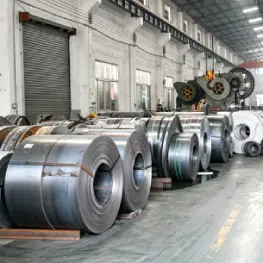
Raw Steel Inspection
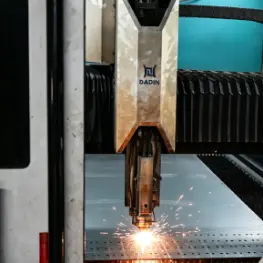
Precision CNC Cutting
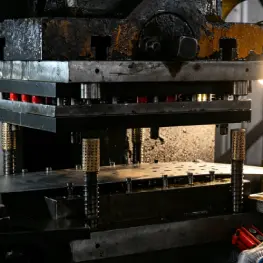
Automated Upright Punching
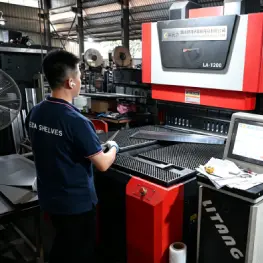
Cold Bending & Forming
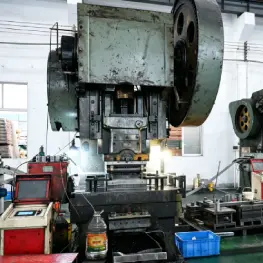
Profile Roll Forming
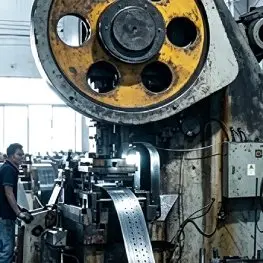
Polishing & De-Burring
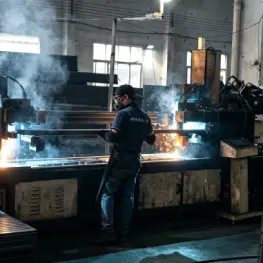
Robotic Connector Welding
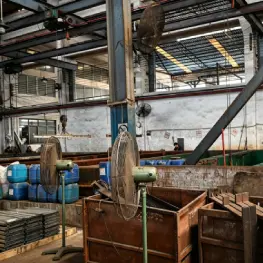
Pickling & Phosphating
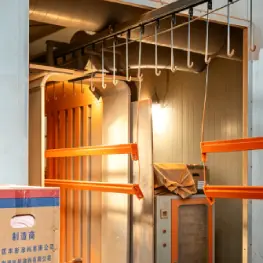
Electrostatic Coating
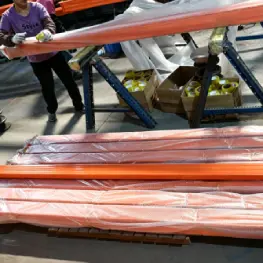
QC & Seaworthy Packing
Frequently Asked Questions for Global Procurement Teams
Crucial answers covering structural engineering, Euro/ISO pallet tolerances, EN 15512 safety protocols, cold room metallurgy, and international maritime logistics.
Ready to Optimize Your Warehouse Capacity & Cut Racking CapEx?
Connect with a senior intralogistics structural engineer today. Receive a complete 2D/3D warehouse layout proposal, structural load calculations, and a direct factory quotation within 24 hours.