Structural Engineering Taxonomy: Medium-Duty vs. Heavy-Duty Racking
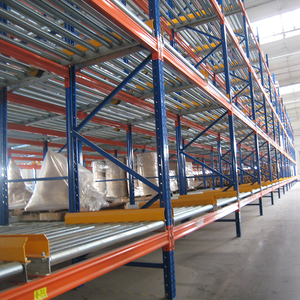
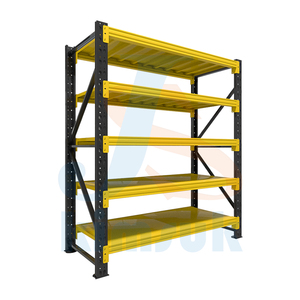
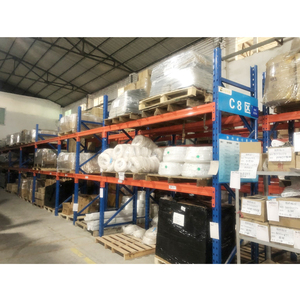
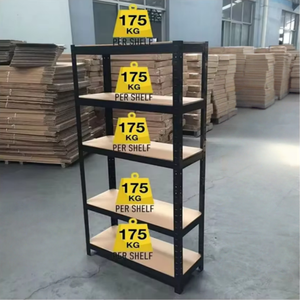
In modern intralogistics warehouse design, medium-duty racking systems bridge the critical operational divide between lightweight commercial boltless shelving and heavy-duty structural selective pallet racks. While light-duty shelving accommodates manual case picking below 150 kg per level, and selective pallet racks manage unit loads exceeding 1,500 kg handled entirely by reach trucks and counterbalance forklifts, medium-duty racking is engineered to support distributed loads spanning 200 kg to 800 kg per beam level. This capacity makes medium-duty frameworks the global standard for high-density carton storage, fulfillment pick modules, buffer staging zones, automotive part sequencing bays, and multi-tier mezzanine floors.
The structural integrity of Chinese medium-duty export racks relies predominantly on cold-rolled high-strength Q235B or Q355B low-carbon structural steel alloys. Unlike hot-rolled structural steel shapes which introduce excessive deadweight and substantial raw material costs, cold-formed thin-walled sections undergo precision mechanical work-hardening during continuous roll-forming. This cold-forming process elevates yield stress characteristics without sacrificing metallurgical ductility. Key upright profile cross-sections are engineered with proprietary multi-bend ribbed geometries (typically featuring 8 to 12 longitudinal return bends) designed specifically to maximize polar moments of inertia, resisting both Euler flexural buckling and torsional-flexural buckling modes under asymmetric warehouse loads.
| Classification | Standard Load (per Tier) | Typical Upright Gauge | Standard Beam Section | Deflection Limit Criterion | Common Intralogistics Applications |
|---|---|---|---|---|---|
| Light Shelving | 50 – 150 kg | 0.8 – 1.2 mm cold sheet | Angle post / stamped fold | L / 150 maximum | Small parts, retail reserve stock, archive files |
| Medium-Duty A | 200 – 400 kg | 1.2 – 1.5 mm Q235B | P-type step beam (50×30mm) | L / 200 (FEM standard) | E-commerce fulfillment bins, workshop kits, wholesale |
| Medium-Duty B | 400 – 800 kg | 1.5 – 2.0 mm Q235B | Closed box beam / heavy step | L / 250 (EN 15512) | Automotive components, industrial machinery spares |
| Heavy-Duty Pallet | 1,000 – 4,000 kg | 2.0 – 3.2 mm Q355B | Twin C-channel box weldment | L / 200 (Pallet dynamic) | Unit pallet bulk storage, cold store racks, AS/RS bays |
Strategic Procurement Horizons: Future Trends in Global Racking Sourcing
The international procurement landscape for industrial storage infrastructure is undergoing a fundamental shift away from simple spot-market commodity bidding toward integrated lifecycle total cost of ownership (TCO) evaluation. Enterprise supply chain procurement directors across North America, the European Union, the Middle East, and Australasia are recalibrating their vendor selection rubrics to manage geopolitical disruptions, carbon taxation frameworks, and the rapid automation of distribution facilities. When sourcing medium-duty racking systems from Chinese manufacturers, forward-thinking B2B procurement leaders are focusing on three primary macro trends:
First, modularity and interchangeability have superseded fixed-dimension systems. Modern distribution facilities must reconfigure picking lanes and storage bay elevations every 12 to 24 months to adapt to shifting SKU dimensions driven by direct-to-consumer e-commerce packaging miniaturization. As a consequence, procurement specifications now mandate teardrop, butterfly, or diamond pitch punch configurations standardized on 50 mm, 50.8 mm (2-inch), or 75 mm vertical increments. Upright columns that enable tool-free beam level elevation adjustments with integrated high-tensile safety locking pins minimize warehouse downtime and preserve structural rigidity during tenant-level modifications.
Second, procurement frameworks are integrating stringent carbon boundary verification in response to border trade regulations such as the European Union's Carbon Border Adjustment Mechanism (CBAM). Sourcing executives are scrutinizing the raw material provenance of Chinese steel mills, prioritizing tier-1 exporters that utilize electric arc furnace (EAF) scrap-recycled steel billets or low-emission blast furnace coils. In tandem, dry-powder electrostatic epoxy polyester coatings formulated without volatile organic compounds (VOCs) and compliant with RoHS/REACH environmental standards have transitioned from optional upgrades to mandatory contract stipulations.
Third, digitized engineering submittals have become a non-negotiable threshold for international procurement agreements. Procurement teams require complete Building Information Modeling (BIM) files, IFC-compliant parametric geometry, and finite element analysis (FEA) structural calculation packs prior to cutting steel. This digital-first procurement protocol ensures that imported racking systems align perfectly with architectural sprinkler heads, in-rack dry-pipe fire suppression systems, and narrow-aisle AGV kinematic envelopes.
Technological & Industrial Development Trajectories (2026–2030)
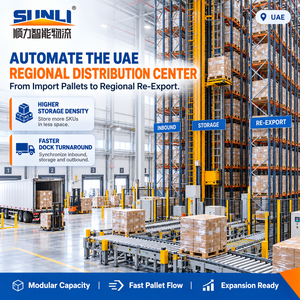
The medium-duty and industrial storage equipment manufacturing sector within China is entering an era characterized by robotic precision, metallurgical optimization, and automated system convergence. As warehouse real estate costs continue to escalate globally, the physical footprint of warehouse storage can no longer remain a passive steel matrix. Industrial engineering innovations within top-tier Chinese manufacturing operations are reshaping the capability of racking installations worldwide:
AMR & AGV Hybrid Integration
Medium-duty racking frames are increasingly customized as hybrid pick-towers serving autonomous mobile robots (AMRs). Systems feature cantilevered induction shelves, magnetic guidance track recesses, and precision robotic interface tolerances (±0.5 mm) to facilitate high-speed bin-picking robots without manual human intervention.
Advanced Anti-Corrosive Metallurgy
Moving beyond standard single-layer powder finishes, manufacturers are deploying multi-stage automated pre-treatment baths with nano-ceramic zirconium conversions alongside hot-dip zinc-aluminum-magnesium (ZAM) roll-formed steel. This metallurgy extends corrosion resistance past 1,500 hours of neutral salt spray testing, enabling dependable deployment in humid tropical and coastal cold-chain environments.
Multi-Tier Rack-Supported Mezzanines
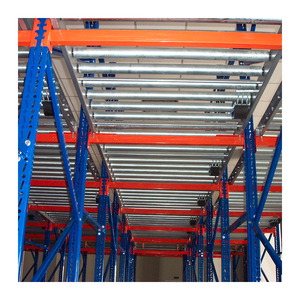
To capture unutilized vertical cubic space, medium-duty uprights are engineered as primary vertical load-bearing columns for structural multi-tier mezzanine floors. Integrating cold-formed steel grating, catwalk decking, staircases, and conveyor chutes, these systems multiply warehouse floor space by 200% to 300% without incurring new commercial building permitting delays.
Additionally, automated roll-forming equipment across premier Chinese export factories now utilizes continuous in-line CNC punching. High-speed hydraulic and servo punches stamp upright connector patterns while material flows through the feed line, ensuring millimeter-perfect slot alignment over standard continuous 12-meter profiles. This automated precision eliminates progressive pitch drift—a critical defect in legacy factories that leads to twisted uprights, difficult beam installation, and uneven structural load transfer during on-site warehouse assembly.
International Shipping Mechanics & Protective Export Packaging Protocols
A prevalent failure mode in global steel racking procurement is shipping-induced physical damage, which frequently manifests as twisted beam connectors, chipped powder coating, or crushed column flanges during intermodal transit. Top-tier Chinese exporters prevent transit losses through rigorous container optimization and export-grade protective crating protocols. Unassembled upright frames are nested with protective high-density polyethylene (HDPE) buffers, banded with heavy-gauge PET straps, and wrapped in water-resistant UV-inhibiting stretch film. Upright footplates and beam end-connectors, being particularly susceptible to blunt shock, are encased within reinforced corrugated edge protectors or packed into fumigated solid-timber crates complying with ISPM-15 standards.
Furthermore, shipping economics require strict volumetric container packing efficiency. Engineering teams simulate container utilization using 3D cargo packing software, strategically mixing high-density upright steel packs with lighter, bulkier wire mesh decking or steel shelf panels. This load distribution achieves 95% to 98% cubic space utilization inside standard 40-foot High Cube (40HQ) maritime shipping containers without exceeding gross road weight limits upon arrival at destination ports such as Rotterdam, Hamburg, Los Angeles, Jebel Ali, or Melbourne.