Commercial
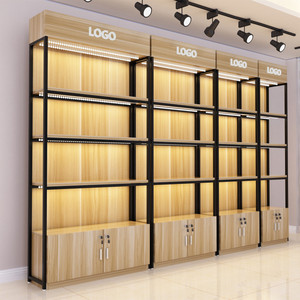
Supermarket Wooden Retail Shelving Display Shop Shelves Cosmetic Grocery Rack
Hybrid Wood-Steel
Modular Bays
Retail FMCG
Engineered cold-formed steel profiles with beam capacities exceeding 5,000 kg per bay, certified under CE No. 2435-CPR-8605159 and ISO 9001:2015 QA systems.
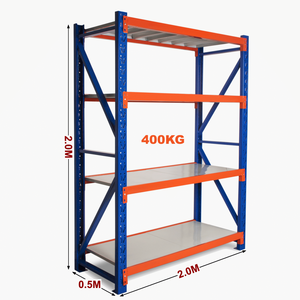
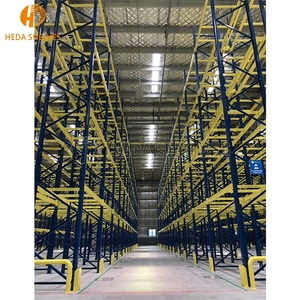
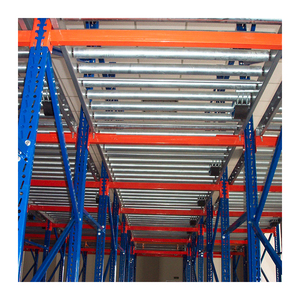
A deep analysis of cold-formed steel sections, EN 15512 calculation models, automated pre-treatment processes, and structural seismic design parameters.
Procurement leaders managing enterprise logistics hubs, automated 3PL facilities, and distribution centers require verified structural integrity rather than generic price comparisons. Chinese tier-1 pallet shelving systems manufacturers, anchored by specialized industrial hubs in Guangdong and Jiangsu, have undergone an engineering paradigm shift. Modern manufacturing is dominated by high-yield, cold-formed structural steel alloys (predominantly Q235B and high-tensile Q355B, equivalent to European S235JR and S355JR according to EN 10025 standards). The mechanical performance of racking uprights and step/box beams depends directly on chemical composition controls—keeping sulfur and phosphorus levels under 0.045% to prevent micro-fissures during high-speed rolling.
Structural testing according to FEM 10.2.02 and EN 15512 mandates rigorous verification of moment-rotation characteristics at beam-to-column connector assemblies. Leading factories deploy continuous roll-forming lines with inline optical laser sensors that check hole pitch accuracy within ±0.15 mm across 12-meter single-piece columns. This prevents cumulative vertical deflection and structural lean when erecting high-bay installations. Under maximum operational loads, beam deflection ratios are strictly calculated at δ ≤ L/200 (or L/300 for sensitive automated shuttle systems), preventing localized stress fatigue and ensuring total forklift operational safety.
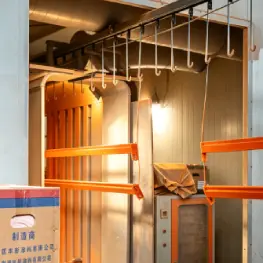
The operational lifespan of cold-storage and high-humidity industrial racking is determined before powder coating. High-tier Chinese plants operate automated multi-stage pre-treatment tunnels encompassing alkaline degreasing, industrial acid pickling, zinc phosphating, and deionized water flushes. This creates a chemical conversion layer providing salt-spray resistance exceeding 500 hours (ASTM B117) and cross-hatch adhesion tested to ISO 2409 Class 0.
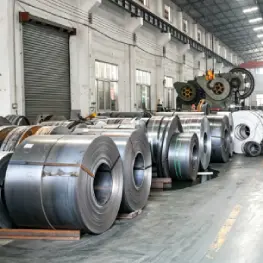
Mill test certificates (MTC 3.1) accompanying prime Chinese coils ensure minimum yield strength of 235–355 N/mm². Tensile and Charpy V-notch impact testing guarantee structural compliance in sub-zero cold chain facilities down to -30°C.
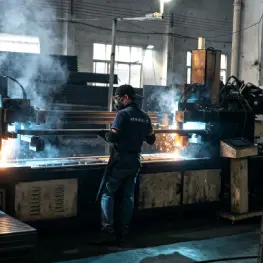
Upright base plates and 3-to-5 prong beam connector brackets are welded using Panasonic and Fanuc robotic CO2 shielded welding cells. Complete root penetration eliminates weld porosity and brittle failures under cyclic forklift loading.
Engineered load capacity signboards, beam safety pins with 4.5 kN shear limits, corner column protectors, and frame bracing geometries are tailored to withstand lateral building movements and forklift side-impacts.
A reference guide developed by HEDA Shelves structural engineers to assist procurement teams in matching operational throughput with floor footprint efficiency.
| Racking Architecture | Pallet Access Rate | Volumetric Space Utilization | Rotation Principle | Typical Payload / Pallet | Forklift Compatibility |
|---|---|---|---|---|---|
| Selective Pallet Racking | 100% Direct | 40% – 50% | FIFO / LIFO | 1,000 – 4,000 kg | Counterbalance, Reach Truck |
| Double Deep Racking | 50% Direct | 60% – 65% | LIFO | 1,000 – 2,500 kg | Pantograph Reach Truck |
| Drive-In / Drive-Through | Lane Dependent | 75% – 85% | LIFO (Drive-In) / FIFO | 1,000 – 2,000 kg | Narrow Counterbalance |
| Gravity Pallet Flow | Lane Face Only | 80% – 85% | Strict FIFO | 500 – 1,500 kg | Standard Reach / Forklift |
| Radio Shuttle Automation | Automated Channel | 85% – 90% | FIFO or LIFO | 1,000 – 2,000 kg | Reach Truck + Shuttle Cart |
| Heavy Duty Cantilever | 100% Open Front | Custom Linear | Any Access | 1,000 – 5,000 kg/arm | Side Loader, 4-Way Truck |
Analyzing total landed cost of ownership (TCO), material index fluctuations, and intermodal ocean container packing density.
Bypassing multi-tier distributors in North America and Western Europe allows commercial warehouse operators and racking installers to reduce capital expenditures by 32% to 46% without sacrificing steel gauge or safety certification. However, maximizing this cost delta requires navigating ocean freight optimization, steel price indexing, and dimensional container stuffing.
Factory-direct contracts tie steel coil procurement to benchmarked SHFE (Shanghai Futures Exchange) indexes. Transparent costing removes dealer markups on structural beams, connectors, and anchoring hardware.
Top factories employ specialized nesting engineers who sequence pallet racking bundles to max out 40ft HQ ocean containers (up to 26–27 metric tons), drastically lowering the shipping cost per pallet position.
Direct communication with HEDA and LIJIN engineering departments allows rapid turnaround on custom pitch configurations (50mm/75mm/76.2mm teardrop), specialized powder finishes (RAL codes), and structural stamping.
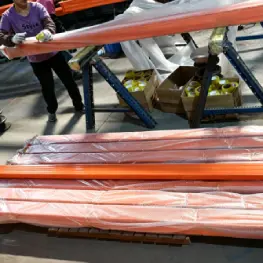
Upright frames and horizontal beams receive corrugated wrap, plastic strapping, metal edge protectors, and desiccants to prevent white rust formation caused by marine container condensation during ocean voyages.
Critical structural innovations transforming high-volume warehousing from passive steel storage into dynamic robotic automation interfaces.
Standard static selective racks are rapidly yielding ground to automated 4-way radio shuttle systems and ASRS-ready high-bay structures reaching heights of 25–40 meters. In these systems, vertical column tolerances must not exceed 1:1000 plumb deviation to allow optical sensors on robotic cranes and AGVs to locate pallet coordinates without mechanical collision.
With major logistics corridors expanding in seismically active regions across the Pacific Rim, Southern Europe, and Latin America, top Chinese factories now engineer racks utilizing modal frequency analysis and inelastic dynamic pushover simulations. Baseplate designs incorporate ductile energy-dissipating anchors that absorb ground shockwaves without brittle column collapse.
The European Carbon Border Adjustment Mechanism (CBAM) and international Scope 3 emission audits are driving procurement teams toward greener supply chains. Leading Chinese manufacturers are transitioning to Electric Arc Furnace (EAF) recycled scrap steel and zero-VOC waterborne or high-efficiency electrostatic powder coating systems that lower product carbon footprints.
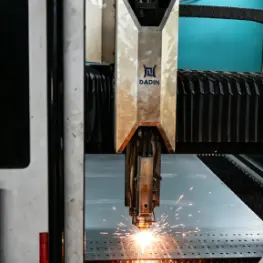
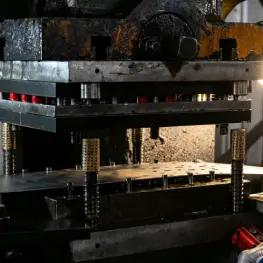
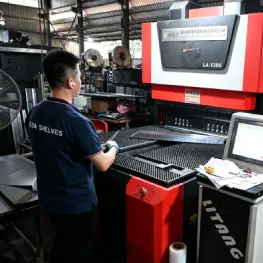
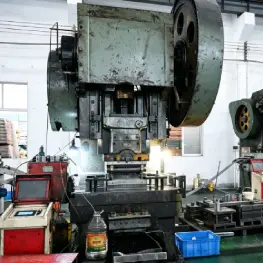
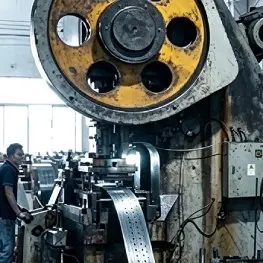
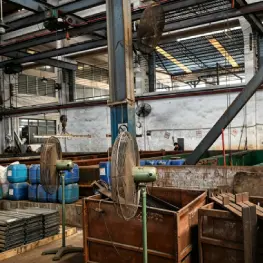
Comprehensive in-house production control ensures strict adherence to dimensional geometry, metallurgical integrity, and durable surface protection.
Detailed technical answers addressing quality control, international compliance standards, shipping logistics, and structural customisation.