Heavy-Duty Racking & Multi-Tier Storage Systems
Explore our precision-rolled, high-yield steel warehouse storage solutions engineered for maximum spatial volumetric efficiency, pallet security, and full compliance with European EN standards.
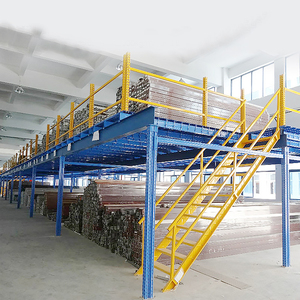
Manufacturer's Steel-Structured Corrosion Protected Powder Coated High Load Bearing Mezzanine Storage System Rack
- Uniform Load: 300 - 1,000 kg/m²
- Electrostatic Powder Coating
- Integrated Stairways & Balustrades
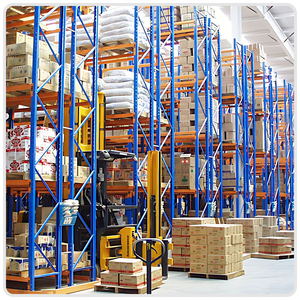
Factory Supply Heavy-Duty Drive-Through Industrial Warehouse Racking High-Density Pallet Storage Shelf
- Density Increase: +75% Floor Space
- Handling Flow: FIFO / LIFO Config
- Cold Storage Compatible (-30°C)
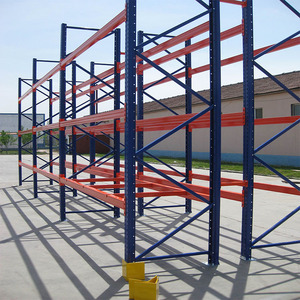
Warehouse Heavy Duty 5 Layer Stainless Steel Boltless Pallet Rack Shelving System with Anti-Corrosion
- Grade: SUS304 / Galvanized Core
- Capacity: 800 - 2,500 kg/tier
- Washdown & Cleanroom Certified
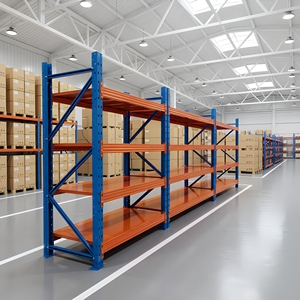
Custom Size Color Industrial Warehouse Shelf 4-Layer Adjustable 300-500KG Light Duty Rack Powder Coated
- Pitch Adjustment: 50mm increments
- Tier Capacity: 300 - 500 kg
- Fast Snap-In Boltless Assembly
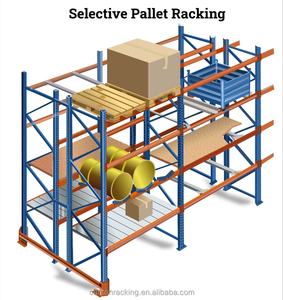
Double Deep Pallet Racking System Essential for Space Optimization with High Aisle-to-Rack Ratio
- Storage Density: +50% vs Selective
- Forklift: Pantograph Reach Truck
- Structural Steel Q235B / Q355B
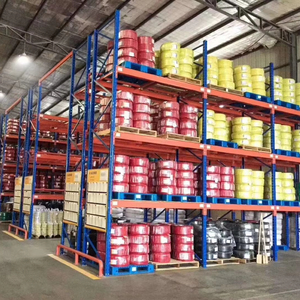
Boltless Stacking Steel Pallet Shelf Cantilever Supermarket Heavy Duty Multi-Level Freestanding System
- Arm Load: Up to 1,800 kg/arm
- Best for: Timber, Pipes & Sheets
- Configuration: Single & Double Face
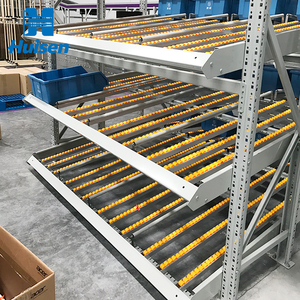
High Density Heavy Duty Steel Durable Corrosion Protection Flow Rack System For Dynamic Warehouse Storage
- Movement: Gravity Incline Roller Bed
- Speed Braking Rollers Integrated
- Strict Batch & Expiry Control
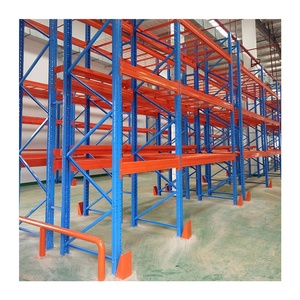
European Standard Selective Pallet Racking System Heavy Duty Warehouse Storage Solution (EN 15512)
- Direct Accessibility: 100% Every Bay
- Bay Load: Up to 5,000 kg/level
- Euro (1200x800) & ISO Pallet Ready
Engineering Optimization & Storage Density Selection Matrix
In modern high-throughput supply chain networks, choosing an industrial warehouse racking framework requires rigorous alignment between stock-keeping unit (SKU) profiles, building structural clearances, handling equipment (MHE) parameters, and rotational velocity. As a premier Chinese manufacturer established in 2001, Guangzhou Heda Shelves Co., Ltd. applies finite element analysis (FEA) and structural cold-bending roll-forming technologies to eliminate volumetric inefficiencies while adhering strictly to EN 15512, EN 15620, and RMI design specifications.
Core Structural Metric: Selecting the optimal warehouse racking design is fundamentally an equation balancing Storage Density Index (SDI) against Accessibility Ratio (AR). While traditional selective pallet racks deliver 100% immediate selectivity with lower density (approx. 40% volumetric utilization), automated shuttle and dynamic push-back systems drive cubic density past 80%, substantially cutting the operational heating/cooling energy costs per pallet position.
Our engineering division evaluates four core system tiers based on load dynamics, building seismic conditions, and pallet dimensions:
1. 100% Selective & Double-Deep Systems
The global benchmark for third-party logistics (3PL) and fast-moving retail distribution. Utilizes multi-bend upright columns punched on 50mm or 75mm pitches with safety-locked box beams.
- Direct visibility for high SKU turnover
- Adjustable beam tiers with 5-hook connector claws
- Adaptable with wire mesh decks & drop-in crossbars
2. Drive-In & Radio Shuttle Systems
Designed for cold storage facilities, raw materials hubs, and single-batch operations. Compact lane arrays eradicate conventional access aisles to maximize deep-lane pallet volume.
- Eliminates up to 60% of forklift travel corridors
- Semi-automated shuttle options boost lane velocity
- Heavy structural guide rails safeguard uprights
3. Heavy-Duty Mezzanines & Cantilever
Unlocks vertical headspace without brick-and-mortar facility expansion. Supports multi-level pick-modules, e-commerce fulfillment sortation, and elongated structural profiles.
- Self-supporting cold-rolled or H-beam structural columns
- Deck options: Perforated steel, plywood, or steel mesh
- Cantilever arm capacities engineered up to 1.8 tons
| Racking Architecture | Floor Space Utilization | Direct Selectivity | Handling Throughput | Optimal Pallet Profile | EN 15512 Safety Rating |
|---|---|---|---|---|---|
| Selective Pallet Racking | 40% - 50% | 100% Direct Access | High Velocity (Continuous) | Mixed SKU / Euro & US Pallet | Standard Certified |
| Double Deep Racking | 60% - 65% | 50% Immediate (2-Deep) | Medium (Pantograph Reach) | Identical 2-4 Pallet Batches | Heavy Duty |
| Drive-In / Drive-Through | 75% - 85% | Lane Dependent (LIFO/FIFO) | Medium-Low (Aisle Drive) | Homogeneous Raw Goods / Cold Store | Seismic Reinforced |
| Pallet Gravity Flow Racks | 70% - 80% | First-In, First-Out (FIFO) | Ultra-High (Gravity Powered) | Perishable Goods / Pharma Expiring | Speed-Brake Verified |
| Industrial Mezzanine Floor | 100% Vertical Gain | Manual / AGV Integrated | High E-Commerce Sortation | Cartons, Bins & Pallet Drop Zones | EN 1090-2 Execution |
Future Procurement Trends in Industrial Storage Racking (2025–2030)
Global warehouse real estate rates, supply chain volatility, and carbon border adjustment mechanisms (such as the EU CBAM) are changing how enterprise procurement directors buy racking systems from China. Sourcing has evolved beyond base steel price per metric ton. It now centers on lifecycle cost engineering, seismic structural compliance, and automation readiness.
1. Near-Zero Deflection Automation (AS/RS Ready)
Modern buyers avoid static racks that cannot integrate with automated guided vehicles (AGVs) or stacker cranes. Procurement specifications now mandate tighter manufacturing tolerances: beam deflection limits tightening from L/200 down to L/300 or L/400, alongside sensor-aligned alignment pins that accommodate autonomous mobile robots (AMRs).
2. Green Steel & Eco-Certified Finishing
Environmental, Social, and Governance (ESG) mandates in North America and the European Union are transforming racking criteria. Sourcing teams prioritize Chinese mills deploying scrap-recycled Electric Arc Furnace (EAF) steel and closed-loop degreasing/phosphating lines that emit zero VOCs during electrostatic thermosetting epoxy-powder application.
3. Digital Twin 3D Layout Modeling
Procurement teams now expect end-to-end BIM (Building Information Modeling) Revit and STEP files alongside initial pricing. These models feed directly into supply chain simulation tools to evaluate truck turnaround times, fork transit conflicts, and fire sprinkler clearance before manufacturing begins.
Advanced Racking Production & Material Metallurgy Dynamics
Reliable heavy-duty warehouse racking begins with material science. At Guangzhou Heda Shelves Co., Ltd., we use certified high-yield hot-rolled coil (HRC) steel—predominantly Q235B and Q355B (equivalent to European S235JR and S355JR / ASTM A36 and A572 Grade 50). These structural steels offer the tensile ductility needed to resist dynamic seismic loads and accidental forklift collisions.
High-Precision Roll-Forming Lines
Our 30,000 square-meter Guangzhou manufacturing facility operates continuous CNC-automated profile rolling lines. Unlike low-cost fabricators using manual press brakes, our automated cold-roll lines form up to 24 mechanical bends within a single upright profile. These multi-rib profiles stiffen the steel column, raising its gyration radius and compressive load capacity without adding unnecessary deadweight.
Corrosion Engineering & Pre-Treatment Technology
Surface treatment directly governs longevity, particularly in coastal ports, ambient chemical warehouses, and refrigerated cold-chain depots. Heda Shelves uses an automated 9-stage pre-treatment wash: pickling, acid neutralization, nano-ceramic silane conversion, and double deionized rinse. This cycle ensures superior polymer crosslinking for our 70–100 micron electrostatic powder coat, reliably preventing rust, surface flaking, and chemical degradation.
Seismic Resonance Modeling
Upright frame configurations and diagonal bracing geometry are validated through finite-element seismic simulation. This safeguards joints against shear rupture and baseplate anchors against shearing during seismic accelerations.
Automated Robotic Welding
Connector claws are fused to box beams via 6-axis robotic MIG welding cells. Continuous gas-shielded fillet welds eliminate the micro-fissures and cold joints common to manual welding, guaranteeing maximum shear retention under full load.
Full Inspection Traceability
Every production batch includes mill test certificates (MTCs), ultrasonic weld inspections, cross-hatch coating adhesion tests, and beam-deflection load tests. Records are retained for five years to support client compliance audits.
Why International Logistics Leaders Choose Guangzhou Heda Shelves
Over 25 years of specialized racking manufacturing delivered directly from our certified Chinese factory floor to 120+ countries worldwide.
Dual EU & ISO Quality Credentials
Our manufacturing systems run under audited ISO 9001:2015 processes (Certificate No. 18624Q00169R0M). Every export batch is fully certified to CE standards (Certificate No. 2435-CPR-8605159) and complies with RoHS non-hazardous finishing directives.
Free Engineering CAD & 3D Modeling
Do not gamble on unverified dimensions. Our 300+ technical and production personnel include in-house structural engineers who analyze your building floor DWGs, forklift turning radii, and slab point-loads to generate free 3D and CAD layouts before production.
Comprehensive Global Logistics Support
We supply customized OEM/ODM racks to distributors, logistics integrators, and project principals across Europe, North America, the Middle East, and Australia. Components are systematically bundled, rust-proof wrapped, and container-optimized for reliable sea freight handling.
Frequently Asked Questions: Global Industrial Racking Procurement
Essential technical, compliance, and logistics clarifications for project managers, supply chain engineers, and procurement directors sourcing from China.
How does Heda Shelves calculate load capacity ratings to guarantee seismic and dynamic safety? +
Our load tables are computed using the limit-state design approach outlined in EN 15512:2020 and RMI (Rack Manufacturers Institute) MH16.1 specifications. We model the combined interactions of axial compression, bending moments, and local torsional buckling on cold-formed thin-walled steel upright sections using structural FEA software. In addition, physical destructive coupon tests, stub column compression tests, and cyclic beam-connector portal tests are conducted to verify beam safety locking pins, ensuring that working capacity values include a minimum 1.5 to 1.95 safety factor against structural yield.
Can your selective and drive-in racks be customized for both EUR (1200x800mm) and ISO/US (1200x1000mm) pallets? +
Yes. All our racking systems are completely customized to your operational pallet configuration. For EUR/EPAL (1200 × 800 mm) pallets, we typically configure standard clear-entry beam spans of 2700 mm (for 3 pallets per bay) or 1800 mm (for 2 pallets per bay) with an upright frame depth of 1100 mm to ensure the code-mandated 50 mm front and rear overhang. For ISO / North American GMA pallets (1200 × 1000 mm), frame depths are adjusted to 1000 mm or supplied with heavy-gauge cross support bars or wire mesh decking to prevent pallet deflection.
What engineering documentation and inspection certificates accompany export shipments? +
Every commercial container dispatch includes a complete engineering documentation binder: Mill Test Certificates (MTCs) for raw steel coils (confirming yield strength, elongation, and chemical composition), CE Declaration of Performance (DoP under Certificate No. 2435-CPR-8605159), ISO 9001:2015 quality verification docs, third-party salt-spray corrosion reports, comprehensive component installation blueprints, and formal Safe Working Load (SWL) signage plaques for on-site display in compliance with local safety regulations.
What is the standard production lead time and sea freight transit schedule for large export projects? +
Our monthly production volume of 30,000 tonnes allows us to manufacture standard containerized orders (1 to 5 forty-foot high-cube containers) in 15 to 25 calendar days following CAD sign-off. Larger custom projects (20+ containers, multi-tier mezzanines, or automated shuttle rails) typically require 30 to 40 days. From our Guangzhou production facility, sea freight shipping times are approximately 25 to 35 days to European base ports (Rotterdam, Hamburg, Antwerp), 18 to 22 days to the US West Coast (Los Angeles, Long Beach), and 14 to 18 days to Australia (Sydney, Melbourne).
How do you assist international buyers with assembly and on-site rack installation? +
We provide full installation support for all exported storage systems. Every shipment includes step-by-step 3D assembly guides, structural schematics, and color-coded component tagging matched to packing slips. For large distribution centers and complex mezzanine builds, we offer remote video technical supervision or can deploy certified structural installation managers directly to your project site to direct local assembly teams and perform the final safety sign-off inspection.
Hot-dip galvanizing vs. electrostatic powder coating: Which surface finish is recommended? +
For standard climate-controlled or ambient distribution warehouses, our automated electrostatic epoxy-polyester powder coating (70–100 μm thickness) delivers exceptional scratch resistance, impact durability, and customizable RAL colors for high-contrast safety demarcation. For outdoor operations, open lumber yards, corrosive fertilizer/chemical plants, or deep-freeze cold storage with high condensation cycles, we recommend hot-dip galvanization (HDG to ISO 1461), which creates a 65–85 μm metallurgical zinc alloy layer for 25+ years of maintenance-free rust protection.
Key Data Points Required for an Engineered Racking Proposal
To ensure your quotation and CAD design comply with all building codes, please prepare the following technical parameters when submitting an inquiry to our engineering team:
1. Warehouse Geometry & Slab Data
DWG or PDF architectural drawings showing column centers, overhead clearance (clear height below trusses, lighting, or HVAC ducts), floor slab thickness, concrete compressive strength (e.g., 25–30 MPa), and expansion joint locations.
2. Pallet & Unit Load Specifications
Pallet footprint (length × width × height including load overhang), pallet construction type (two-way or four-way entry, skids vs. perimeter base), nominal unit weight, and maximum deflection limits for bagged or non-rigid items.
3. Forklift & Material Handling Data
Forklift type (counterbalanced, reach truck, VNA turret truck, or articulated), maximum lift mast height, free-lift dimensions, turning radius, and required right-angle stacking aisle width (AST) provided by the truck OEM.
Request a Custom CAD Layout & Factory-Direct Quotation
Connect directly with our structural engineering team. Send us your building floor plan, load criteria, and project specifications to receive a free, code-compliant 3D CAD proposal, load table analysis, and transparent direct-export quotation within 24 hours.