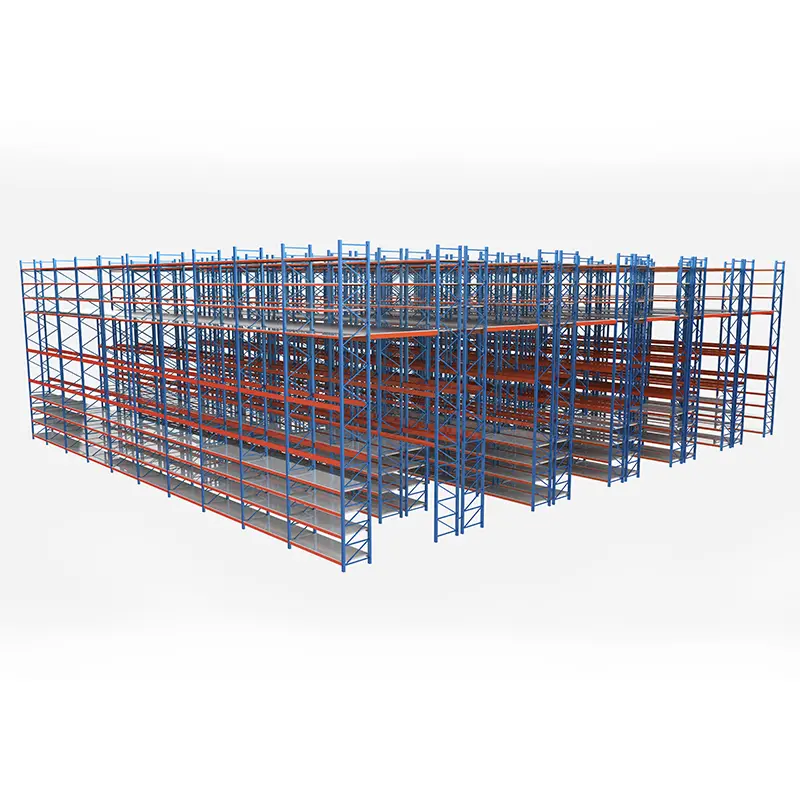
Heavy-Duty & Tall Warehouse Shelving Solutions
Precision-fabricated from Q235B and Q355B high-tensile cold-rolled steel. Explore our primary tall storage and racking configurations optimized for global distribution hubs, high-density manufacturing, and multi-tier logistics centers.
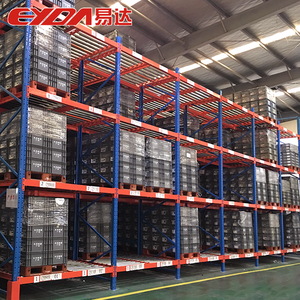
5 Layer Metal Pallet Flow Rack Gravity Storage Racks Heavy Duty Multi-Level Warehouse Industrial Cargo Storage Equipment
- Capacity: 1,000–1,500 kg/pallet
- Roller Pitch: Calibrated Slope 3–4%
- Braking: Centrifugal Speed Rollers
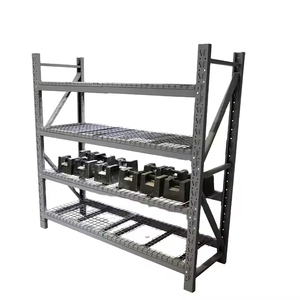
Wide Span Bolt Free Shelving Industrial Shelving Storage Racking Warehouse Racking
- Layer Load: 300–800 kg/level
- Adjustment: 50mm Upright Pitch
- Decking: Steel / Solid Timber
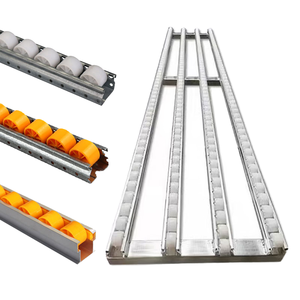
Langle Carton Flow Rack System Sliding Roller Shelf for Warehouse Storage Slide Warehouse Rack
- Track Type: Aluminum Alloy / Plastic
- Separation: Adjustable Lane Guides
- Throughput: High-Frequency Split-Case
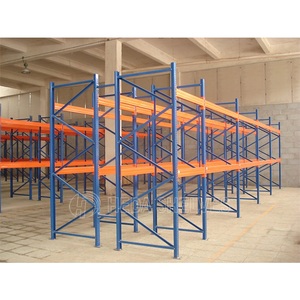
Europe Style Racking System Guangzhou Factory Direct Heavy Duty Q235 Steel Industrial Pallet Rack
- Upright Section: 90–120mm Width
- Safety Factor: 1.5 Design Limit
- Finishing: Electrostatic Powder Coat
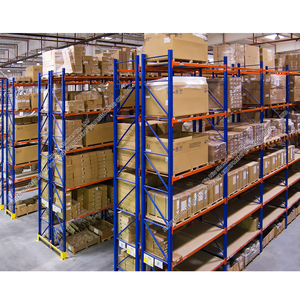
Industrial Pallet Storage 3000KG 2000KG 1500KG 1000KG Load Capacity Heavy Duty Racks Pallet Racking System Distribution Center
- Beam Load: 1,000–3,000 kg/level
- Safety Pin: Spring-Lock Steel Retainers
- Anchor Type: M12 Expansion Sleeve Bolts
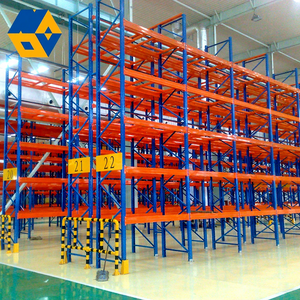
NOVA Industry Warehouse Steel Adjustable Shelf, Automation Equipment Heavy Duty Pallet Racking System Selective Pallet Rack
- Height Range: Up to 15+ Meters
- Tolerances: Millimetric Deflection (1/200)
- Interface: AGV / Reach Truck Guidance
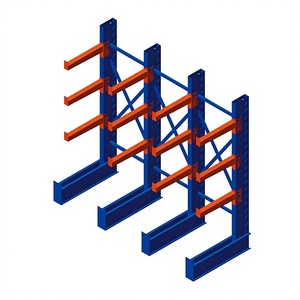
Heavy Duty Warehouse Storage Racking System Metal Shelving Rack Industrial Cantilever Rack
- Arm Capacity: 500–1,500 kg/arm
- Configuration: Single / Double Sided
- Arm Pitch: 100mm Bolted Adjustment
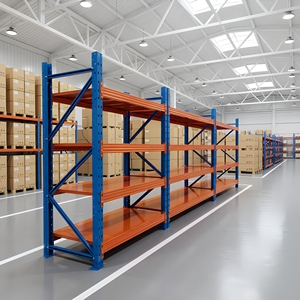
Custom Size Color Industrial Warehouse Shelf 4-Layer Adjustable 300-500KG Light Duty Rack Waterproof Powder Coated Metal Storage
- Level Capacity: 300–500 kg/tier
- Surface: Phosphatized Pre-treatment
- Assembly: Toolless Interlocking Clip
Structural Physics of Tall Warehouse Shelving & High-Bay Racks
When industrial shelving and pallet racking exceed 6 meters—scaling up to 12m, 16m, or modern 30-meter rack-clad buildings—structural mechanics transition from localized flexural loads into complex global stability calculations. As a leading manufacturer in Guangzhou, China, our engineering teams build high-bay solutions governed strictly by EN 15512 (Steel static storage systems), FEM 10.2.02, and RMI (Rack Manufacturers Institute) criteria.
The fundamental risk in tall vertical shelving is not yield stress in tension; it is Eulerian Column Buckling, torsional flexural buckling, and frame sway under dynamic lateral loads. Our tall uprights utilize omega-shaped, closed-box, or cold-formed multi-ribbed profiles rolled from certified Q235B and high-yield Q355B structural steel. By engineering progressive web-to-flange ratios and computerized hole punching patterns (such as 50mm or 75mm pitches), our designs minimize cross-sectional moment-of-inertia losses while guaranteeing high axial stiffness.
Under full live loading conditions, horizontal beam deflections must strictly adhere to the L/200 boundary (where L equals clear span). For tall automated narrow aisle (VNA) operations, this is tightened to L/300 to prevent handling mast deviation and snagging during full-speed vertical retrieval.
Furthermore, tall warehouse installations require holistic calculation of seismic base plate anchoring. The base plates are CNC-cut structural steel with thickness ranging from 8mm to 16mm, distributing ground reactions over industrial concrete slabs (typically class C25/30 or C30/37). Each column footing incorporates high-shear mechanical anchors or chemical resin stud systems engineered against horizontal shear stress and overturning moments induced by operational impacts or seismic acceleration.
Tall Warehouse Shelving & Racking Comparative Matrix
Evaluate key operational tradeoffs between high volumetric storage density, SKU accessibility, capital expenditure, and handling equipment compatibility before requesting engineering layout drafts.
| Storage System Type | Max Usable Height | Storage Density | Pallet / SKU Selectivity | Stock Rotation Strategy | MHE (Forklift / Stacker) Required |
|---|---|---|---|---|---|
| Selective Pallet Racking | Up to 12.0 Meters | Standard (40-50%) | 100% Direct Access | FIFO or LIFO | Counterbalance, Reach Truck |
| Very Narrow Aisle (VNA) Tall Racks | Up to 16.5 Meters | High (65-75%) | 100% Direct Access | FIFO or LIFO | VNA Turret Truck / Man-Up Stacker (Wire/Rail Guided) |
| Radio Shuttle High-Bay System | Up to 24.0 Meters | Ultra-High (80-90%) | Lane Access (Deep Pallet) | Configurable FIFO / LIFO | Standard Reach Truck + Autonomous Shuttle Cart |
| Gravity Pallet Flow Racks | Up to 10.0 Meters | High (70-80%) | Lane Access Face | Strict FIFO (First-In, First-Out) | Counterbalance or Reach Truck at separate load/pick faces |
| Multi-Tier Mezzanine Shelving | Up to 9.0 Meters (3-4 Levels) | High (Split-Level) | 100% Manual Hand-Pick | FIFO or LIFO | Manual Cart, Vertical Cargo Lift, Spiral Chutes |
| Heavy-Duty Cantilever Racking | Up to 10.0 Meters | Medium-High | 100% Open Front | Direct Selectivity | Side Loader, Multi-directional Forklift |
Future Procurement Trends in Tall Warehouse Shelving
Warehouse real estate costs in prime logistics corridors continue to surge. Procurement executives are shifting capital from horizontal footprint expansion to vertical cubic optimization, automation integration, and sustainable materials.
1. Convergence of Tall Racks & AMR/AGV Fleets
The boundary between structural racking and automated robotics is dissolving. Procurement teams are specifying beam configurations that incorporate optical reflectors, floor QR-grid anchoring, and millimeter-level upright tolerances designed specifically for 3D Autonomous Mobile Robots (AMR) and automatic reach trucks.
2. "Green Steel" & Low-Carbon Supply Chains
European and North American supply chain regulations (such as CBAM and corporate ESG audits) mandate quantified lifecycle carbon metrics. We utilize recycled scrap-supplemented EAF (Electric Arc Furnace) coils, solvent-free non-VOC powder coatings, and optimized sea freight container loading that cuts transport emissions per ton.
3. Modular Reconfigurability vs. Fixed Infrastructure
Dynamic omnichannel supply chains cannot commit to permanent, unchangeable storage systems. Buyers demand slotted teardrop or hook-style beam-to-frame connections, modular decking, and scalable mezzanine floors that allow quick reallocation from bulk pallet storage to manual split-case picking within 72 hours.
4. Cold Chain & Energy Density Optimization
Refrigerated warehouse volume costs 3–5× more to operate than ambient sites. Tall high-bay radio shuttle and gravity roller racking maximize cubic cooling efficiency by eliminating dead aisle air space, reducing refrigeration compressor loads per pallet slot by up to 45%.
5. Digital Twin & BIM Structural Modeling
Procurement teams no longer accept flat 2D blueprints. Turnkey shelving projects require detailed Revit / BIM 3D models integrated directly into warehouse architectural clash-detection software, verifying clearance against overhead sprinklers, HVAC ducts, lighting grids, and column footings prior to steel cutting.
6. Stricter Post-Pandemic Safety Compliance (EN 15635)
Global insurers and occupational safety regulators (such as EU and OSHA inspectors) now require mandatory annual rack safety inspections, column upright impact protectors, backstop nets, and visible certified load capacity plaques installed at every single racking row end.
Guangzhou Manufacturing Hub: 25 Years of Engineering Authority
Founded in 2001, Guangzhou Heda Shelves Co., Ltd. has grown from a regional structural fabricator into an internationally certified powerhouse exporting tall warehouse shelving and automated racking systems to over 120 countries. Operating a 30,000 square meter modern manufacturing facility staffed by 300+ technicians, we supply European distributors, 3PL giants, and industrial end-users without intermediary trading markups.
Unlike generic export brokers, our engineering desk controls the entire chain of custody: in-house spectrometer steel testing, automated CNC cold roll-forming lines, automated continuous punching, dual robotic welding bays, shot-blasting, automated phosphating pre-treatment, and high-adhesion electrostatic coating.
Frequently Asked Questions (Tall Warehouse Shelving)
Key engineering, regulatory, and logistics questions answered by our senior structural design team to de-risk your international racking procurement.
What engineering information is required to generate a certified CAD layout & quotation?
To produce an accurate structural design compliant with EN 15512 or RMI standards, our engineering team requires six core data parameters:
1. Warehouse Architectural Floor Plan: DWG (AutoCAD) or scaled PDF showing structural columns, interior firewalls, dock door placements, overhead clearance to the lowest obstruction (sprinklers/lighting), and slab expansion joints.
2. Concrete Floor Specification: Slab thickness (typically 150mm–250mm), compressive strength (C20/25, C25/30), reinforcement type, and maximum allowable point load (kN/m²).
3. Unit Load (Pallet) Profile: Dimensions (Width × Depth × Height including pallet overhang), bottom pallet runner orientation, and maximum gross weight.
4. Material Handling Equipment (MHE): Exact make and model of your reach truck, counterbalance forklift, or VNA turret truck, including its maximum lift height, collapsed mast height, and minimum turning radius (Ast).
5. Seismic Zone & Environmental Factors: Ground acceleration coefficients (PGA / Ss, S1) or geographic project location, plus operating temperature (ambient or cold room).
6. SKU Turnover Velocity: Required daily picking throughput to determine lane depths and aisle configuration.
How do you prevent high-bay frame buckling and ensure lateral stability on racks over 8 meters?
Lateral stability in tall upright frames is achieved through a multi-tiered engineering approach. First, we increase the cross-sectional geometry from standard 80mm uprights to 100mm, 120mm, or 140mm wide profiles rolled from Q355B steel, boosting the second moment of area (I-value).
Second, frames are engineered with rigid K-bracing or X-bracing truss nodes welded or securely bolted with high-tensile Grade 8.8 structural bolts at tighter vertical intervals. In high-bay installations exceeding 10 meters, we install top-tie structural portals spanning between back-to-back rack runs across the aisle, as well as vertical spine bracing. Seismic floor baseplates are oversized and secured using dual chemical anchor bolts per foot to resist dynamic overturning moments.
Can HEDA tall racking systems accommodate EUR/EPAL pallets alongside US standard GMA pallets?
Yes. Global logistics hubs frequently handle mixed cargo formats. European EPAL pallets measure 1200mm × 800mm, while North American GMA pallets are 48" × 40" (1219mm × 1016mm), and Asian pallets are typically 1100mm × 1100mm.
Our engineers customize the standard beam clear spans (for example, 2700mm for three Euro pallets, or 2300mm for two GMA pallets) and specify dual-flanged pallet support bars, drop-in wire mesh decking with under-beam stiffeners, or galvanized steel shelf panels. This allows any standard pallet size to be safely placed on the same beam level without risk of edge collapse between beams.
What surface treatment is used to prevent rust and scratches during rough container shipping?
Our automated finishing process utilizes a continuous nine-stage pre-treatment and electrostatic powder coating line. First, steel components undergo high-pressure hot alkaline degreasing, acid pickling to eliminate mill scale, surface conditioning, and zinc-phosphate conversion coating. This chemical bonding layer provides active electrochemical corrosion resistance.
Components then enter automated powder booths where electrostatic thermoset polyester powders are applied to an average film thickness of 60 to 90 microns (μm), followed by curing in a 200°C baking oven. For ocean freight, all uprights and beams are wrapped in heavy-duty polyethylene protective films, bundled with corner steel caps, separated with corrugated dunnage pads, and strapped with high-tensile PET strapping to eliminate salt-mist contact and transit abrasion.
What is the typical production and shipping timeline from Guangzhou to major international ports?
Standard project manufacturing timelines range between 15 to 25 calendar days depending on total tonnage (e.g., 2 to 10 standard 40-foot High Cube containers). Custom paint matching (RAL colors) and specialized roll-tooling for bespoke upright sections can add 5–7 days.
Maritime shipping times from Guangzhou Port (Nansha / Huangpu) typically run:
• Southeast Asia & Middle East: 7 to 18 days
• European Ports (Rotterdam, Hamburg, Valencia, Felixstowe): 28 to 35 days
• North American West Coast (LA, Long Beach, Vancouver): 18 to 24 days
• North American East Coast (New York, Savannah): 30 to 38 days
• Australia / New Zealand (Sydney, Melbourne): 14 to 20 days.
Do you provide structural calculation books for local building permits and third-party inspectors?
Yes. For international municipal permits and fire marshal approvals, we provide comprehensive engineering calculation packets signed by our licensed structural engineers. Documentation includes beam deflection analysis (FEA modeling), upright axial load verification, anchor bolt pull-out calculations, wind/seismic load certifications, mill test certificates (MTC) proving raw material steel grade chemistry, and CE/ISO declarations of performance.
How is tall warehouse shelving installed safely on-site without supplier crews present?
Every shipment is packed with systematic color-coded component tagging and matched to corresponding 3D assembly shop drawings. We supply step-by-step installation manuals detailing torque ratings for every bolt assembly, column plumbness tolerances (verticality ≤ 1/1000 per EN 15620), and anchor torque requirements.
For medium-to-large installations, our engineering department provides remote video supervision and real-time CAD layout support to your local certified rigging contractor. For major turnkey high-bay warehouse contracts, we can dispatch senior site supervisors to oversee the installation and final load-testing verification.
Design Your High-Bay Tall Shelving Facility Today
Skip intermediary trading companies. Connect directly with Guangzhou Heda Shelves' senior racking engineers to receive a preliminary CAD layout, capacity loading table, and itemized CIF/FOB export quotation within 24 hours.