Engineered Heavy-Duty Pallet Racking & Specialized Storage Systems
Explore our precision-fabricated warehouse racking portfolio. Engineered using high-yield Q235B and Q355B structural steel, conforming to FEM, SEMA, and European CE standards for high-density, cold storage, and heavy-load logistical demands.
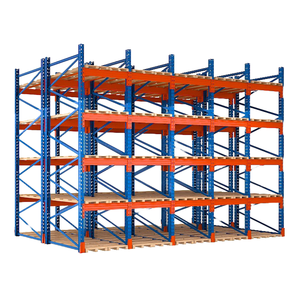
Warehouse Pallet Shelving Systems Heavy Duty Rack 2000kg Stacking Pallet Cold Storage Rack
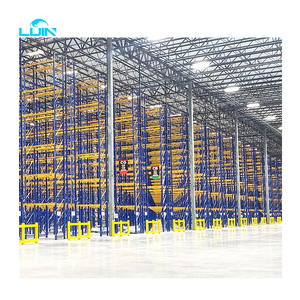
Lracking Wholesale Storage Equipment Heavy Duty Pallet Racks CE Customized 2000kg
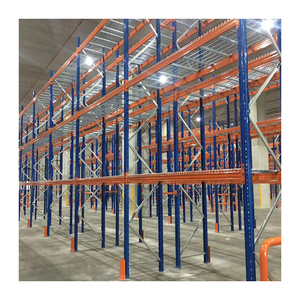
Heavy Duty Industrial Storage Warehouse Rack Selective Pallet Racking Shelves
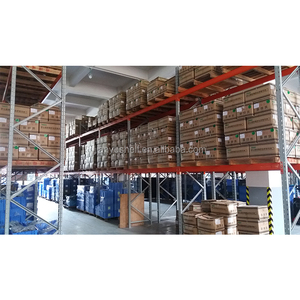
Commercial Industrial Storage Rack System Heavy Duty Pallet Warehouse Solution
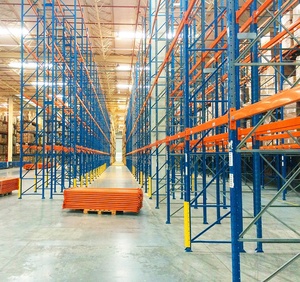
Warehouse Storage Racking System Industrial Metal Racks Heavy Duty Selective Pallet Racking
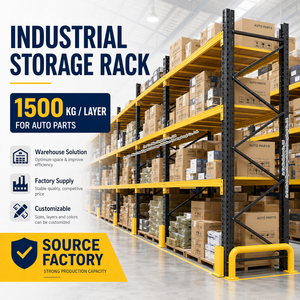
1500KG Per Beam Custom Yellow Black Heavy Duty Rack for Auto Parts Storage 4 Layers
H-shaped Precision Stand Multi-functional Structural Steel I-Beam Fabricated Equipment
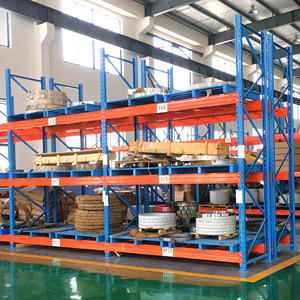
OEM Factory Wholesale Warehouse Racking Industrial Customized Pallet Racking System
Engineering Precision: How Leading Chinese Manufacturers Anchor Global Supply Chains
In modern industrial logistics, high-bay warehouse facilities demand unprecedented levels of structural stability, dimensional repeatability, and load-bearing endurance. Sourcing warehouse pallet storage directly from Tier-1 Chinese manufacturers has transitioned from a purely cost-driven procurement tactic into a strategic capital expenditure (CapEx) optimization model. As global distributors, third-party logistics (3PL) conglomerates, and automated fulfillment networks face soaring land and construction expenses, warehouse racking is no longer static structural shelving; it is the mission-critical skeletal framework underpinning automated material handling systems (MHE).
Chinese manufacturing leaders like Guangzhou Heda Shelves Co., Ltd. (established in 2001) have driven this industrial transformation. Operating sprawling 30,000 m² advanced fabrication centers with an aggregate output reaching 30,000 metric tonnes per month, our manufacturing methodology integrates high-precision continuous cold-roll forming, automated punch-press profiling, robotic dual-torch welding, and advanced multi-stage electrostatic thermoset powder coating. Over our 25 years of engineering heritage, we have delivered more than 10,000 structural storage projects across 120+ countries, conforming strictly to European CE certification (Certificate No. 2435-CPR-8605159) and ISO 9001:2015 quality assurance protocols (Certificate No. 18624Q00169R0M).
Industrial Manufacturing Ecosystem: Why Tier-1 Sourcing Matters
A resilient supply chain depends on structural repeatability and rigorous quality control. Industrial pallet racking systems undergo continuous cyclic loading, severe forklift dynamic impacts, and potential seismic ground motions. Procuring directly from our certified Chinese manufacturing base guarantees full visibility over raw steel metallurgy, weldment testing, and chemical surface preparation.
Certified Quality Standards
Full conformance to European standard EN 15512 (Steel static storage systems), CE Certification (No. 2435-CPR-8605159), ISO 9001:2015, and RoHS compliant non-toxic environmental powder coats. Structural calculation sheets are provided for every bay layout.
Complimentary 3D & CAD Layouts
Our in-house structural engineering office delivers comprehensive architectural DWG blueprints, load-bearing stress calculations, and 3D visual renderings before production begins, eliminating spatial interferences with building columns, sprinklers, and HVAC conduits.
Full OEM/ODM Customization
Every beam profile, upright upright section (up to 120mm profile width and 2.5mm steel thickness), connector claw hook angle, and safety lock is custom-tailored. Custom RAL powder coat colors, specialized zinc galvanization, and private labeling for international dealers.
Engineering Comparison: Industrial Warehouse Pallet Systems
Select the optimal storage infrastructure tailored to your inventory velocity, material handling equipment (MHE), and warehouse footprint utilization ratio.
| Storage System Type | Space Utilization | Pallet Accessibility | Stock Rotation Rule | Handling Equipment Required | Average Cost / Pallet |
|---|---|---|---|---|---|
| Selective Pallet Racking | 40% – 50% | 100% Direct Immediate Access | FIFO / LIFO Any Order | Standard Counterbalance / Reach Truck | Lowest (CapEx Anchor) |
| Double Deep Racking | 55% – 65% | 50% Immediate (Requires Pantograph) | LIFO Strategy | Specialized Deep-Reach Forklifts | Economical |
| Drive-In / Drive-Through | 65% – 75% | Lane Dependent (Low Selectivity) | LIFO (Drive-In) / FIFO (Drive-Thru) | Standard Counterbalance Truck | Moderate |
| Radio Shuttle Cart Racking | 80% – 85% | Automated Channel Retrieval | FIFO or LIFO Switchable | Standard Forklift + Automated Shuttles | Advanced Investment |
| Gravity Flow Racking | 75% – 85% | Front Picking Face Direct | Strict Natural FIFO | Standard Forklift / Pallet Jacks | High (Roller Beds) |
| Very Narrow Aisle (VNA) | 70% – 80% | 100% Direct at High Bay | FIFO / LIFO Any Order | Wire / Rail Guided Turret Man-Up Trucks | Moderate to High |
Future Procurement Trends in Warehouse Storage (2025–2030)
Global logistics networks are navigating rapid macroeconomic shifts: urban land scarcity, surging labor overhead, heightened seismic building requirements, and stringent decarbonization mandates. Supply chain directors are re-evaluating traditional racking procurement models to prioritize long-term asset agility and total lifecycle economics over short-sighted initial purchase prices.
Low-Carbon Green Steel
Global ESG disclosure regulations (such as the EU Carbon Border Adjustment Mechanism - CBAM) mandate verified Scope 3 emissions reporting. Tier-1 Chinese exporters are adopting scrap-based electric arc furnace (EAF) steel and zero-effluent powder coating processes to support international net-zero benchmarks.
Robotics & AMR Integration
Autonomous Mobile Robots (AMR), Automated Guided Vehicles (AGV), and crane-based AS/RS systems require millimeter-accurate tolerances. Modern racking designs integrate base-plate laser alignment, high-strength ground anchors, and structural tolerances conforming to DIN EN 15620 Class 100-400 standards.
Cryogenic Metallurgy
Rapid growth in fresh food distribution and temperature-controlled pharmaceuticals is driving demand for sub-zero racking. Sub-zero environments (-25°C to -35°C) require micro-alloyed structural steels that eliminate cryogenic brittle fracture risks and maintain impact toughness.
Vertical Cube Expansion
Faced with warehouse rent hikes across key logistics hubs, operations are shifting from horizontal expansions toward rack-supported multi-tier mezzanine floors. Integrating pallet flow below with pick modules above optimizes vertical cubic space without requiring new real estate development.
Technological Evolution in Racking Metallurgy & Structural Design
The manufacturing technology behind industrial pallet racking has advanced significantly over the past two decades. Structural engineers are moving away from traditional thick, heavy mild-steel sections toward optimized, cold-formed profiles produced from high-strength low-alloy (HSLA) steel coils. Through comprehensive Finite Element Analysis (FEA) computer modeling, upright columns are engineered with complex multi-bend stiffening ribs that provide superior torsional and compressive stiffness while reducing overall structural deadweight.
Automated manufacturing operations run 10-stage fabrication lines: starting from decoiling, laser-guided slitting, and continuous roll-forming, through CNC high-speed column punching with 50mm and 75mm standard vertical pitch adjustments. Components undergo an 8-stage pre-treatment wash including chemical degreasing, zinc-phosphate conversion coating, and high-purity water rinses before entering automated Swiss Gema electrostatic powder-coating booths. This automated process ensures uniform film thickness (60 to 90 microns), salt-spray corrosion resistance exceeding 500 hours, and reliable impact durability against daily forklift maneuvers.
Frequently Asked Questions by Industrial Buyers & Engineers
Critical engineering criteria, international standard verifications, shipping logistics, and manufacturing parameters explained by our technical directors.
What specific international structural standards do your racking systems satisfy?
How are racking systems designed to withstand seismic activities?
What are the key technical differences between Q235B and Q355B structural steel?
How do you optimize ocean freight container stuffing to prevent transit damage?
What guarantees exist against cold-storage paint flaking and steel embrittlement?
Can our engineering team request custom OEM hole punch patterns and branding?
What documentation is delivered for third-party building control inspections?
What is the typical production lead time and factory payment framework?
Request an Engineered Layout & Factory Quote
Send your warehouse architectural DWG drawings, storage pallet dimensions, floor load capacities, and forklift handling specifications. Our senior structural engineers will prepare an optimized 3D layout, load-distribution calculation, and direct export estimate within 24 hours.