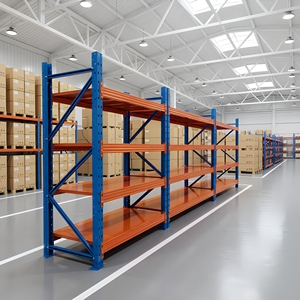
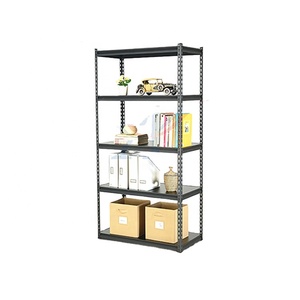
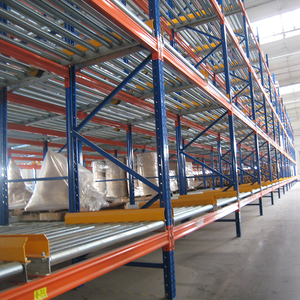
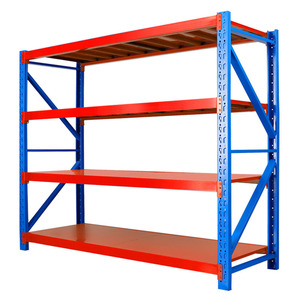
Engineered for EPC warehouse contractors, automated logistics hubs, 3PL distributors, and cold storage chains. Fully adaptable to European EUR/EPAL and global GMA pallet standards.
Global Supply Chain Shift: Why Tier-1 EPCs Source Warehouse Racking from China
The geopolitical transformation of global supply chain logistics has redefined procurement equations for modern intralogistics infrastructure. Across Europe, the Middle East, the Americas, and Australasia, warehouse operators and industrial building developers face rising structural steel costs, extended domestic mill lead times, and demanding structural safety mandates. Within this landscape, leading Chinese heavy-duty racking manufacturers—anchored by specialized industrial clusters such as Guangzhou Heda Shelves Co., Ltd.—have evolved from basic fabricators into comprehensive structural engineering partners capable of turnkey engineering design, robotic cold roll-forming, and strict adherence to international standards.
A core driver of this competitive advantage is direct metallurgical integration with world-class primary steel suppliers such as Baosteel and Shougang Group. Heavy-duty pallet racking systems depend critically on certified hot-rolled coil (HRC) grades, predominantly Q235B structural carbon steel (yielding minimum tensile strengths of 370–500 MPa with a yield point of ≥235 MPa) and high-yield Q355B low-alloy steel (minimum yield strength ≥355 MPa). Western tier-1 distributors increasingly recognize that Chinese tier-1 exporters produce components with certified chemical compositions, controlled phosphorus/sulfur content (<0.045%), and guaranteed elongation (>26%), matching or exceeding European standard S235JR and S355JR structural steels under EN 10025-2.
Moreover, Chinese production hubs leverage automated continuous punching lines and cold roll-forming profiles with proprietary omega and multi-bend upright geometry. Rather than relying on simple C-channels, Chinese roll-formed columns incorporate 12 to 18 distinct cold-formed bends. These complex geometries enhance the cross-sectional radius of gyration, counteracting torsional-flexural buckling under axial compression without unnecessary dead-weight steel consumption. When combined with localized galvanizing and electrostatic polyester powder-coating lines, China's racking export market delivers an exceptional balance of price, engineering precision, and lead-time predictability.
Seismic Capacity (EN 16681)
Engineered upright baseplates and moment-resisting beam-to-column beam-lock connectors optimized through finite element analysis (FEA) for high seismic risk zones.
Automated Upright Punching
Multi-stage CNC hydraulic punching ensures hole pitch precision within ±0.1 mm over 12-meter continuous vertical upright lengths, preventing pitch drift during assembly.
Surface Pretreatment Chemistry
Continuous 7-stage automated immersion: alkaline degreasing, twin rinses, iron phosphating, and deionized passivating to guarantee 500+ hours salt-spray resistance.
Engineering Compliance: Navigating EN 15512, FEM 10.2.02, RMI MH16.1 & AS 4084
Procuring warehouse racking from overseas is not simply a matter of steel tonnage pricing; it is a serious legal and structural engineering responsibility governed by national workplace safety mandates. In Europe, racking qualifies as work equipment and must conform to the Machinery Directive and Construction Products Regulation (CPR). Guangzhou Heda Shelves Co., Ltd. satisfies these requirements via CE Certificate No. 2435-CPR-8605159 alongside accredited quality system compliance under ISO 9001:2015 Certificate No. 18624Q00169R0M. For procurement managers, consulting engineers, and logistics directors, understanding the alignment between global standards is essential to de-risk investments:
EN 15512:2020 (European Standard): Governs the design of steel static storage systems, specifically adjustable pallet racking. It specifies limit-state design principles, requiring advanced 3D global frame analysis that accounts for second-order sway effects (αcr calculations), beam-end connector semi-rigidity testing (moment-rotation characteristic curves M-θ), and base-plate loosening coefficients.
FEM 10.2.02 & EN 15620: Specifies allowable tolerances, deflections, and warehouse clearances. Typical vertical beam deflection under working load is restricted strictly to δ ≤ L/200 (or L/300 in semi-automated ASRS environments) to prevent pallet drop hazard or forklift mast jamming.
ANSI / RMI MH16.1 (North American Standard): Published by the Rack Manufacturers Institute, this standard emphasizes effective length factors (K-values) for torsional flexural buckling of perforating cold-formed members according to AISI S100 specifications.
AS 4084:2023 (Australian Standard): Outlines stringent requirements for structural steel storage racking, mandating unit load signages, post-impact safety tolerances, and mandatory annual safety inspection workflows.
Reputable Chinese exporters supply full structural load-capacity tables, seismic calculations, and finite element modeling dossiers stamped by chartered structural engineers. This technical transparency guarantees that local municipal building control officers, OSHA inspectors, and insurers approve the system upon commissioning without delays or costly on-site structural modifications.
Heavy Duty Storage Systems: Engineering & Operational Comparison
Selecting the optimal racking architecture requires balancing storage footprint density, individual pallet selectivity, handling cycle times, and upfront capital expenditure (CAPEX). The engineering matrix below summarizes performance benchmarks across core industrial configurations manufactured by Chinese factories:
Racking Topology
Volumetric Efficiency
Pallet Selectivity
Handling Throughput
Rotation Logic
Typical Max Load
Primary Industrial Use Case
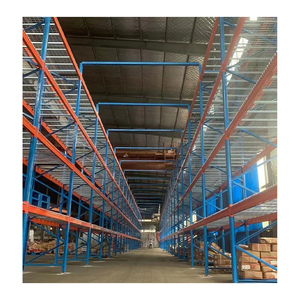
Standard Selective
40% - 50%
100% Direct
Fast (Counterbalance / Reach)
FIFO / LIFO
1,000 - 4,500 kg / Level
3PL hubs, multi-SKU FMCG, engineering parts
Drive-In / Drive-Through
70% - 80%
Low (Lane-based)
Moderate (Truck enters rack)
LIFO (Drive-In) / FIFO
1,500 kg / Pallet
Cold storage, beverage plants, seasonal reserves
Radio Shuttle System
85% - 90%
Channel Selective
Very High (Automated Cart)
Automated FIFO / LIFO
1,500 - 2,000 kg / Pallet
Deep freezer distribution, pharmaceutical hubs
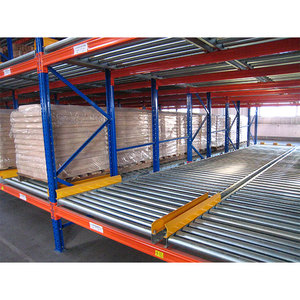
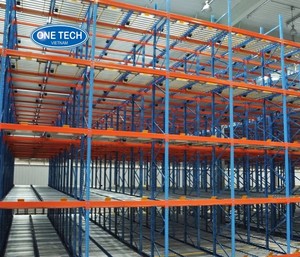
Gravity Pallet Flow
75% - 85%
Face Selective
High (Gravity dynamic roll)
Strict FIFO
2,000 kg / Lane
Perishables, dairy, time-sensitive food & pharma
Heavy Duty Cantilever
Specialized
100% Column Face
High (Side loader / Crane)
Independent
1,000 - 3,000 kg / Arm
Timber, extruded aluminum, steel pipes, sheet metal
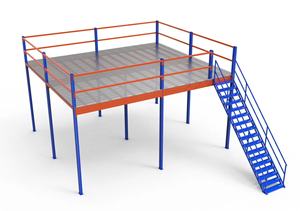
Multi-Tier Mezzanine
100% - 200% Extra
Zoned Access
High (Personnel / Conveyor)
Dynamic
300 - 1,000 kg / m²
E-commerce fulfillment centers, automotive parts bins
Operating as a premier exporter and manufacturer since 2001, Guangzhou Heda Shelves Co., Ltd. represents the upper tier of Chinese manufacturing engineering. Over the past 25 years, the organization has expanded its footprint to a 30,000 m² state-of-the-art manufacturing campus staffed by over 300 experienced technical and production specialists. With a monthly capacity reaching 30,000 tonnes of structural racking components, Heda Shelves delivers turn-key manufacturing scale capable of processing multi-container mega-distribution hub orders without supply-chain bottlenecks.
The company's end-to-end industrial manufacturing lifecycle encompasses ten rigorous fabrication stages, ensuring total control from cold steel coil to containerized ocean shipping:
Raw Material Mill Certification: Incoming inspection of structural steel coils (Q235B and Q355B) utilizing spectral metallurgical analyzers, tensile elongation testers, and thickness ultrasonic gauge verifications.
Automated Continuous Upright Punching: Multi-station hydraulic punching dies execute tear-drop, diamond, or European omega hole profiles with sub-millimeter positional repeatability.
Multi-Stand Cold Roll Forming: 18-station roll formers progressively fold structural uprights and step beams, minimizing residual internal stress and work-hardening micro-fractures.
Closed-Box Beam Robotic Welding: Twin roll-formed C-profiles are continuously stitch-welded into composite interlocking box beams via six-axis robotic welding cells, yielding consistent root penetration.
Precision Mechanical Deburring & Polishing: Mechanical shot-blasting removes scale, oxidation, and slag, delivering an anchor pattern that optimizes paint bonding.
Beam End-Connector Automated Assembly: 3-claw, 4-claw, and 5-claw interlocking beam hooks are precision fixture-welded with safety pin retainers to prevent accidental uplift.
Multi-Stage Chemical Pre-Treatment: Immersion degreasing, hot acid pickling, rinsing, and zirconium/iron phosphating create a protective passive layer against subterranean corrosion.
Electrostatic Powder Coating: Automated reciprocal powder spray booths apply lead-free, RoHS-compliant thermoset epoxy-polyester coatings cured in 200°C baking ovens, achieving a uniform 60–90 μm dry film thickness (DFT).
Seaworthy Export Packaging & Rigorous QC: Final inspection includes magnetic film thickness checks, cross-hatch adhesion testing (ASTM D3359), and palletized steel-band bundle strapping with corrugated edge protection for sea transit.
For international buyers, Heda Shelves offers complete OEM/ODM engineering capabilities—including free 2D DWG AutoCAD layouts, comprehensive 3D Navisworks/Revit BIM models, and tailored RAL color finishes—providing European, American, and regional distributors with private-label manufacturing that integrates into their local portfolios.
The warehouse racking sector is undergoing a profound paradigm shift driven by e-commerce fulfillment pressures, urban land scarcity, labor constraints, and ESG carbon mandates. Engineering teams evaluating industrial storage procurement over the next decade must prepare for several emerging technological developments:
1. The Convergence of Static Racking and Autonomous Mobile Robotics (AMRs)
Traditional high-bay pallet racking is rapidly adapting to accommodate hybrid automated material handling fleets. Standard forklift aisles (3.2–3.8 meters wide) are increasingly narrowed to VNA dimensions (1.6–1.8 meters) served by automated guided vehicles (AGVs) or replaced entirely by rack-integrated 2D/4D satellite radio shuttles. Future-ready racking specifications require tighter deflection limits (down to L/400) and strict floor-anchoring torque controls to withstand the high-frequency cyclic loading applied by continuous automated fleets.
2. Digital Twin Integration & Structural Health Telemetry
The industry is transitioning from reactive annual damage inspections toward continuous real-time structural health monitoring. Smart warehouse uprights are now prototyped with embedded IoT strain gauges, multi-axis wireless accelerometers, and acoustic emission sensors. These telemetric nodes detect forklift mast impacts immediately, calculate localized structural degradation, and transmit alerts to the facility's Warehouse Management System (WMS) before catastrophic progressive collapse occurs.
3. Low-Carbon Steel & Green Powder Coating Chemistry
With corporate Scope 3 greenhouse gas reporting gaining regulatory enforcement in the EU (CBAM - Carbon Border Adjustment Mechanism) and North America, the carbon footprint of structural steel has become a core procurement KPI. Chinese manufacturers are investing heavily in Electric Arc Furnace (EAF) steel sourcing, photovoltaic-powered production facilities, and heavy-metal-free, low-VOC powder coatings. Securing Environmental Product Declarations (EPD) and ISO 14064 carbon-accounting verifications will soon be standard prerequisites for enterprise contracts.
4. Multi-Level Rack-Supported Mezzanine Mega-Hubs
Skyrocketing industrial land lease rates in peripheral urban areas have made vertical volume utilization imperative. Rack-supported and shelving-supported multi-tier platforms—soaring up to four levels (12–16 meters high)—allow logistics operators to multiply usable square footage within their existing building footprint without incurring commercial property expansion costs. These hybrid systems integrate pallet staging on ground levels with picking, automated carton sorting, and packaging stations on upper mezzanine decks.
Clear, direct engineering answers addressing the core questions international procurement managers, structural consultants, and warehouse heads raise when importing heavy-duty racking systems from China:
How can overseas buyers verify the structural steel grade and mill authenticity?
Authentic manufacturers provide original Mill Test Certificates (MTC) conforming to EN 10204 Type 3.1 for every batch of hot-rolled and cold-rolled steel coils. These certificates document chemical composition (Carbon, Manganese, Silicon, Phosphorus, Sulfur) and mechanical testing results (Yield Strength ReH, Tensile Strength Rm, Elongation A80). Reputable Chinese factories also accommodate third-party inspection agencies (SGS, TÜV, Bureau Veritas) to conduct random on-site optical emission spectrometry (OES) and tensile break testing prior to shipment.
Can Chinese pallet racking match custom European EUR (1200 × 800 mm) and US GMA pallets?
Yes. Upright frame depths and clear beam spans are custom-engineered to match the precise load distribution of standard EUR/EPAL 1 (1200 × 800 mm), EUR 2 (1200 × 1000 mm), and American GMA (48 × 40 in) pallets. Frame depths are typically calculated at 1100 mm for 1200 mm pallets to allow the mandatory 50 mm front and rear overhang required by EN 15620 safety standards. Beam levels feature standard 50 mm, 75 mm, or 76.2 mm (3-inch) pitch adjustment holes to accommodate evolving pallet height profiles.
What specific certifications and design dossiers are provided for local municipal approval?
Orders include CE Declaration of Performance (DoP) under CPR Certificate No. 2435-CPR-8605159, ISO 9001:2015 Quality Management certification, and RoHS surface compliance documents. Upon project commissioning, our engineering department provides comprehensive CAD dimensional layouts, 3D structural connection details, and formal structural calculation packages detailing static analysis, wind/seismic load calculations (IBC or Eurocode 8), and maximum permissible frame capacity charts for presentation to local building inspectors and insurance underwriters.
How are oversized upright frames and heavy beams protected against transit corrosion and deformation?
Long structural members (upright frames up to 11.8 meters) are bundled using automated steel banding over heavy corrugated paper edge buffers and industrial wood runners to prevent transit warping. Finished components undergo electrostatic powder curing, followed by wrapping in water-resistant polyethylene stretch film and desiccant placement within 40-foot HQ shipping containers. Small items—such as baseplates, row spacers, shims, safety pins, and wedge anchors—are packaged in heavy-duty wooden crates with reinforced corners to withstand multi-port maritime transport.
What typical lead time is required from CAD design finalization to container dispatch?
Standard production lead times range between 15 and 30 calendar days depending on total project tonnage and paint customization requirements. Preliminary 2D DWG layout proposals and 3D architectural models are typically completed within 24 to 48 hours following receipt of your architectural building plans, clear internal height measurements, pallet dimensions, and forklift fleet specifications. Ocean transit times vary by destination: 25–35 days to European hubs (Rotterdam, Hamburg, Valencia), 18–25 days to US West Coast ports, and 12–18 days to Australia/Middle East.
Does your engineering team support on-site installation and field assembly abroad?
Every shipment is supported by a comprehensive technical installation documentation package, including numbered component schedules, exploded view assembly drawings, column anchoring torque charts, and installation video guides. For medium-sized projects, our structural engineers provide real-time remote technical coordination with your local contractor. For major enterprise installations, automated ASRS integration, or multi-tier mezzanine builds, we can deploy seasoned installation supervisors to direct your on-site erection team from foundation layout to safety sign-off.
Transform Your Warehouse Efficiency with Certified Engineering
Submit your architectural floor plans, storage volume requirements, and handling equipment parameters. Our senior structural engineers will prepare an optimized 2D layout, 3D visualization, and structural load analysis for your review.