Modular Boltless
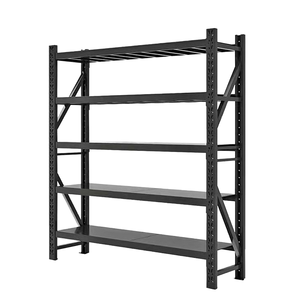
Each engineered installation is configured to specific unit loads, floor plate geotechnical ratings, and handling equipment. Explore our primary certified production units.
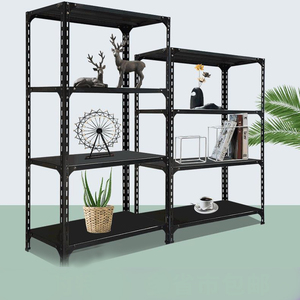
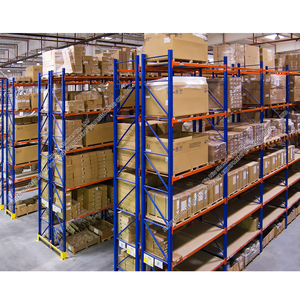
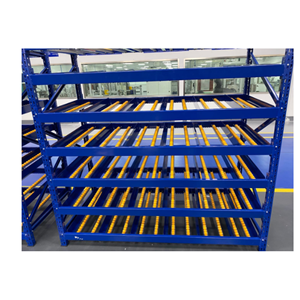
Cantilever systems are uniquely subjected to pure eccentric bending moments without the front columns common to conventional pallet racking. Selecting the right manufacturer requires verifying raw steel mill specifications, column-to-base moment connection calculations, and load deflection criteria.
Structural cantilever racks utilize hot-rolled IPE, HEA, or wide-flange universal steel sections (conforming to Q355B / S355JR). Hot-rolled steel provides immense mechanical yield strength to absorb severe forklift impacts without sudden catastrophic buckling. In contrast, cold-formed roll-profiled uprights are engineered for cost-effective light-to-medium long loads such as PVC piping, light extrusions, and packaged mouldings.
Under load, every cantilever arm acts as an elastic beam with maximum deflection occurring at the outermost tip. Tier-one manufacturers incorporate an engineered upward incline pitch (typically 2° to 4°). When loaded to maximum rated capacity, the arm deflects downward within permissible tolerances (conforming to the L/200 or L/250 structural limit per FEM 10.2.02 and ANSI MH16.1), preventing materials from slipping forward off the rack face.
Cantilever runs maintain longitudinal rigidity solely via diagonal X-bracing panels and horizontal spacer struts bolted between adjacent vertical columns. The structural stability of the entire rack run relies entirely on tensioned turnbuckles and rigid hollow structural steel (HSS) tie bars, which transfer all longitudinal horizontal sway and seismic ground acceleration safely into the reinforced floor slab.
| Cantilever Class | Typical Profile (Uprights & Arms) | Load Capacity per Arm | Standard Arm Lengths | Optimum Industry Application |
|---|---|---|---|---|
| Light-Duty Cold-Formed | Roll-formed C/Omega Profiles (Q235B) | 150 kg – 600 kg | 400 mm – 1000 mm | Plumbing conduit, electrical trunking, auto body mouldings |
| Medium-Duty Hybrid | Reinforced Box Section / Light IPE | 600 kg – 1500 kg | 600 mm – 1200 mm | Hardwood lumber bundles, packed sheet goods, light steel bar |
| Heavy-Duty Structural I-Beam | Hot-Rolled IPE / HEA / WF Profiles (Q355B / S355JR) | 1500 kg – 5000+ kg | 800 mm – 2500 mm | Structural steel beams, heavy rebar, oil pipelines, stamping dies |
| Roofed Outdoor Yard System | Galvanized Structural I-Beam with Truss Arms | 2000 kg – 4500 kg | 1000 mm – 2000 mm | External timber yards, building supplies, weather-exposed steel packs |
*Engineering Note: Load ratings represent uniformly distributed loads (UDL). Concentrated point loads at the arm tip decrease permissible capacity by up to 50%.
Warehouse developers and logistics procurement directors are evolving their purchasing criteria beyond nominal metric tonnage. Supply chain resilience, automated handling integration, and strict total lifecycle compliance now drive industrial sourcing decisions.
Global logistics operators are bypassing domestic regional middlemen in favor of factory-direct procurement partnerships. Working directly with integrated manufacturers like HEDA Shelves enables custom CAD structural profiles, exact clear height matching, and savings of 25% to 40% on capital equipment expenditures.
With the European Carbon Border Adjustment Mechanism (CBAM) and corporate ESG mandates becoming mandatory, procurement whitepapers now stipulate full traceability of raw coil steel. Manufacturers utilizing scrap-based Electric Arc Furnaces (EAF) and closed-loop electrostatic powder coating lines provide essential carbon accounting documentation.
Skyrocketing industrial real estate prices are pushing warehouse designs vertically. Cantilever configurations are expanding beyond standard 6-meter heights up to 14 meters, integrated with mechanical guide rails or inductive floor-wire guidance for specialized multi-directional four-way side loaders and reach trucks.
Corporate risk mitigation policies increasingly mandate proof of structural compliance before issuing production purchase orders. Buyers require verified CE certificates (EN 1090-1 execution class EXC2), ISO 9001:2015 traceability, and calculations certified under Eurocode 3 (EN 1993-1-1) and FEM 10.2.02 standard design rules.
Modern heavy storage manufacturing combines advanced metallurgy, digital twin simulation, and IoT telemetry to transform static racking into dynamic, intelligent warehouse infrastructure.
Traditional rigid cantilever arms suffer acute joint damage when inadvertently struck from below by lifting forklift masts. Next-generation systems incorporate pivoting hitch-pin joints with safety retaining rings. When struck from underneath, the arm swings freely upward and pivots slightly out of the way, preventing shock transfer into the vertical column and avoiding fatal weld tear-out.
For outdoor lumber and piping depots exposed to rain, salt mist, and seasonal freeze-thaw cycles, conventional powder coating is insufficient. Leading manufacturers apply full hot-dip galvanization with a minimum zinc coating thickness of 70–85 μm. The zinc metallurgically bonds with the substrate steel, providing galvanic cathodic self-healing protection that delivers a maintenance-free 25+ year lifespan.
Industry 4.0 cantilever installations integrate micro-strain gauge sensors along high-stress arm root gussets and column bases. Connected via wireless LoRaWAN gateways, these sensors monitor real-time deflection and impact shock loads. Instant alerts notify warehouse management if uneven loading exceeds design thresholds, preventing mechanical fatigue before cracks can propagate.
Founded in 2001, Guangzhou HEDA Shelves Co., Ltd. operates a 30,000 m² production facility producing up to 30,000 tonnes of certified racking per month. With 10,000+ completed projects across 120+ countries, we deliver single-source accountability from initial CAD modeling to verified on-site installation.
All HEDA systems hold valid CE Certification (Certificate No. 2435-CPR-8605159) and ISO 9001:2015 Quality Management accreditation (Certificate No. 18624Q00169R0M). Every project includes structural calculation reports ready for European independent safety inspectors.
Before you commit a single dollar, our senior racking engineers review your building drawings, clear column grids, and forklift capabilities. We deliver comprehensive DWG architectural layouts, 3D stress renders, and bay load distribution tables within 24 to 48 hours.
From custom European RAL color coding to match existing warehouse fleets, to specialized removable arm end-stops, coil cradles, wire mesh decking, and weather-protected canopies, our production lines are built for custom industrial requirements.
All upright columns and heavy arms are bundled with corrugated steel strapping, wrapped in protective shock-absorbent poly film, and packed with steel skid shoes for safe container destuffing. We ship CIF or DDP to Rotterdam, Hamburg, Antwerp, Felixstowe, and beyond.
Certified quality control at every phase guarantees exact structural alignment and zero weld fatigue.
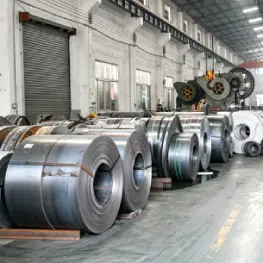
Raw Material Testing
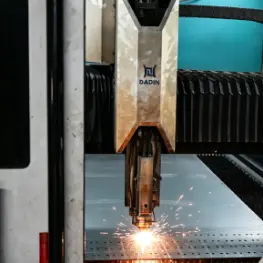
Precision Laser Cutting
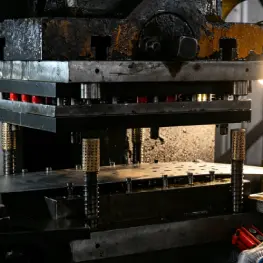
Automated Punching
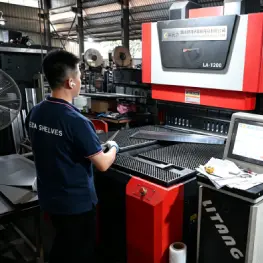
Cold Bending Forming
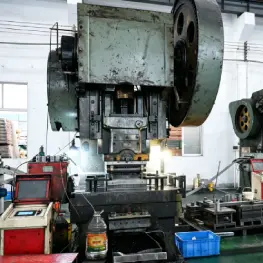
Continuous Roll Forming
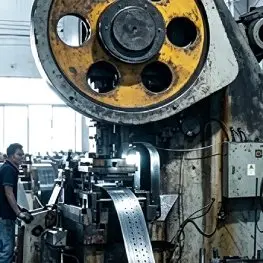
Mechanical Polishing
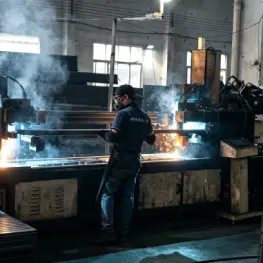
Robotic Welding
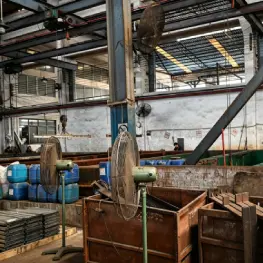
Pickling & Phosphating
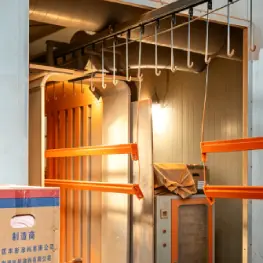
Electrostatic Coating
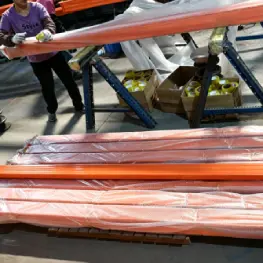
QC & Seaworthy Packing
Engineering insights and compliance details addressing common questions from warehouse managers, safety inspectors, and procurement teams.