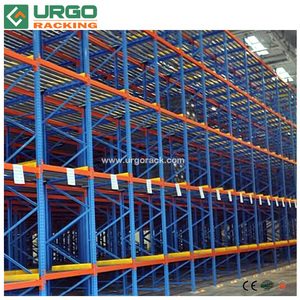
Industrial Stainless Steel Carton Flow Rack
Gravity-driven roller tracks for high-density, split-case picking. Ideal for assembly lines, pharmaceutical distribution, and strict FIFO inventory control.
System SpecsExplore our heavy-duty warehouse racking line-up. Every system is roll-formed from certified high-tensile structural steel, engineered for strict stock rotation, pallet integrity, and maximum volumetric utilization.
Gravity-driven roller tracks for high-density, split-case picking. Ideal for assembly lines, pharmaceutical distribution, and strict FIFO inventory control.
System Specs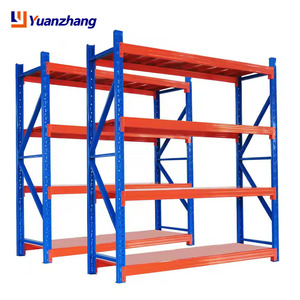
Engineered cold-formed uprights and box beams delivering high structural rigidity for multi-tier heavy palletization up to 4,500 kg per beam level.
System Specs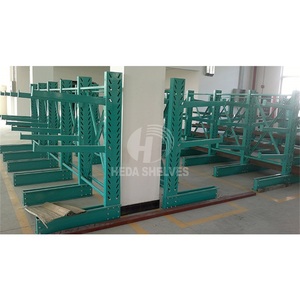
Freestanding column systems with unhindered horizontal arms designed for timber, structural steel profiles, piping, and variable-length loads.
System Specs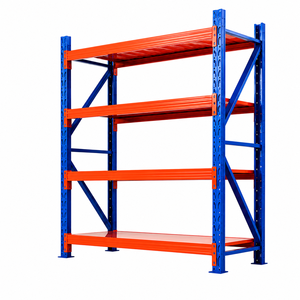
Interlocking beam profile and steel decking configuration for fast manual picking, archival facilities, light manufacturing, and maintenance depots.
System Specs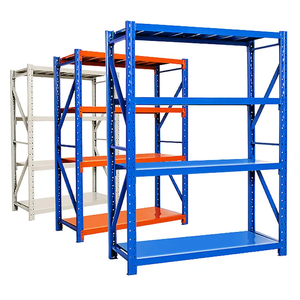
Engineered pitch adjustments on 50 mm / 75 mm hole patterns for dynamic inventory heights, boxed parts, and fluctuating warehouse stock density.
System Specs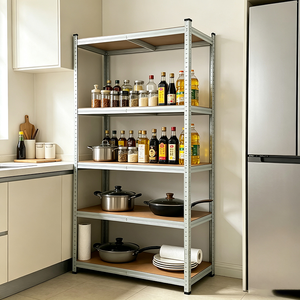
Rapid knock-down modular frame design with riveted beam-to-column keyholes. Versatile, boltless integration for retail stockrooms and e-commerce staging.
System Specs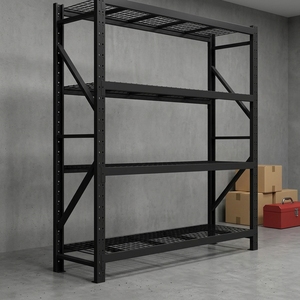
Automated multi-stage electrostatic powder coating over high-yield cold-rolled steel. Corrosion-resistant performance in cold chains and humid zones.
System Specs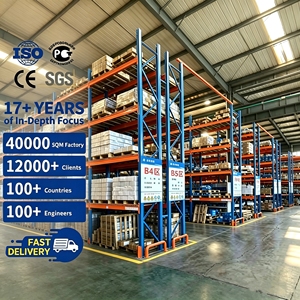
High-clearance bays with reinforced baseplates and column protectors, custom-tailored for engine blocks, chassis crates, and mixed SKU automotive logistics.
System SpecsFirst-In, First-Out (FIFO) dynamic storage eliminates redundant handling cycles and inventory obsolescence. Achieving absolute operational reliability requires mathematically balanced kinetic dissipation, roller inclination, and separator engineering.
A true FIFO gravity flow racking system converts gravitational potential energy into controlled linear kinetic energy. The standard pitch angle of a pallet flow bed typically ranges between 2.8% and 3.5% (approximately 1.6° to 2.0°) for conventional wooden Euro-pallets (1200 × 800 mm) and industrial GMA pallets (1200 × 1000 mm). When ambient temperatures drop or bottom deck board deflection increases, the rolling friction coefficient changes fundamentally.
To prevent uncontrolled pallet acceleration down long lanes (which can extend past 30 meters in high-density cold distribution centers), centrifugal brake rollers are placed at precise intervals—typically one brake roller per pallet position. As pallet velocity reaches approximately 0.3 m/s, internal planetary flyweights within the brake drum expand outward against internal friction linings, creating resistive counter-torque proportional to the square of angular velocity. This ensures smooth, constant-speed descent regardless of whether the pallet weighs 250 kg or 1,500 kg.
A frequent structural failure point in poorly engineered FIFO racks is line pressure. In a 15-deep pallet lane, the cumulative forward pressure exerted by 14 trailing pallets resting against the front pallet can exceed 150 kN. This massive force wedges the lead pallet against the discharge stop, making extraction by reach truck or counterbalanced forklift dangerous, damaging forks, and bending lower racking beams.
Our factory-engineered FIFO systems integrate an automatic mechanical pallet separator. When the lead pallet arrives at the picking face, it triggers a spring-loaded mechanical trip lever that raises an arresting stop behind it, isolating the remaining pallet train. Only after the forklift has cleanly lifted and removed the front pallet does the separator reset, allowing the subsequent unit load to roll smoothly into the extraction station at controlled velocity.
Selecting the optimal storage geometry requires evaluating inventory turnover speed, SKU diversity, floor area conversion, and structural life-cycle cost (TCO). Review this engineering matrix before finalizing site schematics.
| Storage Topology | Inventory Logic | Floor Space Efficiency | Throughput Speed | Operating Cost (OPEX) | Ideal Sector Application |
|---|---|---|---|---|---|
| FIFO Gravity Pallet Flow | Strict FIFO | Up to 75% Footprint Reduction | High (Separated Load/Pick Aisle) | Ultra-Low (Zero Motor Power) | Cold Storage, Perishable Food, Pharmaceuticals |
| Radio Shuttle FIFO Racking | FIFO or LIFO | Up to 80% Footprint Reduction | Very High (Automated Cart Run) | Moderate (Battery & Cart Servicing) | High-Volume Beverage, Raw Material Buffers |
| Carton Flow Racking | Strict FIFO | Up to 60% Linear Pick Face Save | Maximum (Split-Case Ergonomics) | Negligible (Passive Roller Tracks) | E-Commerce Fulfillment, Kitting & Assembly |
| Drive-In Pallet Racking | Strict LIFO | Up to 65% Footprint Reduction | Low (Forklift Navigates Racking Lanes) | High (Frequent Column Collision Repairs) | Homogeneous Non-Perishables, Bulk Packaging |
| Standard Selective Racking | Arbitrary Access | Baseline (Requires 3.2m+ Aisles) | Moderate (Single Pallet Extraction) | Low (Structural Maintenance Only) | Multi-SKU 3PL Hubs, General Wholesale Distro |
Modern supply chain directors no longer view racking as passive steel shelving. The convergence of automated material handling, decarbonization mandates, and sub-zero cold chain logistics is transforming how industrial racking is procured.
With global frozen food, biologics, and lithium battery cell conditioning surging, cold warehouse storage demands steel profiles that resist low-temperature embrittlement. Standard commercial hot-rolled steels experience a brittle transition at temperatures below -10°C. Future procurement specifications mandate micro-alloyed, cold-formed Q355D/E steels with verified Charpy V-notch impact values down to -35°C, ensuring structural integrity during dynamic loading inside high-volume refrigerated distribution centers.
The manual reach truck is systematically giving way to Autonomous Guided Vehicles (AGVs) and Autonomous Mobile Robots (AMRs). Gravity flow and FIFO racking systems are evolving their loading guides and discharge stations to millimeter-level tolerances. Precision optical targets, sensor reflector brackets, and laser-guided pallet centering funnels are now factory-machined directly into our upright frames to facilitate 24/7 uncrewed robotic loading and unloading cycles without structural impact damage.
Scope 3 carbon emissions auditing is pushing multinational brands to demand certified environmentally friendly manufacturing. Our factory uses closed-loop, solvent-free electrostatic powder coating lines that recycle over 98% of overspray powder. Eliminating volatile organic compounds (VOCs) and using low-temperature curing chemistries significantly slashes the embodied carbon footprint per metric ton of exported racking, meeting strict corporate ESG requirements.
The journey from rudimentary gravity skate wheels to today’s multi-physics, self-regulating live pallet storage reflects 25 years of material science, mechanical optimization, and operational telemetry.
Early FIFO installations relied on plastic or stamped-steel skate wheels arranged in linear tracks. These systems suffered from severe pallet runaway velocity, pallet jamming due to bottom-board split imperfections, and high maintenance costs when pallet weights exceeded 600 kg. System depths were strictly constrained to 3–4 pallet positions to avoid devastating impacts at the discharge face.
The introduction of cold-drawn, zinc-plated steel full-width rollers equipped with internal precision ball bearings marked a massive structural leap forward. Calibrated centrifugal brake rollers were embedded into the roller bed at calculated intervals, allowing lane depths to extend to 20+ pallets safely. Spring-actuated mechanical separators enabled high-speed forklift operation without risk of back-pressure pinches.
Modern FIFO storage unites the best of gravity dynamics and mechatronic pallet shuttles. Hybrid configurations leverage long gravity accumulator beds feeding high-speed automated cranes. Modern roller channels can be equipped with optical speed validation and wireless load-cell telemetry, alerting maintenance managers to bearing wear or misaligned pallet boards before lane blockage can occur.
Founded in 2001, Guangzhou Heda Shelves has grown from a specialized metal stamping works into an international powerhouse of intralogistics engineering. We control every stage of manufacturing under one roof.
Our centralized manufacturing campus houses over 30 automated continuous cold-roll forming lines, high-precision robotic laser cutting stations, CNC automated punching presses, and dual 200-meter continuous electrostatic powder coating tunnels capable of producing over 30,000 metric tons of certified racking every month.
Never take safety claims on faith. Guangzhou Heda Shelves holds verified CE Certificate No. 2435-CPR-8605159 and ISO 9001:2015 Certificate No. 18624Q00169R0M. Our structural calculations, beam deflections, and weld integrity align with European EN 15512, EN 15620, and American RMI specifications.
Having shipped over 10,000 large-scale warehouse projects worldwide, our logistics engineering department specializes in seaworthy bundling, precision container packing layouts (to optimize 40HQ cube utilization and prevent transit abrasion), and complete export clearance documentation for seamless delivery to Rotterdam, Hamburg, Antwerp, Valencia, Long Beach, and Felixstowe.
Engineered answers to the technical, operational, and commercial questions most frequently raised by logistics project directors, warehouse architects, and sourcing specialists.
The standard roller gradient is typically designed at 3.0% to 3.5% (approx. 1.8°), but the exact slope depends on pallet material, bottom runner configuration, and payload variance. Plastic or smooth steel skid pallets exhibit lower rolling friction and typically require only a 2.5% slope to initiate roll. Conversely, standard wooden Euro or GMA pallets with rough bottom boards or slight moisture content require a 3.5% slope to overcome static inertia.
During the engineering design stage at Heda Shelves, we conduct physical sample testing using customer-supplied pallets to record break-away roll characteristics and adjust roller spacing (pitch) and brake roller resistance accordingly.
Broken bottom runners or missing bottom deck boards can catch between adjacent rollers, leading to lane blockages. To prevent this, well-designed FIFO installations feature two safeguards:
1. Infeed Profile Inspection Gauges (Poka-Yoke): Mechanical optical portals or physical clearance templates installed at the loading face that prevent trucks from placing warped, broken, or excessively sagging pallets into the channel.
2. Multi-Roller Bed Geometry: Instead of two wide single rollers, we employ three or four parallel track lines with dense roller pitch (e.g., 50 mm to 75 mm center-to-center). This ensures that even if one bottom board splits, adjacent continuous contact points maintain stable load distribution without snagging.
Yes. Sub-zero cold chain environments represent one of our primary installation categories. When operating between -25°C and -35°C, standard mechanical components fail if not properly specified. Our cold-rated FIFO systems incorporate:
• High-tensile structural steel formulated to prevent low-temperature ductile-to-brittle transitions.
• Specialized synthetic, low-viscosity fluorinated lubricants within all roller bearings that will not freeze, solidify, or increase roll resistance.
• Stainless steel brake components and internal springs resistant to condensation corrosion and frost heave during defrosting cycles.
Every industrial project engineered by Guangzhou Heda Shelves Co., Ltd. is accompanied by a full technical submittal package. This includes 2D AutoCAD fabrication and installation layout drawings, 3D spatial layout renderings, structural calculation reports referencing EN 15512 / EN 15620 guidelines, mill test certificates (MTC) proving steel chemical composition and tensile yield strengths, CE Declaration of Performance (DoP), and ISO 9001:2015 quality inspection logs.
These documents provide local building inspectors and structural engineers with all the verification data needed for rapid municipal permitting.
Standard fabrication lead time at our Guangzhou production facility is 15 to 25 calendar days, depending on project scale and custom RAL powder coat requirements. Ocean freight from the ports of Guangzhou, Shenzhen, or Hong Kong takes approximately 22 to 32 days to European base ports (Rotterdam, Hamburg, Valencia), 18 to 24 days to US West Coast ports (Long Beach, Oakland), and 12 to 18 days to Middle Eastern ports (Jebel Ali, Dammam).
While the initial capital expenditure (CAPEX) of FIFO gravity flow is higher due to precision steel rollers, brake drums, and separators, the Total Cost of Ownership across a 5-year operating window is substantially lower. Drive-in racking requires forklifts to drive inside the steel structure, resulting in continuous upright collisions, high structural repair bills, slow cycle times, and frequent pallet honeycombing.
FIFO flow racking keeps forklifts in dedicated exterior aisles, cuts transit drive distance by up to 40%, virtually eliminates rack impact damage, and prevents perishable product write-downs through strict batch and date rotation.
Send our senior engineering team your warehouse CAD floor plan, ceiling clear heights, and pallet specifications. We deliver complete 2D/3D layout schematics, structural load calculation reports, and factory-direct pricing within 24 to 48 hours.
Contact Us