High-Density Pallet Storage & Heavy-Duty Racking Series
Direct from our 30,000 m² automated production facility: custom cold-formed structural racking engineered to standard EUR/EPAL, ISO, and heavy industrial load matrices.
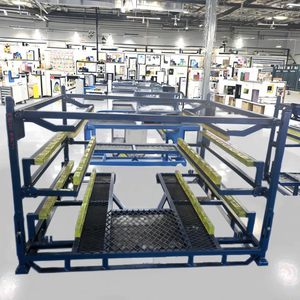
Automotive Parts Storage Rack Adjustable Carrier Shelf
Designed for heavy component cradles, engines, body panels, and transmission handling with transport lock functions.
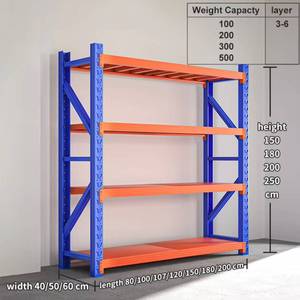
Customizable Industrial Steel Shelving & Stacking Rack
Flexible boltless garage and warehouse pallet stacking units with reinforced cold-rolled steel deck inserts.
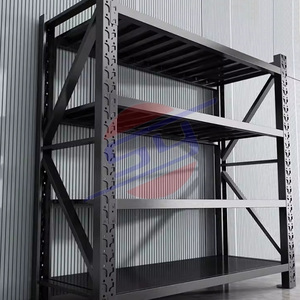
Customizable 4-Tier Metal Pallet Racking Units
Wholesale heavy industrial pallet rack structure incorporating seismic-resistant upright bracing and safety locking pins.
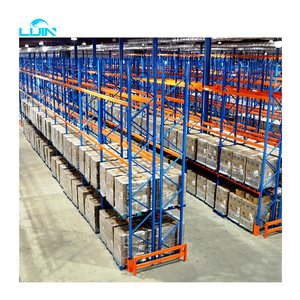
Double Deep Pallet & Rolled Carpet Racking System
Stores two pallets deep in a single-aisle footprint; increases density by 30% over standard selective layouts.
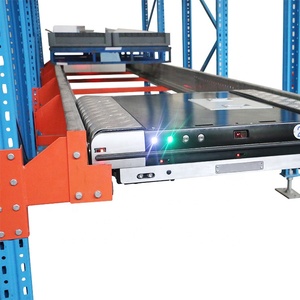
Automated FIFO & FILO Pallet Radio Shuttle Racking
Intelligent carrier shuttle eliminates forklift travel inside rack lanes. Ideal for cold-storage distribution hubs.
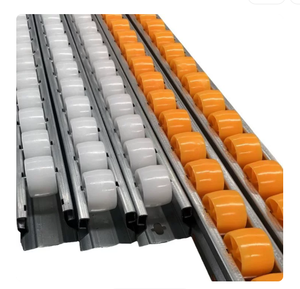
CE ISO Certified Roller Track Flow Rail Racking System
Gravity-driven pallet flow rails providing strict first-in, first-out stock rotation for fast-moving consumables and pharma.
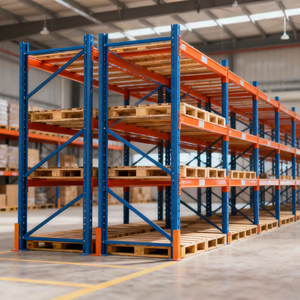
Corrosion-Resistant Powder Coated Heavy Pallet Rack
Pickled and phosphated high-tensile upright frames with heavy box beams engineered for raw materials and chemical storage.
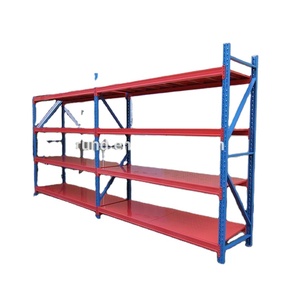
Metal Post Pallet Stacking Storage Racks & Cradles
Flexible vertical storage without permanent floor anchoring. Ideal for temporary overflow and bulk seasonal warehousing.
Structural Mechanics, Optimization Models, and Material Physics in High-Density Pallet Racking
In modern industrial supply chain networks, warehouse footprint costs and cubic volumetric efficiency have superseded simple horizontal floor area as primary logistics KPIs. High-density pallet racking systems represent an advanced engineering discipline combining structural mechanics, metallurgy, and dynamic material handling interface parameters. Designing a high-density system demands a rigorous assessment of the structural interaction between cold-formed thin-walled steel sections, static dead loads, dynamic seismic responses, and handling equipment operational envelopes.
1. Mechanical Structural Standards: EN 15512, FEM 10.2.02, and ANSI MH16.1
Industrial racking systems are civil engineering structures under continuous load. Guangzhou Heda Shelves Co., Ltd. fabricates components in strict accordance with the European Standard EN 15512:2020 (Steel static storage systems - Adjustable pallet racking systems - Principles for structural design) and the Federation of European Materials Handling (FEM 10.2.02). Upright frames are subjected to second-order non-linear structural analysis (P-Delta effects) to calculate global frame buckling and torsional flexural deformation under partial and full load patterns.
Steel grades utilized include certified high-tensile Q235B and Q355B structural steel. Through computerized continuous roll-forming mills, upright profiles are shaped with multiple stiffening ribs along the profile web and flanges. This geometric work-hardening optimizes the radius of gyration, enabling upright columns to sustain high vertical load concentrations while minimizing total dead weight.
2. System Topology Comparative Analysis: Density, Throughput, and Mechanical Wear
Selecting the optimal racking typology is a calculated engineering compromise among SKU diversity, pallet turnover velocity, capital expenditure (CAPEX), and mechanical impact risks. The table below delineates the functional differences across dominant industrial racking typologies.
| Racking Topology | Cubic Density | Selectivity Profile | Stock Rotation | Structural Impact Vulnerability | Recommended Facility Application |
|---|---|---|---|---|---|
| Radio Shuttle System | Maximum (85%) | 1 SKU per Lane | FIFO / LIFO Automated | Very Low (Forklift stays in outer aisle) | Cold storage (-25°C), FMCG, high-volume raw inputs |
| Drive-In / Drive-Through | High (70%-75%) | 1 SKU per Bay Lane | Strict LIFO (Drive-In) / FIFO | High (Forklift drives inside steel channels) | Bulk beverage, seasonal batching, homogeneous stock |
| Pallet Flow (Gravity Roller) | High (75%-80%) | 1 SKU per Lane | Strict FIFO Automatic | Low (Separated loading & picking faces) | Perishables, pharmaceuticals, high-throughput DCs |
| Push-Back (Cart/Roller) | Medium-High (65%) | 1 SKU per Shelf Lane | LIFO (2 to 6 deep) | Moderate (Gravity cart push force required) | Medium SKU turnover, cold rooms, stage-buffering |
| Double Deep Selective | Medium (55%-60%) | 50% Direct Access | LIFO / Two-Pallet Depth | Low (Standard upright column protections) | General wholesale, general manufacturing components |
3. Dynamic Load Resistance and Aisle Interface Engineering
A critical vulnerability in dense storage is upright frame degradation due to materials handling equipment (MHE) collisions. In drive-in systems, where reach trucks navigate inside the rack matrix, structural fatigue at baseplates and lower bracing is elevated. HEDA integrates reinforced wrap-around column protectors, heavy-duty Omega-profile floor guide rails (anchored with M12–M16 high-tensile chemical anchors), and chamfered entry guides to eliminate lateral shock transmission to upright frames.
In contrast, Semi-Automated Pallet Radio Shuttle Racking isolates the forklift from the storage cube. The vehicle interfaces only at the loading face, transferring the pallet to an autonomous shuttle carrier that travels along galvanised guide rails via optical sensor guidance. This decoupled architecture reduces structural frame damage to virtually zero, enhances operator safety, and reduces cycle time per pallet transfer by up to 40% compared to traditional drive-in configurations.
Future Procurement Trends Shaping Heavy Industrial Racking
Strategic supply chain investments require looking ahead. Here are six overarching trends redefining warehouse racking acquisition, engineering requirements, and lifecycle ROI through 2030.
1. Shuttle-to-AMR Automation Convergence
Procurement is pivoting from standalone manual racking toward hybrid structures designed to interface directly with Autonomous Mobile Robots (AMRs) and Automated Storage and Retrieval Systems (AS/RS). Future-proof systems require tighter beam tolerances (±1.0mm) and integrated optical docking sensors.
2. Cold-Chain Energy Density Optimization
Rising electrical tariffs are driving refrigerated facilities to replace standard racking with ultra-dense multi-deep shuttle systems. Eliminating access aisles cuts cold-room air volume by 45%, achieving measurable operational energy savings and shortening CAPEX payback to under 24 months.
3. Decarbonized Steel & Scope-3 Compliance
Multinational procurement mandates require verified low-carbon steel sourcing and environmentally neutral surface finishes. Electrostatic powder coatings free of toxic VOCs and heavy metals, coupled with closed-loop pickling lines, are becoming baseline RFQ evaluation criteria.
4. BIM-Ready Engineering & Digital Twins
Modern buyers demand complete building information modeling (BIM) structural files (Revit/IFC) during the tendering phase. Engineering teams simulate static and seismic loads inside 3D virtual building representations before a single ton of steel is roll-formed.
5. Modularity & Rapid Reconfigurability
E-commerce SKU shifts require modular bay geometries. Boltless, 50mm pitch adjustable beam levels and adaptable deck accessories allow distribution centers to alter beam elevations without requiring structural recertification or torch-cutting onsite.
6. EN 15635 Lifecycle Safety Auditing
Global corporate safety governance mandates rigorous compliance with EN 15635 maintenance protocols. Buyers favor manufacturers that supply verifiable load notices, engineered tolerance plates, and readily available replacement parts for periodic safety audits.
Why Global Logistics Leaders Partner with HEDA Shelves
Founded in 2001, Guangzhou Heda Shelves Co., Ltd. has developed into a global intralogistics manufacturing authority, delivering custom engineering, rapid production cycles, and complete supply chain transparency.
Certified European Standards
Holding official CE Certificate No. 2435-CPR-8605159, ISO 9001:2015 No. 18624Q00169R0M, and RoHS testing verification. Fully compliant with EN 15512 and FEM structural principles.
Free 3D Layout & CAD Modeling
Our senior intralogistics engineers calculate optimal bay spans, aisle clearances, and seismic load distributions, delivering complete 2D DWG schematics and 3D design renderings in 24–48 hours.
High-Precision In-House Mills
Equipped with computerized automated roll-forming lines, robotic CNC beam welding cells, precision multi-point column punch presses, and continuous electrostatic powder coating tunnels.
Turnkey Global Export & Support
Exporting to over 120 countries with seaworthy bundle packaging. Comprehensive installation drawings, component indexing, remote video guidance, and on-site engineering supervision available worldwide.
10-Stage Precision Manufacturing Protocol
Frequently Asked Procurement Questions
In-depth answers addressing structural engineering, regional compliance, load calculations, and global delivery schedules.
How does a Radio Shuttle system structurally compare to Drive-In racking regarding floor slab load and cycle efficiency?
What engineering documentation and certifications are provided to satisfy municipal building inspectors?
How are racking systems engineered for cold storage (-25°C to -30°C) conditions?
Can HEDA configure racking bays for both EUR/EPAL (1200x800mm) and ISO standard (1200x1000mm) pallets?
What warehouse floor flatness tolerance (e.g., DIN 18202 / TR34) is required for high-bay installations?
What is the typical production lead time and global shipping timeframe?
Request an Engineered CAD Layout & Factory Quote
Provide your facility floor plan (DWG or PDF) along with clear ceiling heights, pallet dimensions, and handling equipment specifications. Our senior structural engineers will return a complete 2D layout, capacity matrix, and firm factory quotation within 24–48 hours.
- Complimentary 2D/3D CAD Layouts
- EN 15512 Static Structural Calculations
- Direct Factory Pricing (No Middlemen)
- Custom RAL Colors & OEM Private Label