High-Efficiency Industrial Storage Systems
Explore our precision-manufactured storage solutions engineered for industrial warehouses, logistics hubs, and specialized commercial operations worldwide.
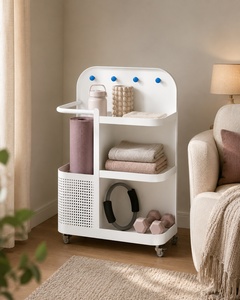
Coovens Rolling Home Gym Storage Rack Fitness Equipment Organizer for Yoga Mats Dumbbells Foam Rollers and Rackets Dumbbell Rack
- Framework: Heavy-Gauge Tubular Steel
- Mobility: 360° Industrial Casters
- Application: Fitness Centers & Studios
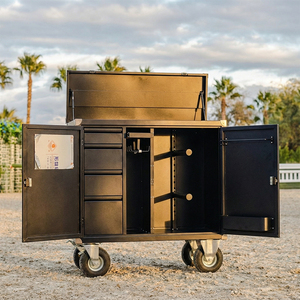
Custom Disassembled Top Box Luxury Steel Horse Cabinet Saddle Box Rack Locker Cabinet
- Material: Electro-Galvanized Cold Steel
- Security: Multi-Point Reinforced Lock
- Finish: Anti-Corrosion Powder Coat
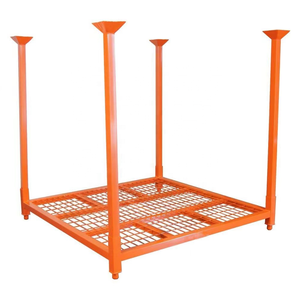
Manufactures Cold Room Vertical Stackable Pipe Rack System Transport Storage Metal Pallet Racking Stacking Racks
- Temp Rating: Sub-Zero down to -30°C
- Capacity: 1,500 kg per Stacking Tier
- Structure: Modular Interlocking Post
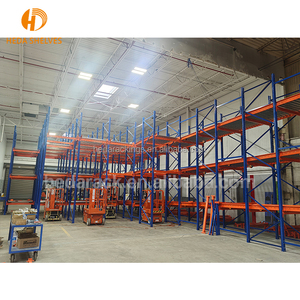
FIFO High Efficient Warehouse Storage Gravity Pallet Flow Racks Roller Rack/Pallet Flow Racking
- Rotation: Strict First-In-First-Out
- Track System: Graduated Speed-Brake Rollers
- Lane Depth: Up to 20 Pallets Deep
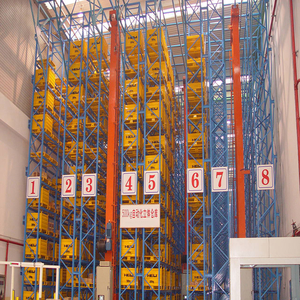
ASRS Warehouse Storage System Automatic Automated Retrieval System Steel Storage Racks Pallet Racking
- Integration: Full WMS/WCS Automation
- Tolerance: EN 15620 High-Bay Standard
- Density: Maximizes 30m+ Vertical Space
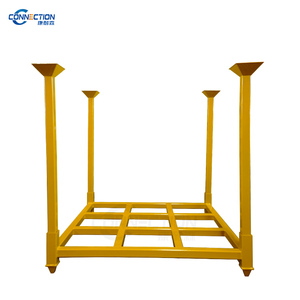
Customized Movable Powder Coated Stacking Post Pallet Stacking Pallet Rack & Shelve
- Flexibility: Nestable When Empty (80% Save)
- Load Limit: 1,000–2,000 kg Tier Rating
- Surface: Zinc-Phosphate Pre-treated
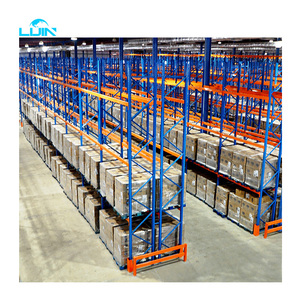
Multipurpose Metal Rack Double Deep Racking Carpet Storage Racks Warehouse Pallet Racking Systems
- Layout: 2-Deep Pallet Placement
- Space Gain: +50% Over Standard Selective
- Reach: Pantograph/Deep-Reach Trucks
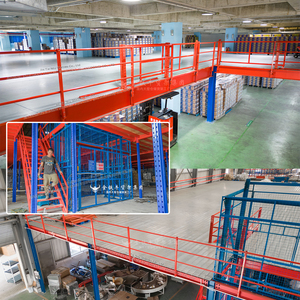
Custom I Beam Steel Structural Platform Mezzanine Floor Racking Loft for Warehouse Storage and Picking Area
- Deck Load: 300–1,200 kg/m² Uniform Load
- Beam Section: Heavy Hot-Rolled I-Beam Structure
- Configuration: Integrated Stairs, Railings, Gates
Engineering Principles of Long Span & Heavy-Duty Pallet Racking
A rigorous examination of cold-formed steel mechanics, limit-state deflection analysis, and structural integrity protocols under global intralogistics standards.
In modern high-throughput distribution environments, selecting a qualified long span pallet racking manufacturer requires an understanding of structural mechanics, metallurgy, and material handling ergonomics. Industrial racking systems are engineered load-bearing steel structures subject to static dead loads, dynamic seismic actions, continuous cyclic loading from forklift operations, and deflection limits governed by international codes such as EN 15512 (European Limit State Racking Code), RMI ANSI MH16.1, and AS 4084.
"Structural deflection failure in industrial racking does not originate from steel tensile failure under static conditions; it stems from uncalculated torsional buckling, second-order (P-Delta) lateral sway, and defective moment-resisting beam-to-column connections under cyclic operations."
1. Yield Strength Metallurgy & Cold-Formed Steel Cross Sections
The foundation of long span shelving and pallet racking engineering lies in the quality of the cold-rolled structural sheet. Certified manufacturers utilize premium structural steels like Q235B and Q355B, which offer verified mechanical properties including yield points from 235 MPa to 355 MPa and elongation percentages exceeding 21%. These specifications ensure predictable ductile deformation before any ultimate structural shear occurs.
Upright columns undergo automated continuous multi-station cold roll forming. Unlike simple press-braked profiles, a multi-roll process imparts engineered work-hardening into the profile corners. This produces an upright cross-section with a high radius of gyration, increasing resistance to torsional-flexural buckling under axial compression.
2. Deflection Limits and Beam-to-Column Connection Mechanics
In heavy-duty long span beams (utilizing box-beam or twin-C interlocked configurations), deflection is calculated under the strict formula δ ≤ L / 200 or L / 300 of the clear beam span. For a 2,700 mm beam bay storing two EUR pallets (1,000 kg each), vertical elastic deflection must not exceed 9 mm to 13.5 mm under working conditions. Connectors employ multiple locking claws punched from high-strength plate that engage the upright column. Heavy-duty safety spring pins prevent accidental dislodgement from lift-truck forks with a minimum vertical extraction resistance of 5.0 kN.
| Racking Architecture | Standard Yield (Steel) | Deflection Ratio (Beam) | Seismic Resistance | Typical Storage Density | Optimal Application |
|---|---|---|---|---|---|
| Selective Pallet Racking | Q235B / Q355B | L / 200 | Zone 1–4 Engineered | Standard (100% Selectivity) | FMCG, 3PL Distribution Hubs, Retail Warehouses |
| Double Deep Systems | Q355B Cold Rolled | L / 250 | Rigid Base Anchor Plates | +50% vs Selective | Dry Wholesale, Buffer Staging, Multi-Lot Storage |
| Gravity Pallet Flow (FIFO) | High-Yield Structural | L / 300 (Continuous Bed) | Braced Frame Geometry | Very High Density | Perishables, Cold Rooms, Pharmaceutical FIFO |
| ASRS High-Bay Racking | High-Precision Alloy | L / 400 (EN 15620 Cl. 100) | Full 3D Finite Element | Maximum Vertical Cubic | Lights-Out Automated Plants, Micro-Fulfillment |
3. Finite Element Analysis (FEA) and Seismic Dynamic Modeling
Leading manufacturers use 3D structural analysis software (such as ANSYS and SAP2000) to simulate second-order P-Delta effects, live-load vibrations, and ground accelerations up to 0.4g. This analysis directly informs baseplate dimensioning, chemical anchor embedment depths, and frame horizontal/diagonal bracing patterns, ensuring every bay remains fully operational and stable throughout its lifecycle.
Product Innovation & Strategic Procurement Trends
How automation, ESG governance, structural sensorization, and optimized supply chains are transforming pallet racking investments through 2030.
1. Convergence with Autonomous Mobile Robots (AMR) & Shuttles
Traditional static racking is evolving into hybrid automated frameworks. Modern racking channels now feature micro-toleranced guide tracks designed for 4-way radio shuttles and automated guided vehicles (AGVs). Upright posts include integrated optical fiducial markers and LiDAR-reflective target surfaces, allowing autonomous forklifts to operate at millimeter tolerances with reduced aisle dimensions down to 1,600 mm.
2. Digital Twins & Structural Health Monitoring (SHM)
The next generation of long span and pallet racking integrates strain gauges, tri-axial impact accelerometers, and acoustic emission sensors directly into the baseplates and lower upright sections. If an operator-driven reach truck strikes a lower strut above 3 kN, the telemetry node alerts the warehouse management software immediately, identifying compromised bays before catastrophic collapse can occur.
3. ESG, Circular Steel & Low-Carbon Metallurgy
Procurement directors in Europe, North America, and Australasia now weigh carbon declarations alongside load charts. Manufacturing facilities are transitioning to electric arc furnace (EAF) primary coils with recycled steel content exceeding 65%. Powder coating lines have moved away from heavy-metal phosphate baths to nano-ceramic ziconium-based pretreatments, cutting water usage by 40% and eliminating toxic VOC discharges.
4. Total Cost of Ownership (TCO) vs Pure CapEx Procurement
Forward-thinking logistics operators assess modular scalability, reconfigurable beam slot patterns (such as standard 50 mm or 75 mm pitches), and salvage resilience rather than just base price. Racks with higher ductile capacity, robust column guards, and electrostatically cured 80-micron epoxy finishes lower annual repair and maintenance budgets by up to 34% over a ten-year operational span.
5. Direct Tier-1 Manufacturer Direct-Sourcing
To reduce multi-layered distributor margins and lead-time volatility, enterprise EPC contractors and 3PL corporations now partner directly with certified tier-1 manufacturers. Direct engagement provides immediate CAD/DWG turnaround, direct FEA review access, tailored container packing layouts that maximize sea-freight space utilization, and consistent OEM paint matching.
6. Cryogenic Metallurgy for Cold Chain Expansion
With temperature-controlled logistics growing rapidly, racking steel formulas must prevent ductile-to-brittle transitions at -25°C to -35°C. Advanced micro-alloyed structural steels with controlled silicon and manganese ratios maintain high Charpy V-notch impact toughness under sub-zero freezer room conditions, helping prevent sudden stress fractures.
25 Years of Heavy-Duty Engineering & Global Delivery
Founded in 2001, Guangzhou Heda Shelves Co., Ltd. is a premier global manufacturer specializing in heavy-duty pallet racking systems, long span shelving, dynamic flow lanes, structural steel mezzanine platforms, and automated ASRS architectures.
Operating from a 30,000 square meter modern manufacturing plant with over 300 experienced engineers, technicians, and certified fabricators, our factory delivers a monthly capacity exceeding 30,000 metric tonnes of structural racking products. Our engineering team prepares complete 3D models, finite element analysis reports, and detailed structural layout proposals for projects worldwide.
With more than 10,000 warehouse installations completed across 120+ countries, HEDA Shelves provides comprehensive OEM and private-label manufacturing for overseas distributors, industrial contractors, and logistics operators. Systems can be tailored across custom RAL powder-coating colors, bespoke beam-profile profiles, and seismic base assemblies.
Certified Quality Management
- CE Certification: Certificate No. 2435-CPR-8605159 (Compliant with EN 1090 / EN 15512)
- ISO 9001:2015: Certificate No. 18624Q00169R0M (Design & Quality Management)
- Environmental & Safety: Full RoHS Compliant Coatings & Anti-Corrosion Finishes
- Custom Engineering: Free 3D Modeling, CAD DWG Layouts & Load Safety Signage
- Global Logistics: Seaworthy Export Bundling & Shipping to Major Seaports
Frequently Asked Questions on Pallet Racking Engineering
Essential guidance on load capacities, regulatory compliance, flooring requirements, and international order processes.
What is the difference between Long Span Shelving and Heavy-Duty Pallet Racking?
Which building codes and engineering standards govern your racking design?
What concrete slab specifications are required to safely install heavy pallet racking?
How is beam deflection calculated and what safety factors are applied?
Can HEDA Shelves systems be tailored to Euro pallets (EUR/EPAL 1200 x 800 mm)?
What anti-corrosion surface treatments are applied for harsh and cold room environments?
What are typical production lead times and shipping container load arrangements?
What engineering documents are provided to support local building and safety permits?
Ready to Engineer Your High-Capacity Warehouse Solution?
Connect directly with HEDA Shelves' senior structural engineering team. Submit your building dimensions, pallet specs, and forklift parameters to receive a complimentary 3D layout, load calculation model, and factory-direct quotation within 24 hours.