Featured Warehouse Racking & Heavy-Duty Storage Systems
As an internationally certified manufacturer and exporter, Guangzhou Heda Shelves Co., Ltd. delivers engineered racking frameworks tailored to European Euro pallets (EUR/EPAL), North American GMA formats, and bespoke global warehouse specs. Explore our core export line-up below.
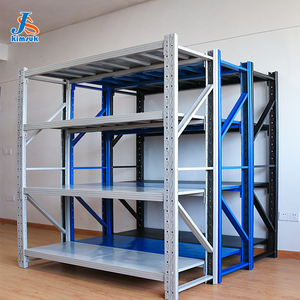
Racking Adjustable Metal Boltless Shelf & Racks Storage
Engineered with cold-formed interlocking connectors for rapid modular assembly without bolts. Ideal for high-density carton pick faces and distribution centers.
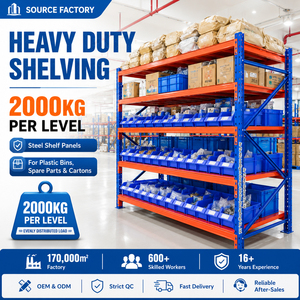
2000KG Adjustable 5-Level Heavy Duty Shelving System
Reinforced steel panel decking structured for severe industrial bin storage, machinery spares, and manual carton order picking with extreme stability.
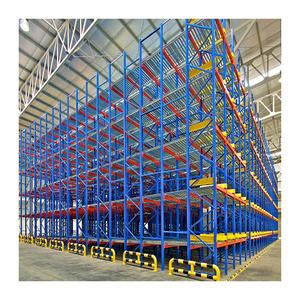
Customizable 1000kg Gravity Racking System Pallets CE
Continuous inclined roller tracks engineered for high-density FIFO pallet rotation, equipped with centrifugal speed controllers and load separation separators.
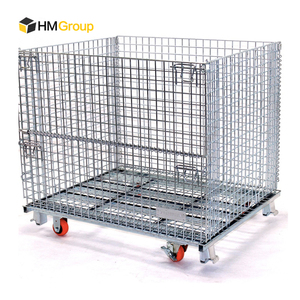
Heavy Duty Stackable Wire Mesh Pallet Cage with Wheels
Collapsible, high-strength Q235B mild steel wire container providing high-visibility bulk containment, versatile inter-stacking, and ergonomic mobile casters.
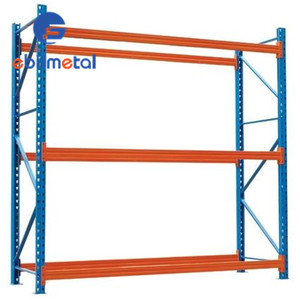
Heavy Duty Shelving Pallet Rack for Industrial Warehouses
Universal selective beam structure with multi-prong high-tensile connection claws, offering 100% pallet accessibility for high-throughput 3PL fulfillment.
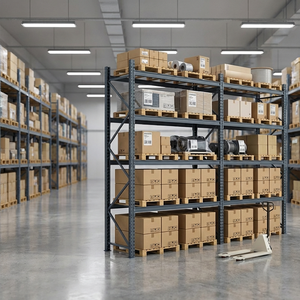
Industrial Pallet Racking Systems Multi-Level Shelves
Engineered upright frames designed to meet EN 15512 standards. Rigid seismic diagonal bracing configurations suited for high-density multi-level warehouses.
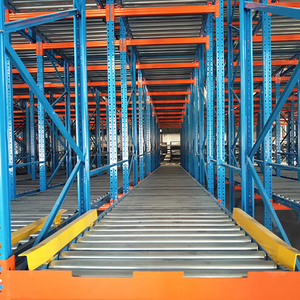
Heavy Duty Live Pallet Racking System 1000kg/Layer
Heavy-duty gravity dynamic lane configuration featuring integrated entry guides, friction brake rollers, and anti-rebound pallet stops for fast inventory cycles.
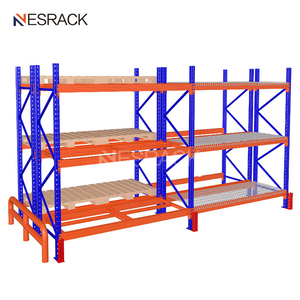
Durable 4-Layer Steel Heavy Duty Pallet Rack 500-3000kg
Robust box-beam structural profile delivering exceptional torsional resistance. Designed for heavy raw material staging, beverage kegs, and chemical totes.
Engineering Foundations of Heavy-Duty Push Back Racking Systems
Push back pallet racking is a dynamic, high-density accumulation storage system engineered on a Last-In, First-Out (LIFO) inventory logic. By utilizing nested wheeled carts riding on inclined structural steel rails, it consolidates cubic space while maintaining independent lane selectivity.
Nested Cart Geometry & Low-Friction Physics
Our push back systems deploy a cascading cart assembly manufactured from laser-cut structural steel. Cart 1 nests inside Cart 2, which rests inside Cart 3, allowing 2, 3, 4, 5, or 6 pallets deep per lane. High-grade sealed steel flanged wheels roll along structural channel tracks inclined at a precise gradient (typically 2.0% to 2.8%), balancing minimal forklift push effort with controlled gravitational descent when retrieving pallets.
Structural Integrity & EN 15512 Compliance
Upright profiles and load beams are constructed from prime certified Q235B and high-yield Q355B cold-rolled coil. Frame design conforms to EN 15512:2020 limit state design standards and ANSI/RMI MH16.1 specifications. Each dynamic channel is engineered to withstand horizontal braking forces, seismic shockwaves, and forklift push-in torsion through reinforced welded upright diagonal bracings.
Fail-Safe Interlocks & Operator Safety
Operational safety is fortified by mechanical safety stops, anti-lift clips, and cart capture lips that eliminate derailment risks under uneven pallet bottoms. Full-width heavy-gauge steel front catch plates absorb mast collisions, while colored indicator flags on each cart provide instant visual telemetry to forklift drivers regarding remaining lane capacity, eliminating dangerous over-pushing.
Push Back Racking vs Alternative Dynamic Systems
Choosing the optimal high-density storage technology demands rigorous evaluation of storage density, pick selectivity, initial CapEx, and forklift cycle velocity. Review our engineering trade-off comparison below.
| System Architecture | Storage Density | SKU Selectivity | Inventory Logic | Forklift Mast Travel | CapEx per Pallet Position | Honeycombing Risk |
|---|---|---|---|---|---|---|
| Push Back Racking | High (75%+) | Medium-High (1 SKU/Lane) | LIFO (Accumulative) | Aisle-Only (Zero Rack Entry) | Moderate | Low (2–6 Deep) |
| Drive-In Racking | Very High (80%+) | Low (1 SKU/Entire Bay) | LIFO (Strict) | Deep Entry Inside Channels | Low | Severe |
| Pallet Live Gravity Flow | Very High (85%+) | Medium (Dedicated Faces) | FIFO (Strict Rotation) | Dual Aisle (Load/Pick Faces) | High | Very Low |
| Radio Shuttle Automation | Maximum (90%+) | Medium-High (Programmed) | FIFO / LIFO Hybrid | Aisle-Only (Robot In-Rack) | Very High | Negligible |
| Selective Pallet Racking | Standard (40%) | 100% Direct Access | Any (FIFO / LIFO) | Aisle-Only (Wide Aisles) | Lowest | Zero |
Why Global Buyers Trust Guangzhou Heda Shelves Co., Ltd.
Founded in 2001, Guangzhou Heda Shelves Co., Ltd. has developed from a precision engineering fabricator into a world-leading warehouse racking exporter. Our automated manufacturing plant covers 30,000 m² with over 300 technical professionals delivering certified structural installations across Europe, North America, Oceania, and Southeast Asia.
Rigorous International Certifications
Our production lines maintain full CE Factory Production Control certification (CE Certificate No. 2435-CPR-8605159) and ISO 9001:2015 Quality Management Systems (Certificate No. 18624Q00169R0M). Raw materials undergo batch spectrographic chemical analysis and tensile proof testing to guarantee absolute adherence to global building regulations.
Complimentary 3D & CAD Layouts
Every client project begins with full engineering design support. Our CAD and structural engineering team prepares warehouse floor plans, clearance calculations, column avoidance layouts, and 3D FEA stress simulations before you issue a PO. We ensure every bay satisfies local seismic codes and forklift turning radius constraints.
Seaworthy Packaging & Ocean Logistics
Exporting heavy steel components requires precision containerization. We employ automated steel strapping, corrugated impact edge buffers, shrink-wrapping, and anti-corrosive VCI vapor barriers. All bundles are cataloged with piece-part barcodes for swift on-site offloading at major ports including Rotterdam, Hamburg, Los Angeles, and Felixstowe.
Macro Trends Reshaping Push Back Racking Procurement
As warehouse land values escalate and global supply chains encounter severe operational volatility, high-density push back racking systems are evolving from static mechanical racks into smart, sustainable, and semi-automated intralogistics nodes.
1. Cold-Chain Volume Compression
Refrigerated and blast-freezer warehouse real estate is extraordinarily costly to operate. Energy expenditures scale with internal cubic airspace. Push back systems reduce wasted aisle volume by over 50% compared to standard selective racking. Future procurement demands synthetic low-temperature lubricants on cart bearings capable of unhindered rotation down to -35°C without gumming or kinematic seizure.
2. AGV & AMR Autonomous Mast Interfacing
The emergence of autonomous counterbalance forklifts (AGVs) is transforming push back staging. Next-generation carts incorporate laser retroreflectors, micro-switch lane sensors, and dampened end-stops. These upgrades communicate load insertion profiles directly to automated warehouse control systems (WCS), preventing dynamic over-pushing while accelerating driverless fleet operations.
3. High-Strength Low-Carbon Steel Profiles
Driven by global Corporate Sustainability Reporting Directives (CSRD), logistics developers are prioritizing low-carbon structural steel. By deploying micro-alloyed, high-yield Q355B and specialized cold-formed roll profiles, Heda reduces steel section weight by 14% while delivering identical moment-of-inertia deflection ratings, lowering Scope 3 embodied carbon.
Frequently Asked Questions by Structural Engineers & Buyers
Get comprehensive, transparent answers to critical mechanical, structural, and commercial questions before finalizing your push back racking procurement brief.
What is the maximum safe pallet depth engineered for push back systems?
Standard industrial push back systems are typically configured from 2-deep to 6-deep pallet accumulation per bay. Engineering best practice recommends 2 to 4 pallets deep for standard counterbalance forklifts to maintain optimum mast visibility and comfortable push-back pushing resistance. When engineered to 5-deep or 6-deep configurations, the combined resistance of fully loaded carts requires dedicated reach trucks with high hydraulic push capacity, reinforced mast channels, and precise floor slope leveling to prevent operator fatigue or irregular cart descent.
How does a push back system prevent cart derailment and pallet misalignment?
Our push back system features multi-tiered mechanical safeguards:
- Anti-Lift Catch Clips: Structural steel tabs lock each nested cart under the flange of the cart or track beneath it, making it physically impossible for a cart to tip upward or lift off during heavy mast engagement.
- Flanged Machined Steel Wheels: Heavy-duty machined steel wheels with double-row sealed bearings ride along structural channel rails, preventing lateral drift.
- Center Alignment Guides: Funneled entry lead-in guides at the pick face mechanically funnel skewed pallets into square alignment upon deposit.
Can push back systems accommodate inconsistent, weak, or damaged wooden pallets?
Unlike drive-in racking or gravity pallet flow racks (which require bottom deckboards in prime condition to ride across narrow support rails or contact rollers), push back racking offers superior pallet tolerance. Each pallet rests flat within its own structural steel cart frame. Because the cart carries the pallet's bottom boards entirely, variations in bottom skid layout, broken bottom boards, or minor pallet deflections do not compromise cart rolling dynamics.
What are the slab thickness, concrete strength, and floor tolerance requirements?
Because push back racking consolidates tremendous tonnage into compact footprints, point loads on concrete footings are significantly higher than selective racking. Structural calculations usually require a reinforced concrete slab thickness of 180mm to 250mm with a minimum compressive strength of C25/30 or C30/37 (3,500 to 4,500 PSI). Floor flatness should conform to DIN 18202 Table 3 Group 3 or ASTM E1155 F-min 50 specifications to ensure accurate cart gravity descent and eliminate lane torsion.
How does sub-zero cold chain storage impact cart steel, wheels, and lubricants?
In cold-storage warehouses (-25°C to -35°C), low temperatures can cause structural embrittlement and lubricant crystallization. Heda uses fine-grain certified structural steel with proven Charpy V-notch impact toughness for cold room applications. Wheel assemblies are packed with synthetic low-temperature fluorinated grease that retains kinematic viscosity down to -40°C, guaranteeing smooth pallet travel without brake sticking or drag.
What documents and design certifications are supplied for building permit approvals?
Every export shipment includes a complete engineering documentation package: certified factory test certificates, mill test certificates (MTC) detailing steel yield and chemistry, CE Declaration of Performance (DoP) referencing EN 1090/EN 15512, ISO 9001 compliance logs, component assembly drawings with color-coded part numbers, and structural calculation reports signed by our licensed structural engineers.
What is the typical manufacturing lead time and ocean export schedule?
Standard production turnaround for customized push back systems ranges between 15 and 25 working days depending on total project tonnage and RAL powder coating requirements. Transit times via containerized sea freight from Nansha or Shenzhen port typically average 28–35 days to European base ports (Rotterdam, Antwerp, Hamburg), 18–22 days to US West Coast (Long Beach, Oakland), and 14–18 days to Australian ports (Melbourne, Sydney).
Request an Engineered Layout & Factory-Direct Export Quotation
Send us your warehouse CAD floor plan, ceiling clear height, pallet dimensions (Length × Width × Height), gross pallet weight, and forklift model. Our engineering design division will deliver a complimentary 3D layout, lane capacity analysis, and competitive FOB/CIF quotation within 24 business hours.