Engineered Storage Equipment & High-Load Systems
Explore our industrial-grade storage racks, cantilever platforms, and modular structural mezzanine configurations fabricated strictly from Q235B and Q355B certified structural coil steel.
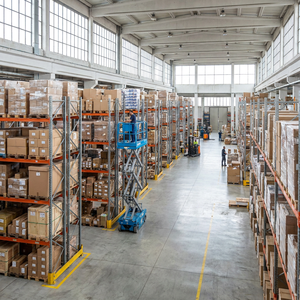
- Uniform load: 1,000 kg – 5,000 kg/tier
- Cold-formed uprights on 50mm / 75mm pitch
- Customized safety locks & column protectors
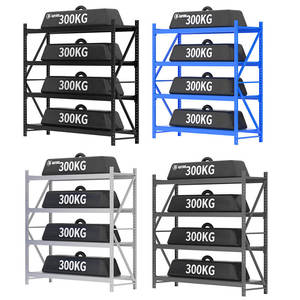
- High-grade Q235 carbon steel construction
- Electrostatic powder coating finish
- Tool-free beam pitch re-configuration
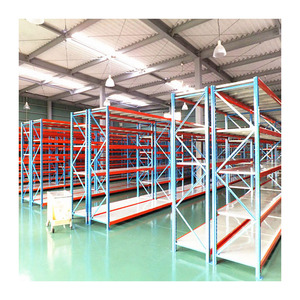
- Ideal for manual picking & carton distribution
- Compatible with Euro and ISO standard pallets
- Rigid cross-braced frame stability
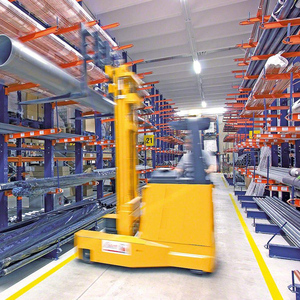
- Unobstructed front face for pipes, timber & bar stock
- Single or double-sided central upright columns
- Load capacities up to 3,000 kg per arm
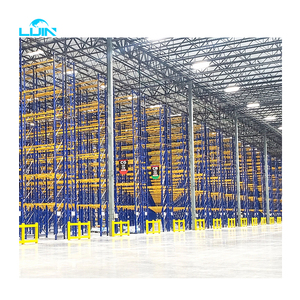
- CE Certified: No. 2435-CPR-8605159
- Customized bay width and clear height profiles
- Optimized for narrow aisle reach truck integration
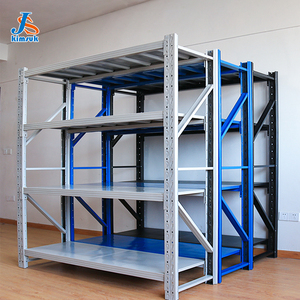
- Fast snap-fit assembly with zero hardware
- Corrosion-resistant treated steel deck plates
- Ideal for e-commerce fulfilment & automotive parts
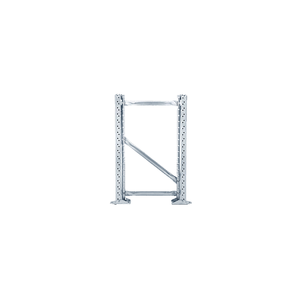
- Sendzimir hot-dip galvanized finish option
- Superior resilience in sub-zero cold chain facilities
- Extreme resistance against chemical humidity and oxidation
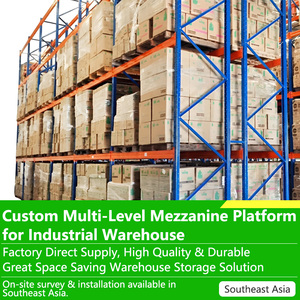
- Heavy interlocking 3/4-claw connector design
- Precision card slot locking against forklift uplift
- Scratch-resistant high-bake epoxy thermoset finish
Executive Industry Whitepaper: Engineering High-Performance Intralogistics & Structural Mezzanines
Modern global logistics infrastructure is undergoing an unprecedented structural transition. Rising industrial real estate costs, the geometric growth of omnichannel SKU proliferation, and stringent seismic and carbon-neutral building mandates demand that industrial warehouses optimize every cubic meter of volumetric vertical envelope. The selection of a premier warehouse racking manufacturer and mezzanine engineering supplier is no longer merely an equipment procurement task—it is a critical capital engineering decision directly impacting facility throughput, operator safety, and multi-decade supply chain agility.
When engineering multi-tier structural mezzanine platforms and heavy-duty selective pallet racking, structural engineers evaluate precise dynamic forces: vertical static pallet loads, horizontal forklift impact impulse loads, beam deflection criteria under working loads (typically restricted to L/200 or L/300 depending on regulatory jurisdiction), and localized slab shear stress. A failure to assess these structural factors can precipitate catastrophic rack frame buckling, aisle operational interruptions, and severe compliance liabilities during municipal structural inspections.
Comparative Structural Matrix: Racking & Multi-Tier Platform Systems
To assist procurement directors, civil structural consultants, and warehouse supply chain managers in specifying optimal storage equipment, our engineering design bureau has synthesized the key operational criteria across core industrial racking systems:
| Storage Architecture | Volumetric Space Utilization | Pallet Selectivity | Standard Load Capacity | Forklift Compatibility | Ideal Application Scenario |
|---|---|---|---|---|---|
| Selective Pallet Racking | 40% – 50% | 100% Direct Access | 1,000 – 4,500 kg / level | Counterbalance, Reach, VNA | General 3PL, FMCG, Multi-SKU retail distribution |
| Structural Steel Mezzanine | 100% – 200% Floor Gain | Manual / Modular Access | 300 – 1,200 kg / m² | Pallet Jacks, Scissor Lifts, AMRs | E-commerce sortation, assembly zones, office integration |
| Rack-Supported Mezzanine | 85% – 95% Volumetric | Tiered Direct Access | 500 – 800 kg / level | Conveyors, Vertical Reciprocating Lifts | Automotive spare parts, apparel fulfilment, archiving |
| Drive-In / Drive-Through | 65% – 75% | LIFO / Restricted FIFO | 1,000 – 2,000 kg / pallet | Specialized Narrow Counterbalance | Cold storage, beverage bulk, uniform SKU manufacturing |
| Heavy Duty Cantilever | 60% – 70% Open Front | 100% Unobstructed Face | 500 – 3,000 kg / arm | Side Loaders, 4-Way Multi-Directional | Timber yards, aluminum extrusions, pipe storage |
| Radio Shuttle Automation | 80% – 90% | Semi-Automated FIFO/LIFO | 1,500 kg / pallet standard | Automated Cart + Standard Forklift | Deep-freeze logistics, dairy storage, fast-turnover food |
Technological Trends Reshaping Industrial Racking & Mezzanines (2025–2030)
The warehouse racking industry is moving swiftly beyond passive steel assemblies into technologically integrated, sensor-monitored, and automation-ready structural systems. Forward-thinking procurement managers must incorporate the following technological trends into their current 5- to 10-year facility development roadmaps:
Autonomous Mobile Robot (AMR) Mezzanine Flooring
Traditional wood composite or basic checker-plate decking is yielding to laser-leveled, high-abrasion resin and interlocking steel paneling designed explicitly for autonomous sorting robots. Low-deflection flooring profiles ensure optical navigation and LiDAR precision without wheel slippage or uneven sensor calibration.
Seismic Dynamic Simulation & Limit State Testing
With warehouse distribution centers clustering near urban zones with complex geological faults, tier-1 suppliers utilize finite element dynamic analysis (FEA) under Eurocode 8 and AS 4084 guidelines. Baseplates, anchor bolting, and upright ductile properties are calculated to absorb harmonic vibrational acceleration without joint fracture.
Circular Metallurgy & Low-Carbon Eco-Coating
Global sustainability criteria such as the European CBAM (Carbon Border Adjustment Mechanism) mandate transparent embodied carbon documentation. Contemporary fabrication processes leverage electric arc furnace (EAF) recycled steel, chromium-free pre-treatments, and lead-free electrostatic powder recovery systems achieving near-zero VOC emissions.
Future Procurement Strategies: Mitigating Supply Chain & Structural Risks
Procuring industrial racking and mezzanine platforms at scale requires moving beyond basic per-kilogram price comparisons. Sophisticated buyers evaluate Total Cost of Ownership (TCO), lifetime operational safety, and supplier engineering accountability. Essential procurement strategic vectors include:
1. Structural Steel Batch Traceability: Ensure that your supplier provides certified mill test certificates (MTC) proving mechanical tensile strength, yield points (minimum 235 MPa for Q235B, 355 MPa for Q355B), and elongation percentages. Sub-standard recycled steels with unregulated trace elements risk brittle fractures under dynamic forklift shock.
2. Surface Treatment Integrity for Harsh Microclimates: In cold storage warehouses operating at -25°C, moisture condensation accelerates galvanic and chemical corrosion. Specifying pre-galvanized or hot-dip galvanized uprights, supplemented by pickling, phosphating, and electrostatic epoxy coating, guarantees an operational lifecycle exceeding 25 years without degradation of load-bearing cross-sections.
3. Comprehensive Engineering Documentation: Avoid suppliers that only offer generic commercial brochures. A reputable engineering supplier furnishes detailed 2D CAD layouts, structural calculations verified by certified structural engineers, clear deflection schedules, dynamic seismic loading tables, and official safety load warning plaques conforming to international safety standards.
Guangzhou Heda Shelves: 25 Years of Factory-Direct Engineering Excellence
Founded in 2001, Guangzhou Heda Shelves Co., Ltd. has established itself as an authoritative global manufacturer of high-density warehouse storage systems, structural mezzanines, and industrial shelving. Spanning a state-of-the-art 30,000 square meter modern manufacturing plant with an automated continuous production capacity reaching 30,000 metric tons per month, we provide direct OEM, ODM, and customized engineering services to clients across more than 120 countries.
Our comprehensive manufacturing workflow integrates automated high-precision roll-forming lines, robotic continuous beam welding, computerized multi-stage punch presses, and eco-friendly electrostatic powder-coating tunnels. Backed by verified CE Certification (No. 2435-CPR-8605159) and ISO 9001:2015 Quality Management certification (No. 18624Q00169R0M), our team of 300+ technical specialists provides turnkey project execution—from complementary 3D concept visualization and structural calculation reviews to seaworthy packing, container load optimization, and comprehensive installation blueprints.
Frequently Asked Procurement & Technical Questions (FAQ)
How do you engineer racking beam lengths and clearance for standard Euro and ISO pallets?
For standard Euro pallets (1200 mm depth × 800 mm width) and industrial ISO pallets (1200 mm × 1000 mm), bay lengths are engineered to ensure required safety clearances under EN 15620 guidelines. A standard 2-pallet bay typically utilizes 1800 mm or 2300 mm clear beams, while a 3-pallet Euro bay utilizes 2700 mm beams. Frame depths are configured at 1100 mm for 1200 mm deep pallets to allow a safe 50 mm pallet overhang at both the front and rear faces, ensuring positive support directly on the structural box beams.
What structural deflection standard is applied to your racking and mezzanine floor beams?
Our structural design calculations strictly adhere to international codes including EN 15512 and FEM 10.2.02. For selective pallet rack load beams, allowable deflection under maximum uniformly distributed load (UDL) is restricted to a maximum of L/200 (where L is the clear span of the beam). For multi-tier structural mezzanine primary girders and secondary joists supporting manual sorting or office spaces, deflection is maintained under L/300 to eliminate noticeable deck bounce and maintain acoustic and ergonomic comfort.
Can you supply certified structural calculations and verification for local municipal inspections?
Yes. For every bespoke industrial project, our engineering department provides comprehensive CAD drawings, mechanical load tables, and FEA stress distribution calculations referencing EN 15512, EN 15620, and Eurocode 3 standards. Our international credentials include CE Factory Production Control certificate No. 2435-CPR-8605159 and ISO 9001:2015 certificate No. 18624Q00169R0M, allowing rapid third-party engineering approval across European, North American, and Australasian jurisdictions.
What are the key differences between a Structural Steel Mezzanine and a Rack-Supported Mezzanine?
A Structural Steel Mezzanine uses wide-flange heavy structural steel columns (H-beams or square hollow sections) to achieve wide spans (typically 4m to 8m between columns), providing unobstructed open space beneath for manufacturing, dispatch staging, or wide-aisle forklift traffic. A Rack-Supported Mezzanine utilizes standard heavy-duty pallet racking or longspan shelving uprights as the primary vertical load-bearing columns. This represents a highly cost-effective solution for high-density small-parts pick modules and e-commerce distribution centers, as it creates dense storage both under and above the floor level.
What is your production lead time and seaworthy export packing protocol?
Standard fabrication lead time is between 15 to 25 business days depending on tonnage and project complexity. All structural uprights, beams, and mezzanine panels are packaged using reinforced corrugated card corner protectors, heavy-duty stretch film wrap, steel strapping, and specialized wooden dunnage blocks to eliminate transit abrasion and moisture ingress. Components are methodically tagged with sequential part numbering corresponding exactly to our supplied 3D installation blueprints, streamlining field assembly and inventory verification upon arrival at destination ports.
How do you ensure racking stability in seismic-active warehouse territories?
In seismic-active zones, our structural engineers evaluate ground peak acceleration coefficients according to local building regulations (e.g., Eurocode 8, IBC). We incorporate heavy-duty seismic footplates with dual anchor studs, reinforced spine and portal bracing frames, heavier upright steel wall gauges (up to 2.5 mm or 3.0 mm), and 4-hook or 5-hook high-ductility welded beam end connectors to maintain structural joint coherence during dynamic lateral displacement.
Request Your Custom Warehouse Layout & Engineering Quote
Connect directly with our senior intralogistics project engineers. Provide your facility floor plan (DWG or PDF), clear eave height, pallet dimensional specifications, and forklift specifications for a comprehensive 3D CAD design proposal and structural load calculation within 24 hours.