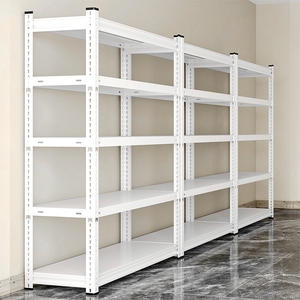
Factory Direct Products
Heavy-Duty Warehouse Storage Solutions & Engineered Systems
Manufactured from high-tensile structural steel with precision continuous cold roll-forming. Browse our premier heavy-duty pallet racking configurations and industrial storage modules built to international FEM, RMI, and EN standards.
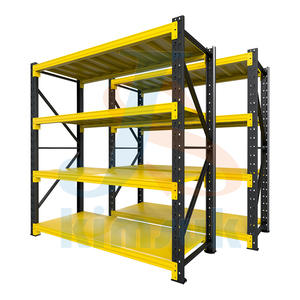
Engineering Whitepaper
Structural Anatomy of Industrial Selective Pallet Racking
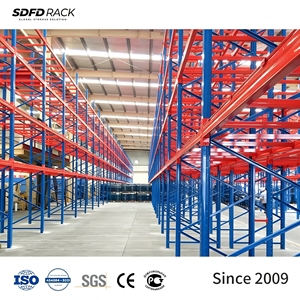
Selective pallet racking represents over 70% of global warehouse installations because of one core operational metric: 100% direct selectivity. Unlike drive-in, push-back, or gravity flow configurations which operate on batch logic, selective racking grants material handling equipment unrestricted access to every single unit load without moving adjacent pallets.
Engineered according to rigorous structural codes—including EN 15512:2020 (European standard for adjustable pallet racking systems), RMI MH16.1 (Specification for the Design, Testing and Utilization of Industrial Steel Storage Racks), and FEM 10.2.02—our selective racking uses high-yield structural cold-rolled coil steel (Q235B and Q355B equivalent to S235JR and S355JR). The structural integrity hinges on key components designed to absorb static and dynamic stresses:
-
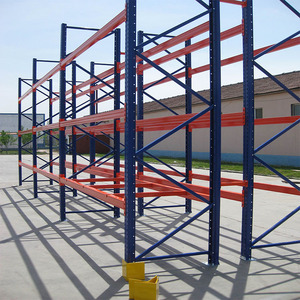
Continuous Omega Column Uprights: High-moment multi-rib cold roll-formed uprights (80mm to 120mm web widths) punched on 50mm or 75mm pitches with high cross-sectional modulus.
-
Dual-C Interlocking Box Beams: Heavy-gauge twin C-channel seam-welded box beams featuring robotic MIG-welded 3-claw or 4-claw connector ends that prevent twisting under point loads.
-
Positive Engagement Safety Pins: High-visibility zinc-plated spring locking pins that resist vertical dislodgement forces exceeding 5 kN during aggressive mast lifting.
Technical Load & Dimensional Specifications
Structural Steel Grade
Q235B / Q355B (Yield Strength ≥ 235–355 MPa)
Upright Frame Heights
1,500 mm to 14,000 mm (Single Piece or Spliced)
Upright Frame Depths
600 mm, 800 mm, 1,000 mm, 1,100 mm, 1,200 mm
Beam Clear Span Lengths
1,350 mm to 3,900 mm (Optimized for EUR/US Pallets)
Rated Beam Pair Capacity
1,000 kg to 4,500 kg UDL (Deflection limit: L/200)
Maximum Frame Capacity
Up to 24,000 kg depending on first-beam elevation
Standard Surface Finish
Electrostatic Dry Powder Coat (60–80 μm) / HDG
Compliance Certificates
CE (2435-CPR-8605159), ISO 9001:2015, RoHS
Technical Trade-Off Analysis
Selective Pallet Racking vs. Alternative High-Density Systems
Selecting the correct warehouse rack topology requires balancing floor footprint utilization against SKU selectivity, pallet throughput rate, and initial capital expenditure.
| Racking Topology | Direct Selectivity | Floor Space Utilization | Inventory Rotation | Forklift Compatibility | Capital Investment |
|---|---|---|---|---|---|
| Selective Pallet Racking | 100% (Instant) | 35% – 45% (Aisle Dependent) | FIFO or LIFO | Counterbalanced, Reach, VNA | Lowest / Baseline |
| Double-Deep Racking | 50% (Two-Deep) | 50% – 60% | LIFO | Pantograph Reach Trucks | Moderate |
| Drive-In / Drive-Through | 15% – 20% (Lane-Based) | 65% – 75% | LIFO (Drive-In) / FIFO | Standard Counterbalance | Moderate |
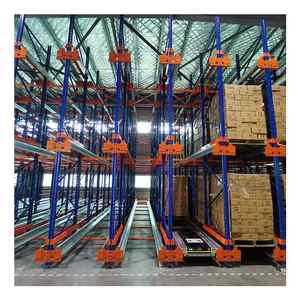
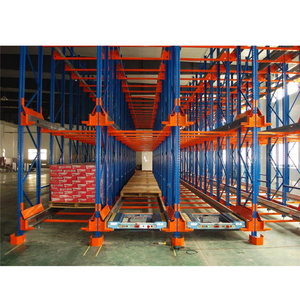
| Radio Shuttle System | 20% – 30% (Lane-Based) | 75% – 85% | Automated FIFO / LIFO | Standard Reach / Forklifts | High (Robotic Shuttles) |
| Gravity Pallet Flow | Per-Lane Picking Face | 70% – 80% | Strict FIFO | Standard Forklifts | High (Roller Beds) |
| Push-Back Racking | Lane Face (2–6 Deep) | 60% – 70% | LIFO | Standard Counterbalance | Moderate–High |
Strategic Sourcing Insights
Future Procurement Trends in Pallet Racking (2025–2030)
Procurement directors and warehouse operations executives must anticipate rapid engineering, regulatory, and supply chain shifts when specifying multi-year racking investments.
1. High-Yield Down-Gauging & Micro-Alloy Metallurgy
Global steel volatility is accelerating the shift from standard Q235B hot-rolled sheet to micro-alloyed, cold-rolled high-strength Q355B and Q460. By refining grain structures through continuous annealing, manufacturers reduce frame mass by 12–18% while simultaneously increasing ultimate moment capacity and lowering maritime freight shipping weights.
2. AGV/AMR Fleet Hybridization Readiness
Autonomous Mobile Robots (AMRs) and automated reach trucks require tighter deflection thresholds and optical clear zones. Modern procurement requires Selective Pallet Racking with laser-aligned lower beam levels, zero ground-level baseplate interference, and integrated QR / RFID fiducial marker targets calibrated to automated vision guidance.
3. Decarbonization & Circular LCA Metallurgy
Scope 3 carbon reporting is becoming mandatory across the EU, US, and APAC. Enterprise buyers favor factories utilizing electric arc furnace (EAF) steel with lower embodied carbon, alongside TGIC-free thermoset polyester powder coatings that eliminate toxic VOCs and reduce curing oven natural gas burn rates during fabrication.
4. Dynamic Seismic Codes & Soil-Structure Interaction
Global seismic zoning enforcement has hardened. Logistics centers located in seismically active regions (such as coastal zones, New Zealand, Italy, Turkey, and western North America) now mandate 3D nonlinear finite element modeling (FEM) to ensure inelastic ductility without brittle frame failure under maximum considered earthquakes (MCE).
Industry Frontiers
Technological Development & Smart Warehousing Evolutionary Trends
The static pallet rack of the past is evolving into an active, monitored intralogistics asset. Discover the technical vectors defining the next era of heavy-duty storage engineering.
Continuous Digital Twin Modeling
Engineering departments now interface direct BIM (Building Information Modeling) Revit and STEP files straight into automated punch-press and roll-forming controllers. This integration prevents column-column clash, HVAC conduit conflict, and ensures beam elevations precisely match slab flatness ratings (DIN 18202 or ASTM E1155 F-min).
Integrated IoT Structural Health Sensors
High-bay installations are deploying wireless triaxial accelerometers and piezoelectric deflection strain gauges along critical bottom-tier upright columns. Real-time telemetry detects invisible forklift impact micro-fractures, triggering instant automated alerts before fatigue deformation leads to catastrophic progressive collapse.
Zinc-Aluminum-Magnesium (ZAM) Coatings
Traditional hot-dip galvanizing and batch wet painting are giving ground to continuous Zinc-Aluminum-Magnesium (ZAM) sheet fabrication. Offering up to 5 times superior salt-spray corrosion protection compared to standard galvanized sheet, ZAM self-heals cut edges and punch-holes through active zinc hydroxide migration.
VNA High-Bay Space Optimization
With industrial land costs rising globally, Very Narrow Aisle (VNA) racking systems reaching elevations of 15+ meters with aisle clearances narrowed to 1.6 meters are rapidly replacing conventional wide-aisle formats, increasing net cubic storage density by 40% per square meter.
Enterprise Credentials
Guangzhou Heda Shelves Co., Ltd. - Manufacturing Excellence
Founded in 2001, Guangzhou Heda Shelves Co., Ltd. has grown from a specialized metal fabrication workshop into a world-class racking design, structural calculation, and export powerhouse serving global distributors, EPC contractors, and Fortune 500 enterprises.
2001
Established Year
30,000m²
Production Plant Area
30,000t
Monthly Steel Output
120+
Export Destination Countries
ISO 9001:2015 Production Flow
Precision 10-Step Heavy-Duty Racking Manufacturing Pipeline
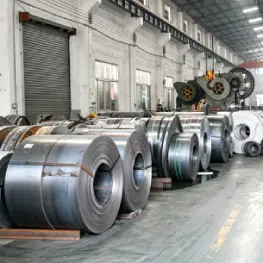
Raw Steel Inspection
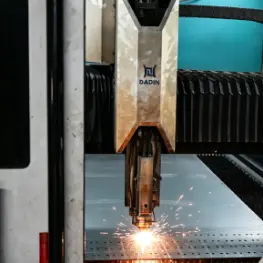
CNC Precision Cutting
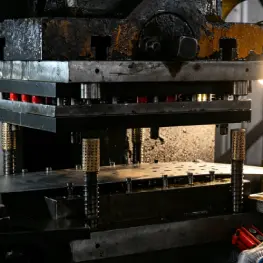
Automated Punching
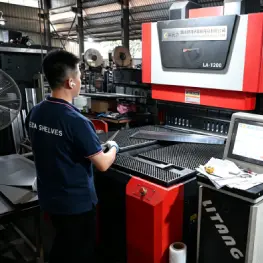
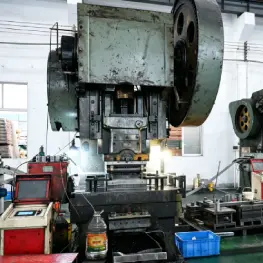
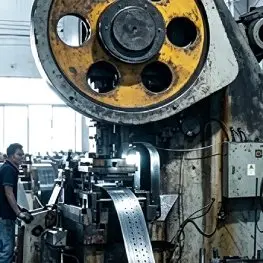
Cold Bending Forming
Continuous Roll Forming
Mechanical Polishing
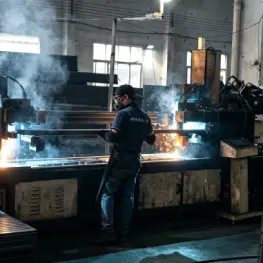
Robotic MIG Welding
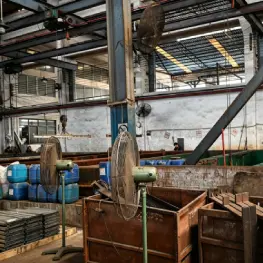
Pickling & Phosphating
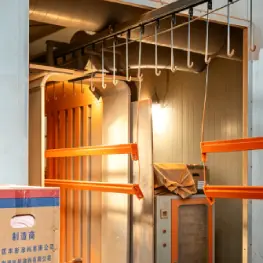
Electrostatic Coating
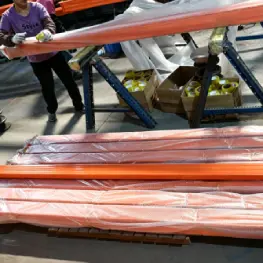
QC & Seaworthy Packing
Free 24h 3D CAD & Structural Calculations
Our in-house team of 25+ licensed structural engineers provides comprehensive DWG/BIM floor plans, 3D renderings, and certified static load calculation books within 24 hours of receiving your site drawing.
Accredited CE & ISO Quality Control
Every fabrication batch undergoes spectrometer steel verification, tensile yield testing, weld penetration ultrasonic tests, and dry film coating thickness inspections backed by CE Certificate 2435-CPR-8605159 and ISO 9001:2015 No. 18624Q00169R0M.
Global Seaworthy Packing & Turnkey Freight
Uprights are nested and banded with heavy steel strapping, corner protectors, and moisture-barrier shrink wrap. Delivered directly to major ports worldwide (Rotterdam, Hamburg, Felixstowe, Long Beach, Sydney, Jebel Ali) under FOB, CIF, or DDP terms.
Comprehensive OEM & Distributor Private Labeling
We partner with warehouse rack distributors and system integrators worldwide, providing fully customized upright punching patterns, bespoke connector hook brackets, OEM packaging, custom RAL powder shades, and localized product documentation.
Procurement Knowledge Base
Frequently Asked Questions for Pallet Racking Procurement
Detailed technical, structural, and commercial guidance addressing common challenges faced by warehouse operations managers, procurement officers, and project engineers.
How do you calculate the beam length and frame depth for Euro vs. Standard US pallets?
Standard Euro pallets (EUR 1: 1200 mm depth × 800 mm width) typically require a 1100 mm frame depth to provide a 50 mm front and rear overhang as mandated by EN 15620. A standard two-pallet bay utilizes 1825 mm or 1850 mm clear beam spans, while a three-pallet bay requires 2700 mm. For Standard US/GMA pallets (48" × 40" / 1219 mm × 1016 mm), frame depth is conventionally 42" (1067 mm) with standard 96" (2438 mm) or 108" (2743 mm) beams providing a minimum 3" to 4" lateral clearance between pallets and upright columns.
What engineering deflection limits govern beam design under full rated load?
Under both EN 15512 and RMI MH16.1 specifications, the vertical deflection limit for load-supporting beams under maximum uniformly distributed load (UDL) cannot exceed L/200 (where L is the clear span distance between upright columns). For example, a 2700 mm beam is permitted a maximum elastic sag of 13.5 mm under rated load. In automated handling installations or sensitive VNA narrow-aisle setups, stricter design criteria of L/300 or L/400 are frequently enforced to prevent optical sensor interference.
How does the elevation of the first beam level influence total frame capacity?
The load-carrying capacity of an upright frame is governed by the effective buckling length (unbraced height) of the column. A rack whose lowest beam level is set at 1500 mm above finished floor level has a significantly higher total load rating than a frame where the first beam is elevated to 2400 mm to clear a ground-level walk-through tunnel. If floor-level pallet storage is used without bottom beams, our structural engineering team calculates baseplate stiffness and frame bracing ratios to ensure structural stability.
What surface treatment should be chosen for cold stores and outdoor storage?
For standard temperature-controlled warehouses (ambient +10°C to +35°C), high-durability electrostatic dry powder coating with 9-stage iron-phosphate or zinc-phosphate pre-treatment provides outstanding adhesion and scratch resistance. For sub-zero cold stores (-25°C to 0°C), powder formulations require specialized plasticizers to prevent low-temperature micro-cracking. For outdoor yards, humid coastal regions, or open canopies, Hot-Dip Galvanizing (HDG) to ISO 1461 with 70–100 μm zinc thickness or pre-galvanized ZAM steel is strongly recommended.
What structural information is required to generate an engineering quote?
To produce an exact structural calculation and layout proposal, our engineering team requires: (1) Architectural CAD floor plan showing building columns, clear heights, and emergency egress corridors; (2) Pallet dimensions (Length × Width × Overall Height inclusive of cargo) and gross unit weights; (3) Forklift model, maximum lift mast elevation, and minimum aisle turning radius (AST); (4) Concrete slab thickness, compressive strength rating (e.g., C25/30), and reinforcement details; (5) Local seismic ground acceleration parameters (Ss and S1 coefficients).
How are international ocean freight containers packed to prevent transit damage?
Export components are packaged according to strict seaworthy export packing protocols. Upright frames are pre-assembled or shipped knockdown (CKD) bundled with high-tensile steel strapping and heavy composite corner edge protectors. Beams are stacked in interlocking paired bundles with protective spacers preventing painted contact. Hardware, baseplates, shims, and safety pins are palletized in sealed wooden crates or heavy corrugated cartons strapped to fumigated wood or steel skids, accompanied by itemized container loading lists.