Global Industrial Whitepaper & Certified Supply

Top Trusted Stacking Pallet Racks Manufacturer & Exporters

Heavy-Duty Modular Steel Stacking Systems, Portable Post Racks, and Automated Shuttle Solutions Engineered to EN 15512, CE & ISO 9001 Standards for Global Supply Chains.

Precision Heavy-Duty Storage Catalog

Featured Stacking Pallet Racks & High-Density Systems

Discover our industry-standard portable post racks, nestable storage modules, and semi-automated pallet architectures designed for cold storage, tire logistics, chemical drums, and FMCG warehouses.

Engineering Whitepaper & Structural Mechanics

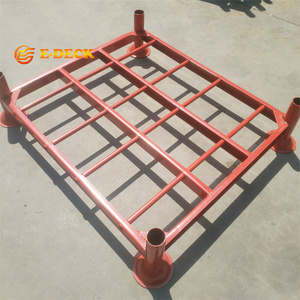
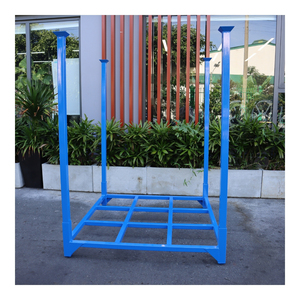
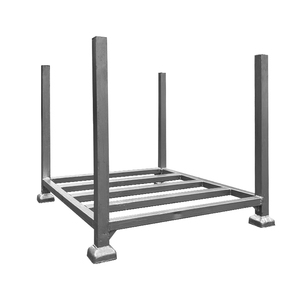
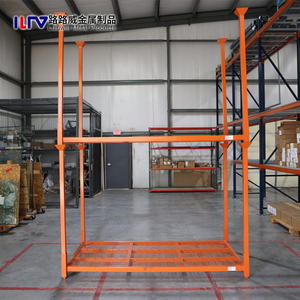
Anatomy of Heavy-Duty Portable Stacking Post Racks

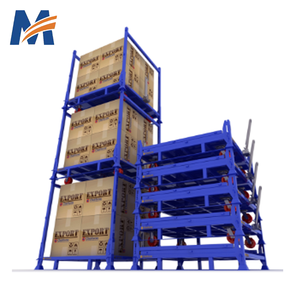
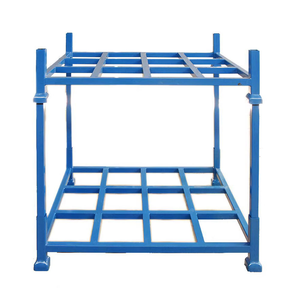
Unlike static teardrop or bolted pallet racking systems, modular portable stacking racks (manuracks) serve as their own transport container and heavy-duty structural shelving. Understanding their metallurgy, joint tolerances, and safety coefficients is essential for zero-failure logistics.

Target Stacking Feet & Inverted Cone Metallurgy

The structural stability of portable stacking post racks relies on precision-cast bell cups or heavy-gauge formed target feet. Engineered with a self-centering 45-degree inward taper, the nesting feet guide upper post legs into a locked position under gravity. This eliminates shifting under dynamic warehouse vibration and guarantees vertical plumb alignment even when stacked 5 tiers high under maximum payloads of up to 2,500 kg per bay.

Cold-Formed Q235B / Q355B Structural Framing

Base chassis and vertical upright posts are fabricated exclusively from certified prime mill steel coils. By maintaining strict yield strengths ($f_y \ge 235\text{ MPa}$ to $355\text{ MPa}$) and rigorous wall thicknesses between 2.5mm and 4.0mm, our post racks deliver elastic deflection thresholds far exceeding standard FEM 10.2.02 and EN 15512 parameters ($L/200$ deflection ratio limits under full rated dynamic loads).

Advanced Anti-Corrosion Surface Finishing

Marine export shipments and cold-chain blast freezers require uncompromised metal preservation. We offer dual surface treatments: batch Hot-Dip Galvanizing complying with EN ISO 1461 (minimum zinc coating thickness of $65\text{ to }85\,\mu\text{m}$) for condensation-heavy refrigeration rooms, alongside automated 9-stage phosphating electrostatic AkzoNobel powder coating for high-scratch resistance in dry FMCG distribution centers.

30,000m²
Modern Manufacturing Plant
30,000t
Monthly Steel Output
25+
Years Engineering Expertise
10,000+
Global Projects Installed
Technical Selection Architecture

Engineering Evaluation: Portable Stacking Racks vs. Fixed Racking Systems

Choosing between modular post stack racks and conventional stationary rack frames requires an analysis of volumetric efficiency, capital expenditure (CapEx), footprint versatility, and structural safety.

Storage System Type Load Capacity (per tier) Stacking Height Footprint Flexibility Handling Equipment Compatibility Ideal Application Scenario
Detachable Post Stacking Racks 1,000 kg – 2,500 kg 3 – 6 tiers high 100% Dynamic Reconfigurable Counterbalanced & Reach Trucks Seasonal warehouse surges, bulk storage, roll goods, fabric rolls
Foldable Collapsible Steel Pallets 800 kg – 2,000 kg 4 – 5 tiers high 75% Return-Freight Reduction Standard Forklifts, Pallet Jacks Automotive tier-1 parts transit, closed-loop return logistics
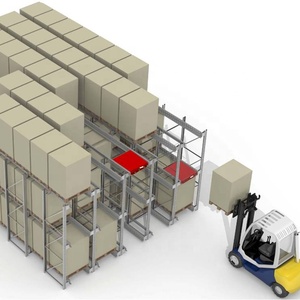
Radio Shuttle Stacking Systems 1,500 kg – 2,000 kg Up to 12 meters bay Ultra-High Density Lanes Semi-Automated Shuttle Carts Cold storage freezers (-25°C), beverage hubs, high-throughput food
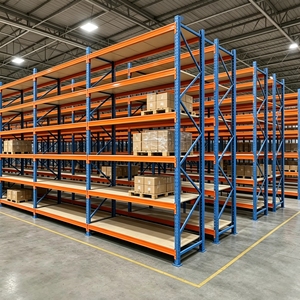
Adjustable Selective Pallet Racks 1,000 kg – 3,500 kg Up to 15 meters bay Fixed Anchored Aisles Reach Trucks, VNA Turret Trucks E-commerce fulfillment centers, multi-SKU retail distribution centers
Get Catalog
Strategic Foresight & Industry Direction

Future Procurement Trends in Stacking Pallet Racks (2025–2030)

As warehouse real estate costs surge globally and warehouse automation intersects with flexible material handling, procurement directors are shifting how they specify and acquire modular stacking systems.

1. Hybrid Automation & AMR Integration

Traditional stacking racks were built exclusively for manual counterbalanced forklifts. The new wave of logistics engineering demands that base skids and bottom clearance profiles integrate laser-guided Automated Guided Vehicles (AGVs) and Autonomous Mobile Robots (AMRs). Future-ready stacking racks incorporate laser target positioning plates and calibrated bottom skid cavities for zero-operator floor pickup and multi-tier stacking.

2. Rapid Decoupling of Fixed Real Estate

Soaring industrial rents in key logistics corridors across Europe, North America, and the Middle East make fixed civil rack bolting a major lease liability. Portable stack racks allow 3PL providers to scale vertical density up during peak fourth-quarter fulfillment volumes and completely demount the racks into tight nests during summer valleys, avoiding building floor alteration penalties.

3. Low-Carbon High-Strength Micro-Alloy Steels

Global decarbonization mandates require supply chain leaders to audit embodied carbon across material handling equipment. By utilizing advanced low-alloy micro-treated steel (high-yield structural grades with micro-niobium or vanadium additions), manufacturers can achieve equivalent 2,500 kg static capacity with up to 18% less steel weight, lowering ocean freight emissions and containerized transport costs.

4. Asset Tracking & Passive RFID Embedded Frames

Fleet loss and inventory misplacement during multi-facility transfers represent significant operational losses for large enterprise distributors. Modern stack rack procurement contracts increasingly mandate factory-embedded passive RFID tags or ruggedized 2D matrix data plates recessed directly inside the base frame, allowing automatic yard scans during cross-docking operations.

5. Stringent Verification Against EN 15635 & CPR Standards

Auditors and insurers in regulated jurisdictions no longer accept unverified fabricator certificates. Global buyers require full Construction Products Regulation (CPR) CE markings, Factory Production Control (FPC) audit documentation, and third-party finite element analysis (FEA) validating weld integrity and post-pocket ductility under simulated seismic shear conditions.

6. Modular Accessories for Irregular Cargo

The expansion of specialized manufacturing requires modular pallet base attachments. Procurement managers are prioritizing suppliers who offer interchangeable side wire mesh gates, side cradles for cylindrical textile or tire rolls, removable fork pockets, and custom drip trays for lubricant and battery chemical isolation.

Enterprise Manufacturing Authority

Guangzhou Heda Shelves: 25+ Years of Certified Engineering Excellence

Founded in 2001, Guangzhou Heda Shelves Co., Ltd. has evolved into an elite global manufacturer of heavy-duty pallet racking, modular stacking systems, and industrial mezzanine structures. Serving distributors, integrators, and end-users in over 120 countries, our unified engineering workflow bridges the gap between raw coil processing and seamless site deployment.

  • Massive In-House Capacity (30,000 t / month) Our 30,000 m² state-of-the-art production plant operates automated high-speed roll forming mills, robotic continuous seam welders, and dual electrostatic powder coating lines.
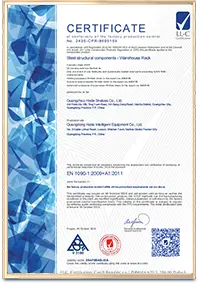
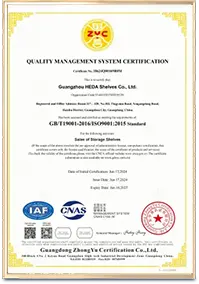
  • CE & ISO 9001 Certified Quality Traceability Certified under CE (Certificate No. 2435-CPR-8605159) and ISO 9001:2015 (Certificate No. 18624Q00169R0M). Every batch includes steel mill heat certs and load deflection testing sheets.
  • Complimentary Professional 3D & CAD Layouts Before steel fabrication begins, our senior structural engineers provide free parametric CAD space plans, finite element static load simulations, and 3D visualization renderings.
  • Global Sea Freight & Seaworthy Protective Packing Components ship palletized with precision steel strapping, corner protectors, waterproof VCI film, and container desiccant packs to prevent transit corrosion across Rotterdam, Hamburg, Long Beach, and Jebel Ali.
HEDA Shelves CE Certification 2435-CPR-8605159 CE CPR Certified
HEDA Shelves ISO 9001:2015 Certification 18624Q00169R0M ISO 9001:2015 Quality
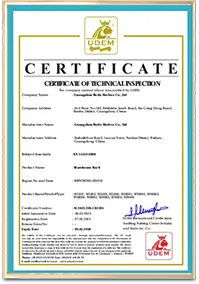
Structural Load Test Report Structural Test Reports
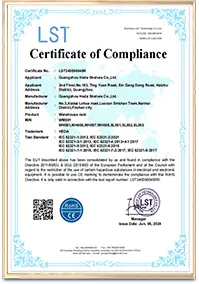
Product Compliance Certificate Product Compliance
Clear Answers for Global Buyers

Frequently Asked Technical Procurement Questions

Review our engineering responses covering safety factors, floor load considerations, stacking tolerances, and international export procedures.

How do you verify the structural safety factor for stacking racks under dynamic warehouse conditions?

All our stacking racks are designed with a safety factor of 1.5 to 2.0 relative to structural yield limits. Finite Element Analysis (FEA) software models buckling stresses on bottom-tier corner posts when loaded 4 to 6 units high. Real-world hydraulic compression testing ensures frames withstand 150% of rated static capacity without permanent plastic deformation.

Can portable stacking post racks be safely used in active seismic regions?

Yes. In designated seismic zones (as outlined in Eurocode 8 or IBC Chapter 16), stacking heights are restricted to 3 tiers, or the bottom rack feet are secured using low-profile mechanical anchors or perimeter guide rails. Our engineering department reviews local ground acceleration coefficients to configure wider base footprints and heavy-gauge post sockets.

What is the difference between Hot-Dip Galvanizing and Electro-Galvanizing for cold storage?

Electro-galvanizing only applies an 8–12μm zinc barrier, which will degrade under the extreme thermal cycles and condensation of freezer warehouses (-20°C to -30°C). We mandate batch Hot-Dip Galvanizing (EN ISO 1461) with an alloyed zinc thickness ≥65μm, delivering over 25 years of corrosion-free performance in blast freezers, agricultural cold stores, and humid coastal docks.

What are the nesting ratios for return transport of empty post racks?

For our detachable post stacking racks, posts detach and stow horizontally across the base frame, allowing 4 to 6 base units to nest into a single footprint. In our collapsible folding steel pallets, the hinged uprights collapse into a flat profile, delivering a 4:1 to 5:1 volume reduction. This allows an empty 40ft High Cube container to carry up to 280 collapsed units, cutting return-freight costs significantly.

How do I verify that my concrete slab can carry stacked pallet loads?

Unlike selective racks that distribute loads across continuous base plates, stacking post racks transfer total multi-tier loads through 4 point-contact target feet. For example, a 4-tier stack rated at 1,500 kg per tier produces an approximate 6,000 kg gross vertical load. Our engineering team calculates the point load footprint area and slab shear stress to ensure compatibility with standard 150mm–200mm industrial concrete floors.

What lead times and seaworthy export packing standards can I expect?

Standard production cycles range from 15 to 25 days depending on project tonnage. Every export bundle is stabilized with high-tensile polyester/steel strapping, timber dunnage buffers, heavy corner protectors, and sealed VCI anti-corrosion barrier sheeting. Shipments include comprehensive packing lists, container loading plans, CE documentation, and raw material mill certificates.

Request an Engineered Layout & Factory-Direct Quote

Submit your warehouse floor plan, clear building height, target pallet specifications, and payload requirements. Our senior application engineers will provide a verified CAD bay layout and transparent project quotation within 24 business hours.