Industry Engineering Whitepaper & Procurement Directory

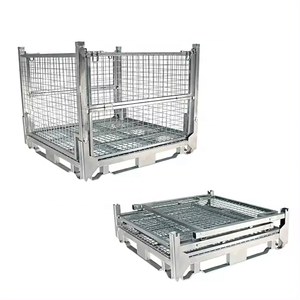
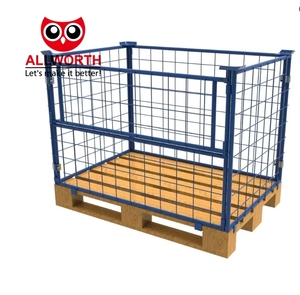
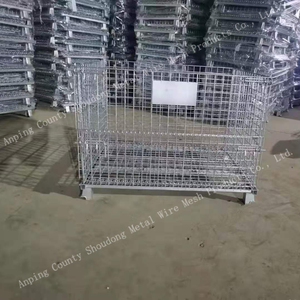
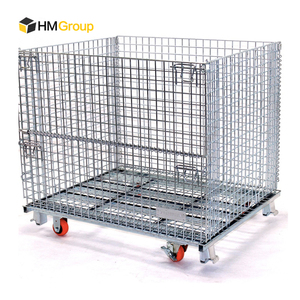
Top Trusted Wire Mesh Pallet Cage Factories & OEM Factory

Global engineering benchmarks, load calculation protocols, and factory direct selection criteria for collapsible steel mesh containers and industrial logistics stillages.

Enterprise Product Inventory

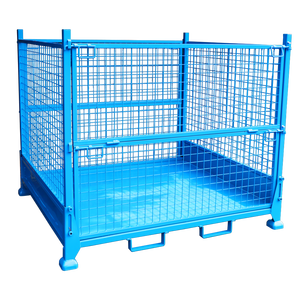
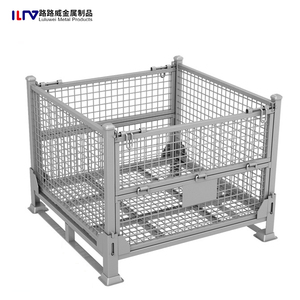
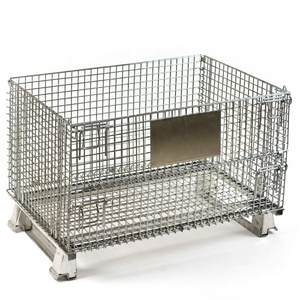
Engineered Wire Mesh Pallet Cages & Collapsible Stillages

Precision-manufactured from high-tensile cold-drawn steel wire and hot-rolled structural steel bases. Certified under ISO 9001:2015 and CE standards to support automated intralogistics, dynamic racking loads, and seamless multi-tier stacking.

Executive Engineering Whitepaper: Metallurgical Standards & Load Verification

In modern industrial logistics, automated warehousing (AS/RS), and high-throughput distribution centers, wire mesh pallet cages (also known as collapsible wire containers, stillage baskets, or metal mesh gitterboxen) have superseded traditional wooden pallets and rigid corrugated bins. As international supply chains target zero-defect handling and aggressive ESG compliance, procurement managers and project engineers require rigorous metallurgical, structural, and kinematic criteria to evaluate top trusted manufacturing facilities.

A certified wire mesh pallet cage is an engineered structural assembly governed by EN 13626, DIN 15155, and ISO 8611 testing protocols. The physical performance of a stillage depends fundamentally on three parameters: raw wire tensile rating, resistance spot-welding integrity, and structural channel base geometry. Premium manufacturers utilize Q235B low-carbon mild steel drawn down to precise wire calibers (5.0 mm to 6.2 mm) through cold work hardening, increasing yield strength up to 550 N/mm² while maintaining the ductility required to absorb dynamic shock from counterbalanced forklift tines.

Evaluation Parameter Industrial Wire Mesh Pallet Cage Traditional Timber Pallet + Collar Rigid Plastic Bulk Box Solid Heavy Sheet Stillage
Dynamic Payload (kg) 1,000 to 2,000 kg 500 to 1,000 kg 600 to 1,000 kg 1,500 to 2,500 kg
Static Stacking Index 4-High Loaded (1:4 Safety Margin) Unstable > 2 High 3-High Max (Creep Risk) 4-High Heavy Duty
Return Freight Ratio 1:4 Collapsible (75% Saving) 1:1.5 Disassembled 1:2 Foldable 1:1 Non-Collapsible Rigid
ESFR Sprinkler Compliance 100% Penetration (>70% Open) Obstructs Water Flow Blocks Sprinkler Deluge Zero Vertical Drainage
Life Expectancy (Cycles) 8 to 12 Years (>50,000 cycles) 6 to 18 Months 3 to 5 Years (UV/Impact Decay) 10+ Years (Excess Tare Weight)
Sanitization & Inspection High-pressure wash; total visual audit Porous, harboring moisture/pests Hygienic but scratch prone Internal corners trap debris

Furthermore, fire safety regulations (NFPA 13 and EN 12845) strictly penalize solid-deck bulk bins in high-bay racking due to vertical water attenuation during sprinkler activation. Wire mesh pallet cages provide an open-area cross-section exceeding 70%, allowing instant Early Suppression Fast Response (ESFR) sprinkler penetration without creating localized pool reservoirs that exacerbate rack collapse during thermal stress events.

Resistance Spot Welding

Automated multi-spot welding matrices maintain shear strength exceeding 2,500 N per node, eliminating weld cracking under dynamic transit vibration.

Cold-Formed Base Channels

Under-base U-channel stringers are hydraulic roll-formed with radiused inner bends, preventing deflection over rack beams under point loads.

Interlocking Cup Feet

Heavy stamped heavy-gauge stacking feet feature lead-in guides that mechanically index over bottom posts, preventing tier displacement up to 15° of tilt.

Ergonomic Drop Gates

Half-drop fold-down front access panels utilize dual self-locking spiral latches, permitting rapid picking even when containers are stacked four tiers high.

Enterprise Manufacturing Capabilities

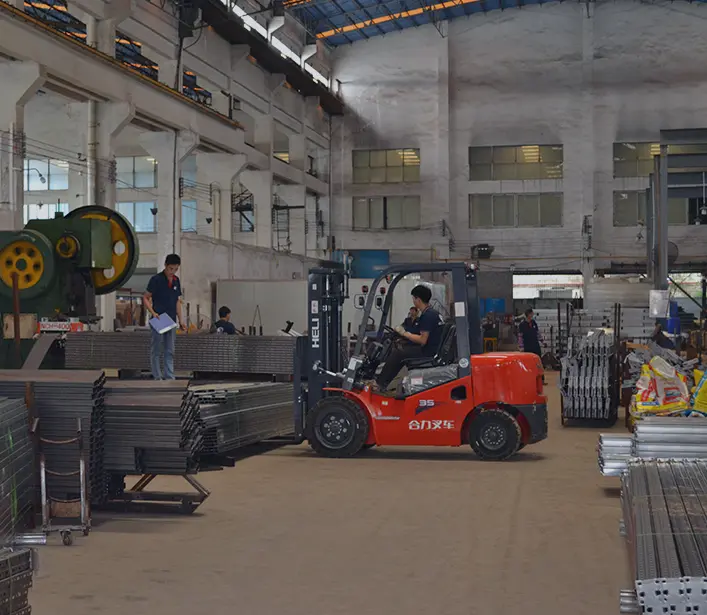
Factory-Direct Quality: Guangzhou Heda Shelves Co., Ltd.

Founded in 2001, Guangzhou Heda Shelves Co., Ltd. operates a premier 30,000 m² heavy-manufacturing plant backed by 300+ precision engineers. Producing up to 30,000 tonnes monthly, we provide end-to-end metallurgical fabrication from wire drawing to certified export packaging.

Total Process Control: From Raw Ingot to Seaworthy Export

Procuring directly from a tier-1 certified manufacturing factory removes broker markups while securing total engineering traceability. Our production workflows strictly satisfy EN 15512, EN 15620, and EN 15635 mechanical calculation principles. All structural wire cage designs are modeled through Finite Element Analysis (FEA) to eliminate stress concentrations at corner hinge nodes and bottom pallet-skid contact interfaces.

Each batch undergo metallurgical spectrography, tensile fracture tests, zinc coating thickness micrometry, and automated weld shear destruction benchmarks before release to surface treatment lines.

  • CE Certificate No. 2435-CPR-8605159 Verified European structural safety compliance
  • ISO 9001:2015 No. 18624Q00169R0M Certified QA/QC audited manufacturing lines
  • Free CAD & 3D Modeling Engineering layout proposals within 24 hours
  • Global Sea Logistics Exporting to 120+ countries (Rotterdam, Hamburg, LA)
Guangzhou Heda Shelves Wire Mesh Pallet Cage Manufacturing Plant
2001
Founded Year
30,000m²
Factory Footprint
30,000t
Monthly Production
10,000+
Global Projects Completed
Industry Market Dynamics

Future Procurement Trends & Technological Evolution (2026–2030)

The wire mesh container market is transitioning from static warehouse receptacles into intelligent, digitized supply chain assets compatible with Autonomous Mobile Robots (AMRs) and circular reverse logistics loops.

Autonomous Compatibility

AGV & AMR Kinetic Integration

Modern mega-fulfillment centers require stillage bases engineered with integrated skid-runner channels, precision ground clearance (100–120 mm), and optical sensor reflective targets. High-precision manufacturing guarantees base deflection tolerance under 1.5 mm, preventing conveyor jams or AGV undercarriage snagging during automated high-speed transit.

Corrosion Metallurgy

Dual-Shield Anti-Corrosion Chemistry

To eliminate white rust in cold-storage environments (-30°C) and marine shipping containers, top factories are phasing out rudimentary electro-zinc plating in favor of Eco-TriPass electro-galvanization coupled with electrostatic thermoset polyester powder coating. This dual barrier exceeds 720 hours in ASTM B117 salt spray chambers without surface pitting.

Traceability & IoT

RFID & Optical Barcode Architecture

With stringent European Packaging and Packaging Waste Regulations (PPWR), large manufacturing enterprises operate closed-loop pool networks. Steel pallet cages now feature laser-welded stainless steel nameplates configured for rivet-mounted Gen-2 UHF RFID tags, QR matrix barcodes, and GPS IoT telemetry beacons to track fleet utilization in real time.

Circular Economics

Reverse Logistics Space Optimization

Global freight volatility has turned collapsible ratio optimization into a primary procurement KPI. Standard rigid containers incur prohibitive "shipping of air" costs on return loops. Advanced hinge mechanisms allow folding ratios of 1:4 and 1:5, permitting up to 320 collapsed units per standard 40ft High Cube container, reducing repositioning transport overhead by 75%.

Ergonomic Safety

Zero-Pinch Self-Guiding Latches

Workplace safety standards (OSHA and EU Machinery Directive) mandate fail-safe drop gate actuation. Emerging factory designs incorporate counter-balanced torsion springs and recessed, enclosed slide-lock pins that prevent operator finger impingement during gate opening, alongside drop-stop retention bars that prevent spontaneous gate collapse.

Cold-Chain Engineering

Sub-Zero Cryogenic Steel Grades

Ordinary structural carbon steels experience ductile-to-brittle transition below 0°C, leading to sudden corner-foot fracturing during high-mast fork impacts. Top trusted manufacturers now formulate low-silicon, aluminum-killed Q235D steel specifically for cold chain warehouses, retaining Charpy V-notch impact toughness at -30°C.

Engineering Due Diligence

Frequently Asked Questions for Sourcing Directors

Direct answers to technical, mechanical, and logistical questions encountered when specifying wire mesh pallet containers for international operations.

What is the exact distinction between Static Stacking and Dynamic Payload capacity?
Dynamic Payload refers to the maximum certified weight the cage can safely sustain while being elevated and maneuvered by a forklift truck (typically 800 kg to 2,000 kg with an engineered safety factor of 2.5:1). Static Stacking capacity defines the maximum aggregate load sustained by the base container when units are stacked vertically on flat, level warehouse flooring. For instance, a 1,500 kg dynamic container stacked 4-high requires the bottom unit's corner posts and feet to maintain a static compressive threshold of 4,500 kg (3 × 1,500 kg) without vertical deflection exceeding 0.2% of post height.
How does hot-dip galvanizing compare to electro-galvanizing for wire mesh pallet cages?
Electro-galvanizing (cold galvanizing) deposits an 8 to 15-micron zinc layer, yielding an exceptionally smooth, bright aesthetic ideal for dry indoor retail and distribution logistics. Hot-dip galvanizing (HDG) per ISO 1461 immerses the fully welded steel cage into molten zinc at 450°C, producing a metallurgical iron-zinc alloy layer 60 to 85 microns thick. HDG provides cathodic self-healing protection indispensable for chemical plants, outdoor yard staging, coastal ports, and wash-down cold storage applications, albeit at a slightly higher tare weight and cost.
Can wire mesh pallet cages be safely placed on beam-style selective pallet racks?
Yes, provided the cage is engineered with structural skid runners or full perimeter bottom runners rather than standalone corner feet. Standalone cup feet create concentrated point loads that can distort pallet rack box beams or slip between beam spans. When ordering for pallet racking, specify heavy-duty bottom channel skids engineered to bridge the rack beam depth (e.g., 1000 mm or 1100 mm) with a minimum 50 mm bearing seat overhang at both front and rear beam faces.
What dimensions are standard for Euro (EPAL) versus North American (GMA) pallet footprints?
Standard European sizes conform to EPAL footprints: 1200 × 800 mm (Euro Pallet 1) and 1200 × 1000 mm (Industrial Pallet 2), with external heights generally ranging from 850 mm to 1000 mm. For the North American market, dimensions conform to GMA standards: 48" × 40" (1219 × 1016 mm) and 42" × 42" (1067 × 1067 mm). Guangzhou Heda Shelves manufactures custom sizing with precision CNC wire-spacing dies to match automated shuttle tracks and trailer interior widths (2400 mm in the EU; 98–102 inches in the USA).
How does your factory verify weld quality across thousands of wire intersection joints?
Quality control follows our ISO 9001:2015 protocol utilizing multi-electrode automated CNC welding gantries with closed-loop thyristor current regulation. This eliminates cold welds and flash burnouts. From every production heat run of 500 units, sample panels are extracted and subjected to hydraulic cross-wire shear tensile testing; the minimum acceptable joint shear force is 2,500 N per intersection. Finished assemblies undergo 1.25× overload dynamic drop testing and fork heel impact testing before anti-corrosion coating.
What is the typical production lead time and export container packing density?
Standard factory production lead time is 15 to 25 calendar days for a 20ft to 40ft container batch. Due to the collapsible folding geometry, folded units are interlocked and strapped onto custom steel skids to prevent transit abrasion. A standard 40ft High Cube sea container accommodates approximately 280 to 340 collapsed standard cages (1200 × 1000 × 890 mm), maximizing ocean freight economics and minimizing landed unit costs.

Accelerate Your Logistics Infrastructure With Factory-Direct Engineering

Directly consult with our Guangzhou Heda Shelves structural engineers. Receive free 2D/3D CAD layout drawings, structural finite element load calculations, and competitive OEM factory quotes within 24 hours.

CE Certified: No. 2435-CPR-8605159 ISO 9001:2015: No. 18624Q00169R0M RoHS Compliant Surface Finishes EN 15512 & EN 15620 Engineering Principles