The Engineering Imperative of Cold Storage Racking Systems
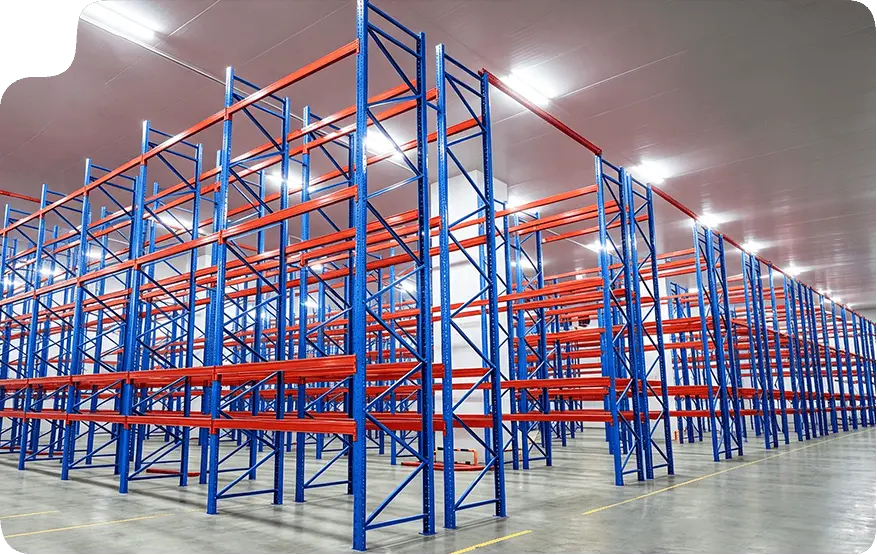
Cold storage and blast freezer logistics represent the most capital-intensive square footage in the entire warehousing and supply chain sector. Operating costs in refrigerated chambers are driven relentlessly by refrigeration energy consumption, low thermal transfer tolerances, specialized low-temperature material handling fleets, and demanding labour conditions. Designing an efficient cold storage racking system is never a simple matter of repurposing standard industrial ambient racks into a freezing room.
At temperatures dropping between -18°C and -30°C, structural steel faces the dangerous physical phenomenon of ductile-to-brittle transition. Standard carbon steels lose their ability to flex and absorb dynamic shock, making them vulnerable to catastrophic brittle fracture when bumped by heavy reach trucks or counterbalanced forklifts. Concurrently, repeated thermal cycling generates micro-condensation that infiltrates standard surface treatments, causing rapid internal rusting and catastrophic structural degradation.
Guangzhou Heda Shelves Co., Ltd. brings 25 years of structural engineering expertise to solve this mission-critical challenge. We calculate high-density layouts that reduce wasted cubic air space by up to 50%, directly slashing chiller compressor runtimes and kilowatt-hour electric bills. Through rigorous material selection (including low-temperature certified Q355D steels, hot-dip galvanization, and anti-frost specialized powder coatings), our engineering proposals ensure uncompromised load capacity, structural safety, and long operational life under harsh sub-zero conditions.
Compare the industry's four leading structural configurations engineered specifically for chilled rooms (0°C to 4°C) and deep-freeze logistics (-18°C to -30°C).
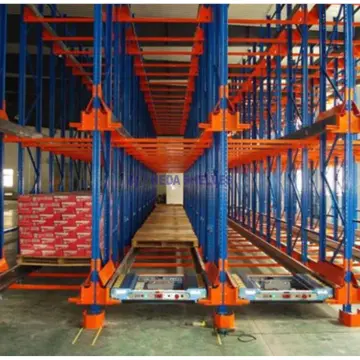
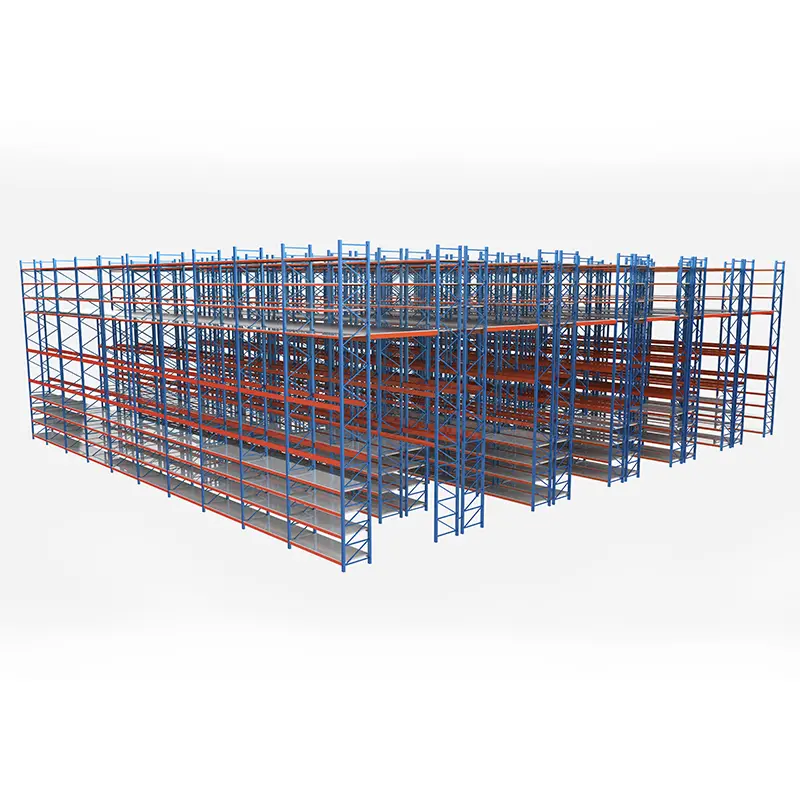
The premier cold storage system globally. Independent battery-powered shuttles carry pallets down deep lanes, keeping reach trucks outside freezing tunnels to prevent structural impacts and cab frost.
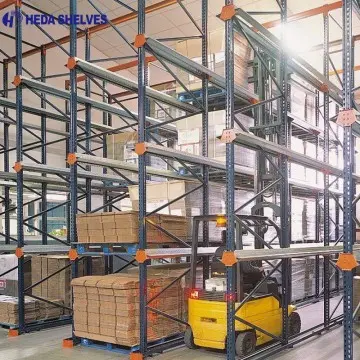
Eliminates operating aisles entirely. Lift trucks drive directly into storage lanes to deposit and retrieve pallets on continuous side support rails. Best for homogeneous frozen inventory with low SKU counts.
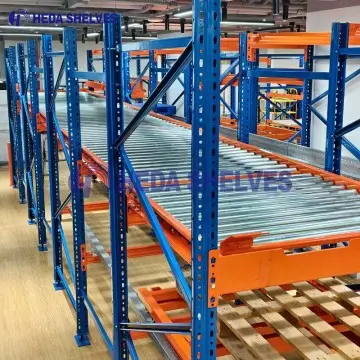
Slanted roller tracks employ gravity to roll pallets from the loading side to the unloading picking face. Integrated speed controllers and heavy-duty braking rollers ensure smooth pallet travel under freezing conditions.
Pallets rest on nested wheeled carts riding on inclined structural rails. Standard forklifts push back previous pallets from a single aisle face without ever entering the rack, speeding turnaround in cold environments.
Review thermal efficiency, density, access flexibility, and capital investment across cold-chain storage configurations before placing purchase orders.
Chilled staging areas, sorting buffers, small multi-variety coolers
* Thermal energy efficiency reflects the ratio between refrigerable cold air volume saved versus pallet volume stored. High density significantly lowers long-term electricity consumption.
Future Procurement Trends
Where Cold Storage Logistics is Heading: Trends for 2026–2030
Global cold-chain supply operations are undergoing structural transformations prompted by energy prices, strict carbon compliance, e-grocery growth, and workforce shortages.
01
Semi-to-Full Automation Migration
Procurement teams are shifting away from manual drive-in systems. Sub-zero environments are harsh on human workers; radio shuttles and automated cranes remove operators from the cold, boosting picking throughput and eliminating collision damage.
02
Hyper-Density as an Energy Defense
With industrial electricity tariffs remaining high, cooling an empty aisle is pure financial waste. Modern cold storage facilities now demand 80%+ storage density. Every cubic meter reclaimed from aisles directly cuts cooling kilowatt-hours by 20% to 35% annually.
03
Hot-Dip Galvanizing & Duplex Coatings
Condensation during defrost cycles causes micro-rusting in standard powder-coated steel. Buyers increasingly mandate hot-dip galvanizing or specialized duplex epoxy-polyester powder coats to ensure a 20+ year life cycle without rust-related structural shutdowns.
04
Rack-Clad Building Architecture
High-bay cold facilities (up to 30 meters tall) increasingly adopt rack-supported structures where the racking frames themselves form the load-bearing skeleton supporting refrigerated wall and roof sandwich panels, slashing construction time and footprint.
How materials science, battery chemistries, and sensor hardware enable uninterrupted operation in -30°C cold chambers.
Impact-Tough Low-Temp Steels
At Guangzhou Heda Shelves Co., Ltd., uprights and load beams intended for sub-zero duties are engineered using structural carbon steels (such as Q355D) certified for guaranteed Charpy V-notch impact toughness at low temperatures, stopping brittle snapping.
Sub-Zero LiFePO4 Battery Tech
Modern radio shuttle carts use cold-chain lithium iron phosphate batteries equipped with smart thermal blankets and self-heating circuits. Shuttles recharge rapidly and run 8 to 10 hours continuously in -25°C temperatures without voltage drops.
IP65 Frost-Resistant Optoelectronics
Sensors and laser guidance units on automated racking systems are upgraded with anti-fog optical heating lenses and IP65/IP67 sealed enclosures to defeat ice accretion and optical refraction errors during humidity shifts.
Thermal Isolation Footplates
Cold room floors feature delicate sub-floor insulation and heating coils to prevent frost heave. HEDA racks incorporate specialized non-conductive thermal isolation pads under baseplates to eliminate thermal bridging into the foundation slab.
EN 15512 Seismic & Dynamic Design
Structural layouts are calculated to withstand load deflection and dynamic shuttle braking forces under EN 15512 and FEM principles, with custom seismic analysis factoring in the stiffness of steel in sub-zero operational states.
Advanced Defrost Drainage Profiles
Beams, rails, and safety profiles feature sloped self-draining geometries and moisture relief perforations, stopping ice dams from accumulating during periodic evaporator defrosting cycles.
Enterprise Strength & Engineering Trust
Guangzhou Heda Shelves Co., Ltd. — Your Heavy Cold Chain Manufacturing Partner
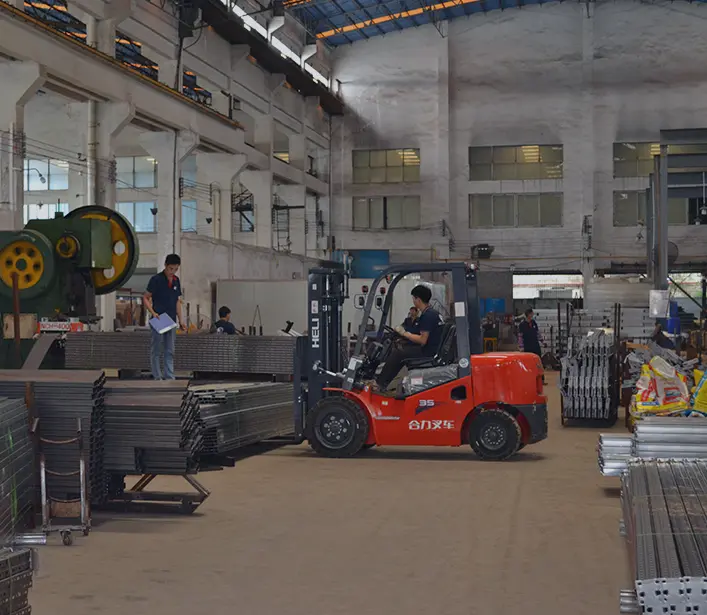
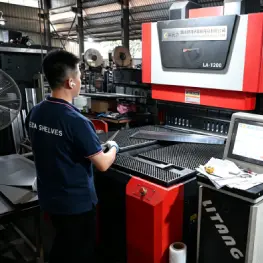
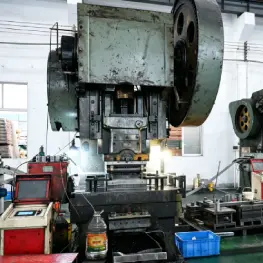
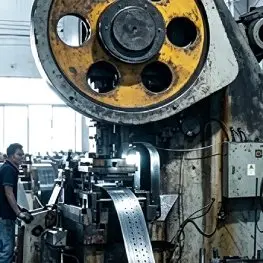
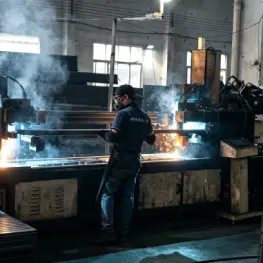
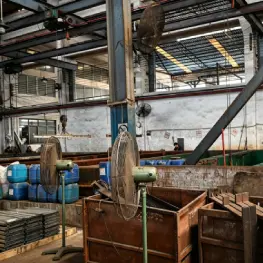
Founded in 2001, Guangzhou Heda Shelves Co., Ltd. has developed into a premier global designer and manufacturer of heavy-duty warehouse storage systems. Operating from our modern 30,000 m² factory equipped with precision roll-forming lines, automated punching centers, robotic welders, and a full-immersion surface pre-treatment line, our 300+ technical personnel achieve a monthly production capacity of 30,000 tonnes.
For international buyers across Europe, the Americas, the Middle East, and Asia-Pacific, Guangzhou Heda Shelves Co., Ltd. delivers direct factory engineering accountability. Every cold storage racking system is designed from scratch: we review your facility DWG drawings, calculate cold-ductile structural loads, verify Euro pallet clearances, and supply CE-compliant manufacturing backed by full traceability documents.
25+ Years ExperienceEstablished in 2001 with 10,000+ completed projects
30,000 t / MonthHeavy-capacity rolling and automated processing lines
CE & ISO 9001CE Cert No. 2435-CPR-8605159, ISO 9001:2015
Free CAD LayoutsComplete 3D renders, load tables & site consultations
Engineered Quality: The 10-Step Cold Chain Steel Process
Every beam, column upright, and support runner undergoes monitored quality gates to guarantee performance down to -30°C.
STEP 01
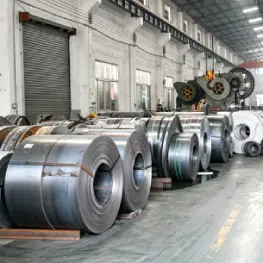
Material Testing
STEP 02
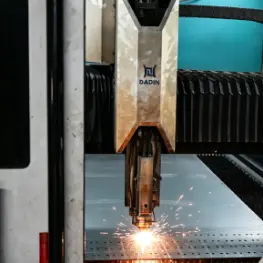
Precision Cutting
STEP 03
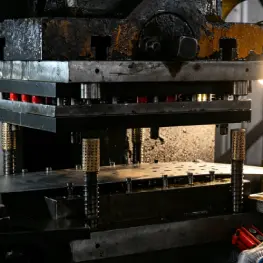
CNC Column Punching
STEP 04
Profile Cold Bending
STEP 05
Multi-Roll Forming
STEP 06
Edge Deburring
STEP 07
Robotic Welding
STEP 08
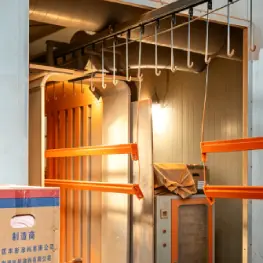
Pickling & Phosphating
STEP 09
Powder Coating
STEP 10
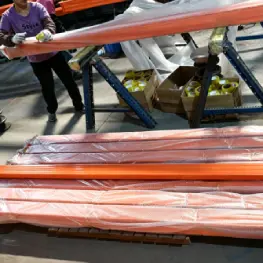
QC & Seaworthy Pack
Frequently Asked Questions
What Global Buyers Ask About Cold Storage Racking
Direct technical answers from our structural engineering department addressing low-temperature ductility, refrigeration efficiency, condensation, and international logistics.
How does sub-zero temperature affect steel grades in cold storage racking?
In deep freeze logistics (-18°C down to -30°C), ordinary carbon structural steel suffers from cold embrittlement, losing its ductile yield characteristics and failing abruptly under impact. Guangzhou Heda Shelves Co., Ltd. specifies certified low-temperature steels (such as Q355D) with tested Charpy V-notch impact toughness values at -20°C and -40°C. Furthermore, we apply specialized anti-cracking epoxy coatings to resist micro-fissuring and detachment caused by thermal expansion and contraction.
Which cold storage racking configuration provides the highest energy savings?
The Radio Shuttle Racking System delivers the highest overall energy and refrigeration efficiency. By cutting out reach truck operating aisles and consolidating pallets into high-density storage tunnels up to 40 pallets deep, it achieves 85% to 90% cubic utilization. Because cooling unoccupied aisle airspace accounts for substantial power loss, shrinking total chamber volume directly slashes chiller energy bills by 20% to 35%.
What pallet tolerances and clearances are required for frozen products?
Cold food goods frequently suffer from packaging bulge, ice crusting, or shrink-wrap sagging during freezing. Standard 75 mm beam clearances often prove insufficient. Guangzhou Heda Shelves Co., Ltd. calculates generous safety tolerances—typically 100 mm horizontal beam-to-pallet clearance and 100 mm to 150 mm vertical clearance—preventing frozen pallets from wedging against uprights or catching shuttle rails.
How do radio shuttles handle low-temperature battery depletion?
Standard consumer lithium cells lose up to 60% of their operational capacity under freezing conditions. HEDA radio shuttles utilize specialized cold-chain lithium iron phosphate (LiFePO4) battery packs featuring internal heating resistance wraps, temperature-compensated microprocessors, and low-viscosity synthetic lubricants. This maintains 8 to 10 hours of continuous operations at -25°C to -30°C on a single charge.
How is condensation corrosion prevented in cold storage racking?
Condensation is common in transition zones and during defrost cycles. Guangzhou Heda Shelves Co., Ltd. applies an intensive 10-step surface treatment protocol comprising acid de-rusting, zinc phosphating, and heavy electrostatic thermoset powder coating baked at high temperatures. For ambient-to-freezer ante-rooms, meat processing wash-down areas, and high-humidity chambers, we manufacture hot-dip galvanized upright frames and beams that offer permanent protection against rust.
What engineering documentation is supplied for European and global compliance?
Every cold storage project is supported by CE certification (Certificate No. 2435-CPR-8605159), ISO 9001:2015 traceability documentation, finite-element structural calculation sheets based on EN 15512 and EN 15620 guidelines, factory material mill test certificates (MTC), and branded safe working load notices ready for facility inspection and insurance sign-off.
Send your facility specifications to our technical engineering team. We will produce a complete 3D warehouse model, capacity analysis, and certified quotation within 24 to 48 hours.