Engineered Order-Picking Systems for Russian Warehouses
Direct from our 30,000 m² automated manufacturing facility: heavy-duty structural steel platforms, high-throughput carton flow, and precision picking units tested for harsh continental temperature variations.
Technical Specification & Structural Architecture for the Russian Market
Navigating warehouse logistics within the Russian Federation requires strict adherence to GOST standards, specialized metallurgy for extreme climatic zones, and optimization for regional freight dimensions.
Structural Alignment: Reconciling CE Certification (EN 15512) with GOST R 55525-2017
Procurement directors and general contractors in the Russian Federation face dual regulatory frameworks when sourcing international warehouse equipment. While European CE certification (specifically compliance with EN 15512:2020 for static steel racking design and EN 15620 for tolerances, deformations, and clearances) demonstrates high structural integrity, Russian installations must strictly conform to GOST R 55525-2017 (Складское оборудование — Стеллажи сборно-разборные — Общие технические условия) and GOST R 57381-2017 for shelf and multi-tier picking structures.
HEDA Shelves bridges this technical gap. Every racking profile exported to Russian logistics centers is calculated under limit state design principles that comply simultaneously with EN standards and Russian building codes (SNiP / SP 16.13330 for steel structures). Our structural analysis accounts for localized vertical live loads, seismic actions in accordance with SP 14.13330 (crucial for seismic-active regions including the Baikal corridor, Krasnodar, and the North Caucasus), and point-load distributions on industrial concrete slabs.
| Picking Racking Configuration | Typical SKU Velocity | Payload Rating (Per Level) | Cold-Climate Resiliency (-30°C) | Primary Russian Industrial Sector |
|---|---|---|---|---|
| Multi-Tier Picking Mezzanines | Ultra High (350+ picks/hr) | 300 kg – 1,000 kg / m² | Standard with 09G2S/Q355D fasteners | E-Commerce Fulfillment (Ozon, Wildberries) |
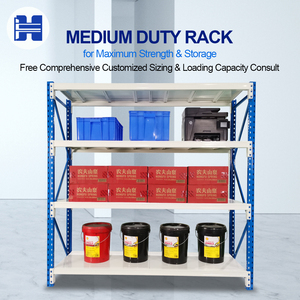
| Boltless Medium-Duty Shelving | High (Manual Picking) | 150 kg – 500 kg / layer | High (Epoxy-polyester coated) | Automotive Spares, Electronics Retail |
| Reinforced Push-Back Racks | Medium-High (Pallet Batches) | 1,000 kg – 1,500 kg / pallet | Equipped with low-temp sealed bearings | Cold Storage, Frozen Poultry & Dairy |
| Automated Robot AS/RS Shelving | Automated Continuous | 50 kg – 250 kg / tote | Precision calibrated (±1.0 mm tolerance) | Pharmaceuticals, High-Density Tech Hubs |
| Heavy I-Beam Platform Lofts | Staging & Sorting | 500 kg – 1,500 kg / m² | Hot-rolled Q355B/C grade steel | 3PL Transit Hubs (Moscow Oblast, SPb) |
Low-Temperature Metallurgical Ductility
Ordinary structural carbon steels experience ductile-to-brittle transitions when ambient temperatures drop below -15°C. For unheated Class B logistics facilities and deep-freeze cold stores in Siberia and the Central Urals, brittle fracture represents a critical operational hazard.
- Impact Resistance: Charpy V-Notch at -40°C
- Steel Equivalent: Russian 09G2S / ASTM A572
- Weld Integrity: CO2 gas-shielded automated bead
Corrosion & Thermal Expansion Coating
Sudden condensation caused by Russian winter vehicle loading docks creates aggressive micro-climates. Our 10-stage automated pre-treatment includes acid pickling, zinc phosphating, and electrostatic epoxy-polyester powder application cured at 200°C.
- Coating Thickness: 60–80 μm uniform
- Salt Spray Test: Exceeds 500 hours
- Thermal Cycle: Resists -45°C to +40°C shock
Pallet Dimension & Bay Standardization
Warehouses in the Russian Federation handle a heterogeneous mix of pallets: standard Euro-pallets (EUR 1, 800×1200 mm), Finnish pallets (FIN, 1000×1200 mm), and heavy industrial American timber skids. Our beam calculations provide tailored bay lengths.
- 2-Pallet Bay (EUR): 1,800 mm clear entry
- 3-Pallet Bay (EUR): 2,700 mm clear entry
- 3-Pallet Bay (FIN): 3,300 mm clear entry
Deployment Scenarios Across Major Russian Economic Hubs
From high-throughput parcel sorting along the Moscow Ring Road (MKAD) to deep-freeze grocery preservation in Siberia, explore how our picking systems resolve complex regional logistics constraints.
E-Commerce Mega-Fulfillment Hubs
The explosive growth of domestic online marketplaces such as Wildberries, Ozon, and Yandex Market has driven unprecedented demand for multi-tier picking mezzanines. In facilities located across Moscow Oblast (Podolsk, Domodedovo) and St. Petersburg (Shushary), warehouse ceilings exceed 12 meters.
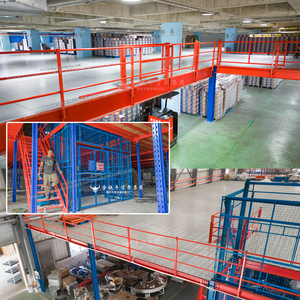
HEDA’s rack-supported multi-tier mezzanine floors transform these high-cube buildings into 3-to-4 layer picking towers, effectively quadrupling pick faces per square meter without expanding the building’s real estate footprint.
- Key Advantage: Integration with carton spiral chutes
- Fire Safety: Perforated steel decking for sprinklers
Sub-Zero Multi-Temperature Cold Stores
Refrigerated warehouse space in regional transit nodes like Novosibirsk, Yekaterinburg, and Samara incurs extreme energy expenditures. Minimizing refrigerated cubic area per stored SKU is vital for profitability.
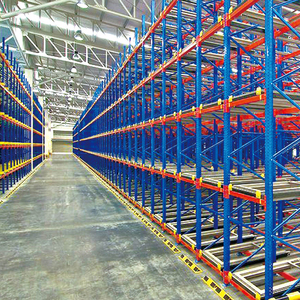
Our push-back racking and dynamic gravity flow carton systems operate seamlessly in temperatures down to -30°C. By eliminating unnecessary access aisles, these systems achieve 75% higher volumetric storage density while maintaining strict FIFO (First-In, First-Out) rotation for fresh perishables, meat, and dairy products.
- Roller System: Cold-resistant polyurethane wheels
- Replenishment: Gravity-fed front picking face
Automotive & Heavy Industrial Parts Depots
With industrial reshoring and growing logistics corridors connected to Eurasian automotive suppliers, centralized spare parts warehouses demand rugged, modular picking solutions. Components range from micro-relays and gaskets to 150 kg transmission casings.
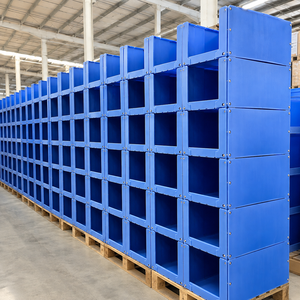
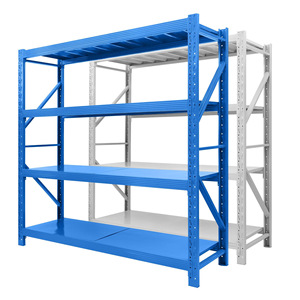
We supply modular butterfly-hole shelving and medium-duty longspan racks combined with heavy-duty stackable corrugated PP picking bins. Pickers achieve swift pick rates assisted by color-coded bin partitions and clear label holders.
- Shelf Load: Up to 800 kg per tier uniform load
- Flexibility: Quick boltless shelf level repositioning
Russian Warehouse Market Dynamics & Modern Procurement Trends
An analytical evaluation of supply-chain pivots, Class A warehouse vacancy rates, and technological imperatives defining modern Russian supply chains.
The Chronic Deficit of Class A Storage & The Vertical Density Mandate
According to industrial real estate market analyses, Class A warehouse vacancy rates across the Moscow Metropolitan Area and the Leningrad Region hover below 1.5%. With prime warehousing land costs rising and speculative construction facing lengthened lead times, logistics operators cannot simply lease additional ground space to absorb inventory surges.
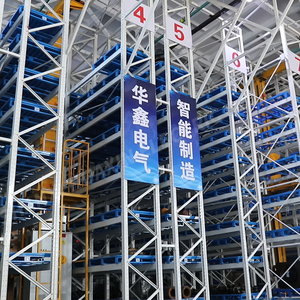
The strategic imperative is vertical densification. Russian logistics managers are upgrading from rudimentary 2-tier floor racks to high-bay automated narrow aisle (VNA) picking towers and structural steel mezzanines exceeding 10 to 14 meters in clearance height. HEDA Shelves engineers our upright frames with deep section profiling (90 mm to 120 mm column width, up to 2.5 mm steel gauge) to handle elevated buckling stress and maintain absolute plumbness under maximum vertical loads.
The Pivot Eastward: Multimodal Freight Corridors from Guangzhou to Russian Depots
Supply chain rerouting has cemented direct China-to-Russia trade infrastructure as the primary artery for industrial capital goods. Sourcing racking systems from European domestic producers has become prohibitively complex and expensive. Conversely, direct containerized railway and multimodal shipping routes from China provide reliable, predictable logistics cycles.
HEDA Shelves has perfected the logistics lifecycle for Russian consignees. We coordinate regular block-train container dispatches (China-Europe Railway Express / КЭП) passing through key border interfaces including Manzhouli/Zabaikalsk and Heihe/Blagoveshchensk, reaching freight terminals in Moscow (Vorsino, Bely Rast, Silikatnaya) in 14 to 22 days. For maritime routes, seaworthy packed containers move directly through Vladivostok or St. Petersburg ports.
Guangzhou HEDA Shelves: 25 Years of Precision Engineering
Direct factory production power, fully certified quality compliance, and comprehensive end-to-end engineering support trusted across 120+ nations worldwide.
Full CE Certification
Officially certified under CE Certificate No. 2435-CPR-8605159, attesting that all load-bearing structural members meet rigorous European Construction Products Regulations.
ISO 9001:2015 QC
Certified Quality Management System No. 18624Q00169R0M. Rigorous tracking from hot-rolled raw coil tensile testing to laser-guided punch hole alignment.
Free 3D & CAD Design
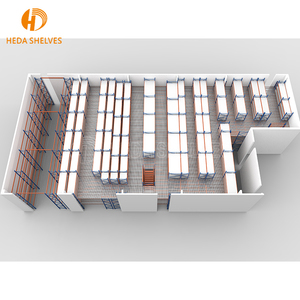
Our senior structural engineering team prepares comprehensive AutoCAD floor layouts, 3D BIM models, and static load distribution calculations before production commences.
Technical Passport Delivery
Every shipment bound for the Russian Federation is accompanied by a formal Russian-language Technical Passport (Технический паспорт), assembly guides, and load safety plates.
Frequently Asked Questions by Russian Buyers
Clear, technically rigorous answers covering customs, EAC clearance, structural compliance, sub-zero logistics, and payment terms.
How does CE certification correspond with Russian EAC (TR CU) and GOST R requirements? +
In the Russian Federation and Eurasian Economic Union (EAEU), industrial warehouse racking systems do not fall under mandatory technical regulations for machinery (TR CU 010/2011) unless they incorporate electrical automation or motorized shuttles. However, warehouse commissioning inspectors and fire safety authorities require compliance with GOST R 55525-2017.
Our factory holds CE Certificate No. 2435-CPR-8605159, confirming compliance with European structural standard EN 15512. For our Russian clients, we provide complete engineering documentation—including material yield certificates, factory static load calculation sheets, and Russian-language Technical Passports (Технический паспорт изделия)—enabling smooth issuance of voluntary GOST R conformity declarations and frictionless facility commissioning.
How do you prevent brittle fracture of steel picking racks in unheated warehouses in Siberia? +
Standard mild carbon steel (such as generic Q235A) suffers severe impact embrittlement below -10°C. For facilities operating in cold regions (Novosibirsk, Krasnoyarsk, Irkutsk) or industrial freezers (-25°C to -35°C), HEDA specifies low-temperature normalized steel grades (Q355D or low-alloy Russian equivalent 09G2S).
These steels undergo certified Charpy V-notch impact toughness verification down to -40°C. Furthermore, all structural welds are executed using cold-resilient welding consumables under automated shielding gas, preventing residual stress cracking under extreme thermal contraction cycles.
What shipping routes and transit times apply for deliveries to Moscow and St. Petersburg? +
We provide three primary shipping modalities to match project urgency and freight budgets:
1. Direct Railway Express (China-Russia Freight Train): Shipped via Manzhouli/Zabaikalsk to Vorsino or Bely Rast container terminals in Moscow. Transit time: 16 to 24 days.
2. Multimodal Sea-Rail via Far East: Ocean freight from Guangzhou to Vladivostok/Vostochny port, followed by Trans-Siberian Railway transport to central Russia. Transit time: 25 to 35 days.
3. Deep Sea Shipping: Direct maritime routes to the Port of St. Petersburg or Novorossiysk. Transit time: 35 to 45 days.
Can your picking racks be configured for both Euro (800×1200 mm) and Fin (1000×1200 mm) pallets? +
Yes. Russian distribution centers frequently receive goods on European EUR/EPAL 1 pallets (800×1200 mm) alongside heavy domestic and Finnish FIN pallets (1000×1200 mm). When designing your layout, our engineers calibrate beam lengths (such as 2,700 mm for 3 EUR pallets or 3,300 mm for 3 FIN pallets) and frame depths (usually 1,050 mm or 1,100 mm with heavy-duty pallet support bars).
This allows dual-compatibility without dangerous overhang or improper load distribution along structural cross-beams.
Do you account for seismic loads according to Russian building code SP 14.13330? +
Yes. In seismic-prone zones of the Russian Federation—including the North Caucasus, Irkutsk Oblast, and Kamchatka—warehouse structures must withstand lateral accelerations without frame collapse. Our structural analysis software models seismic forces based on SP 14.13330.2018 (Construction in Seismic Regions).
We supply thickened baseplates, reinforced anchor bolt patterns (M12 to M16 chemical/expansion anchors), and specialized cross-bracing towers designed to absorb ground motion energy safely.
What technical documentation is provided to support Russian municipal safety inspections? +
Every order ships with a comprehensive engineering package: complete AutoCAD assembly layout drawings with numbered components, beam load-capacity charts, structural calculation summaries referencing EN 15512 / GOST R 55525-2017, factory quality control inspection logs, and metallic load warning safety signs (Информационные таблички допустимых нагрузок) to mount at the entrance of each aisle as mandated by Russian labor safety codes.
What payment terms and transaction arrangements are available for Russian enterprises? +
We accommodate direct cross-border trade settlements in Chinese Yuan (CNY) through sanctioned-free commercial banking channels, ensuring smooth and rapid payment clearance without intermediary Western delays. Standard commercial payment structures include 30% T/T advance deposit upon CAD drawing confirmation and 70% balance payment prior to container dispatch or against the Bill of Lading (B/L).
Request an Engineered CAD Layout & Project Estimate
Provide your warehouse architectural drawing (PDF or DWG), ceiling clearance height, pallet specifications, and operating temperatures. Our certified racking engineers will deliver a free 3D simulation and transparent factory quotation within 24 hours.