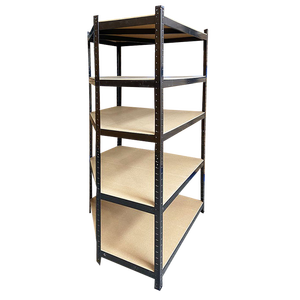
5-Tier Boltless Utility Tire & Rim Racks
Galvanized structural steel framework suited for passenger car tires, wheels, and shop maintenance utility areas requiring rapid hand loading and reconfigurability.
Manufactured using cold-rolled high-tensile structural steel, our storage systems deliver certified load capacities, boltless adjustability, and maximum cubic space utilization for facilities across the United States.
Galvanized structural steel framework suited for passenger car tires, wheels, and shop maintenance utility areas requiring rapid hand loading and reconfigurability.
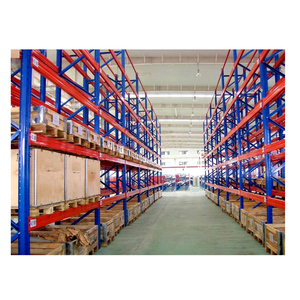
Engineered for bulk palletized tire distribution, truck tires, and nested passenger tires. Fully adjustable beam levels accommodate standard US 48"x40" pallet loads.
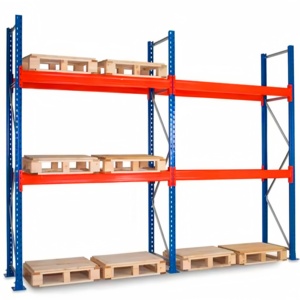
Certified high-yield steel frames designed to withstand commercial bus, heavy truck, and agricultural OTR tire storage weights up to 4,000 lbs per shelf tier.
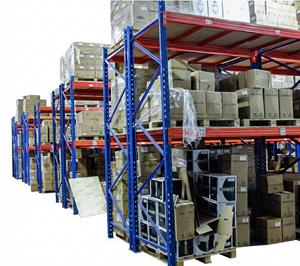
Epoxy powder-coated surface protection against humidity and rubber vulcanization fumes. Ideal for mid-bay manual order picking lines and fulfillment depots.
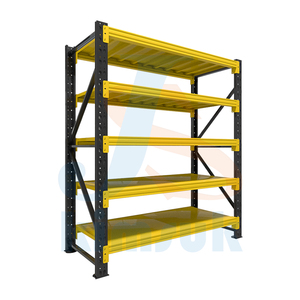
Stackable and portable tire rack solutions providing dynamic footprint reconfiguration during peak seasonal tire changeover spikes in dealership networks.
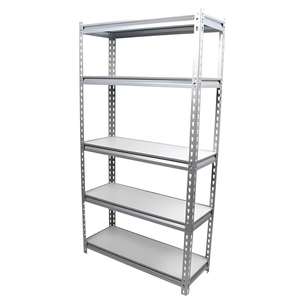
Quick-assembly rivet and teardrop design optimized for tire tread display, retail showrooms, auto service departments, and high-density maintenance bays.
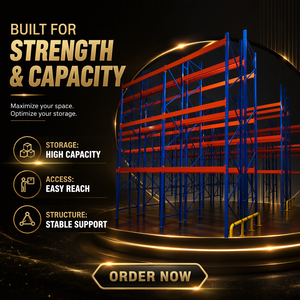
Maximized vertical clearance reaching up to 40 feet. Tailored for wire-guided or rail-guided turret trucks in mega-scale regional tire distribution centers.
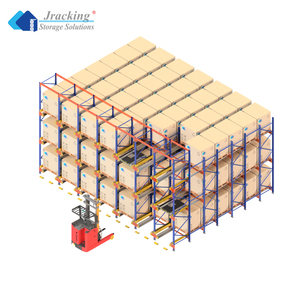
Next-generation robotics-integrated pallet runner designed for lights-out deep lane tire buffering, significantly reducing forklift transit and operator labor costs.
Monthly Steel Processing Capacity
Years of Engineering Excellence
Global Facilities Equipped
RMI & OSHA Structural Alignment
Industrial tire storage represents one of the most mechanically demanding segments within the United States material handling and intralogistics industries. Unlike conventional, rigidly packaged palletized freight, rubber tires introduce unique structural engineering challenges: high concentrated point loads, elastic deformation over prolonged static positioning, variable friction coefficients, and stringent fire-protection classifications enforced under National Fire Protection Association (NFPA 13) standards.
As tier-1 distributors, national retail automotive franchisors, and commercial fleet depots across Texas, California, Ohio, and Pennsylvania modernize operations, the demand has shifted drastically from obsolete timber mezzanines or non-rated light shelving toward certified, heavy-duty cold-formed structural steel tire racking. RMI (Rack Manufacturers Institute) compliance and seismic anchoring calculations per IBC (International Building Code) 2024 standards are now non-negotiable baselines for domestic project permitting.
| Racking Topology | Tire Configuration Profile | Storage Density | Forklift / Equipment Interface | NFPA 13 Fire Flue Compliance |
|---|---|---|---|---|
| Selective Tire Racks | Tread-Standing (Passenger / Light Truck) | Direct 100% Selectivity | Standard Counterbalance / Reach | High (Unobstructed Transverse Flues) |
| VNA High-Bay Racks | Interlaced Barrel Stacking / Palletized | Ultra-High (Aisles < 65 Inches) | Man-Up Turret Trucks / Articulated | Requires In-Rack Sprinkler Integration |
| Stackable Modular Racks | Laced / Interlaced Bulk Truck & OTR | Flexible Dynamic Footprint | Forklift Fork Pocket Interface | Medium (Depends on Array Spacing) |
| 4-Way Radio Shuttle | Palletized / Deep Lane Batch Runs | Maximum Cubic Efficiency | Autonomous Robotic Carriers (AGV/AMR) | Engineered Integrated Flue Channeling |
Furthermore, preventing tire deformation requires precisely calculated beam geometry. Step beams with continuous angled chamfers or dual-pipe horizontal supports cradle tires along their rotational shoulder curves, avoiding permanent flat-spotting during extended inventory holding cycles. This engineered contouring preserves factory bead geometry—a critical quality requirement for high-speed radial and EV-rated tire segments.
Custom structural calculations tailored to regional seismic zones, local frost heave requirements, and facility material workflows.
Designed for major supply-chain crossroads such as Dallas-Fort Worth, the Inland Empire, and Chicago. High-capacity structural uprights allow multi-tier pallet racking that supports both laced and tread-standing SKUs with rapid turnover cycles.
Heavy-duty, reinforced frame profiles engineered specifically for wide-base steer, drive, and trailer tires utilized in municipal transit, freight trucks, and agricultural machines where individual tire weights exceed 150 lbs.
Compact teardrop and boltless longspan systems for dealer backshops and regional tire franchises. Delivers clean aesthetics, durable electrostatic powder coating, and immediate manual access for quick customer turnaround.
1. EV Weight Classes Altering Structural Deflection Ratios: Electric vehicles (EVs) have caused average tire weight and footprint volume to surge by 20% to 35% due to reinforced sidewalls and broader treads designed to withstand battery curb weight and instantaneous torque. Storage systems must feature upgraded beam moment gauges and heavy-gauge column baseplates to prevent structural frame fatigue.
2. NFPA 13 Strict Solid-Flue Regulations: Warehouse fire safety marshals in states with dense logistics infrastructures now routinely shut down unpermitted laced tire storage that breaches vertical flue spaces. Advanced tire racking now incorporates open-wire waterfall decking or integrated ESFR (Early Suppression, Fast Response) fire suppression drops within upright frame columns.
3. Automation Synergy and Lights-Out Depots: Facing labor constraints across Midwest industrial corridors, automated four-way shuttle systems and automated guided forklifts (AGFs) are increasingly integrated with heavy-duty structural steel racking, streamlining high-volume bulk tire buffering without requiring personnel inside narrow rack rows.
Over two decades of precision fabrication, delivering end-to-end quality assurance from raw coil slit processing to global port logistics.
Certified factory compliance (CE No. 2435-CPR-8605159; ISO 9001:2015 No. 18624Q00169R0M) ensuring metallurgical traceability, yield testing, and high dimensional tolerances.
Dedicated structural engineers produce full CAD site layouts, static load engineering calculations, and aisle traffic simulations before order sign-off to accelerate US permit approvals.
Continuous roll-forming lines, automated CNC multi-head punch presses, robotic seam welding, and pre-treatment phosphating prior to electrostatic powder coating.
Direct ocean container staging to all major US ports—Long Beach, Houston, Savannah, New York/New Jersey—with seaworthy bundled steel packing to prevent transit abrasion.
Direct insights covering codes, seismic engineering, lead times, and custom configurations for American warehouse projects.
Yes. Our rack designs utilize structural steel conforming to Q235B/Q355 standards (comparable to ASTM A36 / ASTM A572 Grade 50) and are calculated referencing RMI (Rack Manufacturers Institute) MH16.1 specifications. Structural load rating placards, minimum deflection tolerances under L/240 conditions, and safety column guards are engineered directly into the layout.
NFPA 13 classifies rubber tires as severe fire hazards requiring clear longitudinal and transverse flue spaces (typically 6 inches minimum) to permit fire sprinkler penetration. We configure our tire racking with engineered back-to-back row spacers, open wire decking, or segmented beam stops that ensure operators cannot inadvertently push tires into flue lanes.
Yes. For installations in western US states or regions categorized under high Seismic Design Categories (SDC C through F), we calculate enlarged footplates, heavy-gauge baseplate anchors, and stiffened upright bracing panels to meet local building department stamp requirements.
Production for typical commercial orders (1 to 5 forty-foot high-cube containers) is completed within 15 to 25 business days. Sea transit from our loading ports to West Coast hubs (Los Angeles/Long Beach) takes roughly 16 to 20 days; Gulf and East Coast ports (Houston, Savannah, NY/NJ) average 28 to 35 days.
As a true original equipment manufacturer (OEM), we regularly produce custom upright depths, beam span lengths, and special tube profiles suited for specific tire diameters. We offer computerized powder-coating matching any standard RAL shade or fleet corporate brand colors at no additional engineering charge.
Send your building dimensions, clear roof heights, and target tire capacity to receive an optimized 2D/3D CAD layout, load capacity calculation, and direct factory proposal within 24 hours.
Contact Us