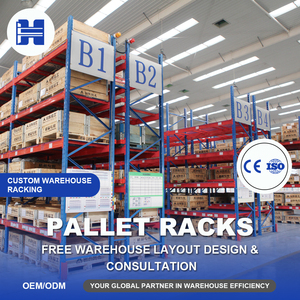
Engineered Heavy-Duty Inventory Systems
Featured Heavy Storage & Pallet Racking Portfolios
Precision-machined structural racks built directly in our 30,000 m² automated production facility, pre-tested for AS 4084 steel storage standards and containerized for swift dispatch to Port Botany.
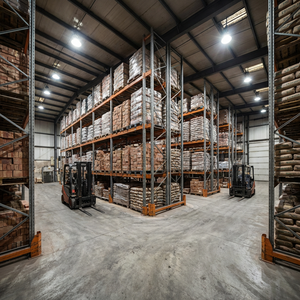
Distributor Direct
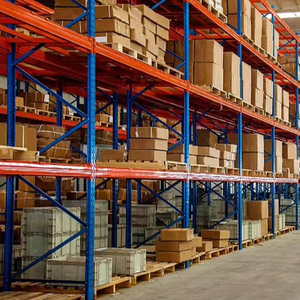
OEM Heavy Duty Warehouse Selective Racking System For Warehouse Storage
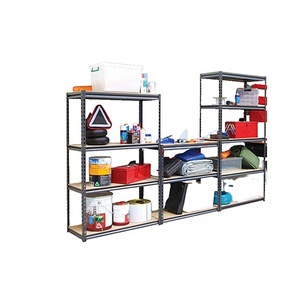
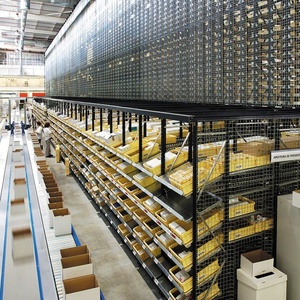
Small Part Storage
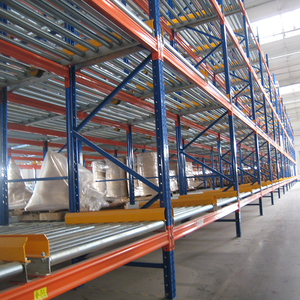
Commercial Shelving Units Heavy Duty Warehouse Rack
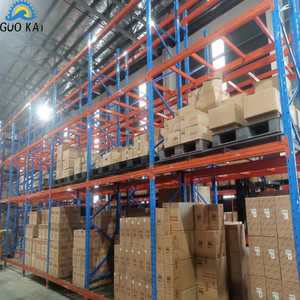
Sydney Supply Chain Strategic Analysis
Overcoming Sydney’s Industrial Land Premium via Very Narrow Aisle (VNA) Architecture
A technical evaluation of footprint optimization, vertical utilization, and material handling physics across Greater Western Sydney and Port Botany freight belts.
Industrial land values across metropolitan Sydney—particularly in key distribution clusters such as Eastern Creek, Erskine Park, Horsley Park, Moorebank, and the emerging Aerotropolis region—command some of the highest lease rates and capital values across the Asia-Pacific region. Warehousing operators, third-party logistics providers (3PLs), and industrial wholesalers face unprecedented pressure: warehouse vacancy rates remain tight while square-meter rental overheads escalate relentlessly. In response, modern logistics engineering has pivoted from horizontal footprint expansion to intensive vertical volumetric utilization.
Traditional selective pallet racking systems require aisle working widths ranging from 3.2 to 3.8 meters to accommodate standard counterbalance or reach forklifts. This layout allocates up to 60% of available warehouse floor plate purely to handling equipment transit corridors rather than revenue-generating pallet positions. By deploying engineered Very Narrow Aisle (VNA) Racking, operating corridors shrink dramatically to between 1.5 and 1.8 meters. Paired with articulated turret trucks or Man-Up trilateral stackers navigating high-tolerance guide rails or inductive floor wire systems, VNA increases overall cubic storage capacity by 45% to 60% within the identical building footprint, without compromising direct 100% selectivity to every individual pallet.
Engineering Insight: Australian Pallet Compatibility (AS 4084:2023)
Unlike European warehousing engineered around EPAL/EUR pallets (1200 mm × 800 mm), Australian supply chains operate ubiquitously on standard CHEP / Loscam pallets (1165 mm × 1165 mm). Direct export into Sydney demands precise beam configuration: frame depths must be set to 1100 mm to ensure the mandatory 50 mm front-and-rear overhang, while bay lengths are calibrated to 2740 mm or 2750 mm for two-pallet bays. This standard provides the critical clearance margins required under AS 4084:2023 and prevents hazardous beam deflections under asymmetric loading.
Volumetric Comparison Matrix: VNA vs. Conventional Systems
| Storage System Type | Aisle Clear Width | Vertical Clear Reach | Floor Space Efficiency | Stock Access (Selectivity) | Handling Truck Infrastructure |
|---|---|---|---|---|---|
| Narrow Aisle (VNA) Pallet Racking | 1,500 mm – 1,850 mm | Up to 17.5 Meters | 85% – 90% Ultra-High | 100% Direct (Individual Bay Access) | Turret Truck / Trilateral VNA (Wire or Rail Guided) |
| Standard Selective Racking | 3,200 mm – 3,800 mm | Up to 10.5 Meters | 45% – 50% Low | 100% Direct (Individual Bay Access) | Standard Counterbalance / Reach Trucks |
| Double Deep Racking | 3,000 mm – 3,400 mm | Up to 11.0 Meters | 60% – 65% Medium | 50% Immediate (Requires Shunting) | Pantograph Reach / Telescopic Forklifts |
| Drive-In / Drive-Through Rack | Lane Dependent | Up to 12.0 Meters | 75% – 85% High | LIFO / Bulk SKUs (Low Selectivity) | Standard Counterbalance with Mast Guarding |
NSW Strategic Implementation
Engineered Scenarios for Sydney’s Prime Industrial Hubs
Tailored narrow aisle rack engineering deployed across critical logistics corridors, e-commerce fulfilment centres, and temperature-controlled facilities.
Western Sydney Aerotropolis & Badgerys Creek
The rise of 24/7 multimodal logistics hubs surrounding the Nancy-Bird Walton Airport demands ultra-dense, fast-throughput warehousing. We engineer high-bay VNA racks up to 16.5 meters with reinforced floor anchoring plates, accommodating intense rotational shifts and high SKU counts in cross-dock environments.
Moorebank Intermodal & Port Botany De-Stuffing
Rail freight and ocean containers transiting through Port Botany demand high-density buffer storage. Our heavy-duty beam profiles (cold-formed Q235B/Q355B structural steel) withstand severe cyclical dynamic impact loads while integrating custom top-tie bracings to neutralize structural sway during concurrent loading cycles.
Eastern Creek & Marsden Park 3PL Distribution
Contract logistics facilities serving major retail supermarket chains (Woolworths, Coles) and pharmaceutical suppliers require split-level pick faces. Our VNA configurations integrate bottom-level carton flow lanes or heavy steel wire mesh decks for ground-level replenishment under multi-tiered high-bay bulk reserves.
2001
Founded & Engineering Racks
30,000 m²
Advanced Manufacturing Base
30,000 t
Monthly Production Capacity
10,000+
Global Warehouses Installed
Technical Compliance & Structural Safety
Engineering to AS 4084:2023 & Sydney Floor Flatness Demands
High-bay narrow aisle installations amplify mechanical stresses. Compliance requires rigorous structural analysis, precise slab interfacing, and high-tensile metallurgy.
In narrow aisle operations extending above 10 meters, minute deflections at the baseplate translate into substantial lean angles at the top beam level. Consequently, the Australian Standard AS 4084:2023 (Steel Storage Racking) enforces stringent criteria covering limit state structural calculations, upright column perforation shear strengths, seismic action parameters (under AS 1170.4 for Sydney’s geotechnical conditions), and mandatory load signage visible at every aisle entrance.
Furthermore, VNA efficiency relies completely on the interaction between the handling vehicle and the concrete floor. Under the Concrete Society's Technical Report TR34 (or DIN 18202 / ASTM F-min ratings), VNA operating floors in Sydney must achieve Superflat or Fmin-100 floor flatness standards. When concrete tolerances diverge slightly, our factory supplies micro-adjustable shim packs (galvanized 1.0 mm to 5.0 mm cold-rolled steel) and high-load M12/M16 chemical anchor bolt patterns that distribute uplift and downward axial forces securely into the building slab.
Our 10-Step Precision Automated Manufacturing Pipeline
Every component exported to Australian sites undergoes automated forming, multi-point digital checking, and ISO 9001 certified surface protection.
01
Raw Steel Chemical Testing
02
Precision CNC Slitting
03
Automated Column Punching
04
Continuous Cold Roll Forming
05
Profile Roll Forming & Calibrating
06
Surface Deburring & Polishing
07
Robotic Beam Connector Welding
08
Pickling & Phosphating Wash
09
Electrostatic Powder Polymerization
10
Ultrasonic QC & Seaworthy Packing
Sydney Project Procurement Q&A
Frequently Asked Questions by NSW Project Directors & Wholesalers
Engineering documentation, customs handling, installation safety, and Australian racking standard alignment answered transparently.
How do your VNA racking systems comply with Australian Standard AS 4084:2023?
Our systems are engineered strictly around the limit states design methods stipulated in AS 4084:2023. We utilize high-yield cold-formed structural steel certified with mill test certificates (MTC). Finite element analysis (FEA) and physical stub-column tests determine our published beam deflection ratios (strictly limited to span/200 under Safe Working Loads) and beam end connector moment-rotation curves. Full engineering calculations and safe working capacity plaques (displaying unit loads, shelf levels, and total bay capacity) accompany every shipment for third-party engineering sign-off in NSW.
Can your factory accommodate standard Australian CHEP / Loscam pallets?
Yes. We routinely manufacture frame profiles custom-sized for standard 1165 mm × 1165 mm Australian hardwood and plastic pallets. Frame depths are calibrated to 1100 mm to maintain proper 50 mm entry and rear overhang clearances. Our box beams and stepping beams are engineered in standard lengths of 2591 mm (two 1165 mm pallets tight configuration), 2743 mm (standard two-pallet bay with 75–100 mm lateral clearances), and 3840 mm (three-pallet configurations), with welded connector pins fitting 50 mm, 75 mm, or 76.2 mm pitch adjustment uprights.
What guidance system options do you supply for VNA turret trucks?
We supply two industry-standard guidance interfaces: mechanical guide rail profiles (heavy-duty 100 mm × 50 mm structural angle iron or inverted steel channels mounted with floor anchors and lead-in flaring horns at aisle ends) and wire-guided layouts (where we coordinate beam levels and baseplate footprints to keep aisle centers entirely free for concrete saw-cut inductive wire placement).
What are the typical sea freight transit times and customs protocols for Sydney?
Manufacturing typically requires 15 to 25 calendar days depending on bay volume. Ocean freight from our plant via Huangpu/Nansha/Yantian to Port Botany (Sydney) typically takes 14 to 18 days on direct express maritime loops. We provide comprehensive export documentation including Clean On-Board Bills of Lading, Commercial Invoices, Packing Lists with itemized weight/cube breakdowns per bundle, and China-Australia Free Trade Agreement Certificates of Origin (ChAFTA Ch-AU COO) allowing tariff-free importation into Australia.
Do you provide private label OEM / ODM manufacturing for Australian racking distributors?
Yes. We are an authorized OEM/ODM production partner for major racking brands and storage system installers throughout Australia. We customize upright punch profiles, beam connector bracket geometry, corporate RAL electrostatic powder coatings (high-gloss, matte, or textured safety finishes), custom component stamping, barcoded batch stickers, and container packing configurations designed for direct forklift de-stuffing at Australian depots.
How are high-bay seismic loads handled for installations in the Sydney Basin?
Although Australia is not located on a major tectonic plate boundary, the Sydney Basin is classified under AS 1170.4 (Earthquake Actions in Australia) with an acceleration coefficient requiring deliberate seismic engineering. For VNA installations exceeding 8 meters in height, we run structural models that incorporate horizontal seismic shear, portal frame sway bracing, spine-to-spine row spacers, and upgraded heavy-duty ductile steel baseplates secured with chemical adhesive anchors to ensure total frame integrity during an event.