Featured Industrial Racking Systems for Qatari Warehouses
Direct factory supply of heavy-duty, high-density, and dynamic pallet racking solutions configured specifically for regional climate resilience, ISO/Euro pallets, and maximum floor space efficiency.
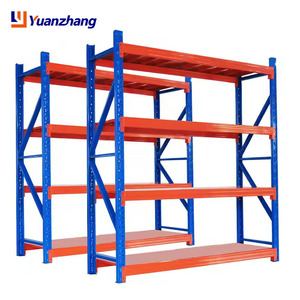
Heavy Duty Adjustable Pallet Storage Rack
Multi-layer super load-bearing industrial selective rack system engineered with adjustable 75mm beam pitch and high-yield cold-rolled steel.
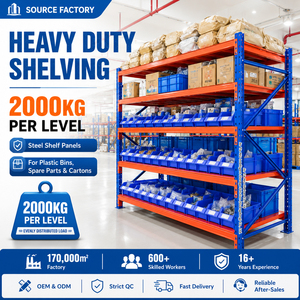
2000KG Heavy Duty Shelving System
5-tier adjustable structural steel deck system tailored for spare parts, heavy maintenance bins, hardware wholesale, and box logistics.
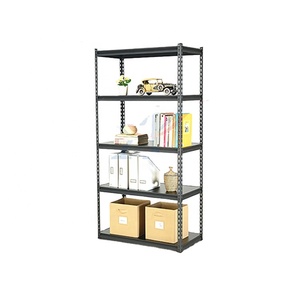
5-Layer Slotted Angle Storage Rack
Precision sheet metal slotted angle unit with corrosion-resistant anti-rust pre-treatment, modular deck options, and swift boltless assembly.
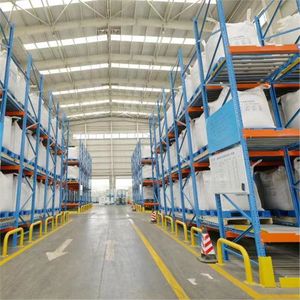
Heavy Duty FIFO Gravity Roller Racking
Dynamic gravity flow rack with calibrated brake rollers, 1,000kg/pallet threshold, and continuous rotation ideal for perishable cold food storage.
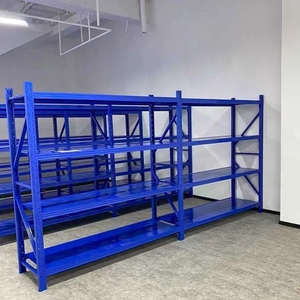
Long Span Multi-Function 5-Layer Rack
Durable anti-rust 500-800kg per layer adjustable shelving built for cash-and-carry stores, fulfillment facilities, and automotive display hubs.
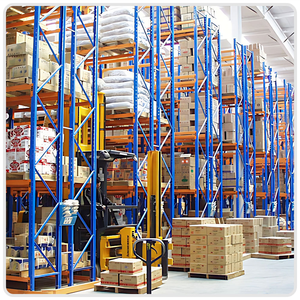
Drive-Through Warehouse Pallet Racking
Continuous lane pallet racking optimizing cubic building volume by removing forklift operational aisles for large-batch manufacturing sites.
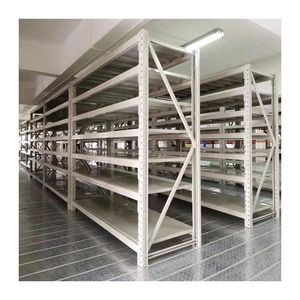
Warehouse Metal Storage Shelving Units
200kg load rating per tier, precision beam-to-upright lock connection, powder-coated finish suitable for high-density manual split-case picking.
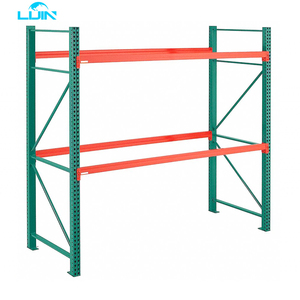
Tear Drop Pallet Racking System
Universal tear-drop hole pitch industrial pallet racks offering rigid beam-to-frame connection, high impact resistance, and versatile reconfiguration.
Engineering Principles: Push Back Racking Kinematics & Volumetric Efficiency
Push back pallet racking is an advanced, gravity-driven dynamic storage system designed to maximize warehouse cube utilization without compromising picking face accessibility. Operating on a Last-In, First-Out (LIFO) inventory management framework, push back racking systems accommodate nested roll-formed structural carts that travel on inclined structural steel channels. When an initial pallet is deposited into the lane, it rests on the topmost nesting cart. Subsequent pallets push the preceding cart backward along low-friction precision ball-bearing wheel channels, exposing the next cart beneath. Systems typically span 2, 3, 4, 5, or even 6 pallets deep per lane.
Unlike conventional drive-in systems where lift trucks must enter the structural core of the rack—substantially increasing the hazard of rack upright impact and slowing cycle times—push back racking confines forklift transit entirely to the main service aisle. The forklift mast remains outside the racking structure at all times. When retrieving stock, the removal of the aisle-facing pallet causes the trailing pallets to slowly and smoothly glide forward via controlled gravitational descent, presenting the subsequent pallet at the pick-face without manual intervention or electronic automation.
Mechanical Subassemblies & Structural Dynamics
For industrial warehouse developers and supply chain operators in Doha, Qatar, the structural integrity of push back systems hinges on precision engineering. Guangzhou Heda Shelves manufactures push back systems incorporating cold-rolled structural steel sections with exceptional yield thresholds. Nesting carts are calibrated with staggered elevations to eliminate cart binding, jamming, or erratic acceleration.
Key physical subassemblies include heavy-gauge inclined structural guide rails (engineered at a standard 2.5% to 3.5% incline), high-tensile steel roll-formed carts, anti-lift safety catches, and heavy-duty mechanical cart stops. In cold-chain installations, low-temperature synthetic lubricants and sealed stainless bearings prevent freeze-locking at temperatures descending to -30°C.
Comparative Storage Density Matrix: Push Back vs. Alternative Systems
| Storage System Type | Space Utilization | Pallet Selectivity | Forklift Damage Risk | Handling Speed | Ideal Application Scenario |
|---|---|---|---|---|---|
| Push Back Racking (2–6 Deep) | 75% – 85% | Lane-Level (Moderate-High) | Extremely Low | Fast (External Aisle) | Medium SKU count, 3-10 pallets/SKU, Cold Depots |
| Standard Selective Racking | 40% – 50% | 100% Individual Pallet | Low | Rapid Direct Pick | High SKU fragmentation, 3PL Fulfillment Centers |
| Drive-In Racking | 80% – 90% | Block-Level (Very Low) | High (Internal Entry) | Slow (Deep Maneuvering) | Homogeneous bulk raw materials, Seasonal overflow |
| Radio Shuttle Cart Racking | 85% – 92% | Lane-Level Semi-Automated | Very Low | High Semi-Autonomous | Ultra-deep mega freezers, Automated distribution |
Zero In-Rack Truck Travel
Forklifts operate purely outside the framework. Eliminates up to 90% of frame collision damages prevalent in conventional Qatari drive-in installations.
Independent Lane Selectivity
Each bay and level functions as an autonomous storage lane. Warehouses can maintain different SKUs on adjacent tiers, preserving selectivity.
Gravity Flow Control
Multi-stage nested carts automatically catch returning loads, providing smooth mechanical deceleration and complete operator stability during retrievals.
Localized Applications Across Doha's Industrial Corridors
The State of Qatar's rapid infrastructure transition has concentrated high-density warehousing requirements within specialized master-planned logistics territories across Greater Doha and the Al Wakrah / Mesaieed industrial axis. Push back racking systems engineered by HEDA Shelves address the distinct physical, operational, and commercial parameters of these strategic hubs:
Under Manateq's economic zones framework, Birkat Al Awamer features extensive logistics warehousing dedicated to consumer packaged goods and building hardware. Because warehouse footprint land concessions carry stringent developmental timelines and premium lease capital, 3-deep and 4-deep push back racks deliver optimal pallet density while maintaining individual lane accessibility for multi-brand distributors.
The traditional Industrial Area features legacy warehouse structures with restricted floor areas and varying ceiling clearances (6m to 9m). Push back racking transforms older rectangular layouts by doubling storage capacity against perimeter walls without demanding broad forklift turning radiuses, enabling machinery suppliers to consolidate inventories within existing properties.
Adjacent to Hamad International Airport (HIA) and Hamad Port, the Qatar Free Zones Authority (QFZA) zones demand rapid import-re-export turnarounds. Precision-engineered push back carts allow express bonded freight forwarders to stage high-turnover cargo lanes with instant retrieval cycle times and zero risk of crushing high-value packaging.
In Qatar’s intense summer conditions where ambient temperatures surpass 48°C, refrigerated cold-store power consumption represents the highest continuous operating expenditure. Push back racking reduces refrigerated cubic air wastage by up to 45% compared to selective racking. Because forklifts never penetrate the cold lanes, thermal curtains and insulated high-speed doors experience reduced open-aperture time, protecting perishable meat, dairy, and pharmaceutical integrity.
Macro Trends Shaping Warehousing: Qatar National Vision 2030
Under the economic diversification pillars of the Qatar National Vision 2030 (QNV 2030) and the Third National Development Strategy (NDS3), the State of Qatar is repositioning its domestic economy toward robust re-export capabilities, national food security mandates, and high-efficiency industrial manufacturing. Key structural trends impacting racking procurement include:
1. National Food Security Strategy Mandates
Qatar’s Ministry of Municipality continues to enforce strategic food reserve requirements across grain, frozen poultry, dairy, and long-shelf-life goods. Warehouses contracted under food security reserves require heavy-load systems capable of carrying 1,200kg to 1,500kg per pallet with uncompromised safety margins. Push back racking enables high-density batch storage of reserve goods while retaining instant stock visibility on front faces.
2. Surging E-Commerce & Omni-Channel Retailing
Domestic e-commerce expansion in Doha, Lusail, and Al Wakrah requires fast consolidation hubs. Logistics engineers frequently pair ground-level carton flow or selective racks with multi-tier push back racks overhead, converting overhead warehouse clear heights into high-density pallet buffers.
3. Rising Cost of Industrial Land Concessions
While government-developed logistics parks provide modern utilities, industrial warehouse lease rates per square meter create substantial financial pressure. Upgrading from standard selective racks to push back racking instantly unlocks 60% to 75% more pallet positions within the existing footprint, eliminating the need to lease secondary facilities.
Doha Procurement Technical Guide: Civil Defence (QCDD) & Environmental Codes
Procuring industrial racking for Qatari facilities involves strict engineering scrutiny. Systems must adhere to local municipal fire department standards, environmental microclimates, and regional pallet standards:
Qatar Civil Defence (QCDD) Fire Safety
QCDD requires precise flue space calculation (longitudinal and transverse flue gaps of 150mm to 300mm) to ensure ESFR (Early Suppression, Fast Response) ceiling fire sprinklers can penetrate deep pallet arrays. HEDA Shelves engineers CAD layouts adhering strictly to NFPA 13 guidelines recognized by QCDD inspectors.
High Humidity & Desert Salinity Corrosion
Coastal proximity (Doha Port, Ras Laffan, Mesaieed) brings high ambient humidity combined with airborne salts. HEDA Shelves applies an 8-stage automated pre-treatment featuring pickling, phosphating, and electrostatic powder coating baked at 180°C–200°C to guarantee exceptional salt-spray corrosion resistance.
Pallet Standard Interoperability
Qatari logistics hubs routinely handle both Euro Pallets (1200 x 800 mm) and standard ISO / GMA / Industrial Pallets (1200 x 1000 mm). Push back carts must be custom-manufactured with integrated structural cross-members to seat varied bottom deck-board orientations securely without risk of sag.
Structural Engineering Calculations & Steel Quality Benchmarks
Every push back racking system fabricated by Guangzhou Heda Shelves conforms to internationally acknowledged structural codes, including EN 15512 (Steel static storage systems – Adjustable pallet racking systems – Principles for structural design) and RMI (Rack Manufacturers Institute) standards. Uprights and beams are cold-formed from high-grade structural coil steel (Q235B / Q355B equivalent to S235JR / S355JR). FEA (Finite Element Analysis) stress simulations are generated for every project to ensure upright deflection values remain well within the permissible 1/200th span threshold under total static dead and live loads.
Manufacturer Pedigree: Guangzhou Heda Shelves Co., Ltd.
Founded in 2001, Guangzhou Heda Shelves Co., Ltd. has developed into an internationally certified leader in the design, engineering, and manufacturing of heavy-duty industrial storage racks, mezzanine platforms, and automated racking solutions. Spanning over 30,000 m² of modern production facilities and staffed by over 300 experienced fabrication specialists and structural engineers, our monthly output exceeds 30,000 tonnes.
Direct Factory Advantages for Qatari Contractors & Facility Owners
When ordering from HEDA Shelves, clients in Doha bypass intermediary trading markups, accessing direct OEM/ODM engineering precision backed by comprehensive factory warranties:
- Full Technical Certification: Verified CE Certificate No. 2435-CPR-8605159, ISO 9001:2015 Quality Management System Certificate No. 18624Q00169R0M, and comprehensive RoHS compliance testing reports.
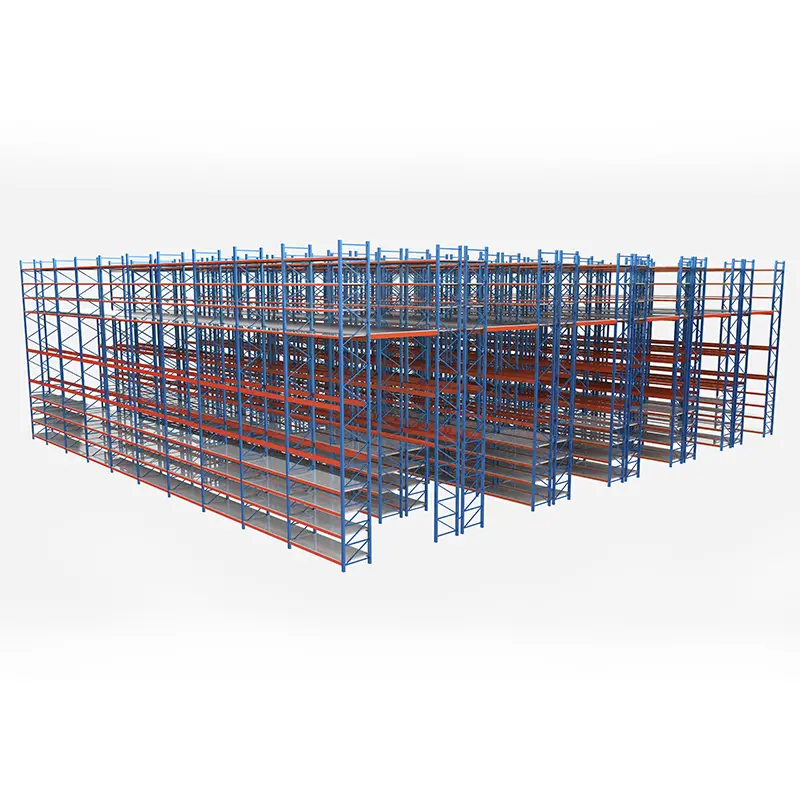
- Complimentary 3D & CAD Layouts: Our dedicated engineering desk provides warehouse floor plan space-optimization drawings (DWG/PDF) and 3D structural visualizers within 24–48 hours of initial brief submission.
- Custom RAL Powder-Coating: Fully tailored corporate aesthetics or hazard safety color schemes (Safety Orange RAL 2004, Ultramarine Blue RAL 5002, Signal Yellow RAL 1003).
- Direct Ocean Freight to Hamad Port: Direct containerized vessel routing from Nansha/Huangpu ports to Hamad Port (Umm Al Houl) in 18 to 26 days sea transit, complete with seaworthy bundle protection.
Frequently Asked Questions: Push Back Racking Procurement in Doha
What is the typical shipping lead time from your factory to Hamad Port (Doha)?
How does push back racking comply with Qatar Civil Defence (QCDD) sprinkler regulations?
Can HEDA push back systems handle non-standard or damaged wooden pallets?
What floor slab specifications and concrete anchor depths are required?
Can the system operate reliably in cold store and blast freezer facilities in Qatar?
Do you provide structural calculation sheets and drawings for municipal building approval?
How does push back compare in operational cost to automated Radio Shuttle systems?
Request an Engineered CAD Layout & Factory Quote for Doha
Connect directly with our senior racking structural engineering team. Submit your warehouse floor plan (DWG/PDF), clear height, and pallet specifications to receive a complimentary space-optimization study, structural calculations, and direct factory pricing within 24 hours.