AS 4084:2023 Compliant Industrial Engineering

Single Deep Selective Pallet Rack Manufacturers & Suppliers for Australia

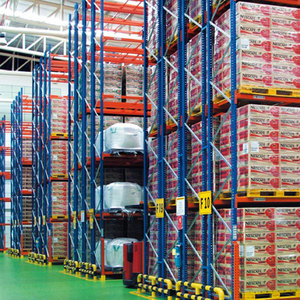
Precision-engineered, heavy-duty structural steel selective racking tailored for CHEP and Loscam 1165mm × 1165mm standard Australian pallets, certified to SafeWork Australia standards and Australian National Construction Code (NCC) design guidelines.

Engineered Racking Portfolio

High-Performance Storage Racking for Australian Operations

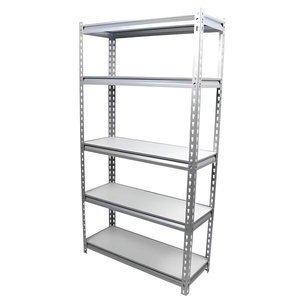
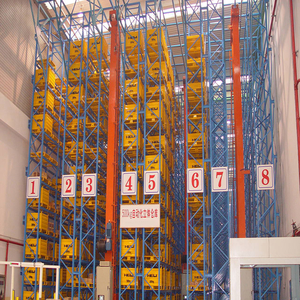
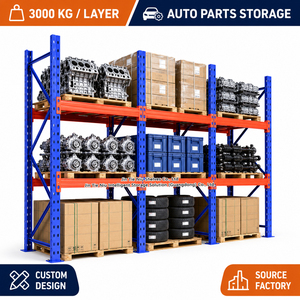
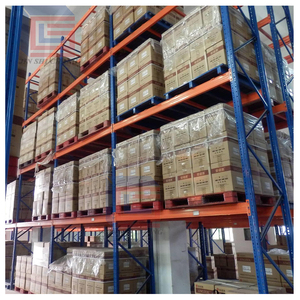
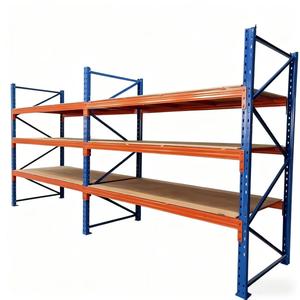
Explore our heavy-duty warehouse racking and industrial storage platforms manufactured with certified high-tensile structural steel, multi-bend upright columns, and precision beam connectors.
Send an Inquiry
Technical Whitepaper & Engineering Specifications

Single Deep Pallet Racking Architecture under AS 4084:2023

A rigorous examination of metallurgy, beam deflection criteria, and upright column dynamics engineered specifically for the Australian logistics environment.

In the Australian warehousing and supply chain sector, Single Deep Selective Pallet Racking constitutes the backbone of modern material handling. Offering 100% immediate selectivity to every single pallet position, it provides logistics operators with direct SKU accessibility without honeycombing or multi-handling bottlenecks. However, specifying single deep racking for Australia requires a strict departure from standard European (EN 15512) or North American (RMI ANSI MH16.1) design envelopes due to distinct national regulatory mandates, structural load requirements, and unique material handling handling dimensions.

1. The Geometry of the Australian Pallet: Designing for AS 4068-1993

Unlike the European pool pallet (EUR 1: 1200mm × 800mm) or the North American GMA footprint (48" × 40" / 1219mm × 1016mm), the Australian logistics ecosystem is standardized around the square 1165mm × 1165mm (46" × 46") wooden pallet, institutionalized by CHEP and Loscam pursuant to AS 4068-1993. This dimensional reality directly dictates racking frame depth and clear entry bay widths:

  • Frame Depth Optimization: Standard racking systems designed for Australian 1165mm pallets demand an upright frame depth of either 838mm (giving a nominal 163.5mm overhang on both front and rear) or 1067mm – 1100mm when paired with pallet support bars or mesh decks. An optimal frame depth prevents bottom-board cracking on Australian hardwood pallets while ensuring positive beam engagement.
  • Clear Bay Widths (2-Pallet vs 3-Pallet Bays): To accommodate two AS 4068 pallets with mandatory 75mm minimum lateral clearances between adjacent pallets and 75mm between pallets and upright columns, the engineering standard for clear entry bay width is 2591mm (8'6") or 2743mm (9'0"). For 3-pallet configurations, clear spans of 3810mm are fabricated with heavy-duty box beams engineered to counteract excessive middle-span deflection.

2. Structural Rigidity and Compliance with AS 4084:2023

In March 2023, Standards Australia updated the core regulatory reference to AS 4084:2023 (Steel Storage Racking), divided into Part 1 (Design) and Part 2 (Operation and Maintenance). Compliance is mandatory across all Australian states under SafeWork Australia workplace health and safety (WHS) regulations. Our selective pallet racking platforms are rigorously computed to comply with the key mandates of this updated code:

  • Beam Deflection Limit: AS 4084 enforces that under maximum uniformly distributed load (UDL), horizontal beam deflection shall not exceed L/200 (where L is the clear span length), which is significantly more stringent than older international allowances of L/180. This prevents dynamic forklift fork-binding during high-elevation pallet disengagement.
  • Beam Safety Locks: Each beam-to-frame connector must be secured with an engineered safety pin capable of withstanding an upward dislodgement shear force of not less than 5.0 kN, mitigating accidental lifting by forklift mast carriages.
  • Seismic Action pursuant to AS 1170.4: Even in low-to-moderate seismic zones such as Sydney, Melbourne, and Brisbane, AS 4084 requires explicit verification of dynamic seismic response factors ($k_p$, $Z$, and site subsoil classes), dictating baseplate anchoring depth, anchor bolt shear ratings (e.g., M12 concrete expansion or screw anchors), and upright bracing patterns.
Component Specification Technical Baseline (AS 4084:2023 Standard) Material / Metallurgy Standard Operational Safety Metric
Upright Columns (Post Profile) 80mm, 90mm, 100mm, 120mm web widths; multi-rib cold roll-formed High-Tensile Q355B (Eq. AS/NZS 3678 Gr 350) Buckling resistance verified via finite element analysis
Upright Frame Depth 838mm, 1067mm, 1100mm, 1200mm (Double Deep) Structural hollow & channel cross-bracing Optimal 50mm-100mm overhang for 1165mm CHEP pallets
Load Beams (Box / Step) 80×50mm up to 160×50mm twin-C interlocked box profiles Q235B / Q355B cold-rolled strip steel Deflection limited to ≤ L/200 under rated capacity
Beam Connectors 3-claw, 4-claw, and 5-claw wrap-around connector brackets High-ductility pressed structural steel plate Resists > 5.0 kN vertical uplift safety shear force
Surface Protection Finishes Electrostatic thermoset powder coating (60-80 μm) / HDG Epoxy-polyester hybrid powder (Lead-free RoHS) 500-hour salt spray resistance; hot-dip galvanized for chillers
Floor Anchor Footplates Heavy-duty baseplate (150×120×4mm minimum) AS/NZS 1594 Grade HA250 plate Dual M12×100mm chemical or mechanical floor anchors
Send an Inquiry

25+

Years of Engineering Manufacturing (Since 2001)

30,000m²

State-of-the-Art Automated Production Base

30,000t

Monthly Steel Racking Fabrication Capacity

10,000+

Global Projects Delivered to 120+ Nations

Targeted Industry Applications

Optimized for Key Australian Warehouse Environments

How single deep selective pallet racking delivers maximum efficiency across regional industrial hubs in New South Wales, Victoria, Queensland, and Western Australia.

3PL Distribution Hubs (Western Sydney & Melbourne West)

In major logistics corridors such as Kemps Creek, Eastern Creek, Truganina, and Altona, multi-client 3PL providers manage high SKU turnover with fluctuating pallet profiles. Single deep selective racking provides 100% individual pallet access, seamless integration with Warehouse Management Systems (WMS), and rapid forklift turnaround without stock-relocation delays.

Cold Storage & Fresh Food (Brisbane & Adelaide)

Refrigerated and frozen food distribution facilities in Coopers Plains (QLD) and Gillman (SA) operate under severe energy constraints. Single deep selective configurations maximize cubic airflow around CHEP refrigerated crates and timber pallets, minimizing cold-spot variations while hot-dip galvanized components resist sub-zero condensation rust.

Mining Logistics & Heavy Spares (Perth & Pilbara)

Heavy industrial suppliers across Kewdale, Welshpool, and regional WA require racking engineered for high point-loads, heavy machinery components, pump skids, and bulk fluids. Configured with reinforced heavy-duty box beams and welded front-to-back pallet support bars, single deep bays support uniform loads up to 4,000kg per level.

Omnichannel Retail & FMCG (Nationwide DC Networks)

Large-scale Australian retailers and FMCG distributors utilize ground-level bays for fast manual carton picking while storing replenishment reserve stock on upper beam levels. Wire mesh decks with built-in dividers comply with fire safety sprinkler penetration codes while preventing undersized cartons from falling through the storage matrix.

Send an Inquiry
Market Drivers & Industry Trends

Emerging Trends Shaping Australian Warehouse Storage

Analysis of industrial property dynamics, regulatory compliance, and modernization strategies across the Australian logistics landscape.

Heightened SafeWork Auditing & Annual Racking Inspections

Regulatory bodies like SafeWork NSW, WorkSafe Victoria, and Workplace Health and Safety Queensland have intensified site audits. Warehouse operators are legally required to perform annual inspections by a competent person. Purchasing certified AS 4084:2023 racking with serialized load plaques, upright corner deflector guards, and engineered safety locking pins prevents costly shutdown notices.

Cubic Maximization Amid Record Industrial Rents

With prime industrial land lease rates remaining near historic peaks across Sydney's Central West and Melbourne's West, operators cannot afford wasted air rights. Warehouses are pushing upright heights from standard 6.0m profiles up to 11.5m – 13.5m clear eaves, paired with articulated reach trucks (such as Bendi or Aisle-Master) to narrow aisle widths down to 1.8m – 2.0m.

DAFF Biosecurity & Sustainable Steel Procurement

The Australian Department of Agriculture, Fisheries and Forestry (DAFF) enforces rigorous biosecurity controls on imported goods, particularly targeting timber dunnage and Brown Marmorated Stink Bug (BMSB) season requirements. Leading importers mandate all-steel packing systems, ISO 14001 certified green manufacturing, and ultra-low VOC electrostatic coatings.

Convergence Toward Hybrid Automation

Australian warehouses are progressively bridging the gap between manual handling and full automation. Single deep selective racking frames are increasingly fabricated with automated optical sensor reflectors, wire-guided ground tracking systems, and laser-aligned pallet position locators to support automated guided forklifts (AGFs) and Autonomous Mobile Robots (AMRs).

Factory Tour & Quality Control

10-Step Precision Manufacturing Process

From prime cold-rolled steel coils to finished export-packed containers, our 30,000m² factory executes uncompromising quality control at every phase.

STEP 01

Raw Steel Testing

Spectrographic analysis & yield tensile testing of prime steel coils.

STEP 02

High-Precision Slitting

Automated uncoiling and CNC high-speed precision longitudinal strip slitting.

STEP 03

CNC Column Punching

Continuous hydraulic stamping with 50mm / 75mm Australian pitch dies.

STEP 04

Cold Roll-Forming

24-stage progressive cold roll forming for multi-bend upright strength.

STEP 05

Beam Interlock Forming

Twin-C interlocking roll forming delivering seamless box load beams.

STEP 06

Robotic Laser Welding

Automated multi-axis robotic welding of claws to beam sections.

STEP 07

Surface Degreasing

Multi-stage immersion bath degreasing to remove rolling lubricants.

STEP 08

Pickling & Phosphating

Chemical surface conversion creating rust-resistant zinc phosphate key.

STEP 09

Powder Coating Line

Gema electrostatic powder application cured in 200°C baking tunnels.

STEP 10

Australian Export QC

100% component dimension audit, metal strapping, and DAFF packing.

Send an Inquiry
Direct Manufacturer Credibility

Why Australian Distributors & 3PLs Partner With Us

Combining 25 years of specialized racking manufacturing with factory-direct pricing, engineering certifications, and full OEM customisation.

Certified Quality Infrastructure

Operating under ISO 9001:2015 quality management systems, our facility holds European CE certification (No. 2435-CPR-8605159) and validates all rack designs to AS 4084:2023 engineering requirements. Detailed material test certificates (MTC) accompany every container shipment.

Free 2D CAD & 3D Layout Engineering

Our in-house project engineering department reviews your architectural DWG building plans, forklift turning circles, and eave heights free of charge. We generate complete bay elevation drawings, floor load distributions, and capacity plaques ready for sign-off by your local certifier.

Full OEM / Private Label Manufacturing

We partner extensively with Australian racking distributors, shelving installers, and warehouse equipment suppliers. We offer custom powder-coat color matching (Dulux, RAL safety orange, safety yellow, ultramarine blue), bespoke column roll-forming, and custom private labeling.

Direct Ocean Freight to All Major Australian Ports

Strategically located near major export terminals in Guangzhou, we provide complete CIF, FOB, and DDP shipping solutions to Port Botany (Sydney), Port of Melbourne, Port of Brisbane, and Fremantle (Perth). Cargo is packed using anti-scratch foam padding and heavy-duty steel cradles.

Procurement FAQ

Frequently Asked Questions by Australian Buyers

Clear, technical, and regulatory answers addressing standards compliance, port logistics, slab requirements, and operational safety.

How do your single deep selective pallet racks comply with AS 4084:2023?
Our pallet racking is designed, tested, and fabricated in full alignment with AS 4084:2023 (Steel Storage Racking - Design and Operation). We compute structural capacities using limit state design methodology, ensuring that beam deflection does not exceed L/200 under maximum uniformly distributed load (UDL). Upright column profiles, beam connector claws, locking pins, and footplates are engineered to resist specified horizontal shear, seismic, and accidental impact loads. Full engineering calculation packages can be submitted for local Australian structural engineer review and BCA certifier sign-off.
Why does the standard Australian pallet (1165mm × 1165mm) require custom beam dimensions?
Unlike European pallets (1200×800mm) or US GMA pallets (1219×1016mm), the Australian logistics ecosystem operates on square 1165mm × 1165mm wooden pallets standardized by CHEP and Loscam under AS 4068-1993. Storing two Australian pallets per bay requires a minimum clear entry span of 2591mm (8'6") or 2743mm (9'0") to maintain mandatory 75mm clearances between adjacent pallets and frame uprights. Frame depths are engineered at 838mm or 1067mm to ensure proper 50mm–100mm front and rear pallet overhang, preventing the pallet's bottom boards from catching on the beams during forklift placement.
What steel grades are used, and how do they correspond to Australian structural standards?
We manufacture our upright columns and heavy-duty load beams from certified prime structural steel coils conforming to Q235B and Q355B (GB/T 700 / GB/T 1591). Q355B features a minimum yield strength of 355 MPa, which is directly equivalent to Australian/New Zealand Standard AS/NZS 3678 Grade 350 and AS/NZS 1594 Grade HA350. Q235B (yield strength ≥ 235 MPa) aligns with AS/NZS 3678 Grade 250. Mill Test Certificates (MTC) validating chemical composition, yield point, and elongation are provided with each production batch.
What are typical production and sea freight lead times to Australian ports?
Standard factory production time ranges between 15 to 25 working days depending on total project tonnage and customized RAL powder-coat requirements. Ocean freight transit from Guangzhou / Shenzhen to main Australian ports is exceptionally efficient: approximately 12–15 days to Port of Melbourne and Port Botany (Sydney), 14–17 days to Port of Brisbane, and 16–20 days to Fremantle (Perth). Including customs clearance and transport booking, total lead time from order confirmation to your warehouse door is typically 5 to 7 weeks.
What engineering documentation is supplied for Australian building certifiers and council permits?
We supply comprehensive structural engineering documentation tailored for submission to Australian private certifiers, local councils, and landlord engineers. This documentation includes: 1) Detailed CAD layout drawings (DWG/PDF) with aisle widths, beam elevations, and clear heights; 2) Structural load capacity tables specifying maximum permissible UDL per beam level and maximum bay load; 3) Upright frame engineering calculations taking into account seismic site acceleration ($Z$) and concrete slab anchoring specs; and 4) Compliant SafeWork load notice plaque templates.
Can single deep selective racks be installed in cold storage freezers or outdoor environments?
Yes. For cold storage and deep-freeze environments down to -30°C, we utilize low-temperature impact-resistant steel and offer hot-dip galvanized (HDG) finishes conforming to AS/NZS 4680, which eliminates micro-cracking and flaking associated with standard paints at cryogenic temperatures. For outdoor applications, we supply fully hot-dip galvanized upright frames, beams, and baseplates with a minimum zinc coating thickness of 65–85 μm, or zinc-rich primer with UV-stabilized exterior-grade thermoset powder coatings.
What concrete floor slab specifications are required for anchoring heavy upright baseplates?
Pursuant to AS 4084:2023, upright footplates must be securely anchored into the building slab to resist uplift, base shear, and accidental vehicle impacts. In standard Australian industrial warehouses, a minimum reinforced concrete slab thickness of 125mm to 150mm with a characteristic compressive strength ($f'_c$) of at least 25 to 32 MPa is required. Upright baseplates are pre-drilled to receive heavy-duty M12 mechanical expansion anchors (e.g., Ramset Trubolt or Hilti HSA) or screw bolts with a minimum embedment depth of 75mm to 100mm.
How do you ensure shipments clear Australian DAFF biosecurity inspections without delay?
The Australian Department of Agriculture, Fisheries and Forestry (DAFF) maintains stringent biosecurity and timber packaging regulations. We eliminate all timber dunnage by utilizing non-timber steel packing cradles, heavy-duty composite strapping, and moisture-absorbing desiccants inside every container. Steel components are thoroughly washed and dried prior to loading to guarantee freedom from organic debris, soil, and biological contaminants. Container sealing complies with DAFF cleanliness declarations, eliminating costly quayside fumigation and customs holds.
Can you manufacture custom RAL or Australian Standard AS 2700 powder coating colors?
Yes. We provide complete OEM color customization to match corporate identity or existing fleet standards. Common Australian warehouse selections include: Safety Yellow (AS 2700 Y14 / RAL 1023), Safety Orange (AS 2700 X15 / RAL 2004), Ultramarine Blue (RAL 5002 / RAL 5015), and Anthracite Grey (RAL 7016). All coatings utilize lead-free, non-toxic electrostatic powders cured at 200°C to achieve exceptional impact, abrasion, and chip resistance under heavy forklift operations.
How does Single Deep Racking compare in CAPEX and OPEX against Double Deep and Drive-In Racks?
Single Deep Racking represents the lowest initial capital expenditure (CAPEX) per pallet location compared to all other engineered pallet storage systems. It requires standard counterbalance or reach forklifts (avoiding the higher maintenance and leasing OPEX of specialized pantograph double-reach trucks or wire-guided turret trucks). Because it guarantees 100% immediate pallet selectivity, picking speed and stock rotation (FIFO) are unmatched, significantly reducing labor handling hours. When warehouse ceiling height exceeds 10m, narrow-aisle single deep racking often yields superior overall return on investment (ROI) compared to high-density systems.

Plan Your Australian Storage Project with Certified Racking Engineers

Whether you are expanding a 3PL distribution center in Western Sydney, fitting out a cold store in Brisbane, or upgrading an industrial facility in Melbourne, our engineering team provides free 2D CAD layouts, structural calculations, and factory-direct project quotations.

Send an Inquiry
Free DWG / PDF Layout Plan AS 4084:2023 Structural Design Shipping to Sydney, Melbourne, Brisbane & Perth ISO 9001 & CE Certified