Q235B / 800KG
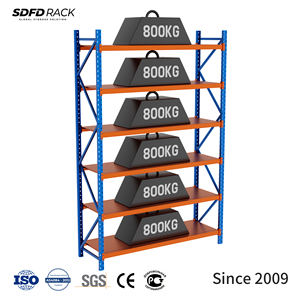
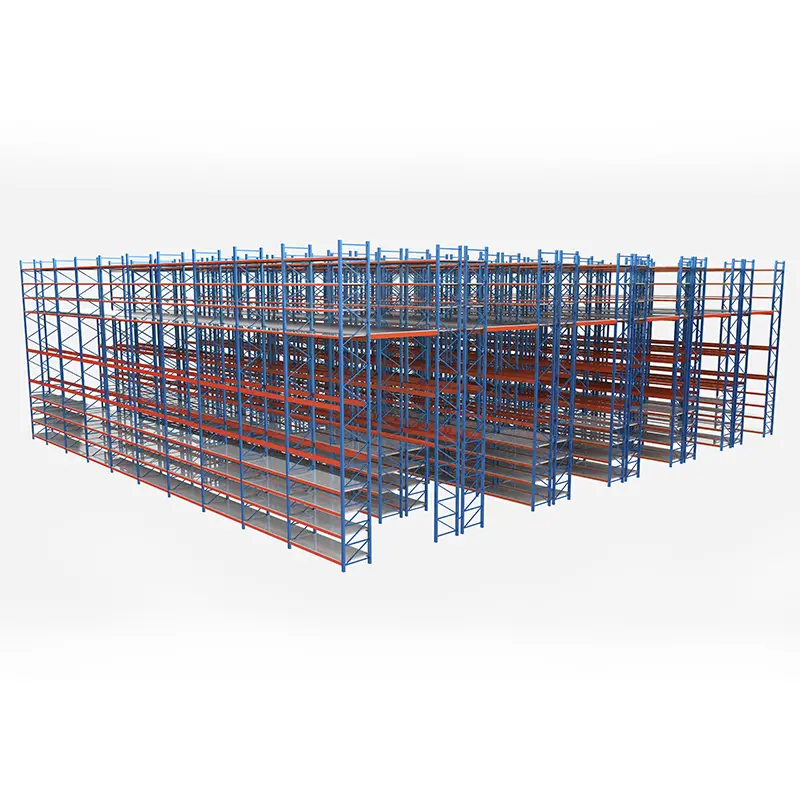
Hot Selling 800kg Adjustable Metal Racking Custom 4 5 6 Layer Selective Pallet Racks
- Beam Section: Interlocking Box
- Standard Span: 2300 / 2700 mm
- Safety Factor: 1.4 / EN 15512
Precision-manufactured structural racking assemblies engineered for variable unit loads, seismic zone compliance, and standard European/ISO pallet footprints.
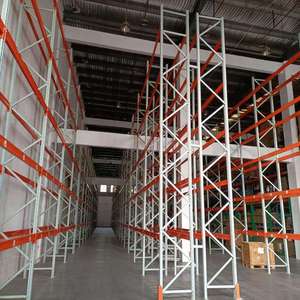
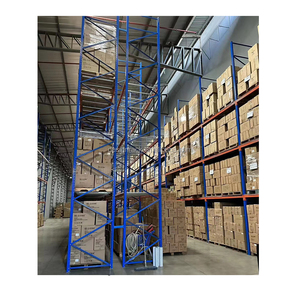
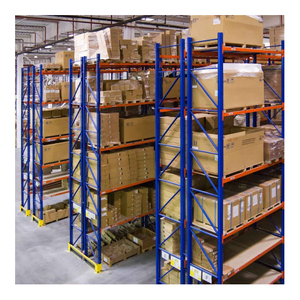
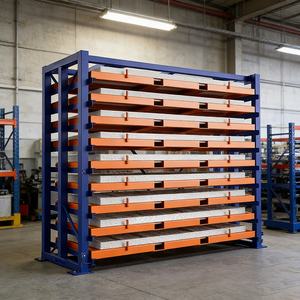
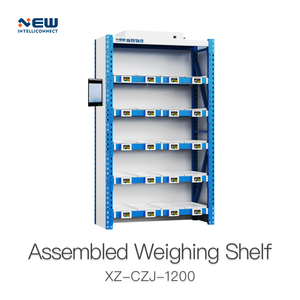
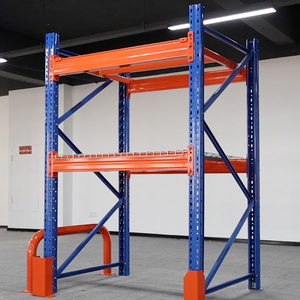
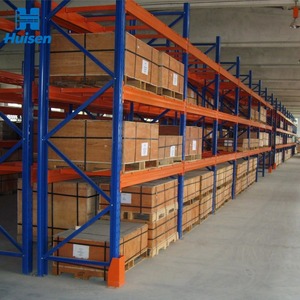
In structural storage rack design, horizontal load beams function as the primary flexural elements transferring unit gravitational loads into the vertical upright frames. The geometry of the profile governs both vertical bending strength and torsional resistance under asymmetrical pallet placement.
Fabricated by cold-forming two complementary "C" sections nested and interlocked, or robotically continuous-welded along the longitudinal seam. Provides superior torsional rigidity (St. Venant torsion constant J) and optimal resistance against lateral-torsional buckling (LTB) under high uniformly distributed loads (UDL).
Engineered with an integrated vertical step (standard 20mm to 28mm depth) on the inner flange. This step allows secondary load components—such as galvanized wire mesh decking, drop-in chipboard supports, or corrugated steel panels—to sit completely flush with the top beam perimeter, preventing snagging during pallet sliding.
Milled from thick structural hot-rolled steel channels (such as C-channel or UPN profiles), delivering extreme toughness against forklift tusk impacts. Recommended for sub-zero temperature environments (down to -35°C in cold storage logistics) where cold-formed thin-walled steels might face ductile-to-brittle transitional risks.
Tubular rectangular hollow sections (RHS) or roll-formed open C-profiles engineered for manual hand-loading, light pallet picking, or modular retail display racks. Offers an optimized strength-to-weight ratio for budget-conscious applications with spans under 2,000 mm and pallet loads not exceeding 1,000 kg.
Under the European standard EN 15512 ("Steel static storage systems – Adjustable pallet racking systems – Principles for structural design"), beam sizing is determined by Serviceability Limit State (SLS) deflection checks and Ultimate Limit State (ULS) flexural and shear capacities.
| Profile Specification | Material Grade | Section Modulus (Wx) | Clear Span (L) | Max UDL Load / Pair | Allowable Deflection (SLS) | Compliance Code |
|---|---|---|---|---|---|---|
| Box Beam 80×50×1.5mm | Q235B / S235JR | 14.2 cm³ | 2300 mm | 1,600 kg | 11.5 mm (L/200) | EN 15512 Approved |
| Box Beam 100×50×1.5mm | Q235B / S235JR | 21.8 cm³ | 2700 mm | 2,200 kg | 13.5 mm (L/200) | EN 15512 Approved |
| Box Beam 120×50×1.5mm | Q355B / S355JR | 31.4 cm³ | 2700 mm | 3,000 kg | 13.5 mm (L/200) | EN 15512 Approved |
| Box Beam 140×50×1.8mm | Q355B / S355JR | 45.1 cm³ | 3300 mm | 3,600 kg | 16.5 mm (L/200) | High Capacity / CE |
| Step Beam 110×50×1.5mm | Q235B / S235JR | 22.4 cm³ | 2700 mm | 2,000 kg | 13.5 mm (L/200) | Flush Wire Deck |
| Structural C120×55×4.0mm | Q235B / ASTM A36 | 52.8 cm³ | 2700 mm | 4,800 kg | 9.0 mm (L/300 ASRS) | Seismic Heavy Load |
The beam-to-column connector is critical in establishing horizontal rack sway stability. In European engineering practice, these connections are evaluated as semi-rigid joints defined by their initial rotational stiffness (Cd) and moment capacity (Mj,Rd).
Our connector claws are precision-stamped from high-tensile 3.5mm-4.0mm structural steel plates featuring 3, 4, or 5 drop-forged fingers. The fingers taper smoothly into the upright teardrop or diamond perforations, generating a dynamic wedging action under increased gravitational load that restrains frame lozenging.
Founded in 2001, Guangzhou Heda Shelves Co., Ltd. has developed into an internationally respected engineering and production powerhouse for industrial storage solutions, racking accessories, and automated mezzanine platforms.
Every structural pallet rack beam manufactured is strictly governed by CE Certificate No. 2435-CPR-8605159 and ISO 9001:2015 Quality Management System No. 18624Q00169R0M. Full metallurgical mill test certificates (EN 10204 Type 3.1) and static calculation packets referencing EN 15512 and EN 15620 principles are supplied directly for European municipal building inspections.
Our dedicated structural engineering division provides fully rendered 3D spatial models, CAD bay layout schematics, and individual beam deflection simulation curves at zero upfront charge. We customize span distances around standard European (1200×800mm EUR/EPAL) or ISO container pallets, validating forklift aisle turn radiuses (AST) before line manufacture begins.
With multi-decade global freight forwarding capabilities, containerized racking components are systematically packed with numbered steel bundles, plastic edge guards, and desiccants to resist ocean transit humidity. We ship routinely to principal maritime terminals including Rotterdam, Hamburg, Antwerp, Valencia, Gdańsk, Le Havre, and Felixstowe with complete customs clearance documentation.
Macro-economic market forces, robotic warehouse automation, and stringent ESG decarbonization mandates are reshaping how multinational logistics operators source pallet rack beam inventories.
As Autonomous Mobile Robots and automated reach trucks replace manned forklifts, beam manufacturing tolerances are tightening from standard DIN class allowances to micro-tolerances (< ±1.0 mm). Beams require optical alignment targets and machined level seating to prevent robotic sensor read errors during blind pallet deposit cycles.
The European Union's Carbon Border Adjustment Mechanism (CBAM) necessitates audited carbon accounting across all cold-formed structural profiles imported into Europe. Leading factories are shifting electric arc furnace (EAF) sourcing to scrap-recycled billets, reducing Scope 1 and Scope 2 embodied carbon intensities to beneath 1.2 tons CO₂ per ton of structural steel.
Global supply chain volatility has made fixed-price 12-month tender contracts obsolete. Sophisticated procurement groups partner directly with original manufacturing factories via transparent raw material indexing (linked to the Shanghai Steel Index or London Metal Exchange hot-rolled coil benchmarks), ensuring cost efficiency without quality compromise.
Modern storage engineering combines metallurgical innovation, automated continuous roll forming lines, and non-destructive testing to achieve lighter structural dead weights while elevating load safety factors.
Transition from standard Q235B structural carbon steel to micro-alloyed niobium/vanadium Q355B and S355MC grades. Increases upper yield strength to $\ge 355 \text{ N/mm}^2$, enabling an 18% reduction in wall thickness without compromising load-bearing deflection thresholds.
Experimental implementation of integrated fiber-optic Bragg grating (FBG) sensor arrays embedded into the bottom tensile flange of the beam. Enables real-time structural health monitoring, logging elastic deflection, localized overloading, and seismic vibrations via SCADA systems.
Continuous hot-dip ZAM alloy coating lines delivering over 1,500 hours of neutral salt spray corrosion resistance (ISO 9227). Self-healing cut edges protect against aggressive chemical fumes, marine coastal warehouses, and persistent condensation in blast freezers.
Continuous computerized 16-roller forming stations eliminate internal residual stresses and cross-sectional twisting across standard 4,000mm beam profiles. Ensures absolute parallelism between top loading surfaces and connector weld points, eliminating pallet rocking.
Clear, technically exact answers regarding static calculations, European regulatory inspection codes, connector shear tests, and production lead times.
Provide your warehouse dimensions, clear stacking ceiling heights, pallet load weights, and handling truck specifications. Our structural engineering department will prepare a complete CAD layout and EN 15512 calculation profile within 24 working hours.