Industrial Catalog
Featured Heavy-Duty Storage & Warehouse Racking Systems
Engineered for intense throughput, precision cart kinematics, and structural endurance under international FEM and EN seismic design frameworks.
Technical Deep-Dive
Push Back Racking Mechanics: Kinematics, Inclined Rails, and Dynamic Carts
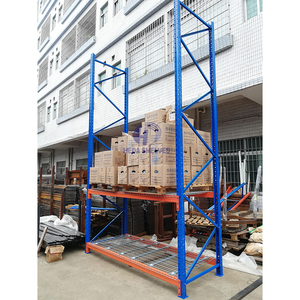
Push back pallet racking is an advanced, high-density accumulator system designed on an inclined profile that optimizes footprint utilization without requiring material handling equipment to enter storage lanes. Manufactured typically to hold from 2 to 6 pallets deep per lane, the operational principle revolves around nested telescoping carrier carts that roll along inclined structural structural steel tracks (typically sloped at an exact gradient of 2.5% to 3.5%). When the initial pallet is introduced by a counterbalanced or reach truck, it rests securely upon the topmost nested cart. Subsequent loading pushes that cart backward, revealing the second cart underneath. The process repeats until the final pallet is deposited directly onto the fixed structural rails.
During unloading, the extraction of the front pallet releases gravity potential energy, prompting subsequent carts behind it to roll forward smoothly under controlled deceleration to the primary pick face. This design creates a highly efficient Last-In, First-Out (LIFO) dynamic storage queue while reducing forklift transit travel distances by up to 40% compared to traditional selective racking arrangements.
Key Engineering Differentiator: Unlike drive-in racking where forklifts must enter narrow steel aisles—creating frequent column impact risks—push back racking confines forklift maneuvers strictly to the central access aisle. This structural isolation extends the operational lifecycle of uprights, reduces maintenance interruptions, and provides individual lane selectivity across multi-level elevations.
For operations balancing dense footprint requirements with intermediate SKU diversity, Chinese push back racking solutions deliver structural customization for standard EUR (1200 x 800 mm), Industrial UK/ISO (1200 x 1000 mm), and US (48" x 48") pallets, providing bay load envelopes reaching up to 1,500 kg per pallet position without cart binding or rail deflection.
| Storage System Type | Volumetric Density | SKU Selectivity Face | Handling Speed / Cycle | Forklift Impact Vulnerability | Capital Expenditure / Pallet |
|---|---|---|---|---|---|
| Push Back Racking (Nested Carts) | High (up to 85%) | Lane Face Accessible (Moderate) | Fast (No lane entry) | Very Low (External access) | Moderate |
| Standard Selective Pallet Racking | Low (approx. 40-50%) | 100% Immediate Direct | Standard | Moderate | Lowest |
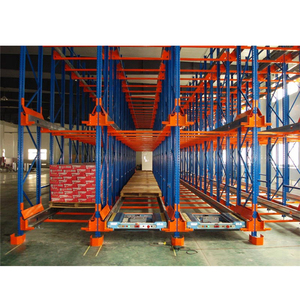
| Drive-In Racking System | Very High (up to 85%) | Restricted per Bay Corridor | Slow (Deep navigation) | High (Mast inside lane) | Low-Moderate |
| Pallet Flow (Gravity Roller Bed) | Maximum (FIFO) | Strict Lane Sequential | Fast (Automatic sliding) | Very Low | Highest (Roller density) |
| Semi-Automated Radio Shuttle | Ultra-High | Automated Lane Retrieval | Very Fast | Negligible | High CapEx (Electronics) |
Factory Direct Advantages
Why Global Procurement Relies on Our Certified Manufacturing
Operating from Guangzhou since 2001, Guangzhou Heda Shelves Co., Ltd. provides end-to-end manufacturing oversight, automated structural rolling, and fully audited international compliance.
Rigorous Certifications
Structural reliability guaranteed under European Construction Products Regulation with CE Certificate No. 2435-CPR-8605159 and continuous factory QA verified via ISO 9001:2015 Certificate No. 18624Q00169R0M.
- Full conformity to EN 15512
- Seismic safety verified to EN 16681
- RoHS eco-compliant powder coatings
30,000 m² Automated Plant
Equipped with continuous cold-roll forming lines, high-speed CNC punching matrices, robotic GMAW welding stations, and automated 10-stage pickling, phosphating, and powder-coating finishing lines.
- 30,000 metric tons monthly output
- High-yield Q235B & Q355B cold steel
- Mill certificate tracking on every batch
Free 3D & CAD Layouts
Our experienced structural engineering department models pallet weight distribution, calculates column buckling factors, and generates clear DWG/BIM files before metal cutting commences.
- Bespoke cart gradient configuration
- Calculations aligned with local codes
- On-site or remote installation guides
2001
Founded in Guangzhou
30,000t
Monthly Production Capacity
300+
Technicians & Metal Engineers
10,000+
Global Warehouses Delivered
Industry Strategic Outlook
Future Procurement Trends & Technological Evolution in Push Back Racking
Forward-looking insights for logistics directors, procurement specialists, and warehouse managers preparing for next-decade operational shifts.
1. IoT Sensor Integration
Procurement mandates are moving toward instrumented safety monitoring. Modern push back lanes are adopting embedded ultrasonic sensors and passive RFID tags on cart stops to verify that carriages fully return to the forward pick face without jam-ups or unseated loads.
Prevents unseated pallet accidents and gives WMS platforms visibility into exact lane capacity utilization.
2. Cold-Chain Optimization
With cold-store cubic meter refrigeration power costs soaring globally, push back systems engineered with specialized low-temperature sealed bearing lubricants (operational to -35°C) and hot-dip galvanized steel components have become the preferred alternative to drive-in racks.
Provides maximum thermal density while preventing bearing freeze and carriage stalling in refrigerated distribution.
3. Hybrid AGV Compatibility
Automated Guided Vehicles (AGVs) and autonomous reach trucks demand tighter tolerances than manual forklift operators. Next-generation push back systems integrate laser-cut guide profiles and mechanical centering bumpers to assure millimetric carriage alignment on pick and drop faces.
Prepares conventional warehouses for incremental automation without tearing out installed high-density rack infrastructure.
Procurement Intelligence
Push Back Racking Procurement & Engineering FAQ
Direct technical guidance addressing clearance engineering, payload dynamics, international shipping, and project execution.
What is the maximum practical storage depth for push back carts?
While push back racks can theoretically be engineered up to 6 pallets deep, 2 to 5 pallets deep is considered the optimal industrial standard. At 6 pallets deep, pushing resistance requires high forklift mast power, and the vertical profile stack of nested carts uses up 150 to 200 mm of vertical clear building height. For depths exceeding 5 pallets, semi-automated radio shuttles are typically recommended.
How does Guangzhou Heda Shelves calculate track incline and roll safety?
Inclination is calculated between 2.5% and 3.5% gradient depending on the pallet bottom configuration (slatted wood, plastic runner, or steel perimeter), payload mass (500 kg to 1500 kg), and ambient temperature. Carts feature mechanical end stops, anti-jump clips to prevent rail derailment, and dual-flange heavy-duty steel wheels fitted with maintenance-free, shielded precision bearings.
What documentation is provided to satisfy local European or US warehouse safety audits?
Every export shipment includes verified mill material test certificates, comprehensive 3D layout drawings, installation assembly procedures, and certified load-capacity plates compliant with EN 15635 inspection standards. Full structural calculations referencing EN 15512 design criteria and certified under CE Certificate No. 2435-CPR-8605159 are supplied on request.
What is the typical lead time and ocean packaging specification for export?
Standard production lead time is 15 to 25 business days from engineering drawing approval. Components are packed for overseas shipment: upright frames bundled with protective wood dunnage, beams interlocked on custom steel transport skids, and nested carts crated with moisture-barrier film and desiccant packs to prevent transit corrosion during ocean voyages to Rotterdam, Hamburg, Los Angeles, or Felixstowe.