Engineered Warehouse Racking & Industrial Storage Assemblies
Precision-profiled cold-rolled steel, high-durability electrostatic polymer coatings, and validated layer load ratings spanning 200 kg to 3,000 kg per storage level for modern global logistics hubs.
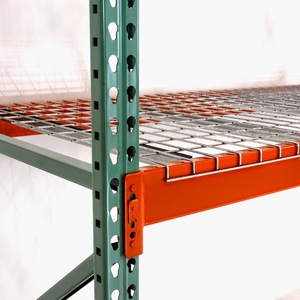
Warehouse Selective Storage Teardrop Pallet Rack
- Standard 2-inch teardrop modular pitch
- Q235B high-yield cold-formed steel
- 100% direct access to single pallet bays
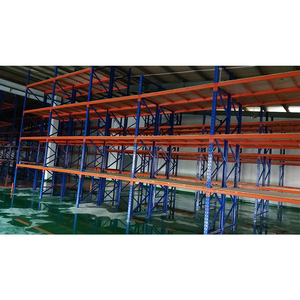
Complete Racking System Warehouse Storage Pallet Shelving Mezzanine One Stop Solution Factory Direct Fast Turnkey
- Vertical space multiplication (2 to 3 tiers)
- Integrated column or rack-supported flooring
- Floor loading up to 1,000 kg/m²
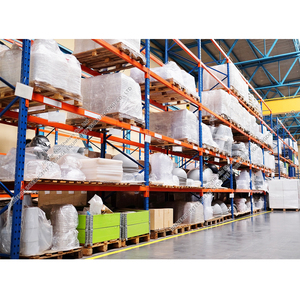
Heavy Duty Selective Pallet Racking Steel Warehouse Shelving Rack Adjustable Beam Level 3000KG Per Layers for Cartons Bins Spare
- 3,000 kg certified beam level rating
- Precision 50mm/75mm adjustable pitch
- Dual safety lock-pin connectors
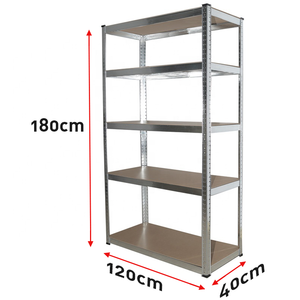
6-Tier Powder Coated Extra Tall Metal Shelving 222x90x40cm 200kg Storage Rack
- 222 cm extended vertical profile
- 200 kg uniform shelf load capacity
- Corrosion-proof electrostatic finish
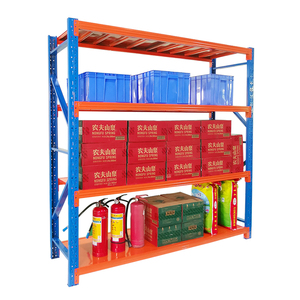
Factory Price Industrial Light Duty Rack Boltless Shelving Unit Warehouse Storage
- Zero fasteners required for rapid setup
- Rivet and slot structural interlocking
- Ideal for manual pick-and-pack stations
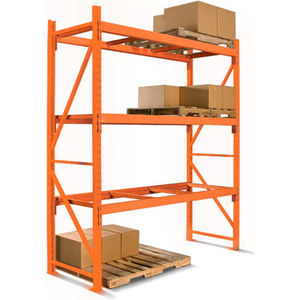
Heavy Duty Selective Pallet Rack Steel Beam Shelving Adjustable Stackable Storage System Galvanized Powder Coated
- Hybrid hot-dip galvanized & coated steel
- Resistant to aggressive humidity & chemicals
- Fully compatible with Euro and GMA skids
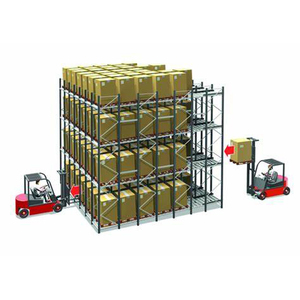
Warehouse High Density Gravity Roller Pallet Flow Racking
- Strict FIFO inventory flow mechanism
- Integrated centrifugal speed controllers
- Up to 60% floor space conservation
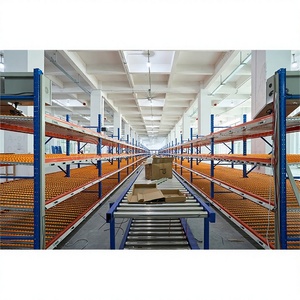
Automated Carton Flow Gravity Racking FIFO Steel Roller Warehouse Storage System Heavy Duty Pallet Live Rack
- High-throughput split-case picking efficiency
- Heavy-duty steel rollers & aluminium tracks
- Zero-energy gravity driven propulsion
Engineering Excellence in Chinese Pallet Racking Manufacturing
In modern supply chain engineering, selecting the optimal manufacturer among China best single pallet racking factories is a calculated engineering decision rather than a routine procurement task. Single pallet racking, frequently designated within high-throughput distribution centres as selective pallet racking or single-deep beam racking, forms the structural backbone of modern automated and semi-automated logistics. A factory's ability to maintain structural equilibrium, limit dynamic beam deflection, and guarantee load ratings under international standardizations separates top-tier Chinese manufacturers from conventional metal fabricators.
Top-tier Chinese facilities operate under strict metallurgical oversight. The structural integrity of upright frames and load-bearing horizontal beams begins with certified coiled strip steel—predominantly cold-formed structural steel grades such as Q235B and high-yield Q355B (equivalent to European EN 10025 S235JR and S355JR, or North American ASTM A36 and ASTM A572 Grade 50). The yield strength (fy) and ultimate tensile capability of these alloys dictate column performance under axial compression, torsional warping, and transverse pallet loading.
Global Compliance Paradigms: EN 15512, RMI MH16.1, and AS 4084
When sourcing from industrial manufacturing hubs in China, international buyers must establish rigorous engineering compliance early in the Request for Proposal (RFP) stage. Premier factories calibrate their cold roll-forming production lines to meet three primary global design standards:
EN 15512 / EN 15620 (Europe)
Specifies limit-state calculation principles for adjustable pallet racking, torsional buckling checks, frame stability, and tight operational floor tolerances according to FEM 10.2.02 codes.
RMI MH16.1 (North America)
Governs industrial steel storage rack testing protocols, perforated column stub tests, beam-to-column connector moment resistance, and Seismic Design Categories (A through F).
AS 4084:2023 (Australasia)
Mandates strict limit-state analysis, column impact allowance margins of 50%, safety factor thresholds on connector shear, and comprehensive periodic rack inspection compliance.
Verified manufacturers, such as Guangzhou Heda Shelves Co., Ltd. (operating since 2001 with CE Certificate No. 2435-CPR-8605159 and ISO 9001:2015 certification No. 18624Q00169R0M), utilize in-house finite element analysis (FEA) software. They also conduct continuous physical destructive tests—such as stub-column compression tests and double-shear connector portal tests—to validate structural safety before container dispatch.
Engineering Comparison: Single Pallet Racking Profiles & Mechanics
Understanding beam section geometries, moment of inertia (Ix), and upright section modulations helps warehouse planners optimize raw steel investment without risking structural failure.
| Profile Specification | Material Grade | Yield Strength (MPa) | Standard Deflection Limit | Optimal Bay Application |
|---|---|---|---|---|
| Box Beam (Twin C-Profile Interlocked) | Q235B / S235JR | ≥ 235 MPa | L / 200 (Max 4.5mm) | Standard selective pallet racking up to 3,000 kg/level |
| Step Beam (Roll-Formed L-Rebate) | Q235B / ASTM A36 | ≥ 235 MPa | L / 200 | Teardrop racking with wire decking or steel drop-in panels |
| Omega (Ω) Cold-Formed Upright (90-120mm) | Q355B / S355JR | ≥ 355 MPa | Height / 350 plumbness | High-bay warehouses, reach truck & VNA racking up to 16m |
| Heavy C-Channel Structural Steel | ASTM A572 Gr 50 | ≥ 345 MPa | L / 240 high-impact | High-throughput freezer stores, heavy machinery tool-and-die |
* Note: All deflection limits conform to EN 15512 and FEM 10.2.02 standard where "L" represents the horizontal unsupported clear span distance between vertical column faces.
Future Procurement Trends in Industrial Storage Systems
The global procurement landscape for warehouse storage equipment has fundamentally shifted from transactional price-per-kilogram purchasing to holistic lifecycle cost modeling. Procurement directors overseeing enterprise supply chains now prioritize dynamic criteria that mitigate long-term operating expenditures (OpEx):
1. Automated Guided Vehicle (AGV) & AMR Compatibility
Traditional pallet racking relied on wide handling clearances to accommodate human forklift operators. As global warehouse operations adopt autonomous counterbalance trucks, autonomous mobile robots (AMRs), and automated reach trucks, single pallet racking factories in China are redesigning baseplates, frame depths, and bottom-beam elevations. Modern layouts feature tighter bay tolerances (conforming to EN 15620 Class 300/400 installations), laser-guided entry points, and recessed anchoring systems to prevent autonomous vehicle wheel collisions.
2. Decarbonization, Low-Carbon Steel & EPD Documentation
European and North American supply chains are enforcing strict corporate ESG mandates. Forward-thinking Chinese factories are actively transitioning to electric arc furnace (EAF) steel sourcing, certified green powder coatings free of volatile organic compounds (VOCs), and comprehensive Environmental Product Declarations (EPD). Evaluating a factory's carbon footprint and recyclable scrap ratio has become a decisive qualification checkpoint during international vendor auditing.
3. High-Density Hybridization
Faced with escalating commercial land costs in major European, North American, and Asia-Pacific freight hubs, logistics operators are transitioning away from pure static single pallet racking. Instead, they are moving toward hybrid layouts that integrate lower-tier selective storage with upper-tier structural mezzanine floors, dynamic live pallet flow roller beds, or radio shuttle automation. Chinese manufacturing plants that provide unified in-house fabrication across selective, gravity roller, and structural steel mezzanines offer significant supply chain consolidation advantages.
4. Container Space Optimization & Anti-Corrosion Packaging
With ocean freight rates experiencing continuous post-pandemic volatility, container cubing efficiency is an essential engineering discipline. Tier-one Chinese manufacturers optimize roll-formed profile geometries so upright columns nest securely, and beam connectors feature detachable or low-profile designs. Coupled with automated stretch-wrapping, rust-inhibiting VCI (Vapor Corrosion Inhibitor) interlayers, and custom steel stillages, these measures prevent transit warping and moisture damage during 40-day maritime voyages to ports such as Rotterdam, Hamburg, Valencia, or Los Angeles.
Technological & Engineering Advancements in Modern Racking Plants
The manufacturing lines of leading Chinese racking factories look starkly different from those of past decades. High-throughput automated equipment has replaced manual fabrication, ensuring millimeter-precise consistency across thousands of metric tons of structural components:
Continuous Roll-Forming Lines
Multi-station automated rolling units equipped with servo-controlled continuous punching dies produce complex upright sections with zero pitch-creep across continuous 12-meter profile lengths.
Robotic Laser & MIG Welding
Automated 6-axis robotic welding cells assemble beam end connectors with consistent penetration, eliminating cold-welding defects and maximizing dynamic shear and moment resistance.
Multi-Stage Pre-Treatment & Powder Lines
Automated 7-stage immersion/spray pickling, silane/phosphate conversion, and continuous electrostatic polymer baking yield salt-spray resistance exceeding 500 hours (ASTM B117).
Structural Dynamics & Seismic Telemetry
In seismic hazard zones across the Pacific Rim, Southern Europe, and Latin America, modern single pallet racking installations require dynamic modal response spectrum analysis. Leading Chinese manufacturers now simulate rack behavior under combined dead, live, and seismic loads (E) in accordance with Eurocode 8 and ASCE 7-22.
Advanced installations incorporate smart sensor telemetry, mounting IoT multi-axis strain gauges and wireless accelerometers onto critical base uprights to record real-time seismic vibration, structural settlement, and accidental forklift collisions.
Guangzhou Heda Shelves Co., Ltd. Enterprise Competencies
Founded in 2001, Guangzhou Heda Shelves Co., Ltd. has developed over two decades into an advanced industrial designer and manufacturer of complete warehouse storage systems. Operating from a modern 30,000 m² factory with over 300 technical production specialists, Heda maintains an in-house monthly output capacity of up to 30,000 tonnes of structural steel storage equipment.
- Verified International Certifications: Full CE Factory Production Control Certificate No. 2435-CPR-8605159 and ISO 9001:2015 quality assurance certificate No. 18624Q00169R0M.
- Rapid In-House Engineering & CAD Layouts: Comprehensive 2D architectural warehouse layouts, 3D structural modeling, and point-load calculation tables delivered within 24 to 48 hours.
- Global Logistics & Installation Support: Dedicated component numbering, detailed structural assembly diagrams, and sea freight shipping to major ports worldwide.
- OEM / ODM Private-Label Manufacturing: Custom RAL electrostatic color schemes, custom roll profiles, and customized packaging for international equipment distributors and system integrators.
Procurement FAQ: Engineering & Logistics Insights
Direct technical answers addressing the critical parameters, tolerances, and supply chain logistics required by international project engineers, warehouse directors, and procurement specialists:
How do you verify whether a single pallet racking system can safely support Euro pallets (EUR/EPAL 1,200 × 800 mm) vs. US GMA pallets (48 × 40 inches)?
What engineering documentation is provided to satisfy local building control and safety inspectors?
How does beam level adjustability and vertical distance impact total frame load capacity?
What surface treatment is recommended: Electrostatic Powder Coating vs. Hot-Dip Galvanizing?
What is the typical production and maritime lead time from Guangzhou port to European and North American destinations?
How do safety locks and column impact protectors prevent progressive collapse?
Request an Engineered Layout & Factory-Direct Quotation
Submit your warehouse CAD floor plan, clear building height, pallet loading specifications, and forklift fleet parameters. Our structural engineering team will deliver a comprehensive 2D/3D storage design, load capacity table, and sea freight estimate within 24 hours.