Technical White Paper: Structural Integrity & Cold-Roll Forming Dynamics of Warehouse Uprights
In modern vertical warehouse logistics, the vertical upright frame represents the ultimate load-bearing backbone of the intralogistics system. Serving as the primary compressive member subjected to simultaneous axial compression, torsional-flexural buckling, and cyclic impact stresses from material handling equipment (MHE), an upright column's cross-sectional geometry and cold-bending steel integrity determine structural safety. As China's premier manufacturer of high-precision vertical columns, our facility addresses complex elastoplastic behavioral dynamics through continuous roll-forming engineering, automated optical punch positioning, and finite element analysis (FEA) compliant with EN 15512:2020, RMI MH16.1, and FEM 10.2.02 design codes.
High-performance racking uprights utilize custom cold-rolled high-tensile structural coil (predominantly SS400, Q235B, and high-yield Q355B or European equivalent S355JR). The proprietary cold-formed Omega (Ω) 11-fold and 13-fold cross-sections are engineered to optimize moment of inertia ($I_x, I_y$) and radius of gyration, actively suppressing local buckling modes along perforated flanges. When specifying high-density or high-bay vertical storage structures exceeding 12 meters, structural engineers must account for perforation-induced section reductions, floor connection ductility, and non-linear axial interactions under seismic and dynamic rack-acceleration conditions.
High-Capacity Industrial Racking & Upright Assemblies
Explore heavy-duty systems constructed with factory-direct cold-formed structural steel columns, optimized for warehouse distribution, cold storage, and logistics hubs.
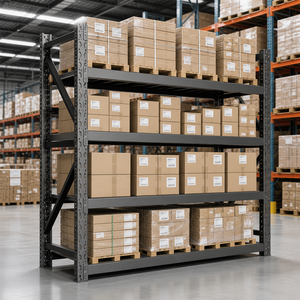
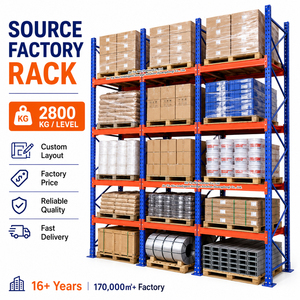
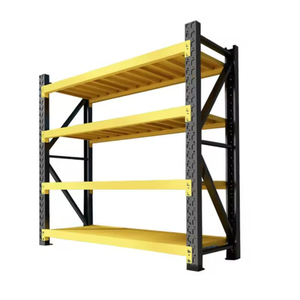
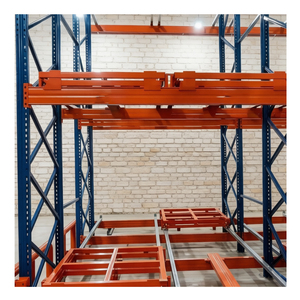
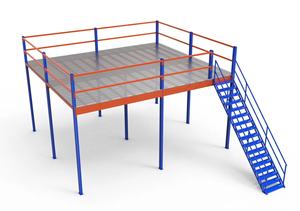
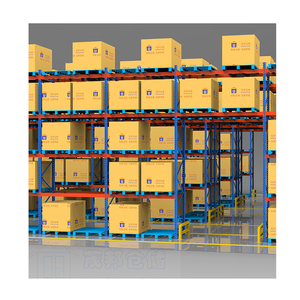
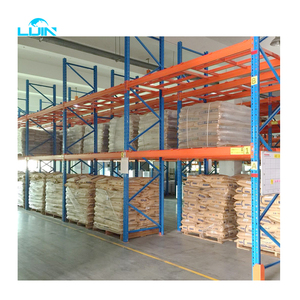
Upright Column Cross-Sectional Geometry & Capacity Matrix
Standardized technical parameters for roll-formed cold-formed upright profiles engineered to European and North American static equilibrium criteria.
| Profile Specification | Width × Depth (mm) | Material Thickness | Steel Grade Standard | Sectional Modulus ($W_x$) | Buckling Capacity (Max Frame) | Recommended Configuration |
|---|---|---|---|---|---|---|
| Omega 80 Light-Bay | 80 × 60 mm | 1.5 mm – 1.8 mm | Q235B / S235JR | 8.12 cm³ | Up to 8,000 kg | Retail Backroom & Light Pallet |
| Omega 90 Standard | 90 × 70 mm | 1.8 mm – 2.0 mm | Q235B / Q355B | 11.45 cm³ | Up to 14,000 kg | Selective Pallet Racking (≤8m) |
| Omega 100 Heavy-Bay | 100 × 70 mm | 2.0 mm – 2.3 mm | Q355B / S355JR | 15.80 cm³ | Up to 21,000 kg | Double-Deep & Drive-In Systems |
| Omega 120 Extra-Heavy | 120 × 95 mm | 2.3 mm – 2.5 mm | Q355B / High Yield | 24.30 cm³ | Up to 32,000 kg | Radio Shuttle & Multi-Tier Mezzanine |
| Omega 140 High-Bay AS/RS | 140 × 100 mm | 2.5 mm – 3.0 mm | Q355B / Specialized | 35.10 cm³ | Up to 45,000 kg | Automated High-Bay Storage (>15m) |
Global Procurement Trends in Warehouse Racking Uprights (2025–2030)
Key market dynamics driving international procurement teams toward enhanced steel yield ratings, environmental footprints, and precision automated manufacturing.
Transition to High-Yield Microalloyed Steels
Procurement teams are shifting from traditional Q235B (yield strength ≈ 235 MPa) to advanced microalloyed grades such as Q355B and S355JR (yield strength ≈ 355 MPa). By increasing yield performance by over 50%, warehouses achieve equivalent structural load capacities with lighter gauge steel profiles, drastically lowering ocean freight container costs per bay without compromising safety margins.
Strict Tolerances for Autonomous AS/RS & AGVs
The acceleration of Automated Guided Vehicles (AGVs) and stacker cranes demands vertical column tolerances far tighter than standard manually operated warehouses. Modern procurement specifications dictate cumulative vertical plumbness deviation within 1:1000 of building height and hole-pitch punching precision within ±0.1 mm to prevent automated sensor misalignment during high-speed pallet retrieval.
Decarbonization, CBAM Compliance & Green Steel
With the European Union Carbon Border Adjustment Mechanism (CBAM) coming into active force, tier-one logistics buyers prioritize manufacturing plants operating on electric arc furnace (EAF) scrap feeds and low-carbon coil suppliers. Life Cycle Assessment (LCA) data and Environmental Product Declarations (EPD) for upright steel columns are becoming decisive procurement criteria.
Engineering Evolution: 10-Step Precision Cold-Forming Lifecycle
A zero-defect manufacturing methodology guaranteeing structural consistency across every roll-formed upright column batch.
Coil Inspection
Spectrographic analysis of chemical composition, yield limits, and elongation ratios.
Precision Slitting
High-speed automated coil slitting ensuring continuous width tolerance within ±0.05 mm.
Optical Punching
Multi-punch press executing 50 mm / 75 mm teardrop, butterfly, or hexagonal hole pitch patterns.
Continuous Roll
Gradual 18-to-24 station roll-forming tooling preventing internal residual stress build-up.
Flying Cut-to-Length
Encoder-controlled hydraulic flying shear slicing columns with zero profile deformation.
Robotic Welding
Automated MIG/MAG welding of upright footplates, bracing tabs, and splice connectors.
Surface Pretreatment
Multi-stage degreasing, ultrasonic water rinsing, zinc phosphating, and deionized seal.
Electrostatic Coat
Nordson automated powder coating system applying 60–90 μm uniform thermosetting polyester.
High-Temp Curing
Infrared curing tunnel at 190°C–210°C yielding 2H pencil hardness and zero peeling.
QC & Seaworthy Pack
Non-destructive ultrasonic thickness testing, impact cross-hatch checks, and steel strapping.
Guangzhou Heda Shelves Co., Ltd.: Global Manufacturing Superiority
Established in 2001, providing complete structural accountability from conceptual CAD layout design to full-scale containerized ocean shipping.
Accredited Quality & Compliance
Fully compliant with international safety mandates, holding verified CE Certificate No. 2435-CPR-8605159 and ISO 9001:2015 Certification No. 18624Q00169R0M. Load tables, yield stress tests, and FEM structural calculations are provided for independent third-party inspection and municipal warehouse permitting worldwide.
Massive Scale & Fast Lead Times
Our expansive 30,000 square meter modern manufacturing facility houses over 300 experienced technical engineers and technicians. Producing over 30,000 tonnes of structural racking components monthly, we fulfill large-scale 100+ container orders within 15 to 30 days, backed by direct maritime access via Guangzhou and Shenzhen ports.
Comprehensive OEM & Distributor Support
Trusted by over 10,000 commercial and industrial projects across 120+ nations. We provide private-label branding, customized RAL powder-coating formulations, bespoke profile geometry tooling, free 3D/CAD layout optimizations, and full engineering documentation tailored for international distributors and installation contractors.
Frequently Asked Questions: Warehouse Upright Procurement
In-depth engineering answers addressing steel certifications, profile tolerances, deflection criteria, and anti-seismic calculations.
What is the impact of upright perforations on overall frame load capacity?
Upright punching (e.g., 50 mm teardrop or 75 mm hexagonal pitch) reduces the net cross-sectional area of the cold-formed steel section by roughly 12% to 18%. In accordance with EN 15512 and RMI standards, load calculation cannot rely on simple gross section properties ($A_g$). Instead, full-scale stub column compressive tests and distortional buckling simulations are conducted to establish an effective section area ($A_{eff}$) and effective moment of inertia ($I_{eff}$). HEDA Shelves provides certified testing data for every profile tooling die.
How are vertical frame buckling and seismic moment frames calculated?
Vertical upright frames function as laced structural trusses in the cross-aisle direction and semi-rigid moment frames in the down-aisle direction. Our structural engineers utilize finite element software modeling down-aisle beam-to-column connector rotational stiffness ($C_b$) and baseplate fixity ($C_f$). In seismic zones, seismic ductility factors ($R$) are incorporated to account for floor acceleration and ground shear forces, sizing baseplates and heavy chemical/mechanical anchor bolts accordingly.
What surface protection standards are applied for cold chain and outdoor applications?
For dry ambient warehouses, an electrostatic thermosetting polyester powder coating with a dry film thickness (DFT) of 60–90 μm provides superior scratch and corrosion resistance. For sub-zero cold storage (-30°C), specialized polyurethane powders ensure elasticity without brittle cracking. For outdoor high-humidity or corrosive agricultural environments, hot-dip galvanizing compliant with ISO 1461 (DFT 70–100 μm) is applied, delivering over 25 years of corrosion protection.
How do European EN standards differ from North American RMI standards for upright procurement?
While both standards share the primary objective of life safety and collapse prevention, EN 15512 follows Limit State Design principles with distinct partial safety factors applied to permanent dead loads ($\gamma_G = 1.3$) and variable live pallet loads ($\gamma_Q = 1.4$). North American ANSI/RMI MH16.1 utilizes Allowable Stress Design (ASD) or Load and Resistance Factor Design (LRFD). HEDA Shelves engineers are certified in both computational frameworks, ensuring seamless localized approval for projects in the EU, UK, US, and Australia.
What documentation accompanies an export shipment of upright frames?
Every international shipment includes complete mill test certificates (MTC 3.1) showing chemical composition and tensile testing of the master steel coils, CE conformity documentation, ISO 9001 factory inspection records, powder coating adhesion test results, component packing lists organized by frame tag numbers, and detailed CAD erection drawings with torque specifications for anchor and bracing bolts.
Can HEDA Shelves manufacture custom upright profiles compatible with existing racking systems?
Yes. Through our custom in-house tooling and CNC roll-former adjustment capabilities, we routinely reverse-engineer and manufacture compatible replacement uprights or expansion bays for established global profiles (including European 50 mm pitch, US Teardrop 2-inch pitch, Dexion-type, and Speedlock systems). Provide a cross-sectional sample or CAD drawing, and our engineers will verify structural load match prior to production.