High-Performance Warehouse Storage & Pallet Racking Systems
Explore our heavy-duty industrial storage racks and precision-engineered shelving lines. Every system is manufactured utilizing premium Q235B/Q355B structural coil steel, automated continuous roll-forming lines, and eco-friendly electrostatic powder coating.
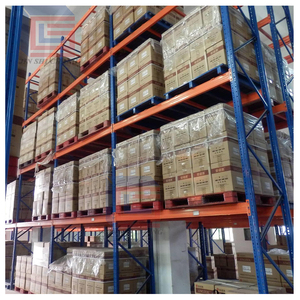
Industrial Heavy Duty Steel Pallet Rack Warehouse Shelving System for Storage, Distribution Center and Factory Use
Designed for high-throughput logistics terminals and central factories. Features interlocking box beams and 4-hook connector claws for zero-deflection operations.
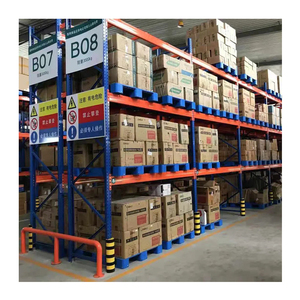
Heavy Duty Selective Pallet Rack 5 Ton Capacity Industrial Warehouse Storage Shelving System Adjustable Steel Rack
Ultra-rigid upright profiles up to 120mm web width engineered to carry extra-heavy die casts, machinery components, and bulk raw commodity inventory.
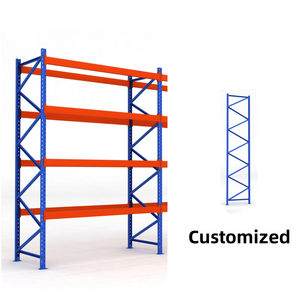
Warehouse Steel Heavy Duty Beam Rack Pallet Rack Store Shelf Warehouse Racking System for Racking Rack Shelf Factory Shelf
Standard industrial racking configuration allowing direct reach to every pallet position. Seamlessly accommodates reach trucks, counterbalance, and VNA stackers.
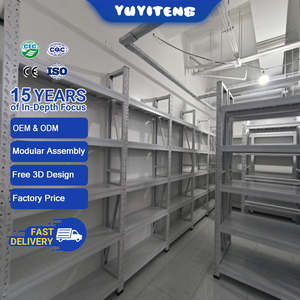
Commercial Shelving Units Heavy Duty Warehouse Rack
Heavy-duty commercial longspan solution optimal for e-commerce picking lines, retail backrooms, and manual distribution sorting centers with variable layer heights.
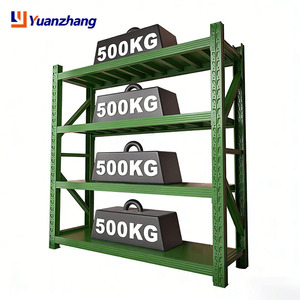
Boltless Adjustable Heavy Duty Load-Bearing 300kg/Layer Steel Racks Warehouse Industrial Stack Storage Racking Shelving System
Patented boltless wedge-lock system for tool-free assembly. Minimizes project commissioning hours while delivering structural rigidity for industrial spare part bins.
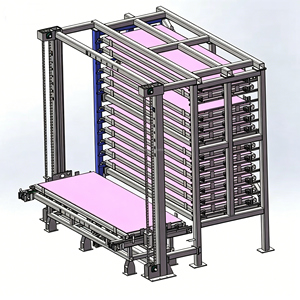
Durable Anti-Rust Heavy Duty Steel Electric Sheet Metal Rack Drawer Type Storage System Automated Retrieval Warehouse Shelving
Specialized mechanical pull-out drawers designed for dense laser sheet metal storage, tooling dies, and heavy molds. Compatible with overhead vacuum lifters.
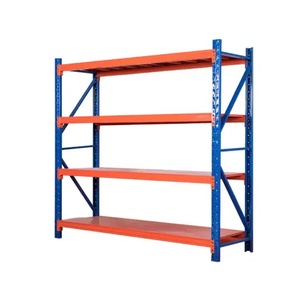
Boltless Metal Shelving 4 Tier Steel Storage Racks Medium Heavy Duty 200KG 300KG 500KG Load Corrosion Resistant Warehouse Shelf
Corrosion-resistant powder finish formulated for ambient humidity and mild chemical environments. Flexible shelf deck inserts include wire mesh, steel planks, or MDF.
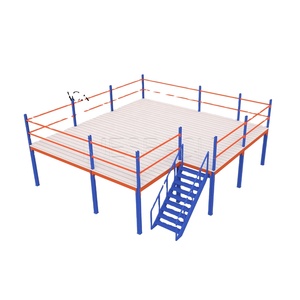
Customized Heavy Duty Steel Mezzanine Floor Second Floor Platform Wire Shelving for Warehouse Storage Second Mezzanine Floor
Transform dead vertical airspace into functional storage, picking bays, or administrative offices. Complete with integrated staircases, handrails, and pallet drop gates.
Over Two Decades of Industrial Steel Engineering Excellence
As a verified China premier storage racking factory, our Guangzhou facility blends rigorous European structural safety baselines with high-scale continuous manufacturing velocity. Every upright, connector, and beam meets stringent non-destructive stress tests.
Full Global Regulatory Compliance
Structural validation backed by CE Certificate No. 2435-CPR-8605159 and ISO 9001:2015 registration No. 18624Q00169R0M. Calculation methodologies adhere to EN 15512:2020 limit state analysis, FEM 10.2.02, and ANSI/RMI MH16.1 specifications.
Turnkey Pre-Engineering & Free 3D CAD
Our in-house logistics architects eliminate costly installation clashes before steel is stamped. We generate complete 3D warehouse layout models, forklift aisle turning clearance calculations, seismic base-plate anchor plans, and maximum allowable frame load tables at zero upfront cost.
Ten-Stage Surface Protection Architecture
Steel profiles pass through high-pressure degreasing, multi-stage acid pickling, rust elimination, and zinc phosphating prior to electrostatic polyester powder coating. The cured 60-80 micron coat withstands harsh thermal swings, continuous pallet friction, and condensation.
Warehouse Storage Systems Engineering Selection Guide
Choosing the ideal structural storage format requires aligning SKU density, handling equipment kinematics, cycle throughput velocity, and floor-to-ceiling volume. Review our structural evaluation matrix below before specifying tender documentation.
| Racking Architecture | Volumetric Efficiency | Pallet Selectivity | Stock Rotation Strategy | Handling Equipment Required | Ideal Procurement Application |
|---|---|---|---|---|---|
| Standard Selective Racking | 40% - 50% | 100% Direct Access | FIFO / LIFO Any | Standard Counterbalance, Reach Truck | 3PL hubs, multi-SKU FMCG, auto parts distribution |
| Double-Deep Pallet Racks | 55% - 65% | 50% Immediate Access | LIFO | Pantograph reach truck with extendable forks | Dry grocery reserves, high-volume identical packaging |
| Drive-In / Drive-Through | 70% - 80% | Lane Dependent (<15%) | LIFO (Drive-In) / FIFO (Drive-Thru) | Counterbalance or narrow-chassis reach truck | Cold storage, seasonal fruit bulk holding, chemical batching |
| Radio Shuttle Automation | 80% - 90% | Automated Lane Reach | Flexible FIFO & LIFO Programmed | Standard lift trucks (stays outside storage channel) | Deep freezer facilities, high-speed food and dairy hubs |
| Pallet Gravity Flow Racking | 75% - 85% | High at Picking Face | Strict Dynamic FIFO | Conventional trucks (dedicated entry and exit aisles) | Short shelf-life perishables, pharmaceuticals, buffer staging |
| Mezzanine Platform Floor | Doubles Floor Area | 100% Manual Floor Walk | Batch / Zone Picking | Vertical reciprocating conveyors (VRC), pallet gates | E-commerce fulfillment centers, carton sorting, light assembly |
Emerging Procurement & Technology Trends in Warehouse Storage
The global logistics landscape is undergoing structural disruption driven by e-commerce SKUs, land cost premiums, and environmental mandates. Modern racking procurement is evolving from passive steel erection to dynamic cyber-physical structural investments.
Automated Shuttle & AMR Kinetic Integration
Traditional static storage is rapidly integrating with semi-automated 2D and 4D radio shuttles, automated guided vehicles (AGV), and autonomous mobile robots (AMR). Procurement teams must specify tight beam tolerance limits (≤ L/300) and laser-welded running tracks to prevent shuttle jamming.
- Reduced Operating Expense: Electric shuttles travel up to 1.2 m/s inside deep bays, drastically cutting forklift travel inside cold rooms.
- Safety & Rack Integrity: Forklifts remain on the aisle boundary, eliminating over 85% of standard upright collision incidents.
High-Yield Micro-Alloy Steel & Cold-Form Optimization
Procurement directors are specifying high-tensile micro-alloyed steels such as Q355B and ASTM A1011 grade 50. By utilizing superior yield-strength steel coils with tighter cold-roll profiling, upright frame structural weight is optimized by 15-20% without compromising load safety factors.
- Freight Cube Efficiency: Lower raw material weight translates into lower ocean container shipping rates per pallet position.
- Enhanced Seismic Resilience: Flexible cold-formed sections absorb cyclic lateral earth shifts during seismic events without brittle fracture.
Circular Sustainable Finishing & Low-VOC Mandates
ESG procurement protocols now examine the carbon footprint and hazardous chemical emissions of warehouse infrastructure. China leading factories have eliminated solvent-based spray paints in favor of closed-loop electrostatic powder coating systems.
- RoHS & REACH Compliance: Zero heavy metals, lead, or halogenated solvents in surface coatings.
- Powder Recycling: Automated cyclone recovery chambers achieve 98% powder reuse, cutting process waste to near zero.
Digital Twin Modeling & Real-Time Deflection Sensing
Next-generation large-scale logistics centers are deploying IoT strain gauges and digital twin models to monitor ongoing warehouse health. Optical sensors detect load beam deflection beyond EN 15635 thresholds, immediately alerting operations before failure occurs.
- Predictive Maintenance: Real-time mapping of structural stress levels during extreme peak loading seasons.
- Automated Inspection Logs: Streamlines periodic safety audit documentation for local regulatory inspectors.
Frequently Asked Questions on Importing Warehouse Shelving Systems
Direct technical answers addressing engineering standards, container loading efficiency, Euro pallet compatibility, fire protection, and inspection protocols.
Can HEDA systems be engineered for European EUR-EPAL (1200 x 800 mm) and US (48 x 40 inch) pallets?
Which seismic design criteria and calculation documents are provided for municipal building permits?
How does your factory prevent ocean freight container damage and ensure optimal loading density?
What is the allowable beam deflection limit under full rated load conditions?
How do your shelving configurations integrate with warehouse in-rack fire sprinkler systems (NFPA 13)?
What is the standard production lead time and typical ocean transit timeline to major global ports?
Transform Your Warehouse Volumetric Efficiency Today
Consult with our lead logistics engineering group. Send your warehouse floor plan, clear building eaves height, pallet specifications, and handling equipment model to receive a comprehensive, zero-cost 3D CAD layout and detailed factory-direct quotation within 24 hours.