Industrial Storage Systems: Engineering Excellence & Structural Safety
In modern warehousing, intra-facility logistics infrastructure represents the single largest physical determinant of operational throughput, volumetric utilization, and occupational lifecycle safety. As global supply chain nodes migrate toward high-throughput automated distributions and high-density vertical fulfillment centers, structural racking design transcends basic commodity fabrication into rigorous civil and mechanical structural engineering governed by international codes including EN 15512, EN 15620, and ANSI MH16.1 (RMI).
Heavy-Duty Racking Systems: Technical Catalog
Configured from structural high-tensile Q235B and Q355B cold-rolled steel, each system is calibrated for deflection boundaries, live-load vibrations, seismic acceleration envelopes, and strict automated handling clearances.
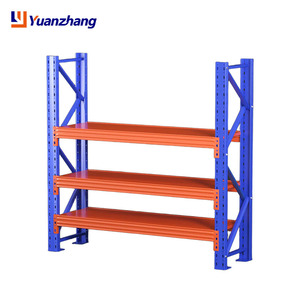
- Capacity: 1,000–4,500 kg/level
- Density: 2-deep back-to-back bays
- Ideal for: Cold stores, raw bulk goods
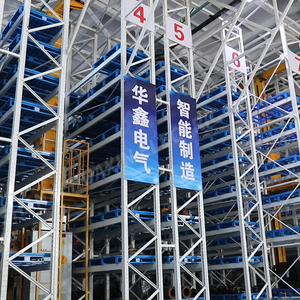
- Tolerance: Millimetric structural precision
- Stacker Crane / AMR interface
- Vertical bays exceeding 30 meters
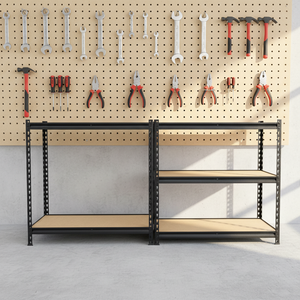
- Load capacity: 300–800 kg/tier
- Modular interlocking rivet assembly
- Electrostatic thermoset powder coat
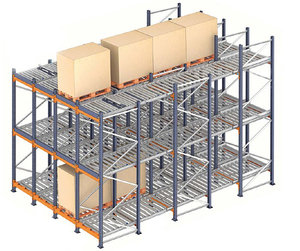
- Strict FIFO (First-In, First-Out) logic
- Integrated centrifugal speed controllers
- Optimized for food, dairy & pharma
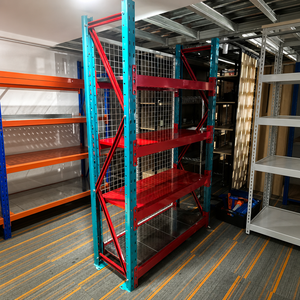
- Interchangeable 2-inch teardrop pitch
- Automated locking spring pins
- ANSI MH16.1 / RMI compliance ready
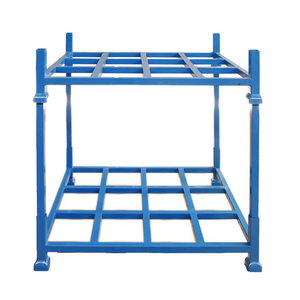
- Hot-dip galvanized / zinc anti-rust
- Stackable 4 to 6 units high
- Demountable uprights for empty return
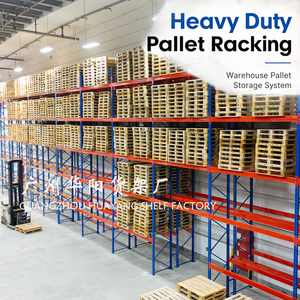
- Cold-formed box beam & omega uprights
- Engineered deflection ratio ≤ L/250
- Full EN 15512 calculation compliance
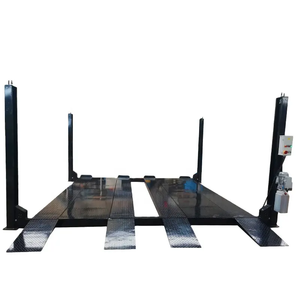
- Hydraulic electro-mechanical safety latch
- Dual-level vehicle density optimization
- Reinforced column baseplate anchors
Future Procurement Trends Shaping the Racking Industry (2025–2030)
Global supply chain leaders and warehouse engineering directors are confronting unprecedented pressure: surging real estate costs, tighter ESG mandates, and rapid conversion toward hybrid automated picking. Modern procurement requires understanding the technological shifts dictating heavy-duty rack performance over 15- to 20-year lifecycles.
1. Automation-Ready Geometry & Stricter EN 15620 Classes
Traditional manual forklift bays permit deflection ratios around L/200 under maximum rated load. However, the rapid proliferation of Autonomous Mobile Robots (AMRs), automated pallet shuttles, and tall Automated Storage and Retrieval Systems (ASRS) necessitates deflection thresholds tighter than L/300 to L/400. Suppliers must guarantee post-installation plumbness within millimetric tolerances under full live load to prevent optical scanner faults in high-speed stacker cranes.
2. Steel Chemistry & Cold-Chain Impact Fracture Toughness
Global cold chain expansion for biologics and frozen food demands steel profiles engineered to negate ductile-to-brittle transitions. At temperatures below -25°C, generic structural steels experience catastrophic brittle micro-fractures under dynamic forklift impact. Tier-1 Chinese exporters now systematically utilize custom-melted, fully killed Q355D/E steels accompanied by certified Charpy V-notch impact toughness tests verifying shock absorption down to -40°C.
3. Circular ESG & Low-VOC Electrostatic Finishing
European and North American sustainability audits now encompass the Scope 3 embodied carbon of warehouse racking installations. The industry is discarding solvent-borne coatings in favor of lead-free, zero-VOC polyester powder coatings applied across automated phosphating and electrostatic pre-treatment tunnels. This ensures both 500+ hours salt spray corrosion resistance (ASTM B117) and compliance with stringent RoHS/REACH environmental safety directives.
Racking Topology Selection: Capacity, Access & Floor Efficiency
Choosing the right racking typology requires balancing direct SKU accessibility against vertical cube density. Compare mechanical performance parameters across core industrial topologies.
| Storage Topology | Volumetric Cube Utilization | SKU Accessibility | Stock Rotation Logic | Typical Payload / Bay | Governing Structural Standards |
|---|---|---|---|---|---|
| Selective Pallet Racking | 40% - 50% | 100% Direct Access | FIFO / LIFO Unrestricted | 1,000 – 4,000 kg | EN 15512, RMI MH16.1 |
| Double Deep Pallet Racking | 60% - 65% | 50% Immediate Access | LIFO Priority | 1,500 – 3,500 kg | EN 15512, FEM 10.2.02 |
| Drive-In / Drive-Through | 70% - 80% | Lane Aggregated | Strict LIFO (or FIFO Pass) | 1,000 – 2,000 kg/pallet | EN 15512, EN 15620 |
| Radio Shuttle Automation | 80% - 88% | Automated Lane Access | Software Configurable FIFO/LIFO | 1,500 – 2,500 kg/pallet | EN 15512, Machinery Dir. CE |
| Gravity Flow Dynamic Rack | 75% - 85% | Picking Face Accessible | Guaranteed Gravity FIFO | 800 – 1,500 kg/lane | EN 15512, DIN 18800 |
| Heavy Duty Cantilever | Linear Variable | 100% Unobstructed Front | Continuous Run Direct | 1,000 – 5,000 kg/arm | EN 1993-1-1 (Eurocode 3) |
Guangzhou Heda Shelves: 25-Year Export Prowess & Quality Architecture
Founded in 2001, Guangzhou Heda Shelves Co., Ltd. has grown into one of Asia's preeminent integrated racking manufacturers. Operating from our state-of-the-art 30,000 m² production base, our 300+ structural engineers and technicians deliver over 30,000 metric tons of certified racking monthly to logistics operators, EPC contractors, and distributors worldwide.
Chemical composition and tensile testing of mill-direct Q235B/Q355B prime steel coils.
High-precision longitudinal strip shearing with computerized edge de-burring.
Continuous servo punching ensures pitch tolerance within ±0.1 mm over 12-meter lengths.
Incremental roll tooling forms omega-profile uprights without residual torsional stresses.
Dual-C profile cold nesting with high-frequency continuous longitudinal seam welding.
Multi-claw beam end connectors fused via automated multi-axis Panasonic GMAW robots.
Full immersion 9-stage chemical wash removes mill scale and establishes an anti-corrosive base.
Automated Gema powder spray booths deliver uniform 60–80μm polymer film thickness cured at 200°C.
Beam shear connector pull-tests, weld micro-etch examinations, and deflection verifications.
Steel-banded, foam-cushioned maritime dunnage prevents abrasion during intermodal ocean transit.
Audited Certifications & Structural Calculation Dossiers
Procurement compliance risks are neutralized through verified third-party laboratory audits, published certification credentials, and engineering design dossiers prepared in accordance with statutory building codes across the European Union, the Americas, and Australasia.
CE Construction Products Regulation (CPR)
Our load-bearing warehouse racking systems are certified under official CE Certificate No. 2435-CPR-8605159. This confirms that all cold-formed structural steel components satisfy essential mechanical resistance, dimensional tolerances, and structural durability requirements mandated for installations throughout the European Economic Area.
ISO 9001:2015 Quality Management System
Heda Shelves operates under verified ISO 9001:2015 Registration No. 18624Q00169R0M. Full traceability governs every production batch: from mill-origin chemical heat numbers through automated punching, robotic welding, curing logs, and final non-destructive testing.
EN 15512 & EN 15620 Engineering Dossiers
Our dedicated engineering office utilizes proprietary Finite Element Analysis (FEA) software to provide project-specific statics dossiers upon request. Calculations account for global 2nd-order P-Delta frame stability, beam connector semi-rigidity, torsional warping, and regional seismic ground acceleration factors.
Frequently Asked Questions by Industrial Racking Buyers
Critical technical, commercial, and logistical clarifications addressing international procurement concerns, material specifications, and regulatory compliance.
How do Chinese steel grades Q235B and Q355B equate to European and American structural standards?
Can Heda Shelves calculate and furnish structural certification dossiers complying with EN 15512:2020?
How does factory-direct procurement prevent maritime corrosion and shipping damage during ocean transit?
What are the standard factory lead times, minimum order volumes (MOQ), and ocean delivery schedules?
Can your engineering team adapt racking designs to proprietary pallets (EUR, GMA, AUS) and hybrid handling fleets?
Do you provide private-label OEM/ODM manufacturing for overseas racking distributors and integrators?
Submit your warehouse layout drawings (DWG/PDF), clear building heights, pallet specifications, and handling equipment parameters. Our engineering department will deliver a comprehensive 2D CAD layout, 3D structural visual, and formal bill of materials within 24 to 48 hours.
Contact Us