High-Capacity Industrial Pallet Rack Bays & Systems
Manufactured using premium cold-rolled Q235B/Q355B structural steel, our certified pallet rack bays deliver unmatched rigidity, precise beam-to-column locking tolerances, and modular configurability for global warehouses.
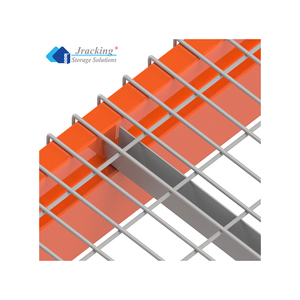
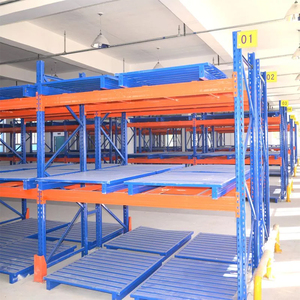
Wholesale Professional Strong Wire Mesh Garage Decking Pallet Board Selective Pallet Rack
Engineered waterfall decking designed for fail-safe fire sprinkler water penetration, preventing point-load collapse and supporting mixed inventory in selective pallet bays.
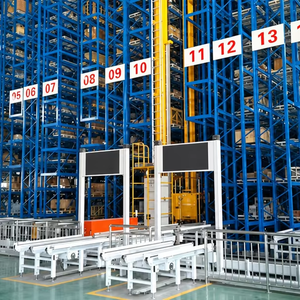
AS/RS Automated Storage and Retrieval System, High Bay Heavy Duty Pallet Rack
Ultra-tight tolerance multi-bay rack-supported structures integrated seamlessly with stacker cranes, high-velocity shuttles, and modern automated WCS/WMS platforms.
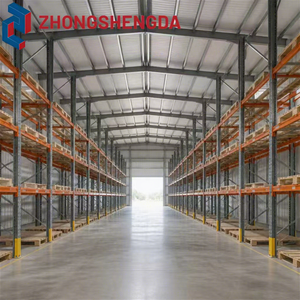
High Bay Galvanized Steel Multi Tier Pallet Racking Central Aisle Fulfillment System
Galvanized high-bay frameworks featuring integrated catwalk mezzanines and central transit aisles engineered specifically for high-throughput e-commerce 3PL sorting centers.
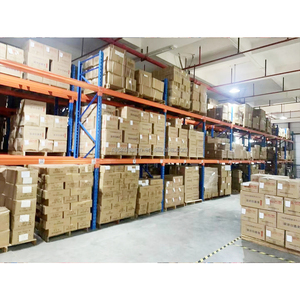
Warehouse Disassembled Industrial High Bay Selective Heavy Duty Pallet Racking
Modular, knock-down heavy-duty pallet rack bays featuring teardrop or omega uprights with 50mm/75mm adjustability, optimized for containerized export transport.
Automated Storage Racking System High Bay Pallet Rack 2000kg OEM Factory
Engineered for intense cyclical loading in fast-moving consumer goods fulfillment hubs, offering reinforced box beams and dual safety-pin connection locks.
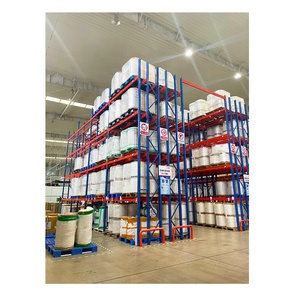
Industrial Warehouse High Bay Adjustable Double Deep Heavy Duty Pallet Rack
Stores pallets two-deep in back-to-back bays to eliminate half the operational aisles, balancing high-density cubic storage efficiency with selective retrieval.
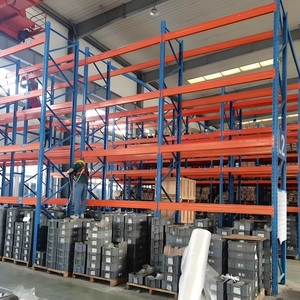
Steel Selective Pallet Rack Multi Bay Plug-In Boltless Rivet Storage System
Tool-less installation bay structure utilizing heavy-duty connector lugs, ideal for decentralized logistics depots, retail backrooms, and rapid warehouse reconfigurations.
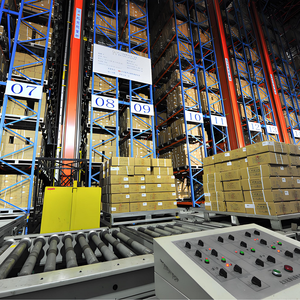
Automatic Double Deep Pallet Assembly and Racking Line for High-Capacity Hubs
Turnkey high-capacity bay line integrating automated deep-reach mechanical interfaces, impact-resistant guide rails, and customized heavy-duty baseplate anchors.
Structural Anatomy & Load Mechanics of an Industrial Pallet Rack Bay
A rigorous evaluation of static equilibrium, second-order p-delta moments, cold-formed section modulus, and beam deflection limits in modern warehouse rack bays.
1. Cold-Formed Steel Chemistry & Yield Dynamics: The performance envelope of any pallet rack bay starts at the atomic level of the roll-formed coils. As an industry-leading OEM exporter, our manufacturing processes prioritize prime structural carbon steels, primarily Q235B (yield strength ≥ 235 MPa) and micro-alloyed Q355B (yield strength ≥ 355 MPa, comparable to European S355JR). During automated roll-forming across 24 progressive cold-bending stations, work-hardening induces an engineered elevation of yield strength in the cold-worked corner radiuses. This work-hardening is factored into the effective cross-sectional area calculation under European limit state analyses, providing up to 15% higher load capacities without adding superfluous dead-load tare weight to the facility slab.
2. Column Omega Geometries and Perforation Pitch: The upright frame column utilizes a sophisticated closed-lip omega (Ω) profile. The geometry features continuous return flanges, internal reinforcing ribs, and precise CNC-punched slot configurations. Whether engineered on a 50mm pitch (European continental norm), 75mm pitch (British/Commonwealth standard), or proprietary teardrop layout, the hole punch tooling must maintain a dimensional tolerance within ±0.1mm. High-precision punching guarantees that the locking lugs of the beam end-connectors engage uniformly across all contact shear planes, eliminating micro-slip and mitigating bay sway under cyclical forklift pallet drops.
3. Semi-Rigid Joint Dynamics (Beam-End Connector Stiffness): A critical differentiator between substandard rack builders and certified structural bay manufacturing lies in joint rotational stiffness (Cd). Standard design codes do not treat the beam-to-column connection as fully pinned or fully rigid; it is classified as semi-rigid. Our heavy-duty beam connectors feature 3, 4, or 5 robotic-stamped drop-forged claw lugs, mated to double-welded hollow rectangular box beams. This creates an engineered spring restraint that distributes bending moments away from the beam span center into the vertical columns, significantly reducing span deflection under maximum allowable service loads (limited strictly to ≤ L/200 according to EN 15620 standards).
4. Baseplate Anchor Mechanics and Slab Interaction: Every vertical upright transfers cumulative thousands of kilograms of gravity load down to a localized floor footplate. Our factory designs heavy-gauge, CNC-plasma-cut baseplates that dissipate concentrated compressive forces across the concrete slab without exceeding the unreinforced concrete crushing limit. Utilizing anchor bolts tested for cracked-concrete seismic scenarios (ETA-rated wedge or chemical capsule anchors), each bay is braced against operational impacts and seismic ground accelerations.
| Racking Bay Architecture | Maximum Bay Height | Bay Capacity Range | Volumetric Space Efficiency | Selective Accessibility | Primary Sector Fit |
|---|---|---|---|---|---|
| Standard Selective Bay | Up to 12.0 Meters | 1,000 – 4,500 kg / level | 40% – 50% | 100% Immediate Direct Access | General 3PL, FMCG, Retail DCs |
| Double Deep Racking Bay | Up to 12.0 Meters | 1,500 – 3,000 kg / level | 60% – 65% | 50% Direct (Reach Truck) | Cold Storage, Dry Groceries |
| Drive-In / Drive-Through Bay | Up to 11.0 Meters | 1,000 – 2,000 kg / lane pos. | 75% – 85% | Low (LIFO / FIFO by lane) | Homogeneous Raw Materials, Beverage |
| Very Narrow Aisle (VNA) Bay | Up to 18.0 Meters | 1,000 – 3,500 kg / level | 65% – 75% | 100% Direct (Turret Truck) | High-Value Pharma, High-Bay Warehousing |
| Radio Shuttle Cart Bay | Up to 24.0 Meters | 1,500 – 2,000 kg / pallet | 85% – 90% | Automated Lane Buffering | Industrial Cold Chain, Meat, Dairy |
| AS/RS Clad-Rack High Bay | Up to 40.0 Meters | 500 – 3,000 kg / cell | 90% – 95% | 100% Machine Automated | Mega-Distribution Centers, Smart Factories |
Global Pallet Rack Procurement & Technology Trends (2025–2030)
How supply chain executives, warehouse developers, and procurement heads are recalibrating steel storage investments in an era of automated handling and volatile raw material indexes.
1. Convergence of AS/RS & Modular Bays
Global procurement teams are shifting away from static, single-purpose racking. Modern bay configurations must now feature structural interfaces designed for future integration with Automated Storage and Retrieval Systems (AS/RS), Autonomous Mobile Robots (AMRs), and automated shuttle tracks. Warehouses are ordering baseline selective bays with pre-drilled structural connection nodes that allow seamless transformation into automated high-density shuttle bays without replacing primary upright columns.
2. Total Cost of Ownership (TCO) Sourcing
Purchasing directors are replacing pure ex-works steel weight pricing with lifecycle TCO metrics. Factors including container pack-density (knock-down nesting efficiency), corrosion longevity (continuous automated phosphating and electrostatic epoxy-polyester powder coats rated for >500 hours salt-spray resistance), and zero-loss field reconfigurability drive the selection of Chinese top-tier export partners over localized intermediaries.
3. Rigorous Seismic & Cold-Chain Codes
With third-party logistics expansion into regions characterized by severe seismic acceleration zones (e.g., Southern Europe, South America, Oceania), pallet rack bay procurement necessitates site-specific modal response spectrum analysis. Concurrently, sub-zero cold chain facilities (−25°C to −30°C) require impact-tested steels exhibiting guaranteed Charpy V-notch toughness to prevent catastrophic low-temperature brittle fractures.
Future-Proofing Your Warehouse Storage Assets
As warehouse ceiling heights push upward from conventional 8-10 meter clear heights to 14-24 meter automated footprints, the structural tolerancing of pallet bays becomes intensely unforgiving. A column out-of-plumb deviation of merely 0.5% at 18 meters translates into a critical 90mm lean, inducing second-order eccentric moments that can over-stress structural welds. Modern procurement demands complete engineering traceability: 3.1 Mill Test Certificates for raw steel, automated robotic welding under EN ISO 3834 controls, and pre-shipping 3D laser verification of bay dimensional accuracy.
Contact Us for Engineering Consultation & Custom SizingWhy International Buyers Partner With Our Factory
Operating a world-class 30,000 square meter intelligent manufacturing facility in Guangzhou, we deliver end-to-end reliability from structural engineering calculations to global sea shipping.
30,000 m² Integrated Facility
Equipped with 10 high-precision automated continuous cold roll-forming lines, computerized multi-station hydraulic punching presses, automatic robotic dual-torch welding cells, and an environmental closed-loop pretreatment and powder-coating conveyor line spanning 300+ meters.
Certified CE & ISO Compliance
Fully compliant with European Construction Products Regulation (CPR) under CE Certificate No. 2435-CPR-8605159, certified quality management systems under ISO 9001:2015, and comprehensive European RoHS environmental surface treatment conformity.
Complimentary 3D CAD & FEA Calculations
Our veteran structural engineering department supplies complimentary warehouse CAD layout plans, 3D parametric renderings, and finite element stress analyses (FEA) tailored precisely around your forklift aisle radiuses and localized building clear heights.
Tailored OEM / ODM Capabilities
We partner with premier material handling dealers, systems integrators, and distributors across Europe, North America, the Middle East, and Australia. Custom corporate RAL powder colors, specialized embossed stamping, private-label packaging, and proprietary connector systems are fully supported.
Export Seaworthy Packaging Precision
Exporting over 30,000 metric tons of steel shelving monthly demands advanced packaging protocols. Columns and beams are nested with custom wooden dunnage, protective corrugated corner cushions, steel banding, and shrink-wrapped moisture barriers to ensure zero shipping abrasion.
Single-Point Accountable Engineering
From the initial review of your architectural DWG floor plans through production, quality control sign-offs, container loading, and on-site assembly blueprints, you work directly with dedicated structural engineers who understand your regulatory framework.
Frequently Asked Questions on Pallet Rack Bay Sourcing
Comprehensive engineering and procurement answers covering European/US standards, seismic verification, deflection tolerances, and overseas container consolidation.
What specific structural parameters define a single pallet rack "bay"?
How do your pallet rack bays comply with European EN 15512 and EN 15620 standards?
What are the acceptable deflection limits for pallet rack beams under full load?
How do you prevent brittle failure and cracking in cold-storage environments (−25°C)?
What surface treatment technologies protect against warehouse corrosion?
What data is required from our engineering team to generate a free layout and load table?
How many linear meters or pallet positions fit into a standard 40ft High Cube container?
Transform Your Warehouse Space Efficiency Today
Direct factory engineering, certified European compliance, zero-middleman pricing, and bespoke project layouts. Connect directly with our lead structural engineers to receive a customized 3D CAD layout and quotation within 24 hours.