High-Yield Warehouse Racking & Multi-Tier Storage Portfolios
Manufactured strictly according to EN 15512, RMI MH16.1, and ISO 9001:2015 benchmarks. Every system integrates cold-formed structural steel profiles, micro-adjustable beam connectors, and modular accessories tailored to universal Euro, ISO, and GMA pallet configurations.
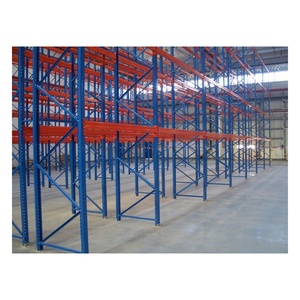
Industrial Shelf Racking Steel Warehouse Multi-Level Pallet System
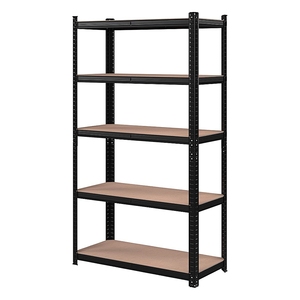
Wholesale Heavy-Duty Steel Boltless Shelf Corrosion Protected Rack
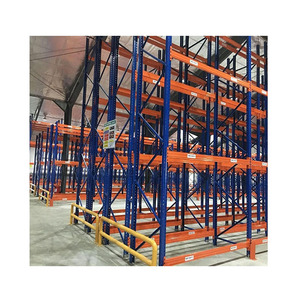
Industrial Galvanized Heavy-Duty Pallet Racking VNA & Deep System
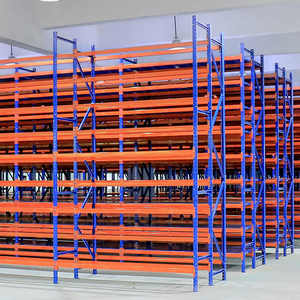
Heavy Duty Warehouse Storage Steel Shelving System for Logistics
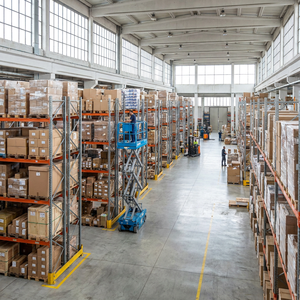
Industrial Storage Shelving Heavy Duty Steel Warehouse Rack Units
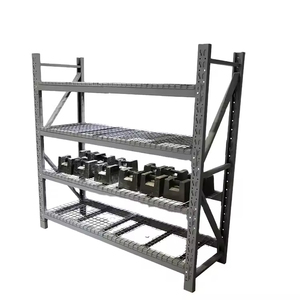
Wide Span Bolt-Free Shelving Industrial Warehouse Storage Units
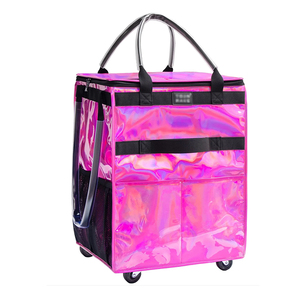
Heavy-Duty Foldable Rolling Fabric Warehouse Organizer Mobile Unit
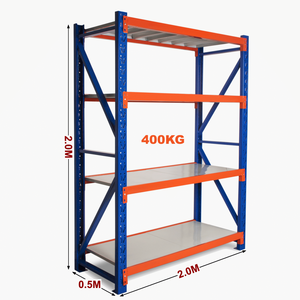
Industrial Long Span Steel Warehouse Racks Adjustable Shelving
Structural Mechanics, Selective Kinematics, and Steel Metallurgy
In modern industrial logistics, the Single Deep Selective Pallet Rack represents the foundational architecture of global supply chain nodes. Delivering pure 100% direct pallet selectivity, this configuration allows any unit load to be deposited or retrieved immediately without displacing adjacent inventory. Unlike high-density bulk-storage configurations (such as Drive-In, Push-Back, or Deep-Lane Radio Shuttle systems), single-deep racking eliminates mechanical dwell time, supports arbitrary SKU diversification, and seamlessly adapts to dynamic FIFO (First-In, First-Out) operations across FMCG, retail distribution hubs, automotive staging facilities, and pharmaceutical repositories.
However, the global procurement of racking systems has evolved significantly beyond rudimentary structural fabrication. Sourcing directors, structural consultants, and warehouse operations executives face stringent seismic codes, localized structural building regulations (such as EN 15512 across the European Union and RMI MH16.1 in North America), complex cyclic fatigue limits, and volatile international steel markets. A system engineered without rigorous deflection-ratio compliance or using substandard cold-rolled coil profiles poses unacceptable liability risks, product collapse threats, and severe operational interruptions.
1. Cold-Formed Steel Metallurgy: Q235B vs. Q355B Mechanical Properties
The structural integrity of warehouse racking starts with raw coil metallurgy. Premium Chinese export factories utilize continuously cast, cold-formed structural carbon steel sourced from Tier-1 domestic steel mills (such as Baosteel, Shougang, and Ansteel). Racking components must exhibit predictable yield strengths, high ductility, and excellent weldability for automated continuous roll-forming processes.
| Steel Grade (GB/T 700 / 1591) | Equivalent Standard (EN / ASTM) | Minimum Yield Strength ($R_e$) | Tensile Strength ($R_m$) | Elongation ($A_5$) | Recommended Application |
|---|---|---|---|---|---|
| Q235B | EN 10025 S235JR / ASTM A36 | ≥ 235 MPa | 370 – 500 MPa | ≥ 26% | Standard load beams, light/medium upright frames, row spacers |
| Q355B | EN 10025 S355JR / ASTM A572 Gr 50 | ≥ 355 MPa | 470 – 630 MPa | ≥ 22% | High-bay upright frames (>8m), seismic zone bracing, extra-heavy beams |
| SPHC / Cold-Rolled SPCC | EN 10111 DD11 / ASTM A1011 | ≥ 205 MPa | ≥ 270 MPa | ≥ 32% | Precision beam safety locks, punched connector teeth, shims |
Utilizing high-strength Q355B steel allows racking engineers to reduce the overall structural self-weight while improving cross-sectional moment of inertia ($I_x, I_y$). This high yield threshold prevents premature plastic deformation under point-impact shock loads commonly induced by counterbalance and reach truck mast oscillations.
2. Kinematics of Beam-to-Column Semi-Rigid Connections
Unlike standard hot-rolled portal building frames where structural connections are assumed to be either fully pinned or completely rigid, cold-formed selective pallet rack systems behave mechanically as semi-rigid space frames. The horizontal load capacity and unbraced frame stability in the down-aisle direction depend strictly on the rotational stiffness ($C_d$) and moment capacity of the multi-claw connector hooked into the punched upright column.
Rotational Stiffness ($C_d$)
Certified beam connectors feature 3 to 5 cold-stamped precision claw teeth engineered to grip the omega upright without axial slack. Higher connector stiffness reduces sway deflections and prevents down-aisle frame collapse.
Safety Lock Mechanics
Every beam-end connector incorporates an automatic spring-action or snap-in mechanical locking pin capable of withstanding a minimum vertical dislodgement uplift force of 5.0 kN according to EN 15512 and RMI standards.
Deflection Limit (L/200)
Under maximum uniformly distributed operational load ($UDL$), load-bearing box beams must maintain a mid-span deflection smaller than $\delta \le L/200$ (European standard) or $\delta \le L/180$ (North American RMI), avoiding elastic sagging.
3. Upright Column Profiling & Torsional-Flexural Buckling Prevention
The vertical upright frame is subjected to complex multi-axial compression forces: axial dead loads, live pallet weights, horizontal wind or seismic excitations, and transverse out-of-plumb eccentricities. Because cold-formed open sections possess low torsional rigidity, China's leading factories design specialized Omega ($\Omega$) Profiles with up to 11 to 13 continuous longitudinal fold bends.
These return lips and interior stiffeners shift the shear center toward the centroid, dramatically increasing the critical elastic buckling load ($P_{cr}$) and mitigating local plate-buckling along the teardrop or diamond slot punch lines. Uprights are laced via triangulated horizontal and diagonal bracing members (typically $C$-section profiles of $30 \times 30 \times 1.5$ mm or $40 \times 25 \times 1.5$ mm) assembled with grade 8.8 structural bolts, forming a rigid plane frame in the cross-aisle direction.
Guangzhou Heda Shelves Co., Ltd.: Manufacturing Infrastructure
Founded in 2001, Guangzhou Heda Shelves Co., Ltd. has grown over 25 years into an internationally recognized engineering designer and direct manufacturer of high-precision warehouse racking systems. Headquartered in Guangzhou, Guangdong Province, Heda operates a modern 30,000 square meter smart production facility backed by more than 300 technical, quality assurance, and structural engineering specialists. The facility delivers an in-house cold-forming and coating capacity exceeding 30,000 metric tons per month, exporting turnkey storage infrastructure to over 120 countries worldwide.
Verified Global Certifications & Structural Conformity
Heda Shelves maintains verifiable compliance with the most stringent global standards, ensuring seamless structural permits and municipal rack inspections across the European Union, the United Kingdom, Australasia, and the Americas:
CE Certification (EU)
Certificate No. 2435-CPR-8605159. Certified structural conformity under the European Construction Products Regulation (CPR 305/2011/EU) and EN 1090 structural steel execution standards.
ISO 9001:2015 Quality
Certificate No. 18624Q00169R0M. Fully audited quality management system encompassing material traceability, continuous dimensional verification, and calibrated tensile testing protocols.
Design Standard Alignment
Static calculations, load tables, and finite element analyses (FEA) calibrated according to EN 15512:2020, FEM 10.2.02, and ANSI/RMI MH16.1:2012 specifications.
Automated 10-Stage Precision Manufacturing Workflow
To eliminate manual fabrication discrepancies, prevent welded joint porosity, and ensure micron-level hole pitch repeatability across multi-kilometer beam runs, Heda implements a fully synchronized 10-step automated production line:
Surface finishing utilizes heavy-duty thermosetting epoxy-polyester hybrid powder coatings cured at 200°C. This automated process achieves a cross-hatch adhesion rating of Class 0 (ISO 2409) and withstands over 500 hours of continuous neutral salt-spray exposure (ASTM B117), guarding the underlying structural steel against scratching, impact chipping, and oxidation in unconditioned logistic warehouses.
Future Procurement Trends & Engineering Outlook (2025–2035)
The industrial warehouse racking sector is undergoing a profound paradigm shift driven by robotic automation, stricter carbon border adjustment mechanisms (CBAM), and volatile supply chain conditions. Procurement executives must evaluate several critical structural trends when commissioning multi-year pallet racking projects:
AMR & AGV Robotic Interfacing
Warehouses are rapidly transitioning from manual counterbalance trucks to Autonomous Mobile Robots (AMRs) and Automated Guided Forklifts (AGVs). This demands tighter dimensional tolerances in selective rack installations: floor-to-beam clearances must comply with DIN 18202 Class 4 floor flatness, with upright plumb tolerances restricted within $H/1000$ to ensure lidar and vision-guided robotic forks dock smoothly.
Low-Carbon Steel & CBAM Compliance
With the European Union's Carbon Border Adjustment Mechanism (CBAM) entering full administrative enforcement, international racking exporters are transitioning to electric arc furnace (EAF) scrap steel coils and low-VOC powder finishes. Certified Environmental Product Declarations (EPD) detailing Scope 1, 2, and 3 embodied carbon per metric ton are becoming mandatory contract conditions for Western logistics tenders.
IoT Structural Health Monitoring (SHM)
High-bay selective installations exceeding 12 meters increasingly integrate digital twin sensors. Piezoelectric strain gauges installed at baseplates and tri-axial impact accelerometers retrofitted to aisle entry upright protectors wirelessly transmit dynamic strain data. Operators receive real-time alerts if a forklift collision exceeds structural yield thresholds, enabling preventive safety maintenance before catastrophic collapses occur.
Total Cost of Ownership (TCO) vs. Initial Capital Outlay
Forward-thinking supply chain directors evaluate racking procurement through a lifecycle lens. While freight rates and metric-ton steel prices dictate initial CapEx, the true cost driver over a 15-year facility lease involves reconfigurability and repair cycles. By choosing standard standardized teardrop or 50mm metric hook patterns manufactured with consistent steel grades, facilities can relocate beam levels, expand into multi-tier mezzanines, or source standard replacement parts without tearing down entire structural bays.
Frequently Asked Questions: Global Racking Procurement
Clear, engineering-backed answers addressing the most common technical, regulatory, and logistics inquiries from international supply chain buyers.
How are beam lengths and frame depths configured for Euro (1200 × 800 mm) vs. ISO/GMA (1200 × 1000 mm) pallets?
+
What specific structural engineering calculations and documentation are provided for local building permits?
+
How do Chinese export factories maximize ocean freight cube efficiency and prevent transit corrosion?
+
What is the structural difference between single-deep selective racking and double-deep configurations?
+
Can Chinese manufacturers supply custom powder coat colors (RAL) and OEM private-label components?
+
What are the recommended deflection and damage inspection thresholds under EN 15635?
+
Request a Certified Engineering Layout & Project Quote
Send your warehouse floor plans (DWG or PDF), clear eave height, pallet dimensional profiles, and forklift parameters. Our senior structural team will deliver a comprehensive 3D layout, static calculation report, and factory-direct FOB/CIF quotation within 24 hours.