Explore factory-direct industrial racking manufactured with high-tensile cold-rolled Q235B structural steel, electrostatically powder-coated for exceptional anti-corrosive durability across intensive commercial environments.
In the contemporary logistics ecosystem, urban distribution centers, localized micro-fulfillment hubs, and regional manufacturing depots operate under intense real-estate price pressures. While mega-distribution centers expand outward horizontally over tens of thousands of square meters, small warehouses—typically defined as facilities spanning between 300 m² and 2,500 m² with clear ceiling heights under 8 meters—require an entirely distinct engineering doctrine. Maximizing cubic volume utilization (the ratio of usable storage space to total enclosed building volume) without impeding handling velocity represents the quintessential engineering challenge of modern facility management.
As a leading Chinese racking factory and global exporter founded in 2001, Guangzhou Heda Shelves Co., Ltd. has analyzed more than 10,000 completed installation blueprints worldwide. Our structural findings reveal that conventional low-density floor stacking wastes upwards of 62% of usable vertical clearance. Conversely, the misapplication of oversized heavy pallet racking in tight footprints restricts operating aisles, severely elevates forklift collision probabilities, and throttles throughput cycles. Achieving optimal warehouse economics demands an exacting equilibrium between mechanical structural properties, clear beam spans, ergonomic pick faces, and dynamic load tolerances.
Information Gain Metric: In a 600 m² urban depot with a 5.5-meter clear ceiling, deploying customized cold-formed narrow-aisle selective frames coupled with rack-supported mezzanine walkways increases active SKU picking locations by 185% while simultaneously cutting average picker travel paths by 42%, compared against standard wide-aisle ground installations.
Designing racking systems for compact floorplans necessitates rigorous adherence to international engineering norms, primarily EN 15512 (Steel static storage systems – Adjustable pallet racking systems – Principles for structural design) and FEM 10.2.02. When steel profiles are scaled down for tighter footprints, load distribution becomes highly concentrated. Upright columns must be cold-roll formed with multiple continuous longitudinal stiffening ribs to suppress torsional-flexural buckling under asymmetrical point loads.
Our manufacturing lines employ continuous automated CNC punching sequences with a standardized 50 mm or 75 mm vertical pitch. This fine granularity allows operators to adjust beam levels to the exact height of their palletized or boxed stock, eliminating dead vertical air space. The connection geometry between the load beam connector and the upright column utilizes a high-precision 3-to-4 tooth cold-stamped claw mechanism. When gravity loads are applied, the wedging effect tightens the moment connection, drastically attenuating sway without requiring obtrusive external diagonal guy-wires that block aisle access.
| Racking Topology | Volumetric Storage Index | Aisle Clearance Required | Access Selectivity | Optimal Operational Profile |
|---|---|---|---|---|
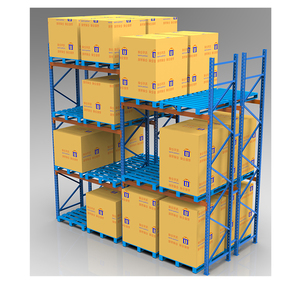
| Selective Pallet Racking | 40% – 50% Cube Utilization | 2.8m – 3.4m (Standard Reach) | 100% Immediate Direct Access | Multi-SKU micro-hubs, 3PL buffer zones, rapid dispatch |
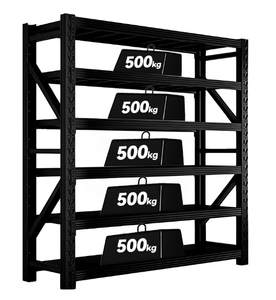
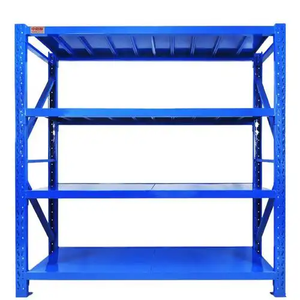
| Boltless Angle & Longspan Shelving | 65% – 75% Manual Pick Volume | 0.9m – 1.2m (Pedestrian Walkway) | 100% Hand-Load Selectivity | Spare parts depots, e-commerce order sorting, hardware bins |
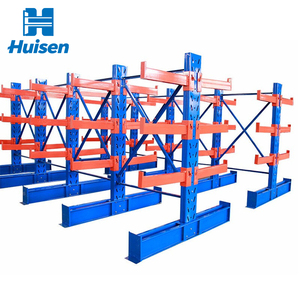
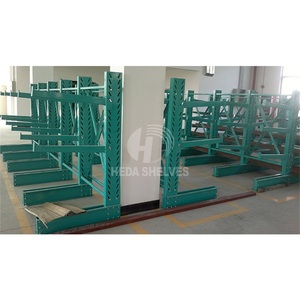
| Cantilever High-Density Units | 55% – 65% Open Linear Volume | 2.2m – 3.0m (Side Loader / Reach) | Continuous Horizontal Access | Extrusions, plastic piping, timber, sheet metals |
| Rack-Supported Mezzanines | 80% – 90% Double/Triple Tier Volume | 1.0m – 1.4m Walkway Decks | Zoned Multi-Tier Access | Urban retail distribution, apparel processing, manual packing |
| Drive-In / Shuttle Lanes (Compact) | 70% – 85% Deep Block Volume | Single Entry Point (No Aisles) | LIFO / FIFO Bulk Rotation | Cold rooms, seasonal buffer stock, single-SKU beverage palettes |
The structural longevity of small warehouse racking directly reflects raw material chemistry and surface finishing treatments. Lower-tier manufacturers often substitute re-rolled scrap steel, resulting in inconsistent yield strengths and microscopic stress fractures during cold bending. At our 30,000 m² ISO 9001:2015 certified production complex, we utilize prime hot-rolled and cold-rolled structural steel coils (Q235B and Q355B grades) sourced directly from state-accredited steel mills.
Every profile undergoes an automated 10-stage chemical pre-treatment cycle, comprising high-pressure degreasing, ultrasonic cleaning, acid pickling to eliminate mill scale, followed by a nanostructured zinc-phosphate conversion coating. This chemical conversion creates a crystalline microscopic anchor profile for the electrostatic thermoset polyester powder coating. The resulting finish provides a uniform dry film thickness of 60 to 90 microns, delivering superior resistance to abrasion from pallet scrapes, impact resistance exceeding 50 kg/cm, and neutral salt-spray corrosion resistance certified past 500 hours.
Technological evolution, sustainability regulations, and labor automation are reshaping how global supply chain directors select, purchase, and deploy racking frameworks.
Small warehouses are rapidly adopting autonomous mobile robots. Procurement mandates now demand racking footings and baseplates engineered with laser-leveled tolerances and wide bottom-clearance openings to accommodate AMR drive-under pod lifters without risking structural strike deflections.
Rising labor rates in Europe, North America, and Australia have transformed installation economics. Modern procurement trends favor proprietary tear-drop and keyhole interlocking systems that eliminate threaded fasteners, allowing two operators to assemble a 20-bay facility in less than 48 hours.
Corporate ESG commitments require supply chains to calculate the embodied carbon of racking assets. Chinese export leaders are transitioning to EAF (Electric Arc Furnace) steel formulations paired with non-toxic, lead-free TGIC powder finishes compliant with EU RoHS and REACH environmental directives.
Procurement teams no longer order out of static physical catalogs. The mandatory standard now involves comprehensive digital spatial audits: submission of raw building CAD (.dwg) files followed by 24-hour turnaround of finite element structural calculations, beam deflection tables, and realistic 3D virtual walkthroughs.
Combining two and a half decades of engineering legacy with precision manufacturing, strict regulatory compliance, and turnkey international export services.
We operate under certified Quality Management Standard ISO 9001:2015 (Certificate No. 18624Q00169R0M) alongside verified CE Construction Products Regulation credentials (Certificate No. 2435-CPR-8605159). Load tables, material test reports (MTRs), and structural engineering calculations adhere stringently to EN 15512 and EN 15620 standards.
Our 30+ in-house structural engineers evaluate your exact building schematics—accounting for column offsets, overhead sprinkler clearances, emergency egress pathways, and forklift turn radii—to construct an optimized spatial arrangement prior to metal fabrication, eliminating on-site cutting or re-work.
Steel profiles travel through extensive international supply chains. Every component leaving our plant is strapped with steel bands onto customized steel pallets, wrapped in multi-layer moisture-resistant PE stretch film, fitted with heavy protective corner cardboard, and systematically numbered for rapid unpacking and bay sequencing.
Essential technical, financial, and logistical insights compiled directly by our chief structural project engineers.
To prepare an engineered layout and definitive cost estimate, our design office requires six baseline data points: (1) A clean architectural floor plan (AutoCAD .dwg or dimensioned PDF) detailing structural columns, building offsets, and exit doors; (2) Clear internal building height to the lowest obstruction (lighting trusses or sprinkler mains); (3) Pallet specifications including width, depth, height, and maximum gross weight including cargo; (4) Forklift specifications, specifically mast collapsed height, maximum lift height, and minimum right-angle aisle stacking radius; (5) Environmental factors such as cold-chain temperatures or seismic zone coefficients; and (6) Destination country and port for accurate freight optimization.
Yes. Because we design and manufacture tooling in-house, our beam spans and frame depths are tailored to your target pallet standard. For EUR/EPAL 1 (1200 mm depth x 800 mm width) pallets stored short-side facing the aisle, we typically supply 1100 mm deep frames to guarantee a safe 50 mm front and rear overhang. Common beam lengths such as 2700 mm accommodate three Euro pallets comfortably per bay while complying with the strict horizontal safety clearances mandated by EN 15620. Similarly, standard American pallets (48" x 40") and Australian standards are configured with identical structural precision.
Structural integrity is governed by international limit-state design principles. For selective pallet beams under uniformly distributed load (UDL), we design strictly within the maximum vertical deflection limit of L/200 (span length divided by 200), conforming to European standard EN 15512 and RMI standards. Every production batch of high-tensile Q235B cold-rolled steel undergoes destructive tensile tests to verify yield strengths above 235 MPa. Furthermore, each beam connector incorporates a high-visibility mechanical safety lock pin preventing accidental dislodgement from upward forklift mast impacts.
Standard fabrication time for small-to-midsize warehouse orders (1 to 5 forty-foot high-cube containers) is typically 15 to 25 business days. Transit time is governed by international sea routes: shipping from our export berths at Guangzhou / Nansha / Shenzhen ports requires approximately 12–18 days to Southeast Asian and Middle Eastern ports, 28–35 days to major European gateways (Rotterdam, Hamburg, Valencia, Antwerp), and 18–25 days to North American Pacific Coast ports. We manage all export documentation, commercial invoices, packing lists, and Certificates of Origin.
Roll-formed racking is fabricated by feeding sheet steel through continuous cold-forming roller stands to create complex, multi-ribbed profiles (uprights and step beams). It offers exceptional strength-to-weight ratios, adjustable pitch versatility, and lower cost, making it the premier choice for 95% of small and dry-storage warehousing operations. Hot-rolled structural channel steel racking is substantially heavier and thicker; it is reserved for heavy-abuse yards, open-air lumber facilities, or severe industrial settings subject to frequent heavy vehicle impacts.
Yes. Guangzhou Heda Shelves supplies racking systems on both a direct-project and private-label basis. For regional equipment distributors, material handling dealers, and trade installers, we provide custom corporate RAL powder-coating colors, customized stamping of upright profiles, branded load notification plaques, and bespoke packaging configurations designed for direct redistribution.
Every shipment is accompanied by a comprehensive engineering packet comprising 3D exploded assembly diagrams, frame bracings schematics, footplate anchor torque specifications, and numbered part labels corresponding directly with packing manifests. For standardized boltless and selective racking, local mechanical contractors or general maintenance teams routinely complete assembly using our step-by-step video manuals. For multi-tier mezzanine floors, remote teleconference engineering supervision or on-site project directors can be deployed.
Submit your warehouse dimensions or floor plan. Our senior design engineers will provide a free 2D/3D CAD layout, load capacity calculation, and direct factory price schedule within 24 hours.
Send an Inquiry