Heavy-Duty Warehouse Metal Racking & Industrial Systems
Engineered with certified high-yield Q235B and Q355B structural steel, our racking systems deliver optimal bay deflection resistance, modular adjustability on 50mm/75mm pitches, and long-term corrosion protection.
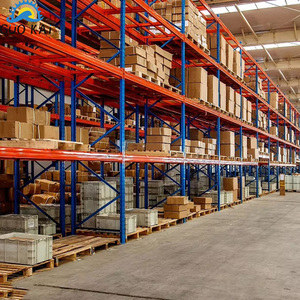
Customizable Industrial Storage Rack Adjustable Metal Pallet Racking
- Load: 1000–5000 kg/Level
- Pitch: 50mm Adjustable
- Anti-Corrosion Powder Finish
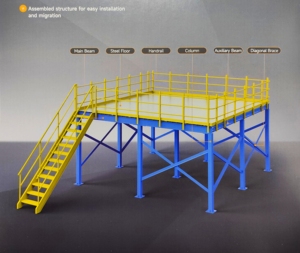
Nova Steel Customized Heavy-Duty Industrial Mezzanine Metal Floor Rack
- Deck Load: 300–1200 kg/m²
- Multi-Tier Structural Build
- Integrated Staircases & Gates
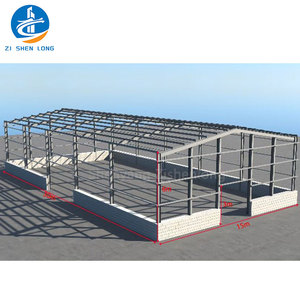
Metal Frame Structure Prefabricated Warehouse Workshop Building
- Grade Q355B H-Section Steel
- Clear-Span Engineering
- Wind/Seismic Certified
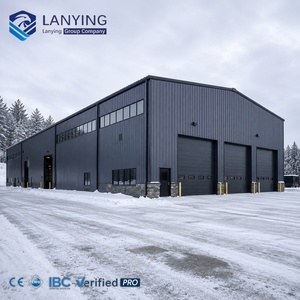
Prefabricated Building Steel Structure Logistics Warehouse
- Fast Modular Bolt Assembly
- Custom Bay Widths
- Integrated Crane Runway
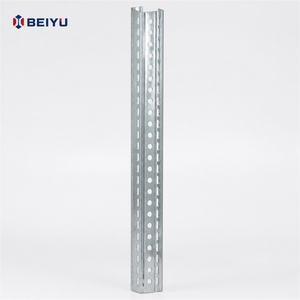
Custom Industrial Storage Rack Upright Profile Roll Forming Parts
- Omega & C-Profile Section
- Thickness: 1.5–3.0 mm
- Automated Continuous Punch
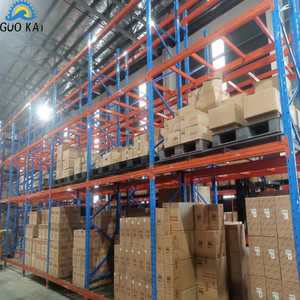
Industrial Heavy Duty Pallet Rack Store Shelf Warehouse Racking
- 100% Pallet Accessibility
- Safety Locking Pins Included
- ISO 9001:2015 Assured
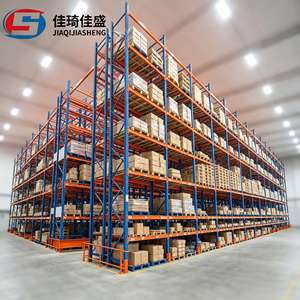
Custom Surface Finish OEM Modular Assembled Beam Pallet Racking
- Box Beam & Step Beam Options
- Dual Robotic Welded Claws
- Custom RAL Powder Finishes
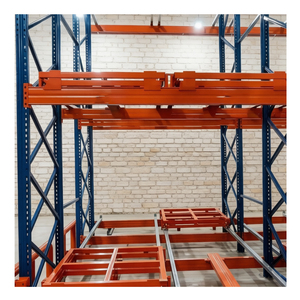
DJ High Density Storage Solution Push Back Pallet Racks
- 2 to 6 Pallets Deep
- Heavy-Duty Gravity Nesting Carts
- LIFO Dynamic Throughput
Why Global Supply Chains Rely on HEDA Shelves
Guangzhou Heda Shelves Co., Ltd. combines quarter-century manufacturing expertise with advanced European engineering verifications to eliminate middleman overheads and supply direct-from-factory metal warehouse racking systems.
CE & ISO 9001 Certified
Backed by official CE Certificate No. 2435-CPR-8605159 and ISO 9001:2015 Certificate No. 18624Q00169R0M. Load tables reference strict EN 15512 and RMI structural safety principles.
Complimentary 3D & CAD Design
Our 30+ project engineers review floor plans (DWG/PDF), clear heights, seismic zones, and forklift turning circles to supply full layout proposals, load stress diagrams, and bay optimization models within 24 hours.
30,000 Ton Monthly Output
Spread across our 30,000 m² automated facility, our continuous roll-forming lines, automated punching equipment, and dual robotic welding arrays ensure uncompromised dimensional consistency and rapid lead times.
Direct Port Logistics
Specialized export nested packing cuts shipping container voids by up to 35%. Direct vessel dispatches from Guangzhou and Shenzhen to Rotterdam, Hamburg, Los Angeles, Jebel Ali, and worldwide industrial hubs.
Industry Whitepaper: Future Trends in Wholesale Metal Warehouse Racking Procurement
The international supply chain for industrial storage infrastructure is undergoing a structural paradigm shift. Where warehouse racking procurement once centered purely on steel tonnage cost ($/kg), modern logistics directors, third-party logistics (3PL) conglomerates, and retail omnichannel operators now evaluate procurement through the lens of Total Lifecycle Value, Seismic Resilience Engineering, and Automated System Interoperability.
1. Strategic Procurement Drivers for Tier-1 Logistics Hubs
When evaluating wholesale procurement directly from Chinese manufacturing facilities, multi-facility enterprises gain profound cost and scalability advantages by establishing direct Original Design Manufacturing (ODM) pipelines. Key strategic procurement drivers include:
Container Volume Optimization (Cubing Efficiency): Racking profiles, upright frames, and horizontal box beams are inherently heavy and bulky. Tier-1 manufacturers like HEDA Shelves utilize optimized knock-down (KD) bolted upright frames alongside nested profile geometries. By nesting beam sections and shipping frames disassembled for on-site bolting, a standard 40ft High Cube (40HQ) container achieves 25–27 metric tons of payload without exceeding cubic volume limits, lowering the effective ocean freight tariff per pallet location by up to 28%.
Raw Steel Feedstock Indexing & Metallurgical Integrity: Structural failure in industrial pallet racking almost always originates from cold-rolled steel fatigue, inferior carbon content, or micro-cracking along profile bend radii. Reputable Chinese suppliers work exclusively with certified prime coils (such as Baosteel or Shougang Grade Q235B and high-tensile Q355B). Procurement contracts now standardly incorporate mill test certificates (MTC) exhibiting traceable yield strength ($\ge 235\text{ MPa}$ to $\ge 355\text{ MPa}$) and elongation parameters ($\ge 22\%$).
2. Technological Trends: Transition from Static Storage to Autonomous Interoperability
The traditional pallet racking bay is no longer an isolated passive asset. It is now engineered as an integrated mechanical component of Automated Storage and Retrieval Systems (AS/RS), 4-Way Radio Shuttle matrices, and Autonomous Mobile Robot (AMR) fleets.
Advanced Anti-Corrosive Coatings for Extreme Thermal Cycling: Rapid growth in cold-chain logistics, pharmaceutical bio-storage, and humid sub-tropical logistics requires sophisticated surface chemistry. Standard solvent dip paints have been universally supplanted by continuous multi-stage electrostatic thermoset polyester powder coating. For cold-storage environments operating down to $-30^\circ\text{C}$, pre-treatments incorporating silane nano-ceramic conversion coatings prevent blistering, micro-porosity, and sub-surface oxidation induced by atmospheric condensation cycles.
3. High-Density Racking Systems Technical Comparison
Selecting the correct mechanical configuration requires balancing pallet density against individual SKU selectivity. Below is an engineering comparison matrix used by our logistics architects during project design:
| Racking Architecture | Space Utilization | SKU Selectivity | Stock Rotation | Capital Cost Index | Recommended Industrial Use |
|---|---|---|---|---|---|
| Selective Pallet Racking | 40% - 50% | 100% Direct | FIFO / LIFO Flexible | Baseline (1.0x) | 3PL FMCG, General Retail, Multi-SKU Distribution |
| Double Deep Pallet Racking | 55% - 65% | 50% Access | LIFO | Moderate (1.25x) | Wholesale Reserve Storage, Identical Batch Goods |
| Drive-In / Drive-Through | 70% - 80% | 15% - 20% | LIFO (Drive-In) / FIFO | Economical (1.35x) | Cold Storage Freezers, Beverage Bottling Depots |
| Push-Back Trolley Racking | 65% - 75% | Lane Specific | LIFO (Gravity Cart) | Intermediate (1.8x) | Food Production Staging, Medium Rotation Cold Chain |
| Radio Shuttle System | 80% - 90% | Channel Level | FIFO or LIFO Selectable | Advanced (2.6x) | High-Volume Frozen Logistics, Meat Processing, Dairy |
| Rack-Supported Mezzanine | 100% Cube Gain | 100% Accessible | Configurable | Value-Added (2.1x) | E-commerce Piece Picking, Garment Sorting, Spare Parts |
4. Structural Safety, Seismic Dynamics, and Beam Deflection Formulae
Modern warehouse racking is an engineered steel structure subject to complex static and dynamic load vectors. Under international design standard EN 15512 and the American RMI (ANSI MH16.1) specification, maximum allowable horizontal beam deflection under full uniformly distributed load (UDL) must not exceed:
Column Base Anchor Safety Factor: Concrete expansion or chemical wedge anchor bolts must withstand seismic shear and tensile uplift forces based on regional spectral acceleration coefficients ($S_s, S_1$). Floor slabs must maintain minimum compressive cylinder strength of $f'_c \ge 25\text{ MPa}$ ($3,600\text{ psi}$) with fiber or rebar reinforcement.
Upright frame sections produced at HEDA Shelves feature multi-fold omega cross-sections with 8 to 14 bending points. This complex profile redistributes torsional stress and dramatically increases the radius of gyration ($r$), allowing superior buckling load resistance with optimized steel thickness.
5. The HEDA 10-Stage Precision Manufacturing Protocol
Consistency in cold-formed steel manufacturing relies on continuous in-line quality controls. Every upright, connector claw, and shelf beam undergoes ten distinct production stages:
Raw Steel Coil Inspection
Precision CNC Slitting & Cutting
Automated Upright Punching
Continuous Roll-Forming
Interlocking Profile Calibration
Robotic Connector Welding
Shot Blasting & Surface Cleaning
Pickling & Nano Phosphating
Electrostatic Powder Coating
Load Testing & Seaworthy Pack
Frequently Asked Questions by Industrial Warehouse Buyers
Direct answers to technical, commercial, and engineering questions encountered during international warehouse metal racking procurement.
How do you guarantee international structural code compliance (EN 15512 vs. RMI)?
Our structural calculations strictly conform to European standard EN 15512:2020, the US RMI (ANSI MH16.1), and Australian AS 4084:2023. Each custom racking proposal includes structural finite element analysis (FEA), verified load capacity tables per beam level, seismic drift limits, and anchor shear capacities. We furnish stamped engineering calculation reports for submission to local building authorities, safety inspectors, and insurers.
What parameters are required to generate an accurate layout and wholesale quotation?
To receive an optimized CAD layout within 24 hours, buyers should provide: (1) Warehouse architectural floor plan (DWG or PDF) showing column grid locations, overhead truss heights, and egress doors; (2) Pallet dimensions (Width × Depth × Height) including pallet overhang; (3) Maximum gross weight per pallet; (4) Forklift specifications (minimum turning radius, mast lift height, outrigger legs); and (5) Operating environment (ambient, cold store, or chemical).
How are components protected against damage and moisture during ocean shipping?
We use custom seaworthy packaging engineered for long ocean transits. Upright frames and beams are nested on heavy-duty timber skids with protective corner guards, wrapped in thick multi-layer UV-resistant stretch film, and strapped with heavy-gauge polyester bands. Small parts (hardware, base plates, shims, and safety locking pins) are packed in reinforced wooden crates with internal desiccant bags to prevent moisture condensation during sea voyage.
What is the difference between Hot-Dip Galvanized and Powder Coated finishes?
Our standard finish is an automated electrostatic polyester powder coat (film thickness 60–90 microns) cured at 180°C–200°C, providing exceptional scratch resistance and aesthetic branding in any custom RAL color. For outdoor yards, harsh coastal environments, or heavy-washdown chemical facilities, we provide Hot-Dip Galvanizing (HDG) conforming to ISO 1461 / ASTM A123, yielding a metallurgical zinc coating exceeding 65–85 microns for multi-decade corrosion defense.
Can HEDA Shelves produce custom OEM/ODM racking profiles to match existing systems?
Yes. A significant portion of our wholesale export production consists of custom OEM profiles for regional distributors and systems integrators. We can replicate or engineer compatible upright profiles (e.g., teardrop, speedlock, hex-hole, or European diamond perforations) and custom connector hooks via dedicated tooling dies, ensuring full modular compatibility with an existing warehouse fleet.
How do you handle warehouse floor slab anchorage and seismic engineering?
Every upright frame is anchored to the concrete slab via heavy-duty cold-formed steel baseplates. Depending on seismic hazard zoning ($S_s$) and building codes, baseplates feature multi-hole patterns for heavy mechanical wedge anchors or chemical capsule anchoring systems. Our engineers calculate slab bearing pressures to guarantee that the racking system does not exceed the structural punching shear capacity of your facility floor.
Request an Engineered Layout & Wholesale Price Matrix
Send us your warehouse DWG floor plans or project specifications. Our structural engineers will review aisle clearances, pallet capacities, and seismic requirements to deliver a factory-direct quote within 24 hours.