Industrial Racking Systems & Safety Netting Integration
Our factory-direct manufacturing combines heavy-duty cold-formed steel racking with modular fall-arrest safety nets and containment screens. Review our certified storage systems engineered for logistics centers, retail distribution, and automated facilities.
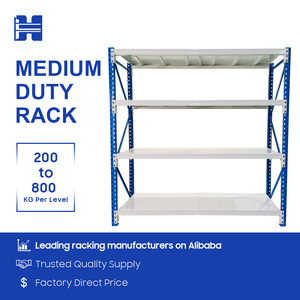 Medium Duty
Long Span Wide Span Medium Duty Shelving Steel Warehouse Storage Racking System Industrial
- Capacity: 300 - 800 kg per beam level
- Pitch: 50mm adjustable connector tabs
- Safety: Rear mesh & netting ready
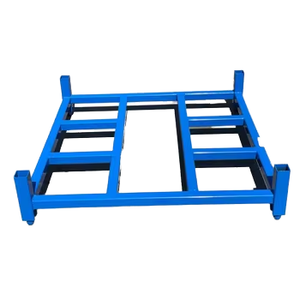 Stackable Post
Stackable Pallet Rack Pipe Post Pallet Stacking Rack Heavy Duty Warehouse Storage Rack for Logistics Center
- Load: 1,000 - 2,500 kg per nest
- Structure: Detachable circular pipe posts
- Containment: Lateral perimeter netting
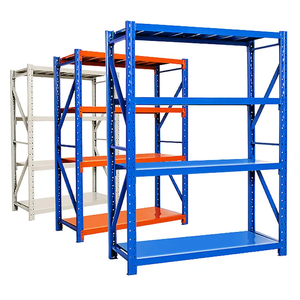 Custom Storage
Factory Custom Adjustable Storage Shelves Heavy Duty Shelving Unit Rack Warehouse Storage
- Customization: Full OEM / ODM dimensions
- Surface: Electrostatic thermoset powder
- Access: Multi-aisle pick security nets
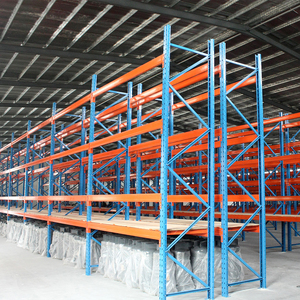 Adjustable Steel
Industrial Rack By LIJIN Manufacture Heavy Duty Adjustable Steel Garage Storage Shelving Rack For Warehouse Stacking Racks
- Steel Grade: Q235B cold rolled steel
- Configuration: High density beam step locks
- Safety Netting: Backstop clamp fixtures
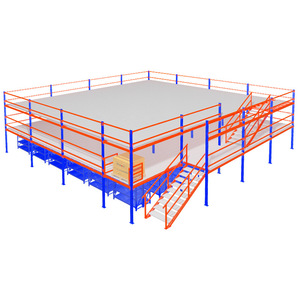 Mezzanine System
Industrial Customized Steel Structure Racks Supported Multi-tier Loft Mezzanine Floor Platform Racking
- Space Efficiency: 200% vertical footprint
- Floor Loading: 300 - 1,000 kg/sqm
- Edge Safety: High-bay perimeter netting
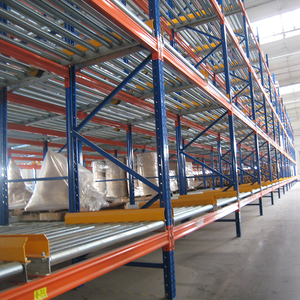 Gravity Flow
High Efficient Steel Selective Gravity Pallet Racks with High Storage Capacity for Warehouse Storage
- Turnover: FIFO gravity roller conveyors
- Brake Rollers: Auto speed deceleration
- Discharge Guard: Heavy-duty arrester net
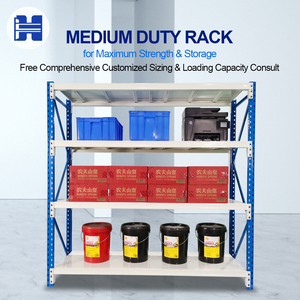 Boltless Rack
Factory Price Professional High Strength Steel 5-Layer Medium Duty Picking Rack Boltless Installation for Retail Distribution
- Assembly: 100% boltless butterfly hole
- Shelving Layers: 5 adjustable steel decks
- Fall Prevention: Side/back carton netting
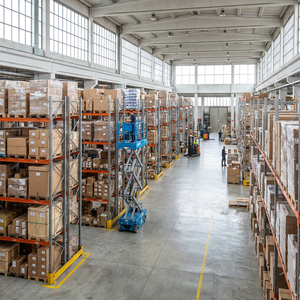 Selective Pallet
Complete Industrial Warehouse Storage Solution Heavy Duty Steel Pallet Racking System
- Heavy Duty: 1,000 - 4,500 kg per level
- Upright Profiles: 80-140mm omega section
- Safety Netting: Full longitudinal flue net
Pallet Racking Nets: Structural Dynamics, Fall Arrest Physics & Code Compliance
A technical examination of containment mechanics, kinetic energy dissipation formulas, and international warehouse safety standards across North America, Europe, and Asia-Pacific.
Structural Risk Factors in Modern High-Bay Warehouses
In high-density racking environments exceeding 8 meters in height, loose carton migration, partial pallet destabilization, and forklift mast over-push represent three of the leading causes of cataclysmic warehouse accidents. When a standard 1,200 × 1,000 mm ISO pallet or 1,200 × 800 mm EUR/EPAL pallet carrying 1,000 kg is pushed beyond the rear load beam, the absence of an engineered containment backstop can result in immediate gravitational collapse into pedestrian aisles or opposing rack bays.
Under OSHA 1910.176(b) (Handling materials - secure storage) and European Standard EN 15635 (Steel static storage systems - Application and maintenance of storage equipment), warehouse duty-holders are strictly mandated to prevent falling loads from encroaching into work zones. Pallet racking nets—manufactured from knotless High-Tenacity Polypropylene (HTPP) or UV-stabilized nylon braided cords—serve as a flexible, high-tensile energy absorption barrier engineered to catch migrating boxes or arrest full dislodged pallets without permanent structural deformation of the steel uprights.
The Physics of Containment: Kinetic Energy Absorption
Unlike rigid welded wire mesh or solid steel sheet backstops which transfer high shock loads directly into the punched upright frames (often precipitating catastrophic frame buckling), flexible racking safety netting absorbs kinetic energy through progressive viscoelastic elongation. The dynamic kinetic energy ($E_k$) of a falling load is defined by:
$$E_k = \frac{1}{2} m v^2 + m g h$$
Where $m$ represents load mass (e.g., 200 kg carton cluster or 1,200 kg pallet unit), $v$ is lateral forklift push velocity, $g$ is gravitational acceleration ($9.81\ \text{m/s}^2$), and $h$ is vertical drop before netting engagement. Flexible HTPP netting exhibits an elastic elongation capacity of 18% to 26% at peak break strain, converting instantaneous impact force into uniform circumferential tension dispersed across aircraft-grade galvanized perimeter cables, turnbuckles, and J-hook upright brackets.
NFPA 13 Fire Sprinkler Penetration & Airflow Dynamics
A critical failure mode of solid sheet steel or dense timber panel backstops in European and North American warehouses is the total disruption of flue spaces. NFPA 13 (Standard for the Installation of Sprinkler Systems) and FM Global Data Sheet 8-9 dictate that longitudinal and transverse flue spaces between rack rows must remain unobstructed to permit ceiling sprinkler water penetration into the base of the fire plume.
High-tenacity knotless netting (with mesh apertures ranging from 20 × 20 mm for small parts to 100 × 100 mm for unitized bulk pallets) provides over 92% open-area porosity. This ensures unimpeded sprinkler deluge penetration and unhindered HVAC air circulation, making pallet racking nets the universally approved fall arrest backstop for cold storage, deep-freeze distribution, and dry goods facilities worldwide.
EN 15512 & ANSI MH31.1 Verification
Every net assembly undergoes dynamic pendulum drop impact testing and static tensile pull validation, guaranteeing verified load containment up to 4,500 ft-lbs (6,100 Joules) without border detachment.
Ultrasonic Knotless Weaving
Interlocked Raschel weave eliminates friction knots that create stress points and fray under continuous vibration, ensuring continuous yarn tenacity and zero abrasive wear on packaged cartons.
Fast-Clip Snap Hook Installation
Equipped with spring-gated galvanized carbines and offset standoff brackets, our netting systems mount onto teardrop, slotted, or rectangular punched uprights in under 12 minutes per bay.
Specification Matrix: Racking Netting vs. Wire Mesh vs. Steel Backing
Compare mechanical properties, dynamic impact containment, installation economics, and code compliance across primary pallet racking backstop solutions.
| Performance Vector | Knotless HTPP Netting (Our Factory) | Welded Wire Steel Mesh | Solid Sheet Steel Panels | Woven Strapping Cords |
|---|---|---|---|---|
| Impact Absorption Mechanism | Viscoelastic Deflection (Optimal) | Rigid Plastic Strain | Rigid Elastic Plastic Deformation | Linear Tensile Friction |
| Dead Load on Racks (per 100 m²) | 18 - 32 kg | 280 - 450 kg | 750 - 1,200 kg | 25 - 40 kg |
| NFPA 13 Fire Sprinkler Porosity | > 92% (Certified Free Flow) | 68% - 78% | 0% (Completely Obstructed) | > 90% |
| Forklift Impact Tolerance | High Elastic Memory (Recovers Shape) | Permanent Buckling / Weld Shearing | Permanent Dents / Frame Pull | Moderate Loosening Over Time |
| Corrosion & Cold Store Resilience | Unaffected (-40°C to +80°C) | Zinc Oxidation / Rust Risks | Surface Scratches Induce Rust | Polyester Humidity Sag |
| Installation Time per Bay | 10 - 15 Minutes | 45 - 60 Minutes | 75 - 120 Minutes | 25 - 35 Minutes |
| Freight & Container Volume | Ultra-Compact (Vacuum Rolled) | Heavy, Bulky Crating | Extremely Heavy Steel Pallets | Compact Spools |
Future Procurement Trends in Industrial Racking & Safety Netting (2025–2030)
How the intersection of robotics, automated storage and retrieval systems (AS/RS), carbon border adjustments (CBAM), and intelligent IoT telemetry is transforming procurement.
1. Seamless Integration with AS/RS & Automated Guided Vehicles (AGVs)
As logistics real estate costs surge across key global hubs, warehouse operators are accelerating the deployment of AS/RS cranes and automated narrow-aisle reach trucks operating at linear speeds exceeding 4 meters per second. In automated high-bay facilities, a falling SKU does not merely present a pedestrian safety hazard; it risks jamming high-speed shuttles, generating tens of thousands of dollars in facility downtime per hour. Future procurement contracts increasingly mandate pre-engineered, zero-deflection rack netting assemblies tailored with quick-release boundary tracks that integrate seamlessly with photoelectric safety interlocks and shuttle clearance envelopes.
2. Eco-Polymer Circularity & Carbon Accounting (CBAM Compliance)
With the implementation of the European Union's Carbon Border Adjustment Mechanism (CBAM) and stricter ESG audit standards across Fortune 500 supply chains, procurement officers are shifting away from heavy virgin steel mesh panels toward closed-loop recyclable polypropylene netting. High-Tenacity Polypropylene (HTPP) boasts a carbon manufacturing footprint up to 74% lower than equivalent cold-rolled sheet steel per square meter of containment area. Our production lines utilize solvent-free dope dyeing and recyclable mono-polymer yarns that can be melted and re-extruded at end-of-life, directly advancing corporate Scope 3 decarbonization metrics.
3. Smart Sensor Netting & Structural Strain Telemetry
The emerging frontier in smart warehouse logistics is the convergence of passive fall arrest netting with conductive yarn sensors and wireless strain telemetry. Future netting systems supplied by advanced Chinese manufacturers feature micro-braided copper fiber filaments woven into the primary stress cords. Upon absorbing an accidental pallet impact, localized resistance variances trigger automated IoT alerts via Bluetooth Mesh or LoRaWAN to the warehouse management system (WMS), alerting safety managers to inspect load integrity before an operator approaches the impacted aisle.
4. Modular Turnkey Sourcing: Racking + Netting Unified Procurement
Historically, logistics contractors sourced pallet racking from steel fabricators and subsequent fall safety netting from third-party industrial textile distributors. This fragmented procurement model led to frequent upright hole misalignment, bracket mismatches, incompatible engineering warranties, and protracted lead times. By partnering directly with an integrated manufacturer capable of designing both the structural steel racking frames and matching precision-fit containment netting, enterprise buyers eliminate interface risk, compress transit lead times by up to 35%, and secure comprehensive EN/OSHA certified turnkey warranties.
Guangzhou HEDA Shelves: 25 Years of Precision Manufacturing
Established in 2001, Guangzhou Heda Shelves Co., Ltd. operates a 30,000 m² advanced fabrication complex with over 300 experienced engineers and technicians, delivering up to 30,000 tonnes of certified racking and warehouse systems every month.
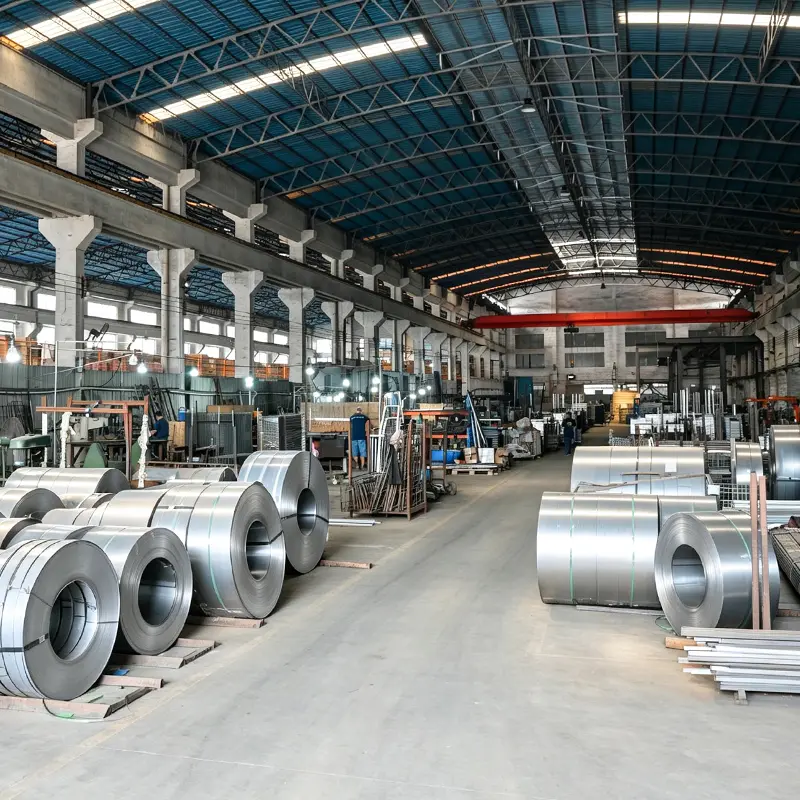
25+ Years Industrial Heritage
Founded in 2001 with more than 10,000 completed warehouse racking and containment installations across 120+ countries worldwide.
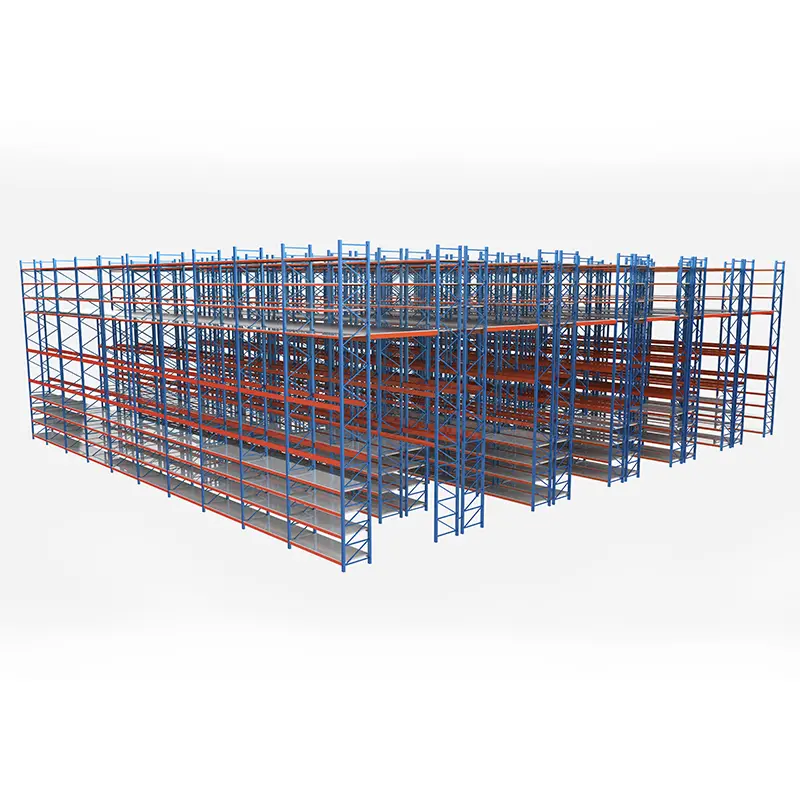
Free 3D & CAD Engineering
In-house structural engineering team prepares comprehensive AutoCAD layouts, 3D BIM models, and structural calculation sheets prior to order confirmation.
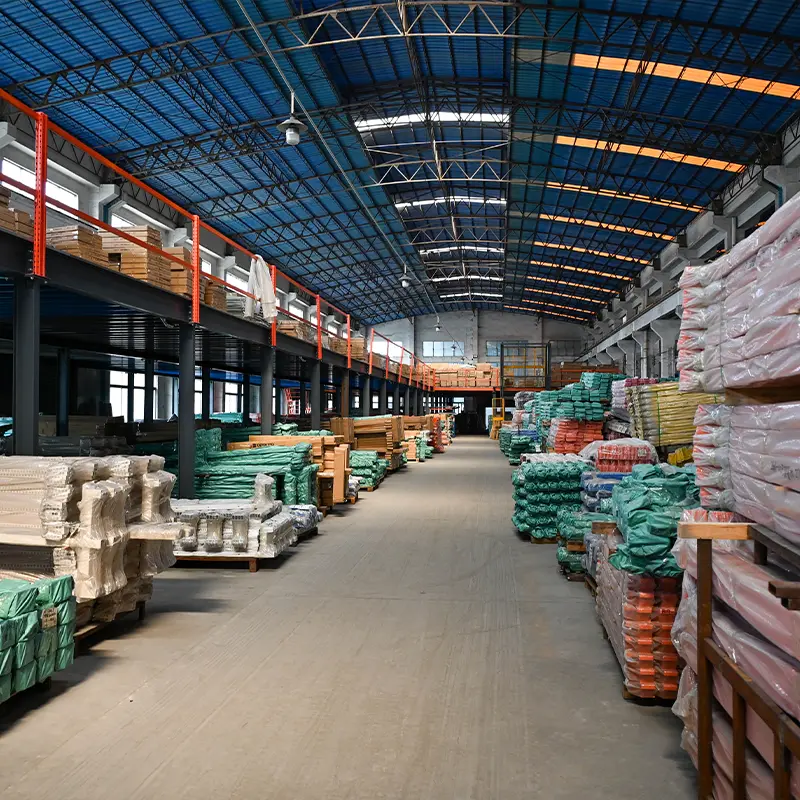
Precision Automated Finishing
Automatic continuous cold-roll forming, robotic laser welding, 12-stage chemical pickling/phosphating, and electrostatic epoxy-polyester powder baking.
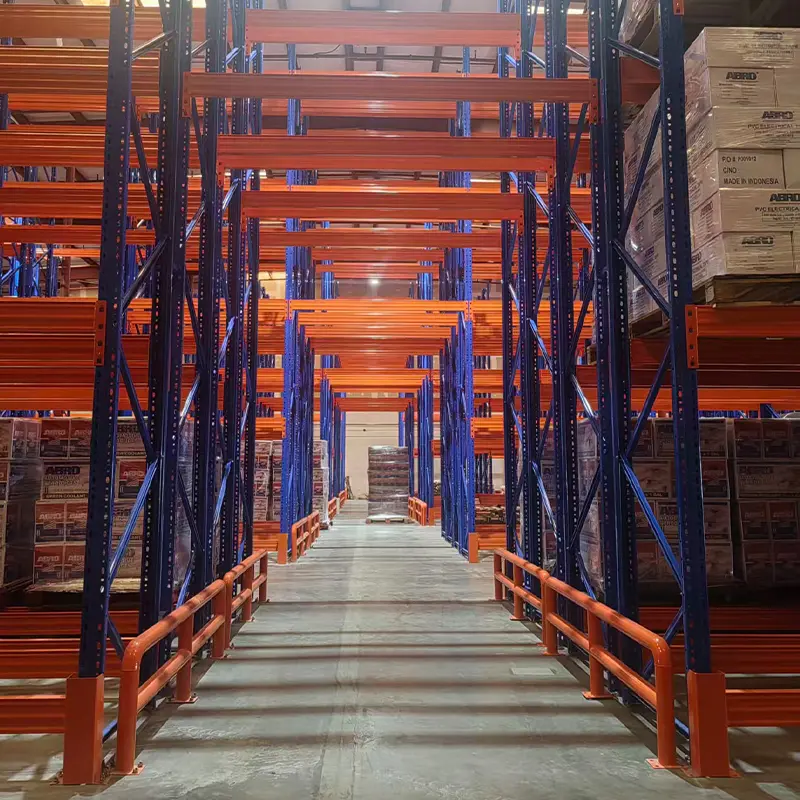
Turnkey OEM / ODM Solutions
Complete custom manufacturing of upright frames, beams, wire mesh decks, and high-performance safety netting matched to any custom RAL color or brand spec.
Audited International Quality & Safety Compliance
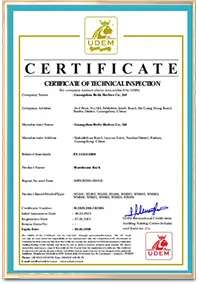
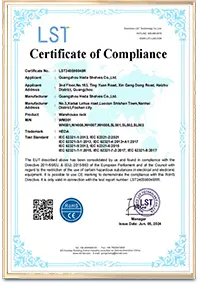
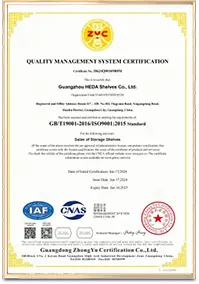
Our facilities operate under verified European and global certification standards. Certificates and factory inspection dossiers are available for independent third-party verification.
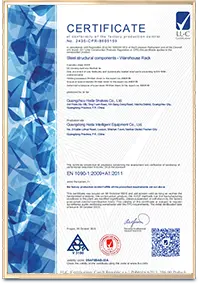 CE Certificate No. 2435-CPR-8605159
 ISO 9001:2015 Certificate No. 18624Q00169R0M
 Independent Structural Test Report
 RoHS Compliance & Factory Audit
B2B Wholesale Procurement Checklist: Auditing Chinese Racking & Netting Suppliers
Avoid common import pitfalls. Use our engineering audit framework to evaluate raw material pedigree, dynamic testing rigor, load ratings, and ocean freight seaworthiness.
1. Mill Certificate & Tensile Verification
Ensure your supplier utilizes certified Q235B / Q355B hot-rolled strip steel from verified primary steel mills (Baosteel, Shougang) and 100% virgin resin HTPP polymer yarn with documented tensile yield strengths exceeding 450 N/mm².
2. Anti-UV & Flame Retardant Ratings
For warehouse facilities with exterior light infiltration or strict insurance covenants, demand DIN 4102-1 B1 or NFPA 701 fire retardancy test reports along with ISO 4892-3 accelerated xenon-arc UV stabilization certificates.
3. Seaworthy Palletized Packing
Racking components require automated corrugated protective banding and timber dunnage to prevent transit surface abrasion. High-strength safety nets should be vacuum-sealed in moisture-barrier bags to avoid ocean salt-spray contamination.
Frequently Asked Questions: Wholesale Pallet Racking Nets
Answers to common technical, logistics, compliance, and custom manufacturing inquiries from international warehouse EPCs, 3PL managers, and racking distributors.
What is the difference between knotted and knotless pallet racking nets?
Knotted netting relies on mechanical knots to interlock the cords. Under intense cyclic loading or forklift contact, knots tend to slip, concentrate tensile stress, and experience significant abrasion against carton corners. Knotless netting (such as our high-tenacity polypropylene Raschel weave) knits intersecting continuous filaments together without knots, providing a completely smooth contact surface, uniform load distribution across the entire mesh sheet, higher breaking tenacity per gram of weight, and zero risk of knot-loosening over years of service.
How do pallet racking nets attach to existing teardrop or slotted upright frames?
Our safety netting systems are engineered for non-invasive, clamp-and-cable installation that requires zero drilling or welding on certified upright frames. Heavy-duty zinc-plated or powder-coated offset standoff brackets (offering 75 mm to 300 mm clearance to accommodate standard pallet overhang) lock directly into the upright punch holes. A perimeter galvanized aircraft steel cable ($4\ \text{mm}$ to $6\ \text{mm}$) is tensioned via forged turnbuckles through the brackets, and the net’s reinforced polyrope border is secured to the cable using industrial snap hooks spaced every 300 mm.
Can HEDA Shelves netting systems handle pallet weights of 1,000 to 1,500 kg?
Yes. We engineer different containment tiers based on risk assessment. For partial carton fall arrest, our 3.0 mm cord diameter net with a 45 mm mesh aperture is ideal. For full-pallet arrest capability where loads up to 1,500 kg could be dislodged by forklift over-push, we fabricate heavy-duty 5.0 mm to 6.0 mm braided HTPP nets with reinforced structural webbing borders and heavy-gauge standoff brackets rated for dynamic energy dissipation up to 6,100 Joules (4,500 ft-lbs).
Are pallet racking nets compliant with NFPA 13 in-rack fire sprinkler requirements?
Yes, 100%. NFPA 13 and FM Global 8-9 require clear vertical flue spaces between back-to-back rack rows so that water discharged from ceiling sprinklers can penetrate downward to cool lower shelf levels during a fire event. Unlike solid sheet steel backing or plywood sheeting which completely block water and redirect flame horizontal spread, our open-weave mesh nets exhibit greater than 90% open porosity, ensuring total compliance with fire safety codes and insurance carrier inspections.
What are your typical production lead times and shipping terms to Europe and North America?
Standard manufacturing lead time is 15 to 25 days depending on the project volume and custom powder-coating specifications. For full container load (FCL) orders, transit time by sea from Guangzhou/Shenzhen port is approximately 28 to 35 days to European main base ports (Rotterdam, Hamburg, Antwerp, Valencia) and 18 to 25 days to West Coast North American ports. We provide full export documentation under FOB, CIF, or door-to-door DDP incoterms.
Can you supply private-label OEM packaging for rack manufacturers and distributors?
Yes. More than 45% of our monthly output is produced under OEM / ODM agreements for European and American storage equipment distributors. We offer custom woven brand labels, custom carton printing, barcodes, and assembly hardware kits packed with your technical manuals and branding.
Request an Engineered Layout & Wholesale Factory Quotation
Send your warehouse architectural drawings (DWG or PDF), clear ceiling height, pallet dimensions, and storage load profiles. Our senior structural engineers will generate an optimized 2D/3D CAD layout, load calculation tables, and an itemized factory direct quote within 24 hours.