Enterprise Heavy-Duty Industrial Racking & Dynamic Flow Solutions
Precision-engineered cold-rolled steel configurations designed for ISO/EUR pallet formats, regional seismic codes, and optimized distribution throughput.
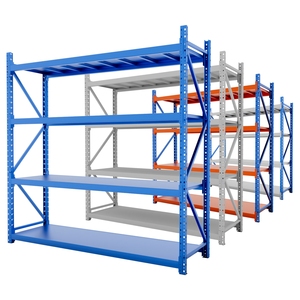
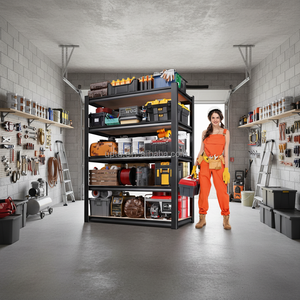
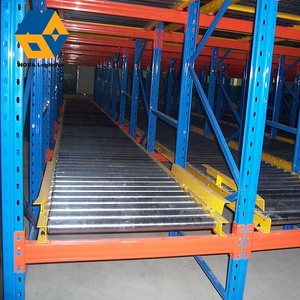
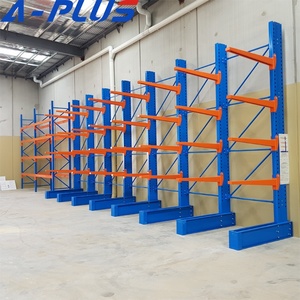
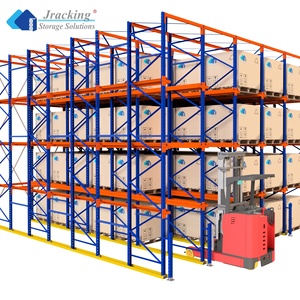
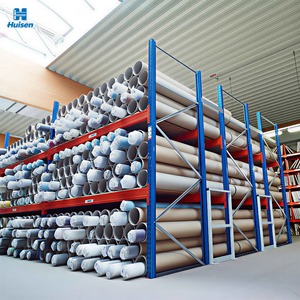
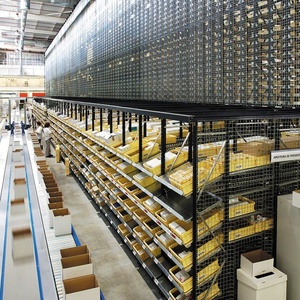
Technical White Paper: Structural Integrity & Deflection Limits in Modern OEM Shelving
Modern warehouse shelving systems are no longer treated as passive metal furniture; they are critical structural members within dynamic fulfillment environments. Sourcing structural steel storage racks requires strict adherence to international stress-strain parameters, yield strengths, and seismic deflection coefficients. When configuring OEM long-span shelving and heavy-duty selective pallet racks, engineering calculations must satisfy both ultimate limit state (ULS) conditions and serviceability limit state (SLS) criteria per EN 15512:2020 (European Standard for Steel Static Storage Systems) and American ANSI/RMI MH16.1 specifications.
At our Guangzhou manufacturing base, cold-rolled structural steel coils (certified prime grades Q235B and Q355B with equivalent ASTM A36 / S235JR and S355JR chemical baselines) undergo CNC multi-station continuous roll forming. Upright profiles feature complex open-section geometries with up to 12 cold-bent return folds. This geometry increases the section modulus (W) and moment of inertia (I) while suppressing local torsional-flexural buckling under sustained axial compression and deadweight dead-loads.
| Structural Parameter | Commercial Grade (Generic) | Our OEM Certified Standard | Engineering Compliance Target |
|---|---|---|---|
| Base Steel Substrate | Recycled Mixed Scrap (Unchecked) | Prime Hot-Rolled Pickled Coil (Q235B / Q355B) | EN 10025-2 / ASTM A1011 |
| Beam Deflection Limit | 1/150 of span (Excessive Sag) | Strict 1/200 to 1/250 of effective clear span (L) | FEM 10.2.02 & EN 15512 SLS |
| Surface Pre-treatment | Manual solvent wipe or single rinse | 8-Stage Automated Pickling, Degreasing & Phosphating | ISO 9001:2015 / Qualicoat Prep |
| Powder Coating Chemistry | Low-cure reclaimed resin (30-50μm) | Electrostatic TGIC-Free Pure Polyester (60-90μm) | ASTM B117 (500hr Salt Spray Pass) |
| Traceability & Verification | Self-declared certificate | CE No. 2435-CPR-8605159 / Mill Test Reports (MTR) | Construction Products Regulation (CPR) |
Welding Metallography & Automated Connection Systems
The beam-to-column connector is the primary moment-resisting junction governing longitudinal stability. Our factory utilizes multi-claw interlocking connectors stamp-formed from 3.5mm-4.0mm heavy-gauge steel, paired with automated spring-loaded safety pins rated to withstand an accidental vertical upward dislodgement force exceeding 5 kN. Robotic gas metal arc welding (GMAW) delivers unified throat thickness without undercuts, porosity, or micro-cracking across beam end connectors, ensuring complete structural stiffness under continuous forklift cycle impacts.
End-to-End OEM/ODM Manufacturing Advantages
From initial DWG/CAD architectural audits to multi-tier cold-bending roll forming, see how our integrated manufacturing workflow eliminates supply-chain intermediaries.
Fully Integrated Production
Operating a dedicated 30,000 m² plant, our facilities feature automated uncoiling, laser profiling, cold bending, 10-stage phosphating lines, and robotic electrostatic powder coating bays producing over 30,000 metric tonnes monthly.
Accredited Quality Governance
Complete compliance verified through CE Certificate No. 2435-CPR-8605159, ISO 9001:2015 Certificate No. 18624Q00169R0M, and RoHS testing. Every production batch includes mill chemical analysis and physical testing documentation.
Complimentary Engineering & CAD
Our engineering division produces turnkey structural calculations, 3D BIM spatial models, and DWG bay configurations within 24–48 hours, fully tailored to handling equipment turning radiuses and regional building geometries.
Comprehensive Customization
OEM engineering support covers tailored upright gauge thicknesses, beam connector pitch patterns (50mm/75mm/76.2mm teardrop), specialized RAL surface coatings, and branded packaging for regional logistics distributors.
Global Direct Export Logistics
Specialized export packaging using heavy steel dunnage, protective foam edge wraps, and bundled component tagging minimizes transit distortion. Shipped worldwide via direct routes to major hubs including Rotterdam, Hamburg, and Antwerp.
Seismic & Cold-Chain Specialization
Engineered dynamic solutions for sub-zero environments (-30°C freezer applications) utilizing impact-resistant steel chemistry and baseplates with non-linear anchor analysis under dynamic seismic conditions.
Future Trajectories: Warehouse Automation, ESG Demands, and Procurement Shifts
The intralogistics landscape is experiencing structural transformation driven by warehouse real-estate constraints, micro-fulfillment demands, and the rapid adoption of Autonomous Mobile Robots (AMRs). As procurement directors and third-party logistics (3PL) operators recalibrate their capital expenditure budgets, five foundational trends are reshaping industrial shelving specifications globally:
1. The Convergence of Static Racking with AMR & Autonomous Stacking Cranes
Traditional static pallet racking is rapidly adapting to support automated sub-systems. Hybrid architectures—combining selective pallet racking bases with elevated mezzanine platforms and autonomous tote shuttle pathways—now demand significantly tighter manufacturing tolerances. Standard roll-formed frame tolerances of ±2.0mm are being replaced by high-precision profiles maintaining perpendicular and longitudinal variance under ±0.5mm per 3-meter section to ensure AMR lidar arrays and optical sensors navigate narrow picking aisles without spatial calibration drift.
2. Cold Chain Infrastructure Expansion & High-Density Space Optimization
Rising energy costs in temperature-controlled warehouses have rendered wide-aisle configurations economically unviable. Procurement demand is shifting toward ultra-dense systems such as dynamic live pallet flow racks, push-back nested cart systems, and radio shuttle lanes. By eliminating intermediate access aisles, gravity flow installations achieve up to 80% higher cubic footprint utilization, dramatically decreasing refrigeration energy loads per individual stored pallet unit.
3. Low-Carbon Steel & Life Cycle Assessment (LCA) Transparency
Enterprise procurement mandates increasingly require Scope 3 emissions reporting across supply chain hardware. The transition toward low-carbon electric arc furnace (EAF) steel production and heavy metal-free powder coatings (certified RoHS compliance) has become an essential qualification benchmark. Modern warehouse shelving suppliers must provide verifiable scrap ratios, recyclable packaging specifications, and transparent material safety datasheets (MSDS) to align with enterprise ESG auditing standards.
4. The Total Cost of Ownership (TCO) Procurement Paradigm
While initial acquisition cost (price per pallet position) historically determined vendor selection, institutional facility operators now evaluate TCO across a 15-to-20-year structural lifespan. Critical factors such as high-tensile yield resistance against forklift impact, structural repair modularity, field-replaceable upright post protectors, and standardized bay adjustability significantly outweigh short-term freight or fabrication savings.
Technical Frequently Asked Questions for Industrial Buyers
Clear, engineering-backed answers addressing structural calculations, regulatory compliance, testing thresholds, and logistics coordination.
How do you verify allowable beam deflection limits under full uniform load?
Our configurations are calculated to maintain a maximum serviceability deflection of L/200 (or L/250 upon engineering request), where L represents the clear span between uprights. For a standard 2700mm pallet beam supporting 2000kg uniformly distributed load (UDL), maximum mid-span vertical sag is physically and analytically restricted to under 13.5mm, safely within FEM 10.2.02 deflection limits.
Can your racking systems integrate with EUR (1200x800mm) and ISO (1200x1000mm) pallets?
Yes. We engineer frame depths specifically to the pallet base type: 1100mm frame depths for 1200x1000mm pallets provide the recommended 50mm front and rear overhang, while 800mm-1000mm frame depths are fabricated for EUR 1200x800mm formats. Cross-wire mesh decking and integrated fork-entry pallet support bars are provided to prevent edge deflection when handling varied pallet designs.
What structural documentation is supplied to satisfy regional facility inspectors?
Every commercial project is supplied with a comprehensive structural document packet: authenticated CE declaration of performance (Certificate No. 2435-CPR-8605159), mill test analysis for raw steel yield and tensile metrics, detailed assembly schematics with anchor torque specifications, and clear loading plaque notices displaying UDL ratings per tier in accordance with EN 15635.
How does the factory manage corrosion resistance for high-humidity or sub-zero environments?
Components undergo an automated eight-stage pre-treatment cycle encompassing alkaline degreasing, zinc phosphating, and deionized water flushes. Parts are subsequently finished with electrostatic thermosetting polyester powder baked at 180°C-200°C. For extreme humidity, external yards, or cold storage conditions, hot-dip galvanized finishes complying with ISO 1461 are provided.
What parameters are required to generate an optimized CAD floor layout and quotation?
To produce an engineered proposal within 24–48 hours, our structural team requires: warehouse clear ceiling height, building column grid locations, slab thickness/concrete PSI rating, pallet dimensions (W x D x H) including load overhanging margins, gross pallet weights, and your forklift fleet specifications (specifically minimum aisle width requirement and maximum mast reach).
What are the standard production lead times and ocean transport arrangements?
Standard fabrication turnaround is 15 to 25 operational days depending on tonnage volume. Shipped out of Guangzhou/Foshan, standard sea freight to European gateway hubs (e.g., Rotterdam, Hamburg, Felixstowe) runs 30–38 days. Components are nested within reinforced timber dunnage and heavy-gauge steel strapping to maximize 40ft High Cube container volumetric capacity.
Transform Your Warehouse Storage Density & Flow Efficiency
Connect directly with our engineering division for comprehensive structural calculations, DWG spatial modeling, and factory-direct OEM quotations tailored to your operational specifications.