Custom OEM Wide Aisle Pallet Racking & Industrial Storage Systems
Constructed from high-tensile cold-rolled steel, each rack profile is precisely engineered for fast installation, severe seismic resistance, and seamless integration with counterbalance and reach truck fleets.
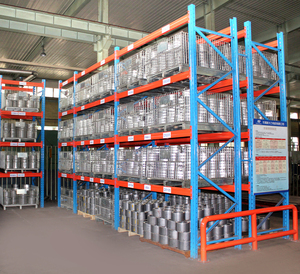
Mracking Heavy Duty Pallet Rack System Industrial Grade Vertical Steel Storage
Full-scale vertical stacking beam configuration engineered for heavy logistics depots, finished with dual-stage electrostatic powder coating.
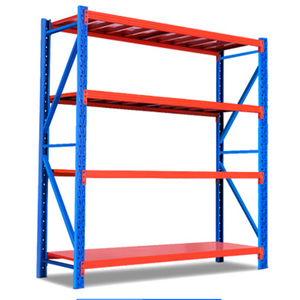
HUAWU 200kg Per Layer Boltless Shelving System 4 Shelf Steel Q235
Versatile lower-bay supplementary racking engineered for manual parts bin handling and integrated ground-level picking in wide-aisle corridors.
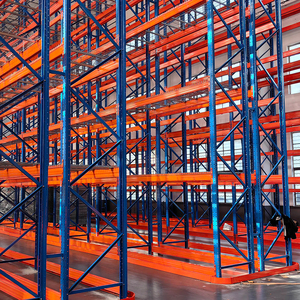
Heavy Duty Industrial Warehouse Storage Selective Teardrop Pallet Racking System
Universal 2-inch punch pitch teardrop upright design delivering rapid beam height adjustability and full structural interchangeability.
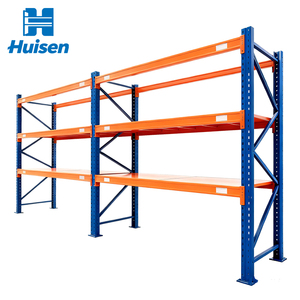
Boltless Adjustable Heavy Duty 3000Kg/Layer Metal Shelves Storage Racks
Heavy-gauge beam shelf structure reinforced with dual lateral channel ties, accommodating high-point load steel containers and tooling dies.
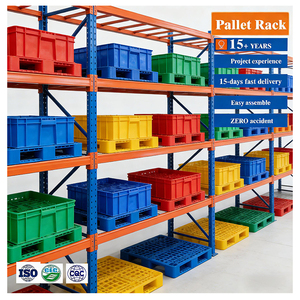
Wholesale Heavy-Duty 5 Layers 3000KG Triple Support Storage Solution
High-bay selective structural configuration equipped with triple pallet support saddles, eliminating beam twist under irregular skid loads.
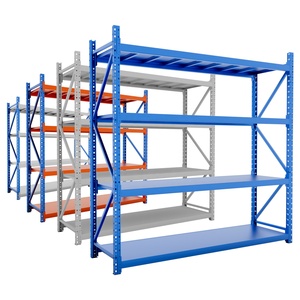
Factory Direct 4-Layer 800kg Medium Heavy Duty Pallet Racking System
Factory-direct medium-duty selective storage architecture engineered for carton picking, bulky non-palletised stock, and sub-assembly kitting.
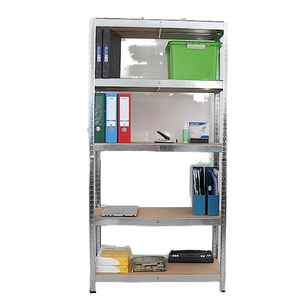
5 Layer Boltless Steel Shelving Unit with Powder Coated Finish
Ultra-clean powder-coated boltless storage shelving engineered for parts staging, archive facilities, and high-density manual order sorting.
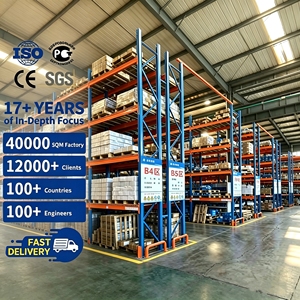
Heavy Duty Selective Pallet Rack for Automotive Parts Warehouse Management
Specialised automotive tier rack with heavy-duty column protection, custom horizontal dividers, and drop-in drop pins for strict OEM operations.
The Mechanics of Wide Aisle Pallet Racking (APR): Structural Calculation & Clearance Geometry
Wide Aisle Pallet Racking—often designated in structural logistics engineering as Standard Aisle Selective Racking (APR)—remains the global benchmark for multi-category supply chain nodes requiring 100% immediate selectivity without specialized forklift guidance infrastructure.
In contemporary logistics facility design, aisle layout dimensions directly govern throughput capacity, floor plate utilization, and material handling equipment (MHE) capital expenditures. Wide Aisle Pallet Racking systems operate with clear working aisle widths typically spanning between 3.0 meters and 3.8 meters for standard counterbalanced lift trucks, and 2.6 meters to 3.0 meters when utilizing modern articulated or reach trucks. This spatial geometry eliminates the expensive guided wire systems or raised floor rails required in Very Narrow Aisle (VNA) topologies, delivering unparalleled operational agility for sites experiencing rapid SKU velocity shifts.
The structural upright frame consists of two roll-formed omega-profile steel columns linked by bolted or welded diagonal and horizontal lattice bracing. The upright profile features a continuous 50 mm, 75 mm, or 2-inch teardrop punching pattern, cold-formed on continuous computer-controlled rolling mills from certified Q235B or Q355B structural coil. This profile configuration provides optimal torsional rigidity under asymmetrical loading situations (such as when an operator places a pallet off-center on one beam while the adjacent bay is unloaded).
100% Pallet Accessibility
Every single pallet position is immediately accessible by any standard forklift in your fleet. There is zero "honeycombing" loss, eliminating the stock-shuffling bottlenecks common in Drive-In or Double-Deep configurations.
Seismic & Impact Redundancy
Calculated in compliance with Eurocode 3 (EN 1993-1-3), Eurocode 8 for seismic regions, and FEM 10.2.02. Uprights are anchored via M12/M16 chemical or wedge anchors directly into reinforced concrete floor slabs.
Adaptable Beam Pitch
Quick-connect beam end connectors utilize 3, 4, or 5-claw interlocking hooks with integrated high-tensile safety spring pins, preventing beam dislodgement caused by erratic upward lift-truck tine movement.
Standard Operating Clearance & System Selection Parameters
Review the structural tolerances, clearance envelopes, and equipment requirements across primary industrial storage typologies to evaluate optimal total cost of ownership (TCO).
| Storage Topology | Typical Aisle Width (m) | Floor Utilization (%) | Selectivity (%) | Handling Equipment Required | System CAPEX Rating |
|---|---|---|---|---|---|
| Wide Aisle (Selective) | 3.0 m – 3.8 m | 40% – 50% | 100% Direct | Counterbalanced / Standard Reach Truck | Lowest Baseline |
| Narrow Aisle (Reach) | 2.6 m – 2.9 m | 50% – 60% | 100% Direct | Specialized Reach Truck / Articulated Forklift | Moderate |
| Very Narrow Aisle (VNA) | 1.6 m – 1.9 m | 65% – 75% | 100% Direct | Man-Up / Man-Down VNA Turret Truck (Wire Guided) | High (Specialist Floor & MHE) |
| Double Deep Racking | 3.0 m – 3.5 m | 55% – 65% | 50% Immediate | Pantograph Reach Truck with Telescopic Forks | Moderate |
| Radio Shuttle System | Lane Dependent | 75% – 85% | Lane Batch (LIFO/FIFO) | Standard Counterbalance + Autonomous Pallet Shuttle | High (Automation Core) |
*Dimensional calculations are derived based on standard EUR-pallets (1,200 x 800 mm) and ISO industrial pallets (1,200 x 1,000 mm) with a minimum 100 mm top and side safety clearance boundary per EN 15620 guidelines.
Future Procurement Trends & Macro Developments in Industrial Racking (2025–2035)
Evaluating structural steel market shifts, automation synergy, and carbon compliance frameworks shaping enterprise warehouse capital expenditure decisions.
1. High-Tensile Cold-Rolled Micro-Alloys & Carbon Border Compliance (CBAM)
Over the next decade, global racking procurement will be fundamentally dictated by the transition to high-strength, low-alloy (HSLA) steels. By substituting standard structural carbon steel with micro-alloyed grades offering minimum yield strengths exceeding 420 MPa to 550 MPa, manufacturers can reduce raw steel mass by 12% to 18% without compromising bay load thresholds. Concurrently, European Union Carbon Border Adjustment Mechanism (CBAM) mandates and international ESG procurement scorecards are accelerating the adoption of certified low-emission electric arc furnace (EAF) steel coils and ultra-low-VOC TGIC-free powder formulations. Enterprise procurement directors now demand documented Environmental Product Declarations (EPDs) alongside mill test certificates.
2. Autonomous Mobile Robot (AMR) & AGV Coexistence in Wide Aisle Configurations
While high-density AS/RS systems continue to capture greenfield headlines, brownfield logistics operations are increasingly transitioning toward hybrid automation models. In these environments, Wide Aisle Pallet Racking serves as the physical backbone for fleets of vision-guided Autonomous Mobile Robots (AMRs) and automated counterbalance forklifts. Because wide aisles offer generous safety corridors (3.2m+), human-driven lift trucks and automated guided vehicles can operate concurrently in shared pick zones. To facilitate machine vision localization, modern OEM racking specifications integrate high-contrast QR floor codes, optical retroreflective column targets, and millimeter-level upright plumb line tolerances matching EN 15620 Class 300 standards.
3. Structural Health Monitoring (SHM) & Connected Telemetry
Unreported forklift collisions represent the leading root cause of catastrophic progressive collapse in industrial warehouses. The next generation of enterprise racking systems features embedded IoT strain gauges, multi-axis tri-axial accelerometers on lower column protectors, and optical deflection sensors integrated directly into critical beam levels. When a structural component undergoes an impact exceeding 200 Joules—the design threshold established under EN 15635—the system transmits real-time telemetry alerts directly to the warehouse management system (WMS) and safety manager dashboards, locking out the compromised bay for automated safety inspection.
4. Supply Chain Regionalization & Modular Standardization
In response to post-pandemic maritime freight volatility and geopolitical disruptions, global brands are moving away from proprietary, single-source racking extrusions toward open, standardized profiles. OEM suppliers that can produce hybrid teardrop, European 50mm, and international 75mm pitches on automated quick-change roll formers enable international 3PL operators to reconfigure and interchange beam and upright assets across European, North American, and Asian facilities without incurring obsolete inventory penalties.
Guangzhou Heda Shelves Co., Ltd. — 25 Years of Precision Engineering
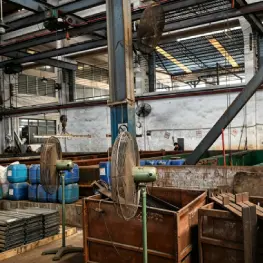
Founded in 2001, Guangzhou Heda Shelves Co., Ltd. operates a 30,000 square meter modernized manufacturing complex staffed by 300+ structural engineers, automated roll-forming operators, and international project directors.
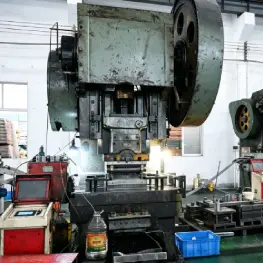
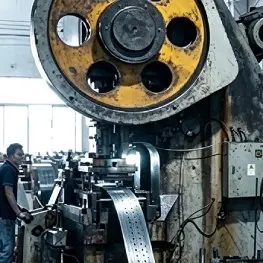
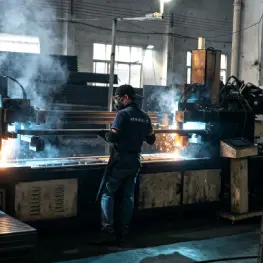
Operating at an in-house capacity exceeding 30,000 metric tons per month, HEDA Shelves provides end-to-end turnkey OEM and ODM contract manufacturing services for international logistics integrators, material handling distributors, and multinational commercial operations. Every production run is subjected to rigorous incoming steel coil tensile assays, automated weld penetration checks, and standardized salt spray corrosion testing in our certified metrology laboratory.
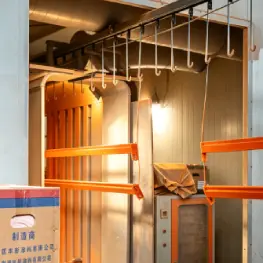
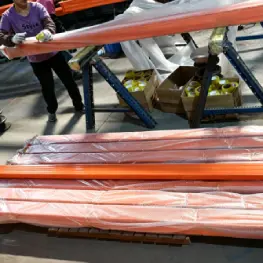
Our 10-Step Quality-Controlled Production Pipeline
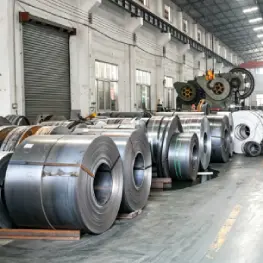
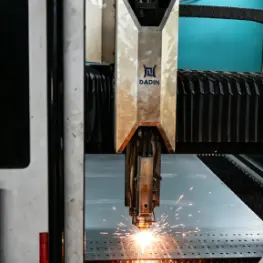
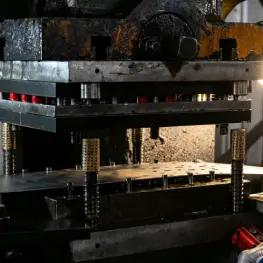
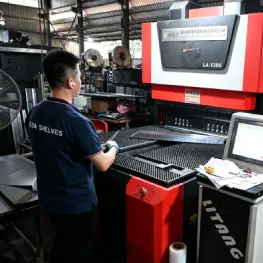
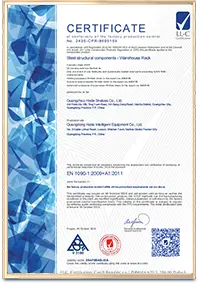
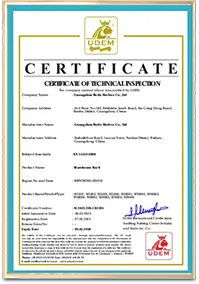
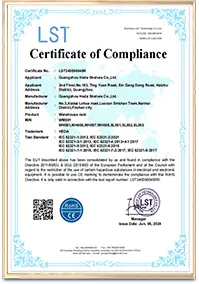
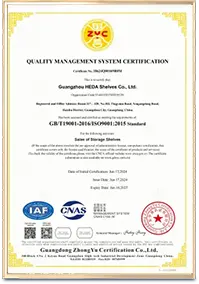
Verified Compliance & Regulatory Test Certification
Frequently Asked Questions (FAQ) for Enterprise Racking Buyers
Direct technical, commercial, and structural answers to critical questions faced by project engineers, plant managers, and procurement officers.
How do you calculate clear aisle width requirements for standard counterbalanced forklifts vs reach trucks?
Can HEDA Shelves wide aisle racking handle mixed EUR-pallets (800x1200mm) and ISO industrial skids (1000x1200mm)?
What steel grades and mill certifications are provided with each OEM export shipment?
What is the structural safety factor calculated for upright frames and horizontal beams?
What are typical OEM customization capabilities for private-label distributors?
How does electrostatic powder coating compare to hot-dip galvanizing for industrial racking?
What documentation is required from the buyer to receive an engineered CAD layout and formal quotation?
What are the production lead times and ocean container loading configurations for European and US ports?
Request an Engineered Layout & Factory-Direct Wholesale Quotation
Collaborate directly with our senior structural racking engineers. Submit your warehouse floor plan today for a free 2D/3D CAD design proposal, load calculation verification, and comprehensive export pricing matrix.