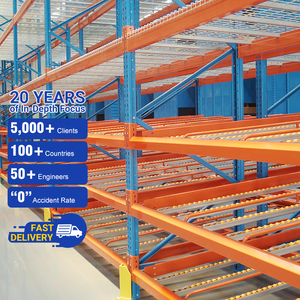
Customized OEM ODM Steel Heavy Duty Durable Gravity Flow Roller Rack Storage System For Warehouse
Engineered inclined dynamic roller bed tracks delivering automatic gravity pallet conveyance for high-turnover date-sensitive distribution hubs.
Precision-formed structural steel configurations manufactured to exact project tolerances, certified under CE and ISO 9001:2015 quality frameworks for global commercial logistics facilities.
Engineered inclined dynamic roller bed tracks delivering automatic gravity pallet conveyance for high-turnover date-sensitive distribution hubs.
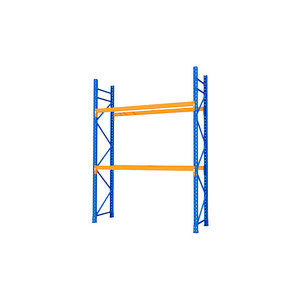
Modular, high-ventilation open wire design minimizing dust accumulation and optimizing fire sprinkler penetration for retail and light manual picks.
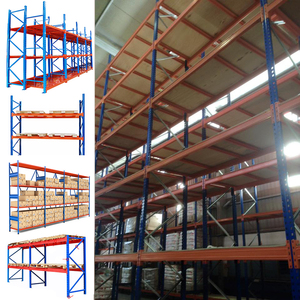
Heavy-load gravity roller lanes with speed control safety brakes and self-centering guides for dependable pallet separation during continuous loading.
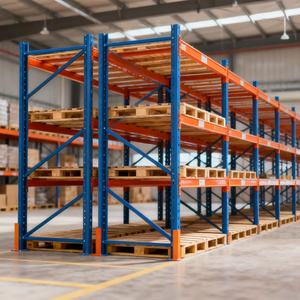
High-tensile structural steel uprights with multi-hook locking connector jaws, finished in high-durability thermoset electrostatic powder coat.
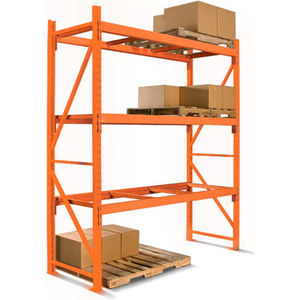
Universal selective beam framing engineered for immediate individual SKU accessibility across standard counterbalance and reach truck fleets.
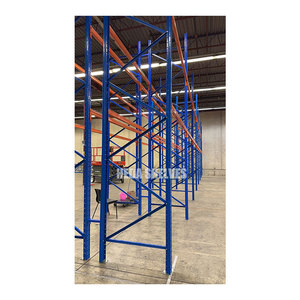
Reinforced steel intermediate decking customized for dense automotive component classification, spare parts distribution, and industrial tooling storage.
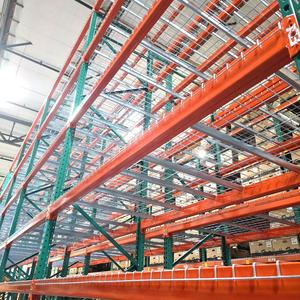
American standard teardrop punch configuration featuring integrated safety drop-locks and structural column crash guards for severe operational environments.
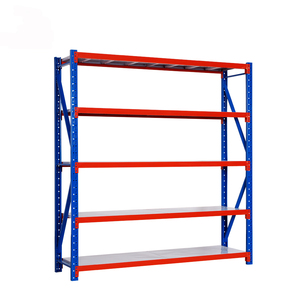
Cost-efficient medium-duty longspan shelving designed for e-commerce picking zones, manual tote buffer stores, and decentralized distribution hubs.
Very Narrow Aisle (VNA) racking systems represent the pinnacle of static warehouse density, shrinking standard working aisle clear widths from 3,400mm down to as narrow as 1,600mm–1,850mm while retaining 100% individual pallet selectivity.
Traditional wide-aisle selective pallet racking reserves up to 60% of total facility floor space strictly for material handling equipment maneuvering circles. In contrast, an engineered Narrow Aisle Racking configuration redirects this non-productive operational volume directly into vertical cubic storage. By configuring bays to interface with articulated reach trucks, wire-guided turret trucks, or man-up order pickers, facilities routinely achieve a 40% to 50% increase in net pallet density within the exact same structural footprint.
The structural rigidity of VNA racking is governed by stringent international engineering frameworks, primarily EN 15512 (Steel static storage systems – Adjustable pallet racking systems – Principles for structural design) and FEM 10.2.02. Because VNA systems frequently extend to elevations between 12 meters and 18 meters, lateral frame deflection (sway) tolerances under dynamic mast acceleration must be maintained within strictly verified limit states.
Operating high-reach handling equipment in clearance envelopes with as little as 100mm margin on each side requires reliable continuous steering guidance. Warehouse engineers choose between two primary guidance methodologies during the OEM design phase:
| Storage Racking Architecture | Typical Aisle Clear Width | Max Storage Height | Floor Space Utilization | Pallet Selectivity | Handling Equipment Class |
|---|---|---|---|---|---|
| Narrow Aisle (VNA) System | 1,600 mm – 1,850 mm | Up to 18.0 Meters | 80% – 85% Cubic Volume | 100% Individual Immediate | Turret Truck / Man-Up VNA / Wire-Guided Stacker |
| Conventional Selective Rack | 3,200 mm – 3,800 mm | Up to 10.5 Meters | 40% – 50% Cubic Volume | 100% Individual Immediate | Standard Counterbalance / Reach Truck |
| Double-Deep Pallet Rack | 3,100 mm – 3,400 mm | Up to 11.0 Meters | 55% – 65% Cubic Volume | 50% Immediate (Last-In First-Out) | Pantograph Double-Reach Truck |
| Drive-In / Drive-Through | Lane Dependent (Dense) | Up to 12.0 Meters | 75% – 85% Cubic Volume | Low (Batch SKU Storage) | Standard Counterbalance Entering Lanes |
"In super-flat warehouse applications exceeding 12m lift heights, dynamic deflection limits under EN 15620 Class 100/200 define upright cross-sectional moments of inertia, demanding certified Q235B/Q355B structural steel to resist second-order buckling effects."
Guangzhou Heda Shelves Co., Ltd. provides comprehensive contract manufacturing, private-label system supply, and site-specific structural design backed by more than 20 advanced cold roll-forming lines.
High-precision automated continuous punching lines supporting 50mm, 75mm, and 76.2mm (3-inch teardrop) connection pitches. Upright profile depths from 80mm to 140mm engineered with varying steel gauges (1.8mm to 3.0mm) to optimize load-to-weight ratios.
Continuous twin-C seam-welded box beams featuring multi-tooth cast-steel connector endplates. Fully compliant with EN 15512 connection stiffness (rotational spring constant Cj) metrics to ensure rigid frame performance under maximum bending moment.
10-stage automated pre-treatment immersion including ultrasonic degreasing, acid pickling, and micro-crystalline zinc phosphating, followed by 60–90µm electrostatic architectural-grade polyester powder coating baked at 200°C for corrosion resistance.
Tailored export crating with automated color-coded component tagging, client-branded steel stamping on upright faces, custom RAL powder match (RAL 5015, RAL 2004, RAL 7035), and knocked-down seaworthy bundle strapping engineered for rapid unstuffing.
Every customized installation is supplied with finite element analysis (FEA) reports, beam deflection certifications (L/200 standard limit), and bilingual stamped load notices specifying maximum bay load (Qmax) and safe working load (SWL) per level.
Strategically situated in Guangzhou, China, with consolidated factory-direct dispatch to major global logistics corridors: Rotterdam, Hamburg, Antwerp, Valencia, Felixstowe, Long Beach, and Singapore with container packing factor optimization.
Unlike standard selective racking, VNA operations cannot tolerate minor concrete floor waviness or tilt. At an operating elevation of 15 meters, a floor level deviation of just 2mm under the truck chassis produces a lateral mast deflection exceeding 35mm at the fork carriage.
Prior to rack anchor bolt placement, the warehouse floor must be mapped against internationally recognized flatness criteria: DIN 18202 Table 3 Group 4 or EN 15620 Classification DM1/DM2. In high-reach facilities where turret trucks operate on fixed wheel tracks, "Superflat" floor grinding is mandatory across the aisle wheelpaths.
Proper slab remediation guarantees that the handling equipment does not experience mast resonance oscillation or wheel scrub, ensuring that side clearances (typically 75mm–100mm between pallet load and rack frame) are strictly maintained during high-speed travel.
Because narrow aisle racking arrays feature high slenderness ratios (height-to-depth ratios exceeding 10:1), run spacers bridging back-to-back frames must be engineered as structural moment-resisting couplings rather than passive distance clips. Top portal tie-beams connect neighboring rows overhead, transforming isolated high-bay frames into a monolithic rigid spatial frame.
In seismic design categories C and D according to Eurocode 8 or RMI MH16.1, vertical diagonal portal bracing towers and horizontal plane cross-bracings are placed at calculated bay intervals to absorb base shear reversals and prevent progressive frame collapse.
| Building / Operational Parameter | Standard Selective Rack | VNA System (8m – 12m) | VNA System (12m – 18m High Bay) |
|---|---|---|---|
| Floor Flatness Tolerance (EN 15620) | Class 400 (Standard Industrial) | Class 300 / DM2 | Class 100 / DM1 (Superflat) |
| Upright Out-of-Plumb Limit (Loaded) | H / 350 | H / 500 | H / 750 (Extreme Precision) |
| Beam Deflection Threshold | L / 200 | L / 200 | L / 250 or L / 300 |
| Overhead Top Tie Beams | Optional / Unused | Recommended at Frame Ends | Mandatory Full-Span Rigid Portals |
| Anchor Baseplate Type | Standard Formed Steel M10/M12 | Heavy-Duty Shimmed M14 Chemical | High-Tensile Precision Epoxy M16/M20 |
The high-density storage sector is navigating a major generational shift driven by warehouse automation, real estate cost inflation, and stringent sustainability imperatives.
Traditional manually operated turret trucks are increasingly being replaced by automated guided forklifts (AGFs) and narrow-aisle AMRs. This shift demands tighter pallet placement tolerances (within ±5mm), optical reflector mounting provisions directly along the rack columns, and integrated RFID tag channel extrusions inside beam flanges.
Procurement directors are shifting away from static, single-purpose installations. Modern narrow aisle framing employs universal punch patterns that enable warehouse operators to convert standard selective bays into VNA configurations, or integrate pick-tunnel gravity flow lanes on ground levels, without replacing base upright columns.
Corporate ESG procurement mandates are establishing strict carbon accounting thresholds for structural steel components. HEDA Shelves utilizes clean electric arc furnace (EAF) scrap-recycled steel, cold roll-forming that reduces process energy, and volatile organic compound (VOC)-free thermoset electrostatic powder coatings.
Forward-thinking logistics facilities are testing embedded strain-gauge deflection sensors and impact-detection accelerometers mounted at corner rack uprights. These smart nodes connect to warehouse management systems (WMS) to log accidental forklift collisions and trigger automated EN 15635 structural re-inspections.
With prime logistics land leasing rates rising globally, newly commissioned greenfield distribution centers are designing vertical clearances upwards of 16m to 20m. VNA systems engineered for these heights utilize stepped upright sections, where column gauge is heavier at lower tiers and lighter aloft, optimizing raw steel costs.
Refrigerated warehouse electricity costs represent a significant recurring expenditure. By reducing total room cubic footage through narrow aisle compaction, cold stores cut compressor cooling loads by up to 35% per stored pallet. HEDA’s low-temperature steel formulations prevent ductile-to-brittle transitions down to -30°C.
From initial DWG CAD structural layouts to final port delivery, Guangzhou Heda Shelves Co., Ltd. delivers accountable, factory-direct engineering and certified manufacturing integrity.
Quality assurance is not treated as an afterthought—it is integrated directly into the manufacturing line. Our in-house metallurgical and physical testing laboratory validates every production batch:
We believe in verifiable transparency. Our certificates and factory audits are fully open to review by your structural engineers, safety consultants, and procurement authorities:
Clear, definitive answers to technical, commercial, and operational questions regarding Narrow Aisle and industrial warehouse racking procurement.
Send our senior engineering team your warehouse floor plan (CAD DWG or PDF), ceiling clear heights, and pallet specifications. We deliver a complete bay layout, pallet count optimization analysis, and factory-direct quote within 24 hours.