Engineered Warehouse Architecture
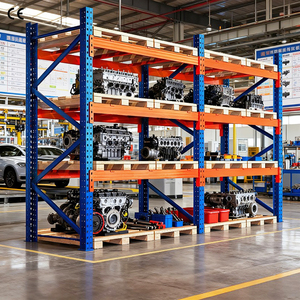
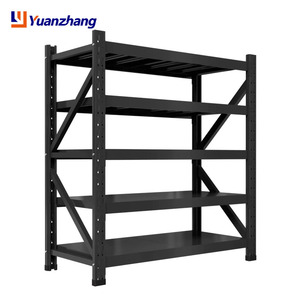
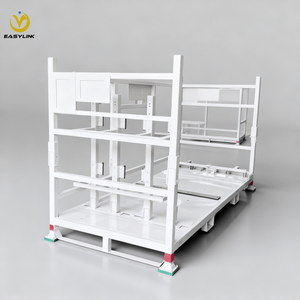
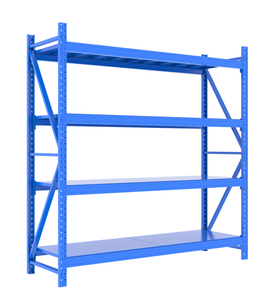
Featured Industrial Pallet Racking & Modular Storage Systems
Discover high-capacity upright frames, boltless interlock profiles, and dynamic multi-tier steel systems engineered for rigorous warehouse, cold storage, and heavy distribution environments.
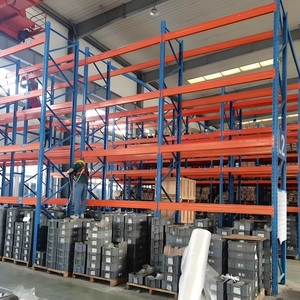
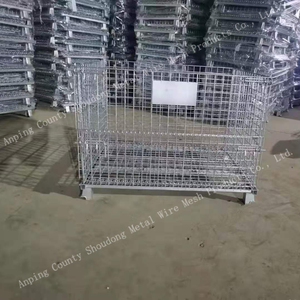
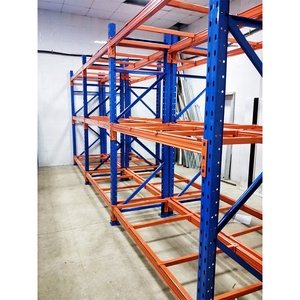
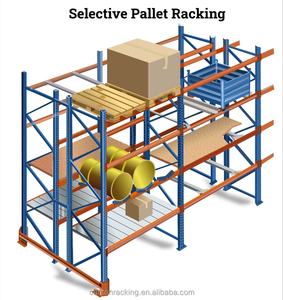
Structural Integrity & OEM Metallurgy
Pallet Rack Frame Engineering: Upright Profiles, Metallurgy & Structural Mechanics
A deep dive into cold-formed steel sections, torsional rigidity, buckling limits, and finite element optimization that differentiate industrial-grade upright frames from standard commercial racking.
In high-bay warehouse installations and seismic-active logistics terminals, the upright pallet rack frame serves as the primary load-bearing column array of the entire facility. Unlike horizontal beams that encounter predictable transverse bending moments, upright frames are subjected to complex axial compression combined with bi-axial bending, torsional-flexural buckling, and dynamic cyclic impacts caused by material handling equipment (MHE). As a specialized OEM/ODM manufacturer, our production engineering centers upon cold-rolled structural steel profiles using certified prime Q235B and high-yield Q355B coils (equivalent to European S235JR and S355JR standards).
The profile geometry of the upright column is critical to its performance-to-weight ratio. Standard racking utilizes basic channel sections, but advanced OEM pallet rack frames feature multi-ribbed omega (Ω) or closed-box configurations engineered with up to 12 return bends. Each continuous cold-roll forming stage introduces strain hardening at the corner radii, progressively elevating yield strength at critical buckling stress points. These specialized stiffening ribs counteract localized plate wrinkling and minimize lateral torsional deflection under full static rated capacity, ensuring absolute compliance with European EN 15512 guidelines and ANSI/RMI MH16.1 specifications.
Bracing design forms the structural bridge between parallel upright posts. Our factory configures both K-bracing and horizontal-diagonal hybrid trussing schemes based on rigorous slenderness ratio ($\lambda = L / r$) calculations. Connections utilize heavy-gauge high-tensile Grade 8.8 structural bolts secured with lock nuts or automated robotic welding jigs. This rigid geometric triangulation transfers lateral shear loads, wind forces (in clad-rack outdoor applications), and seismic inertia directly to the concrete floor slab through heavy-duty anchored baseplates, completely mitigating the risk of progressive frame collapse.
Precision Perforation Formats
Fully customizable pitch options engineered for international compatibility: 50mm metric, 75mm standard, and 76.2mm (3-inch) American teardrop styles. Continuous in-line CNC punching ensures pitch cumulative error <0.5mm across a 12-meter single-piece post.
Anti-Buckling Geometry
Omega-profile columns with multi-flange stiffeners deliver exceptional radius of gyration values along both major and minor axes ($I_x$ and $I_y$). Resists axial buckling under asymmetrical bay loadings and forklift mast dynamic braking sway.
Advanced Pretreatment & Finishing
Comprehensive 9-stage surface treatment including alkaline degreasing, zinc-phosphate conversion, and electrostatic thermoset polyester powder coating cured at 200°C. Delivers superior salt-spray corrosion resistance >500 hours for humid and cold-store facilities.
Engineering Data Sheet
Standard OEM/ODM Upright Frame Specifications
Comparative physical, structural, and metallurgic parameters across our heavy-duty and medium-duty pallet rack frame production lines.
| Profile Model | Section Dimensions (mm) | Steel Thickness (mm) | Yield Strength ($R_e$) | Max Frame Capacity | Perforation Pitch | Typical Application |
|---|---|---|---|---|---|---|
| HD-UP80 | 80 × 60 (Ω-Profile) | 1.5 / 1.8 / 2.0 | ≥ 235 – 355 MPa | Up to 8,000 kg | 50mm / 75mm / 76.2mm | Standard Selective, Retail Backroom |
| HD-UP90 | 90 × 70 (Ω-Profile) | 1.8 / 2.0 / 2.3 | ≥ 235 – 355 MPa | Up to 14,000 kg | 50mm / 75mm / 76.2mm | Multi-Tier Shelving, 3PL Distribution |
| HD-UP100 | 100 × 70 (Ω-Profile) | 2.0 / 2.3 / 2.5 | ≥ 355 MPa | Up to 18,000 kg | 50mm / 75mm | Drive-In, Push-Back, Heavy Pallets |
| HD-UP120 | 120 × 95 (Heavy Ribbed) | 2.3 / 2.5 / 3.0 | ≥ 355 MPa | Up to 24,000 kg | 50mm / 75mm | High-Bay VNA, Radio Shuttle Lanes |
| HD-UP140 | 140 × 105 (Extra Heavy) | 2.5 / 3.0 / 3.5 | ≥ 355 – 420 MPa | Up to 32,000 kg | 50mm Pitch Only | AS/RS Clad-Rack, Heavy Industrial Castings |
Enterprise Strength & Production Scale
Why Tier-1 Global Distributors Partner With Our Factory
Founded in 2001, Guangzhou Heda Shelves Co., Ltd. provides comprehensive vertically integrated manufacturing, turnkey OEM/ODM engineering, and international compliance certification.
2001yr
Established Industry Heritage
30,000m²
Total Modern Production Plant
30,000t
Monthly Cold-Rolling Steel Output
10,000+
Storage Projects in 120+ Countries
Rigorous European & Global Compliance
Our upright frames and bracing assemblies are fully certified under CE (Certificate No. 2435-CPR-8605159) and ISO 9001:2015 (Certificate No. 18624Q00169R0M). Every batch undergoes automated mechanical coupon testing, coating adhesion cross-hatch checks, and weld seam ultrasonic inspection to ensure seamless site verification by European and North American building inspectors.
Full OEM/ODM Private Label Engineering
We provide custom tooling, customized punch patterns, proprietary embossing, and custom RAL electrostatic finishes for international racking brands and engineering contractors. From personalized component part numbering and custom packaging strapped for high-cube container unloading to full structural FEA calculation reports, our 300+ technical staff handle your supply chain end-to-end.
Industry Whitepaper Analysis
Future Procurement Trends in Industrial Storage & Pallet Racking
Strategic procurement insights covering automation integration, green steel mandates, seismic engineering standards, and lifecycle Total Cost of Ownership (TCO).
As modern logistics evolves toward 24/7 automated order fulfillment, procurement strategies for pallet rack frames are shifting dramatically from transactional unit pricing toward systems-level total life cycle efficiency. Logistics operators, 3PL providers, and manufacturing hubs can no longer treat racking infrastructure as passive steel fixtures. Across European, North American, and Asian logistics hubs, four defining procurement macro-trends are transforming the industrial racking industry:
1. Transition to AS/RS and Autonomous Mobile Robot (AMR) Tolerances: Traditional manual counterbalance forklifts allow for operational leeway in bay clearance and upright plumbness. In contrast, modern automated crane-guided storage (AS/RS) and pallet shuttle systems require frame verticality tolerances tighter than 1:1000, along with deflection limits minimized to L/600 under full live dynamic load. OEM buyers are increasingly specifying upright columns roll-formed with laser-monitored profile geometry to avoid automated shuttle jams and sensor false-trips.
2. Decarbonization & Green Steel Sourcing (CBAM Readiness): With the implementation of the European Union's Carbon Border Adjustment Mechanism (CBAM) and corporate ESG governance worldwide, supply chain managers are prioritizing mills utilizing electric arc furnace (EAF) processing and certified low-carbon coil feedstock. Racking factories capable of providing audited cradle-to-gate Environmental Product Declarations (EPDs) and zero-heavy-metal powder coatings gain an undeniable commercial edge in public and institutional warehousing tenders.
3. Seismic Performance and Climate Resilience: Changing regional building codes require robust dynamic rack modeling. Upright frames are now designed with energy-dissipating baseplate configurations and specialized ductilities according to Eurocode 8 and FEMA 460. Rather than simply increasing steel thickness—which escalates seismic inertial mass—procurement teams seek optimized cold-rolled geometries that absorb shock energy through calculated localized deformation without progressive bay shedding.
4. Shift from CapEx to Total Cost of Ownership (TCO): Forward-looking buyers are moving beyond initial steel-per-kilo quotes. They evaluate corrosion resistance in cold storage condensation zones, ease of modular upright replacement (via splice kits and bolted upright inserts), and structural reconfigurability for dynamic SKU shifting. Standardized modular frames that allow rapid adaptation between selective, double deep, and push-back racking deliver 35% higher residual asset value across a ten-year operational window.
Innovation Roadmap
Technological Development Trends in Pallet Rack Frame Manufacturing
Discover how robotics, advanced materials science, and smart IoT monitoring are reshaping the next generation of logistics upright columns.
High-Strength Lightweight Micro-Alloys
Application of thermo-mechanically controlled processed (TMCP) high-strength low-alloy (HSLA) steels. These alloys allow a 15–20% reduction in profile dead weight while increasing yield tensile threshold up to 460 MPa, lowering shipping freight costs without sacrificing axial load thresholds.
Intelligent IoT Stress & Impact Monitoring
Embedding piezo-electric wireless strain sensors within lower column strike zones. These sensors instantly alert facility operators via cloud telemetry when an MHE collision exceeds EN 15635 safety thresholds, preventing catastrophic structural fatigue before visual signs emerge.
Automated Laser-Assisted Cold Forming
Integration of inline continuous fiber-laser cutting into roll-forming lines. Replaces mechanical punch dies to produce zero-burr customized slots, variable teardrop pitches, and complex locking lug geometries on-the-fly without slowing line speed below 25 meters per minute.
Procurement Intelligence
Frequently Asked Questions (FAQ) for Global Buyers & Contractors
Clear, technically rigorous answers regarding load calculations, compliance certifications, MOQ, shipping logistics, and OEM private labeling.
Can your pallet rack frames be engineered specifically for Euro pallets (1200 × 800 mm) and US GMA pallets (48 × 40 in)?
Yes, absolutely. Beam lengths, frame depths (typically 1100mm for Euro pallets to allow standard 50mm overhang front and back, and 42 inches / 1067mm for GMA pallets), and upright column thicknesses are calculated specifically around your pallet handling equipment and load footprints during our complimentary CAD layout and structural review stage.
What design standards and engineering documentation are provided with OEM shipments?
Every OEM/ODM order is accompanied by detailed structural calculation sheets referencing European Standards EN 15512 (Cold-formed steel storage racking), EN 15620 (Tolerances and clearances), and American RMI MH16.1. We supply CE Declaration of Performance (DoP under Certificate No. 2435-CPR-8605159), mill test certificates (EN 10204 Type 3.1), and finite element structural analysis (FEA) reports upon request.
What is the standard factory lead time and shipping capacity for high-volume orders?
Production lead times typically range between 15 to 25 days depending on profile configuration, custom punching requirements, and powder coat color selection. With an average monthly output of 30,000 tonnes, we efficiently process multi-container projects (FCL) shipped directly from major ports like Guangzhou, Shenzhen, or Foshan to global hubs including Rotterdam, Hamburg, Felixstowe, Long Beach, and Jebel Ali.
What specific parameters are required to calculate the exact load capacity of an upright frame?
Upright capacity depends heavily on the unsupported vertical height (the distance from the floor to the first beam level, or between consecutive beam levels). To provide an accurate engineering calculation, we require: maximum weight per pallet, number of pallet levels per bay, building clear height, forklift mast clearance, seismic zone location, and whether wire mesh decking or steel pallet supports will be utilized.
Do you offer galvanized or stainless steel upright frames for cold storage and corrosive chemical environments?
Yes. For harsh environments, sub-zero cold stores (-30°C), fertilizer storage, or outdoor covered yards, we provide continuously hot-dip galvanized (HDG) steel according to ISO 1461, pre-galvanized high-yield coils (Z275 coating mass), and marine-grade epoxy-polyester hybrid powder coats that resist thermal cycling and severe humidity.
Can you supply private-label racking components with our company's branding and color schemes?
Yes. We are a specialized OEM/ODM factory partner to major racking brands, distributors, and integrators. We support custom roll-tooling, proprietary punch hole patterns, laser-etched or embossed corporate branding, customized warning capacity plaques, and RAL color matching across all structural columns and bracing members.
How are pallet rack upright frames packed to prevent sea-freight transit damage?
Upright posts are nested securely in heavy-duty bundles, wrapped with scratch-resistant poly film, separated by corrugated dunnage pads, and bound with high-tensile steel banding on dedicated timber or steel skids. Custom bundle quantities are calibrated for rapid forklift unloading from 40ft High Cube containers, minimizing labor and transit abrasion.
Request an Engineered Layout & Direct Factory Quotation
Share your warehouse floor plan, clear building heights, and pallet specifications. Our structural engineering team will deliver a comprehensive 3D CAD proposal, load capacity verification, and transparent direct-from-factory pricing within 24 hours.