ISO 9001:2015 & CE Certified Factory Direct

OEM/ODM Push Back Pallet Racking Factory & Exporters

High-Density Dynamic Storage Systems Engineered to EN 15512 & RMI Specifications. Delivering Precision Telescoping Nested Carts, Structural Rail Systems, and Global Turnkey Logistics Since 2001.

Engineered Equipment Range

Specialized Warehouse Storage & Material Handling Systems

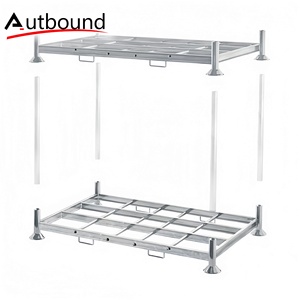
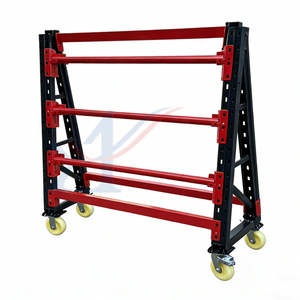
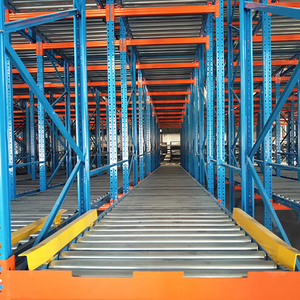
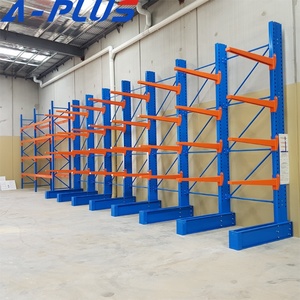
Direct from our 30,000 m² automated production facility: custom structural pallet racks, high-density dynamic push-back systems, live gravity lanes, and certified industrial shelving built for global distribution networks.

2001EST.
25 Years Structural Engineering
120+
Export Destination Countries
30,000m²
Manufacturing Plant Footprint
30,000t
Monthly Steel Racking Output

Push Back Pallet Racking: Kinematic Principles & Mechanical Architecture

Push back pallet racking is a dynamic high-density storage methodology operating on a continuous Last-In, First-Out (LIFO) inventory cycle. Unlike standard drive-in racking that necessitates forklift travel inside structural pallet lanes, push-back racking employs low-profile inclined steel tracks combined with multi-tiered nested rolling carts. The mechanical process relies strictly on structural gravity flow: when an initial pallet is deposited onto the top nesting cart, the forklift utilizes the second pallet to mechanically press the first cart backward along low-friction guide rails, exposing the sub-tier cart beneath it.

Our OEM/ODM push back installations operate across 2-deep, 3-deep, 4-deep, 5-deep, and 6-deep bay architectures. By restricting forklift movements entirely to the front structural aisle, push-back storage increases pallet capacity by 75% compared to selective racking while reducing rack transit cycle times by 40%. The elimination of mast entry into narrow racks virtually prevents column damage, minimizing operational risk and lifetime structural maintenance expenditures.

Kinematic Precision: Gravitational Slope Engineering

The operational safety and reliability of a push-back rack depend entirely on the track inclination ratio. At our manufacturing facility, rails are rolled and brake-formed to maintain an exacting slope gradient between 2.2% and 2.8% (1.25° to 1.6°). This tight geometric tolerance guarantees sufficient gravitational kinetic energy for pallets to roll smoothly toward the loading face without generating uncontrolled acceleration, impact shocks, or dynamic pallet displacement when rear unit loads advance.

Nested Telescopic Carts

Manufactured from cold-formed structural steel profiles with laser-welded cross-members. Nesting depths utilize stepped track profiles to conserve vertical bay clearances down to less than 150mm per cart cluster.

Heavy Flanged Steel Wheels

Machined from C45 carbon steel with double-sealed ABEC-5 industrial ball bearings. Engineered with continuous lateral flanges that eliminate cart crabbing, rail derailment, and friction binding under asymmetric loads.

Multi-Pallet Adaptability

Our OEM nested trays integrate structural secondary cross-flanges, accommodating standard Euro pallets (1200x800mm), Industrial pallets (1200x1000mm), and US GMA spec pallets (48"x40") without changing structural rail bases.

Storage Technology Comparison

Push Back Racking vs. Alternative High-Density Systems

An engineering performance evaluation across operational parameters to help warehouse project planners balance volumetric density, CAPEX, cycle velocities, and maintenance demands.

Storage Topology Volumetric Density Pallet Accessibility Rotation Logic Forklift Cycle Speed CAPEX per Pallet Structural Damage Risk
Push Back Racking (Nested Carts) High (75%-85%) Lane Face Selectivity (LIFO) LIFO per Lane Fast (External Aisle Only) Moderate Minimal (No Mast Rack Entry)
Selective Pallet Racking Baseline (40%-50%) 100% Immediate Direct Access FIFO / LIFO Any Rapid Direct Access Low Moderate (High Aisle Traffic)
Drive-In Racking High (70%-80%) Deep Single Lane Restricted LIFO Slow (Deep Truck Ingress) Low-Moderate High (Frequent Column Collisions)
Pallet Gravity Flow (Live Rollers) Maximum (85%-90%) Dedicated Discharge Face Strict FIFO Rapid Dedicated Split High Low (Separated Load/Unload)
Radio Shuttle Automation Ultra-High (85%-92%) Automated Lane Shuttle Extraction Flexible FIFO / LIFO Rapid Automated Shuttle Very High (Lithium/AGV) Very Low (Robotic Navigation)

Custom OEM/ODM Engineering: Dimensional Tolerances & Metallurgical Integrity

At Guangzhou Heda Shelves Co., Ltd., contract manufacturing and custom engineering represent our primary operational strengths. Because every industrial warehouse facility presents unique ceiling clearances, column spacing grids, concrete slab load deflection boundaries, and seismic criteria, standard catalogue racking frequently fails to maximize storage volume. Our engineering office delivers complete customized layout engineering—generating parametric 3D CAD models and structural calculations compliant with EN 15512:2020 (European Standard for Steel Static Storage Systems) and RMI ANSI MH16.1 within 24 to 48 hours of project brief receipt.

Our push back systems are fabricated from certified high-tensile Q235B and Q355B structural coil steel, procured strictly from premier tier-one domestic steel mills. Raw coils are subjected to spectrophotometric material analysis and yield-strength tension tests before entering the production line. Precision cold roll-forming ensures upright columns retain strict linear dimensional tolerances without residual internal torsion stresses.

Custom Upright Profiles

Roll-formed up to 12 meters in seamless continuous lengths. Column section profiles from 80x60mm to 120x95mm with steel thicknesses from 1.5mm to 2.5mm.

Telescopic Cart Geometries

Cart footprints engineered specifically to customer pallet tolerances, preventing deflection under point-loading from broken bottom deckboards.

Tailored Powder Finishes

Automated electrostatic lines applying thermo-hardened epoxy-polyester coatings (60-90µm thickness) in any custom RAL hue with UV and chemical barrier resistance.

Private-Label Packaging

Dedicated OEM exporter packing with barcoded component labeling, client brand markings, and seaworthy timber-reinforced container bundling.

End-to-End Manufacturing Rigor

Our 10-Step Quality Controlled Production Flow

Every structural beam, upright column, nested cart, and guide rail passes through our verified ISO 9001:2015 manufacturing process to ensure dimensional stability and load-bearing safety.

01

Raw Steel Spectrometry

02

CNC Precision Cutting

03

Automated Pitch Punching

04

Cold Profile Bending

05

Continuous Roll-Forming

06

Precision Robotic Welding

07

Surface Blast & Polishing

08

Acid Pickling & Phosphating

09

Electrostatic Powder Cure

10

Export Seaworthy Packing

Future Procurement Trends & Technological Evolution in Push Back Racking

The global warehousing landscape is experiencing profound transformations driven by industrial real estate cost escalation, labor scarcity, sustainability mandates, and the rapid adoption of automated mobile robots (AMRs). As warehouse directors and supply chain engineers formulate capital expenditure budgets for the upcoming decade (2026-2035), push back pallet racking is adapting to align with complex dynamic supply chain environments:

1. Deep Cold-Chain Specialization

With sub-zero warehouse space costing up to 300% more to cool than dry ambient facilities, high-density push back installations are increasingly deployed in -30°C freezer facilities. Procurement requires specialized low-temperature metallurgical steel formulations, cryogenic bearing greases, and stainless-steel guide wheel assemblies to eliminate thermal contraction seizing.

2. Hybrid Autonomous AMR Staging

Modern distribution facilities are shifting from purely manual counterbalance forklift operations toward hybrid material handling ecosystems. Push back racking is being deployed as a dense gravitational buffering zone where Autonomous Counterbalanced Forklifts (AMRs) interface directly with the lower tier cart faces, automating high-throughput inbound staging lanes.

3. ESG & Low-Carbon Steel Tracing

International environmental regulations, including the European Union's Carbon Border Adjustment Mechanism (CBAM), are transforming procurement criteria. HEDA Shelves is actively responding by incorporating electric arc furnace (EAF) steel feedstocks with certified carbon accounting, lowering embodied carbon per pallet position by over 32% compared to historical baselines.

Enterprise Authority: Guangzhou Heda Shelves Co., Ltd.

Founded in 2001, Guangzhou Heda Shelves Co., Ltd. has developed over a quarter-century into an internationally accredited developer and exporter of industrial warehouse storage infrastructures. Operating an advanced 30,000 m² automated production facility in Guangzhou, China, our team of over 300 experienced engineers, CNC technicians, and international project consultants delivers an output capacity exceeding 30,000 tonnes of certified steel racking monthly.

We provide full structural certification and engineering transparency. Every push-back, selective, drive-in, cantilever, and mezzanine structure manufactured in our facility is certified under CE Certificate No. 2435-CPR-8605159 and produced under an audited ISO 9001:2015 Quality Management System (Certificate No. 18624Q00169R0M). We furnish certified calculation dossiers, beam deflection matrices (adhering to strict L/200 deflection criteria), and anchor shear stress reports directly to client structural auditors, guaranteeing regulatory compliance in over 120 global destination markets.

CE Certified

EN 15512 structural static load testing validated under European Construction Products Regulation.

ISO 9001:2015

Fully documented material tracing, weld inspection, and electrostatic powder coating quality logs.

10,000+ Projects

Over ten thousand successful logistics storage projects engineered and delivered worldwide since 2001.

Direct Port Shipping

Optimized logistics from Guangzhou port to Rotterdam, Hamburg, Antwerp, Los Angeles, and worldwide hubs.
Procurement Technical Guidance

Frequently Asked Questions: Push Back Pallet Racking

Direct technical guidance from our senior structural engineers regarding capacity thresholds, floor slab anchoring, pallet compatibility, and maintenance protocols.

What is the maximum practical lane depth for push-back pallet racking systems?
While 2-deep and 3-deep configurations represent the industry standard for fast-moving consumer goods, our OEM nested cart systems can be engineered up to 5-deep and 6-deep configurations. In lanes exceeding 4 pallets deep, forklift pushing force increases incrementally because the operator must overcome the cumulative gravitational and rolling resistance of all rear carts simultaneously. For 5-deep and 6-deep systems, our engineers specify low-friction ABEC precision bearings, heavy-duty structural guide angles, and provide minimum forklift push-force ratings to ensure the client's handling fleet operates comfortably within hydraulic pressure relief parameters.
How does push-back racking accommodate damaged or poor-quality wooden pallets?
Unlike pallet gravity live flow systems—where pallets roll directly on individual rollers and broken bottom boards can cause catastrophic jams—push-back racking isolates the pallet inside a welded steel cart. The pallet rests securely upon the structural perimeter frame of the cart rather than on dynamic roller tracks. As long as the pallet footprint fits within the cart's outer dimensional stops, bottom board splinters or missing runners will not impede cart rolling mechanics, drastically increasing operational resilience in high-throughput 3PL facilities.
What warehouse slab specifications and seismic anchors are required?
Because push back racking consolidates high concentrations of dead and live loads into continuous multi-deep lanes, floor slab point loads are significantly higher than standard selective racking. Concrete floors must typically provide a compressive strength of at least C20/25 to C30/37 with a slab thickness between 180mm and 250mm. Each upright column footplate is engineered with multi-hole patterns and anchored using M12 to M16 chemical or mechanical wedge anchors engineered for local seismic ground acceleration spectra (PGA) in compliance with EN 1998-1 / FEMA 460 standards.
Can HEDA push back racking operate reliably inside -28°C cold stores?
Yes. Guangzhou Heda Shelves specializes in cold storage retrofits. For cryogenic and blast freezer installations, we substitute standard lubrication with synthetic low-temperature food-grade grease rated to -45°C. Structural steel sections can be specified in low-temperature impact-tested steels (e.g., Q355D or Q355E) to prevent brittle fracture hazards under dynamic shock loads. Additionally, we provide hot-dip galvanized finishes on nested carts and rails to resist condensation-driven corrosion during intermittent defrost cycles.
What maintenance schedules are mandatory under EN 15635 European standards?
Under EN 15635 guidelines, push back racks require visual weekly inspections by internal warehouse safety personnel and an exhaustive annual audit by a qualified racking surveyor. Specific inspection items for push-back systems include verifying that cart guide wheels rotate freely without flat spots, inspecting positive wheel-stop weldments at the front picking face, clearing debris from inclined track channels, and verifying that cart nesting returns freely under gravity without mechanical binding.
How does the OEM/ODM layout consultation process function for overseas buyers?
Overseas procurement teams need only provide a DWG or PDF floor plan showing warehouse boundaries, clear ceiling heights below sprinkler drops, building column grids, and pallet dimensional profiles (width, depth, height, and maximum gross weight). Our CAD engineering team prepares an optimized bay layout, calculation dossier, and comprehensive FOB/CIF quotation within 48 hours. After technical sign-off, mass production is completed in 15 to 25 days, with every order accompanied by 3D assembly diagrams and component identification codes for streamlined on-site assembly.

Request an Engineered Layout & Factory Quote

Send your warehouse floor plans, pallet profiles, and throughput targets directly to our technical engineering team. Receive parametric CAD drawings, structural load tables, and factory-direct pricing within 24 hours.

Get a Quote