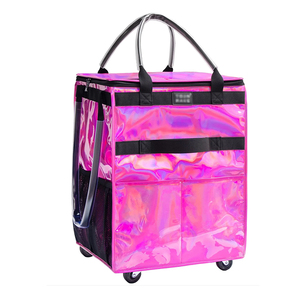
Heavy-Duty Foldable Rolling Fabric Storage Organizer 60L Capacity
Constructed with high-tenacity eco-friendly composite fabric, reinforced structural wire frame, transparent viewing portal, and 360-degree precision swivel casters.
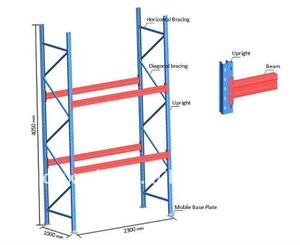
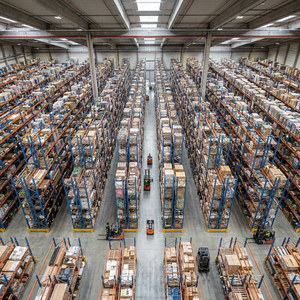
Engineered for rigorous duty cycles, dynamic seismic loads, and optimized cubic space utilization across modern Third-Party Logistics (3PL), automotive, cold storage, and distribution complexes.
Constructed with high-tenacity eco-friendly composite fabric, reinforced structural wire frame, transparent viewing portal, and 360-degree precision swivel casters.
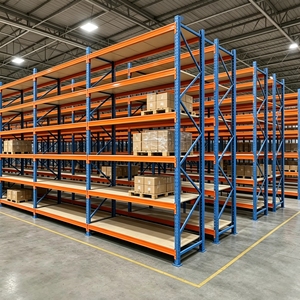
Premium Q235B cold-formed structural steel fabrication. Upright frames feature roll-formed omega profiles with 50mm pitch adjustability and high torsional stiffness.
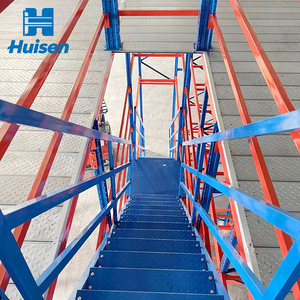
Multi-tier rack-supported intermediate floor systems that double or triple warehouse usable area without civil construction. Engineered for uniform floor loading from 300 to 1000 kg/m².
Designed for heavy unit loads, high throughput logistics operations, and automated truck staging. Fully interlocked safety drop pins prevent beam accidental displacement.
Features heavy-gauge box beams and 4-hook connector brackets delivering high moment resistance. Provides 100% selective individual accessibility to all pallet slots.
Intelligent storage architecture integrating high-tolerance steel racking with WMS/WCS controlled stacker cranes and four-way radio shuttle shuttles for dark-warehouse automation.
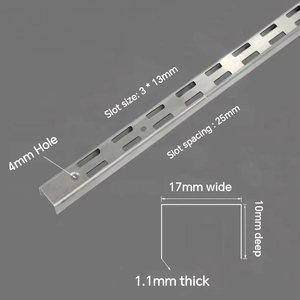
Laser-perforated twin slotted upright channels manufactured from grade 304 stainless steel. Micro-polished surface treatment built for luxury retail and commercial showrooms.
Specialized internal compartment configurations designed to securely accommodate engine cradles, body stamping dies, tire pallets, and mixed component containers.
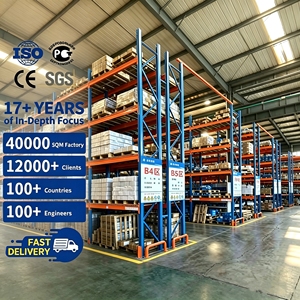
Operating a modernized 30,000 m² automated manufacturing facility with an output capacity surpassing 30,000 metric tons per month. Direct-from-source engineering ensures maximum cost efficiency without technical compromise.
Every batch of primary coil steel is chemically verified and tensile-tested. Uprights and load beams utilize premium cold-rolled Q235B and Q355B structural steel grades with traceable mill test certificates (MTC).
Integrated continuous cold-bending roll formers, CNC optical multi-station upright punching, automated seam welding, and robotic loading cells ensure component dimensional tolerance within ±0.5mm.
Multi-stage pickling, iron-phosphate washing, and electrostatic epoxy-polyester thermosetting powder coating (cured at 180°C–200°C) deliver scratch-proof adhesion, salt-spray durability, and complete RoHS environmental compliance.
Engineered strictly to satisfy European Committee for Standardization EN 15512 (Steel static storage systems), EN 15620 (Tolerances and clearances), and USA RMI standards. Certified CE (No. 2435-CPR-8605159) and ISO 9001:2015.
Strategic logistics planning requires understanding how raw material dynamics, ESG mandates, and warehouse automation are fundamentally reshaping international procurement contracts.
E-commerce demand spikes and omnichannel distribution have made static warehouse topologies obsolete. Procurement managers are increasingly rejecting welded single-purpose frameworks in favor of high-yield teardrop or wedge-lock selective systems featuring universal 50mm or 75mm beam adjustment pitches.
This allows rapid vertical re-slotting of bay elevations within hours when packaging dimensions mutate, eliminating costly teardowns and minimizing labor overhead during system modifications.
Corporate Scope 3 emission reporting standards have reached industrial logistics equipment. Global 3PL operators and European procurement bodies now mandate verified carbon audits for structural steel fabrications.
Purchasing preference is pivoting sharply toward mills running scrap-based Electric Arc Furnaces (EAF) and coating facilities that use VOC-free, heavy metal-free powder electrostatic systems that eliminate hazardous chemical waste while improving scratch and chemical resistance in corrosive environments.
A pure CAPEX evaluation strategy frequently causes severe failure modes: undersized column gauge resulting in frame twisting under eccentric pallet loading, premature zinc peeling, or beam deflections violating the allowable L/200 limit.
Modern supply chain directors prioritize Total Cost of Ownership (TCO), calculating factored lifespan, upright frame impact deflection thresholds, seismic certification conformity, and availability of OEM plug-and-play spare beams and upright frames over a 15-year operational lifecycle.
Cross-border intermodal shipping requires universal clearance design. Multinational fulfillment facilities increasingly require bay dimensions engineered with multi-clearance formulas capable of hosting standard European EUR 1 (1200×800mm), industrial EUR 2 (1200×1000mm), and North American GMA (48×40 inch) stringer pallets without altering structural load tables or necessitating auxiliary front-to-back cross ties.
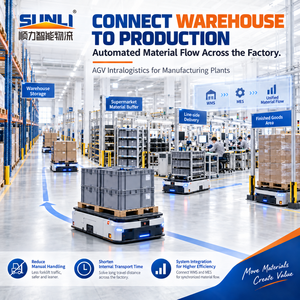
How cutting-edge rack manufacturing aligns with advanced robotics, automated guided vehicles (AGVs), and computational finite element analysis (FEA).
As human forklift drivers are replaced by autonomous stacker cranes and automated guided vehicles (AGVs), permissible structural tolerances drop from centimeters to mere millimeters. Deflection limits under full live-load must remain within sub-millimeter thresholds to prevent optical laser sensor misalignment on stacker crane masts.
High-end OEM manufacturing now integrates automated robotic laser welding tables and continuous multi-roll profile calibrators that guarantee upright column plumbness within 1:1000 height ratios.
Drive-in racking is giving way to high-density semi-automated Radio Shuttle systems. By deploying autonomous shuttles inside deep storage tunnels (up to 40 pallets deep), forklifts no longer drive inside the rack bays, reducing costly rack column impact damage by over 85%.
The latest 4-way multi-directional shuttles operate across both longitudinal and transverse axes, interconnecting with vertical lifts to maximize cold store storage volume where every cubic meter of chilled air incurs extreme electrical expense.
Modern structural steel engineering relies on full 3D Finite Element Analysis (FEA) simulating nonlinear geometric material behavior under combined gravity, wind, dynamic operating accelerations, and seismic ground shocks.
By moving from standard hot-rolled structural shapes to cold-formed high-strength Q355B micro-alloyed steel, engineers reduce deadweight steel load on concrete slab foundations while significantly boosting yield point performance ($f_y \ge 355 \text{ MPa}$) and energy dissipation capacity during earthquake tremors.
Compare storage density, throughput selectivity, pallet handling speed, and floor footprint utilization to determine the optimal storage framework for your warehouse layout.
| System Architecture | Floor Space Utilization | Pallet Selectivity | Stock Rotation Rule | Handling Equipment Compatibility | Target Logistics Environment |
|---|---|---|---|---|---|
| Selective Pallet Racking | 40% – 50% | 100% Direct Access | FIFO / LIFO Any | Standard Counterbalance, Reach Truck | 3PL Distribution Centers, High-SKU Retail |
| Double Deep Racking | 60% – 65% | 50% Immediate Access | LIFO Priority | Pantograph Reach Truck / Deep Reach | Wholesale Distribution, Cold Staging |
| Drive-In / Drive-Through | 70% – 80% | Low (Lane-by-Lane) | LIFO (Drive-In) / FIFO (Drive-Thru) | Counterbalanced, Narrow Reach Forklift | Homogeneous Stock, Seasonal FMCG, Chillers |
| Radio Shuttle System | 80% – 88% | Semi-Selective (Per Lane) | Software Configurable FIFO or LIFO | Standard Reach Truck + Autonomous Shuttle | Blast Freezers, Beverage Plants, Bulk Goods |
| Gravity Pallet Flow | 75% – 85% | High Picking Face Selectivity | Strict Natural FIFO | Standard Counterbalance & Reach Truck | Perishable Dairy/Meat, High Turn Pharmaceutical |
| Multi-Tier Mezzanine | Up to 300% (Vertical) | 100% Manual Bin Picking | Discretionary / WMS Order Batching | Manual Cart, Vertical Reciprocating Conveyor | E-commerce Apparel, Auto Spare Parts Warehouses |
In-depth technical answers addressing structural compliance, international shipping protections, calculation validations, and turnkey engineering workflows.
Load calculation is not simply a theoretical beam formula. Our engineering department executes static and dynamic analysis utilizing FEA software coupled with physical stub-column compression testing, beam-to-column connection stiffness ($C_m$) testing, and bending moment resistance verifications. Certified structural engineering calculation sheets and load-notice safety plaques are provided for local building permit compliance.
Yes. As an OEM/ODM specialist, we produce teardrop, hex-hole, omega-profile, or specialized slot punching to ensure 100% interchangeability with existing racking systems across your distributor footprint. Custom industrial powder coatings can be color-matched to any RAL designation (such as RAL 5015 Blue, RAL 2004 Orange, or RAL 7035 Grey) using our automated powder-spray lines.
Export packaging is critical for cold-rolled steel. Upright frames and beams are nested with custom corrugated cushions, plastic protective edge corners, and heavy-gauge polyester strapping. Bundles are wrapped in UV-resistant waterproof polyethylene stretch film and loaded on structural dunnage skids to allow direct forklift discharge from shipping containers without scuffing the powder coat.
To design an optimized engineering proposal within 24 to 48 hours, our technical team requires: warehouse architectural floor drawings (DWG/DXF format) displaying column grids and clear ceiling heights under roof trusses; palletized unit load dimensions (width, depth, height including overhang); maximum gross weight per pallet; and your designated forklift model or turning radius specification.
Connect directly with our senior structural racking engineers. Receive a comprehensive CAD floor plan, dynamic load calculations, and factory-direct OEM pricing within 48 hours.