Industrial FIFO
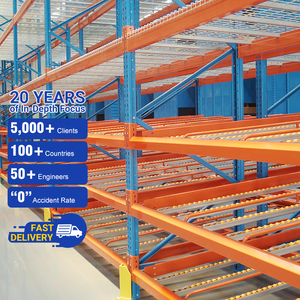
Engineered for high throughput, seamless FIFO inventory control, space consolidation, and ergonomic manual picking across diverse industrial, warehouse, and commercial environments.
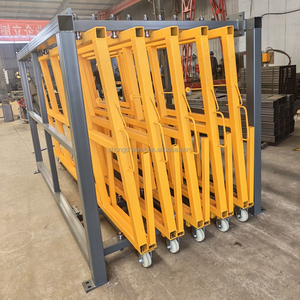
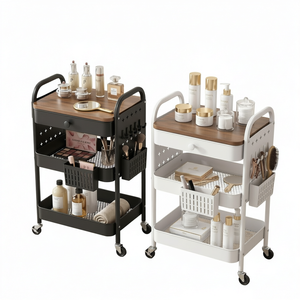
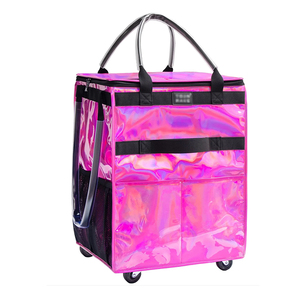
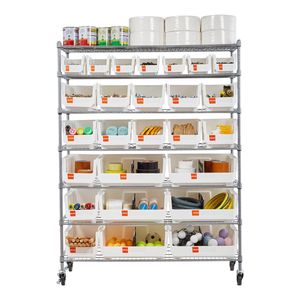
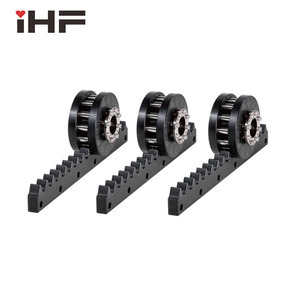
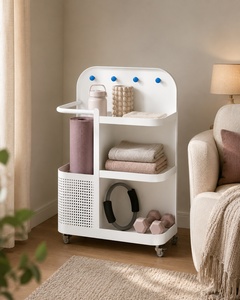
A technical evaluation framework for B2B supply chain architects, distribution hub directors, and industrial distributors sourcing high-capacity roller storage systems.
The kinetic efficiency of roller bed systems relies heavily on matching roller diameter, bearing quality, and track decline angles. In dynamic pallet flow systems, an incline gradient between 2.5% and 3.5% is standard to guarantee steady descent without excessive runaway velocity.
For light-duty carton flow and dynamic wire bin organizers, low-friction polymer rollers provide smooth movement under minimal payload weights. In contrast, heavy-duty applications require galvanised steel cylindrical rollers paired with integrated centrifugal brake rollers to regulate the speed of heavy pallets exceeding 1,000 kg, preventing end-stop impact damage.
OEM manufacturers must account for track deflection metrics. Under full operational load, maximum track deflection should not exceed 1/200th of the span to prevent track sagging that could halt downstream pallet conveyance.
Industrial durability begins with high-grade cold-rolled structural steel (such as Q235B or European equivalent EN 10025 S235). Profile bending precision ensures that uprights and shelf beams handle dynamic stress without structural torsion or micro-fracturing along bend radiuses.
Corrosion resistance is crucial for mixed environments, from cold stores to humid cross-docks. Standard industrial painting processes are insufficient for moving contact interfaces; our production incorporates an automated multi-stage pickling and phosphating pre-treatment followed by electrostatic thermoset powder coating.
For high-contact tracks and specialized linear roller systems, stainless steel grades (SUS304 or SUS316) or galvanised finishes provide long service life while maintaining strict compliance with CE safety standards and RoHS environmental mandates.
When selecting between dynamic roller racking (pallet flow / carton flow / sheet roll-out) and traditional selective static racks, engineering teams weigh footprint consumption against accessibility cycle times:
| Design Criteria | Gravity Flow Roller Racks | Vertical Roll-Out Systems | Standard Selective Static Racks |
|---|---|---|---|
| Floor Footprint Utilization | Extremely High (Up to 75% savings) | High (Compact vertical footprint) | Moderate (Large aisle requirements) |
| Inventory Flow Principle | Strict FIFO (First-In, First-Out) | Direct Selective Pull-Out | LIFO or Random Selective Access |
| Material Handling Speed | Continuous Gravity Conveyance | Quick Ergonomic Extraction | Forklift Travel Dependent |
| Mechanical Wear Factors | Bearings, Rollers, Speed Controllers | Heavy Castor Rails, Extension Guides | Static Structural Deflection Only |
Key technological advances shaping commercial and industrial roller rack manufacturing over the next five to ten years.
Next-generation roller racks increasingly incorporate IoT-enabled acoustic and vibration sensors into critical roller axles. These systems track rotation friction, predict bearing failure, and detect lane blockages early, helping prevent downtime in continuous distribution hubs.
European and North American procurement teams now evaluate the embodied carbon in structural steel. Sourcing strategies favor manufacturers using energy-efficient roll-forming lines, low-VOC powder coating, and scrap-reduction manufacturing technologies.
Logistics managers are moving away from fixed proprietary racking systems. Future procurement emphasizes universal pitch profiles (such as 50 mm / 75 mm hole centers) that allow rapid conversion between roller tracks, wire bins, and roll-out sheet cassettes as operational requirements change.
Combining 25+ years of fabrication expertise with a 30,000 m² modern manufacturing plant, our facility turns complex racking specifications into dependable, ready-to-install storage assets.
Rigorous metallurgical tensile testing and chemical composition verification for every coil of raw steel before processing.
High-speed laser and automated shear cutting guarantee clean edges and tight dimensional tolerances for all rack profiles.
Continuous CNC multi-station punching ensures exact hole-pitch consistency across uprights for trouble-free site installation.
Precision multi-pass progressive cold roll bending creates stiff, uniform channel sections that maximize load-bearing capacity.
Automated roll forming lines produce smooth-finish beam, upright, and roller lane profiles up to extended architectural spans.
Mechanical deburring and surface preparation remove sharp edges, mill scale, and burrs to ensure seamless, safe roller track action.
MIG/CO2 robotic welding lines deliver deep-penetration, defect-free welds across beam-to-connector brackets and base plates.
Full chemical immersion removes microscopic oil and rust, creating a conversion coating for long-term paint adhesion and corrosion resistance.
Automated powder spray booths apply durable epoxy-polyester coatings cured at 200°C for superior scratch and chemical resistance.
Comprehensive load-testing, dimensional audits, protective wrapping, and custom steel-pallet crating ensure zero damage during international shipping.
Fully compliant with CE Certificate No. 2435-CPR-8605159, ISO 9001:2015, and European EN 15512 and EN 15620 structural standards.
Complete 2D CAD architectural integration, 3D structural modeling, and custom load calculations delivered before production begins.
Essential guidance on dynamic roller rack customization, technical compliance, installation, and international shipping.
Connect directly with our senior racking design engineers. We supply complimentary 2D/3D CAD layouts, structural calculations, and direct factory-gate OEM pricing for warehouse projects worldwide.
Contact Us