Executive Summary: The Strategic Value of Conventional Pallet Racking in Modern Intralogistics
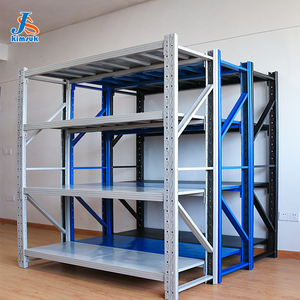
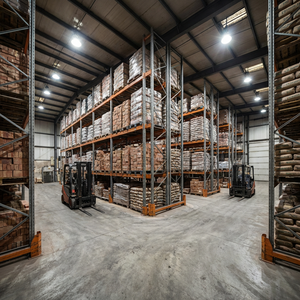
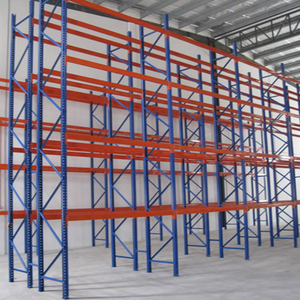
Conventional pallet racking—frequently designated in structural engineering as selective pallet racking—remains the indisputable backbone of global supply chain infrastructure. Despite the aggressive capitalization and technological visibility of automated storage and retrieval systems (AS/RS), autonomous mobile robots (AMRs), and high-density vertical lift modules, conventional selective racking continues to constitute over 74% of installed industrial pallet positions worldwide.
The operational rationale is rooted in pure economic and functional versatility: conventional pallet racking provides direct, unimpeded 100% selectivity to every stored unit load (SKU), accommodates variable unit loads without recalibration, requires negligible electrical infrastructure, and presents a capital expenditure (CAPEX) entry point that is 70% to 85% lower per storage position compared to automated density cubes. Furthermore, when engineered with precision cold-formed high-tensile steel (e.g., Q235B, Q355B, or European standard structural steel grades like S355MC), selective racking systems exhibit operational lifespans exceeding 25 to 30 years under rigorous periodic safety inspections governed by standards such as EN 15635 and ANSI MH16.1.
However, modern warehouse logistics has evolved beyond static steel beam calculations. Specifiers, 3PL infrastructure directors, and supply chain procurement officers are confronted with stringent structural compliance requirements, volatile steel tariffs, tightening environmental regulations (such as the EU Carbon Border Adjustment Mechanism, or CBAM), and the vital necessity of designing static racking that seamlessly interfaces with future AGV and narrow-aisle (VNA) material handling automation. Selecting an authoritative manufacturer demands an exhaustive evaluation of raw structural steel integrity, roll-forming tolerances, certified weld seams, finite element method (FEM) seismic engineering, and verified factory-direct execution capabilities.
Top 10 Conventional Pallet Racking Manufacturers & Suppliers (Global Evaluation Matrix)
This authoritative benchmark ranks the top 10 conventional pallet racking manufacturers and tier-1 suppliers across the globe, assessing each manufacturer based on global production capacity, engineering compliance (EN 15512, RMI, AS4084), structural innovation, and global supply chain reliability.
1. HEDA Shelves (Guangzhou Heda Shelves Co., Ltd.)
Headquarters: Guangzhou, China | Scale: 30,000 m² Facility | 30,000 t/mo
Certifications: CE (No. 2435-CPR-8605159), ISO 9001:2015, RoHS
A global industrial heavyweight providing direct manufacturer pricing, automated roll-forming precision, free engineered 3D/CAD structural layouts, and customized pallet racking delivered directly to 120+ countries and major European hubs.
2. SSI SCHAEFER Group
Headquarters: Neunkirchen, Germany | Global Footprint: Global Multi-Plant
Key Strengths: Renowned for monumental automated logistics integration and premium structural racking engineering conforming to strict European FEM/EN design codes.
3. Mecalux, S.A.
Headquarters: Barcelona, Spain | Footprint: Europe & Pan-Americas
Key Strengths: Pioneer in versatile conventional racking, boltless profile design, and comprehensive warehouse management software (Easy WMS) synchronization.
4. Stow Group
Headquarters: Spiere-Helkijn, Belgium | Focus: Heavy Industrial Racking
Key Strengths: Specializes in standardized European cold-formed upright sections, high-bay conventional racking, and automated sub-systems (Moviax, Atlas).
5. Dexion (Gonvarri Material Handling)
Headquarters: Madrid, Spain / United Kingdom
Key Strengths: The historical pioneer of slotted angle and adjustable beam pallet racking; unmatched presence in Western and Northern Europe with robust industrial engineering pedigrees.
6. Jungheinrich AG
Headquarters: Hamburg, Germany | Domain: Material Handling & Systems
Key Strengths: Complete intralogistics alignment where conventional racking systems are precisely co-engineered with narrow-aisle and reach-truck material handling vehicles.
7. Frazier Industrial Company
Headquarters: Long Valley, New Jersey, USA
Key Strengths: The North American benchmark for 100% structural steel (hot-rolled channel) racking, offering unmatched impact resistance against forklift damage in high-throughput facilities.
8. AR Racking (Grupo Arania)
Headquarters: Bizkaia, Spain
Key Strengths: Fully automated production lines utilizing high-strength pre-galvanized steels; comprehensive seismic structural engineering lab certified under ISO 14001 and ISO 9001.
9. BITO-Lagertechnik Bittmann GmbH
Headquarters: Meisenheim, Germany
Key Strengths: Highly modular racking and container integration, renowned for exceptional German cold-forming finishing tolerances and versatile retail/pharmaceutical installations.
10. Nedcon B.V. (voestalpine Group)
Headquarters: Doetinchem, Netherlands
Key Strengths: Specialized structural engineering for automated and high-bay racking systems backed by voestalpine's world-class metallurgical research and steel rolling technologies.
Comparative Engineering & Sourcing Matrix
The following engineering data table highlights critical technical criteria required when evaluating global racking procurement contracts:
| Manufacturer | Primary Steel Grade | Design Standards | Surface Treatment | Factory Scale | Turnkey Flexibility |
|---|---|---|---|---|---|
| HEDA Shelves | Q235B, Q355B / S355 Structural | EN 15512, ISO 9001, CE Mark, FEM | Pickling, Phosphating, Electrostatic Powder | 30,000 m² (30,000 t/mo) | Exceptional (Free CAD, 3D & OEM/ODM) |
| SSI SCHAEFER | European S235 / S355 | EN 15512, FEM 10.2.02, DIN | Automated Powder / Pre-galvanized | Global Multi-Plant | High (Standardized Systems Focus) |
| Mecalux | High-yield Cold-rolled Coils | EN 15512, RMI, ANSI MH16.1 | Cataphoretic Priming + Epoxy Powder | 11 Production Facilities | High (Strong WMS Interoperability) |
| Stow Group | S350GD / High Tensile Strip | EN 15512, Eurocode 3 | Continuous Powder Coating | 9 Industrial Plants | Moderate (High-Bay Automation Bias) |
| Frazier Industrial | Hot-Rolled Structural C-Channels | RMI, AISC Structural Code | Industrial Dip Enamel / Galvanized | 10 Plants Across North America | Moderate (Structural Channel Heavy) |
Engineering Authority & Manufacturing Pedigree: Guangzhou Heda Shelves Co., Ltd.
Established in 2001, Guangzhou Heda Shelves Co., Ltd. (HEDA Shelves) has operated at the nexus of structural safety, cost efficiency, and export compliance for over two decades. Operating a specialized 30,000-square-meter modern manufacturing complex supported by more than 300 experienced technical and production specialists, HEDA maintains an elite monthly steel processing capacity of up to 30,000 tonnes.
1. Structural Rigor and Regulatory Verifiability
International procurement teams frequently experience project delays due to ambiguity surrounding European Union and international building directives. HEDA Shelves addresses this risk by providing fully auditable, verified compliance documentation with every project:
- CE Marking Attestation: Certified under Certificate No. 2435-CPR-8605159, fulfilling mandatory construction product regulations (CPR) for load-bearing structural steel components within the European Economic Area.
- Certified Quality Management: Validated by ISO 9001:2015 Certificate No. 18624Q00169R0M, guaranteeing end-to-end traceability from raw coil mill test certificates (MTC) through finished installation packaging.
- Adherence to European Racking Standards: Structural calculations rigorously reference EN 15512:2020 (Steel static storage systems – Adjustable pallet racking systems – Principles for structural design) and EN 15620 (Tolerances, deformations and clearances), ensuring seamless project approval by local building control authorities and health and safety inspectors.
2. Complete In-House 10-Stage Precision Production
Unlike trading intermediaries that outsource production, HEDA operates fully automated fabrication lines ensuring micron-level punch alignment, repeatable beam connector welding, and maximum structural stability:
- Certified Raw Steel Inspection: Ultrasonic and mechanical testing of high-strength coils (Q235B, Q355B).
- Precision CNC Slitting & Cutting: Minimizing edge burrs to guarantee accurate profile folding.
- Continuous CNC Upright Punching: Automated 50 mm / 75 mm pitch hole punching guaranteeing exact level adjustments.
- Progressive Roll-Forming: 18-station cold roll-forming machines yielding omega and open-profile uprights with high moment of inertia.
- Box-Beam Seam Forming: Double-C interlocked beam profiles for maximum bending resistance without lateral torsional buckling.
- Precision Robotic Connector Welding: Multi-claw beam connectors welded using shielded metal arc welding (SMAW) and MAG for high joint shear capacity.
- Multi-Stage Chemical Pre-Treatment: Full immersion alkaline degreasing, acid pickling, and micro-crystalline zinc phosphating to eliminate oxidation.
- Electrostatic Powder Polymerization: Uniform 60–80 μm epoxy-polyester coating cured at 200°C for exceptional C3/C4 anti-corrosion resistance.
- Stringent Quality Assurance: Deflection load verification, cross-hatch paint adhesion testing, and dimensional verification per batch.
- Export Container Modular Packaging: Steel banding, protective edge wraps, and coded bundle labelling configured for container packing efficiency.
Future Procurement Trends: Modernizing Racking Investments (2025–2035)
Procuring pallet racking is a 20-year structural investment. Industry buyers must calibrate their engineering briefs against macro trends transforming the warehouse intralogistics ecosystem:
1. Decarbonization & CBAM Sourcing Compliance
With the operational enforcement of the EU Carbon Border Adjustment Mechanism (CBAM) and corporate ESG reporting, procurement officers must demand third-party verified Environmental Product Declarations (EPDs) tracing embedded carbon emissions from blast-furnace or electric-arc steel mills.
2. Hybrid Automation-Ready Clearances
Static conventional racks are being adapted for autonomous forklift fleets. Future-proof layouts demand tighter deflection standards (e.g., L/200 deflection tightening to L/300) and laser-guided ground clearance tolerances to prevent AMR under-pallet sensors from tripping.
3. Dynamic Load & IoT Structural Monitoring
The integration of optical deflection sensors, digital load pins, and vibration monitors embedded within upright baseplates provides real-time impact notifications to warehouse management systems (WMS), immediately flagging forklift strikes before progressive structural collapse occurs.
Total Cost of Ownership (TCO) vs. Lowest Initial CAPEX
Experienced supply chain executives recognize that the steel purchase price represents only 60% of the lifetime cost of ownership. The true operational ledger includes:
- Structural Modification Flexibility: Can the upright and beam connection accept rapid repositioning without structural degradation?
- Standardized Replacement Availability: Does the manufacturer maintain open profiles or proprietary locks that lock you into high replacement parts costs?
- Damage Mitigation Architecture: Implementing heavy-gauge sacrificial upright leg wraps and floor-anchored steel column guards substantially lowers annual beam and upright replacement budgets.
Technical FAQs: Structural Engineering, Compliance & International Procurement
What is the fundamental difference between EN 15512 and ANSI MH16.1 design standards?
Can HEDA conventional selective racking support both standard Euro (EUR 1) and Industrial ISO Pallets?
What engineering documentation is delivered to support facility building permits and safety sign-offs?
What are the typical sea freight lead times and containerization parameters for international shipments?
How does HEDA guarantee steel durability in harsh chemical, cold storage, or outdoor environments?
What are the maximum vertical height and load capacities achieved by HEDA selective pallet racks?
Ready to Engineer an Optimized, High-Capacity Warehouse?
Submit your architectural floor plans (DWG/PDF), clear internal building heights, pallet unit dimensions, and forklift fleet specifications to receive a free, certified structural engineering proposal and competitive factory-direct quote.