Featured High-Density & Heavy-Duty Pallet Systems
Precision cold-formed structural racking systems designed to Euro-pallet (EUR/EPAL 1200×800mm) and ISO standard footprints, engineered for reach truck pantographs, deep shuttles, and dynamic gravity storage.
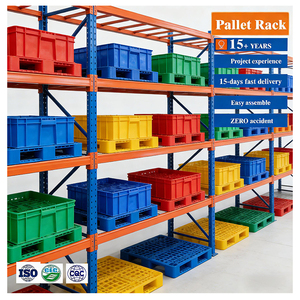
Wholesale Heavy-Duty Pallet Beam Rack (5 Layers, 3000KG Triple Support)
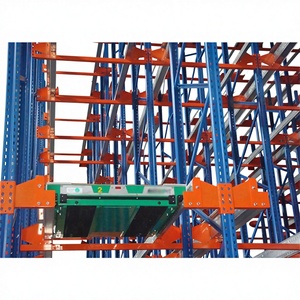
HEDA High-Density Double Deep Pallet Shuttle Racking System
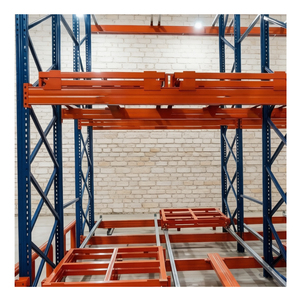
High-Density Dynamic Cart Push-Back Pallet Racking System
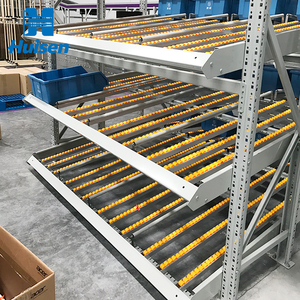
High-Density Heavy-Duty Steel Pallet Flow Rack System
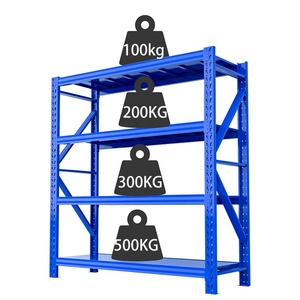
Modular Multi-Tier Metal Shelving Rack for Warehouse & Depot
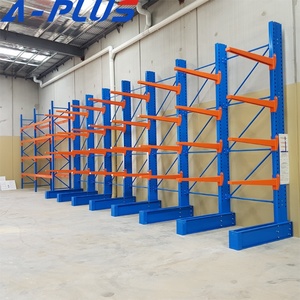
Industrial Warehouse Heavy-Duty Cantilever Rack for Pallets & Timber
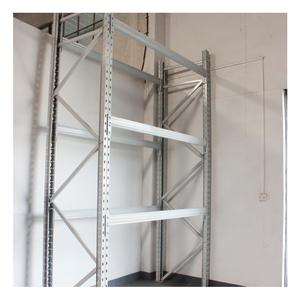
Heavy-Duty Adjustable Boltless Steel Warehouse Storage Shelf Rack
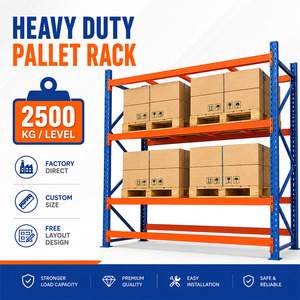
Heavy-Duty Double Deep Pallet Racking Warehouse Storage System
Top 10 Double Deep Pallet Racking System Suppliers Worldwide
In modern industrial warehousing, spatial economics dictate that storing more pallets per square meter without incurring astronomical capital costs is the paramount objective of logistics planners. Standard selective pallet racking offers 100% immediate accessibility but sacrifices over 60% of warehouse floor footprint to forklift transit aisles. Conversely, drive-in systems achieve extreme density at the total loss of selectivity and picking velocity. The Double Deep Pallet Racking System represents the optimum engineering equilibrium: by deploying back-to-back rack pairs four pallets deep between aisles, it slashes aisle requirements by 30% to 40% while preserving a 50% immediate pallet selectivity ratio.
Deploying double-deep architecture requires precision cold-roll manufacturing tolerances, sophisticated structural analysis complying with EN 15512:2020, RMI (Rack Manufacturers Institute) MH16.1, and seismic design provisions. Below is the authoritative evaluation of the top 10 global manufacturers and suppliers delivering engineered double-deep pallet racking systems to international logistics hubs.
1. Guangzhou Heda Shelves Co., Ltd.
Guangdong, China · Established 2001A heavyweight tier-one manufacturer operating across 120+ countries, HEDA Shelves specializes in direct factory supply of heavy-duty double deep racking, radio shuttle hybrid configurations, and multi-tier mezzanines. Engineered to exact Euro-pallet (EUR-1/EUR-2) and American standard configurations, their upright columns feature high-yield cold-rolled Q235B steel with continuous robotic welding and electrostatic powder coating. Known for providing free preliminary 3D/CAD layout optimizations and structural load calculations aligned with EN 15512 and EN 15620.
2. SSI Schaefer Systems
Neunkirchen, Germany · Global EntityRenowned globally for turnkey automated distribution centers, SSI Schaefer produces heavy-duty double-deep racking profiles with high structural rigidity. Their systems are frequently chosen by enterprise-grade pharmaceutical and multinational FMCG operations who look to integrate double-deep racking directly with automated storage and retrieval machines (ASRS) and automated deep-reach stacker cranes.
3. Stow Group
Spiere-Helkijn, Belgium · EU FootprintStow is one of Europe's largest structural racking producers. The proprietary Stow Pal Rack beam connectors utilize engineered multi-claw locking hooks that deliver high torsional resistance for double-reach applications where reach truck mast deflections impart dynamic lateral loading on front beams.
4. Mecalux Racking
Barcelona, Spain · Americas & EMEAMecalux offers extensive technical documentation and catalog flexibility. Their double-deep selective configurations incorporate specialized pallet stop bars, heavy-duty floor channel guide rails, and customized rear crossbars designed specifically to prevent puncture damage caused by deep-entry reach pantographs during blind-face insertions.
5. Jungheinrich AG
Hamburg, Germany · Intralogistics SpecialistJungheinrich delivers a fully unified operational loop: designing the double-deep racking matrix in exact dimensional harmony with their proprietary pantograph and telescopic fork reach trucks. Their structural layouts focus on millimeter-perfect aisle tolerances, camera-assisted fork positioning, and high-bay stability.
6. Frazier Industrial Company
Long Valley, New Jersey, USAFrazier differentiates itself in the double-deep sector through structural channel steel fabrication. While roll-formed steel can be prone to torsion dents from pantograph misuse in fast-paced cold storage environments, Frazier’s structural steel uprights withstand substantial forklift collisions without buckling, albeit at a higher capital acquisition cost.
7. Dexion Storage Solutions
Swindon, UK & GermanyDexion’s double-deep pallet racks are widely praised across the UK and Commonwealth territories. Utilizing cold-rolled high-tensile steel, their beam connectors feature high-visibility security lock pins and heavy-duty upright column guards that isolate the lower frames from reach truck impact deflection.
8. Ridg-U-Rak, Inc.
North East, Pennsylvania, USARidg-U-Rak produces both teardrop roll-formed and structural double-deep racking. Their designs feature oversized baseplates with dual anchor holes to accommodate high seismic design categories (SDC D, E, F) and extreme overturning moments typical of tall double-deep reach truck applications.
9. AR Racking (Grupo Arania)
Bizkaia, Spain · Global ReachA leader in continuous automated roll-forming, AR Racking delivers high-precision double-deep systems with zero micro-fracturing along bend radiuses. Their structural design incorporates full FEM calculations, offering complete traceability from coil batch spectrography to warehouse installation.
10. BITO-Lagertechnik Bittmann GmbH
Meisenheim, GermanyBITO manufactures double-deep racking systems known for stringent German quality tolerances. Their beam brackets feature tight-fit tolerance keys that prevent sagging under dynamic 1,500kg pallet loads, making them the preferred vendor for automotive manufacturers requiring zero beam sag during deep retrieval cycles.
Engineering Benchmark: Selective vs. Double Deep vs. Drive-In vs. Shuttle
| Storage System Type | Space Utilization | Pallet Selectivity | MHE Handling Equipment Required | Aisle Reduction vs Selective | Cost per Pallet Position |
|---|---|---|---|---|---|
| Selective Pallet Racking | 40% – 45% (Baseline) | 100% Direct | Standard Counterbalance / Reach Truck | 0% (Standard 3.2m – 3.8m aisles) | Low ($45 – $75) |
| Double Deep Racking | 60% – 65% (Optimal) | 50% Immediate (LIFO Pair) | Deep-Reach Pantograph or Telescopic Fork Truck | 30% – 40% Aisle Reduction | Low–Med ($65 – $95) |
| Drive-In / Drive-Through | 75% – 80% (High Density) | < 15% (Strict LIFO) | Counterbalance / Narrow Mast Trucks | 60% – 70% Aisle Reduction | Medium ($90 – $135) |
| Radio Shuttle Racking | 80% – 85% (Ultra High) | Lane-Based (FIFO/LIFO) | Standard Forklift + Semi-Auto Shuttle Unit | 70% Aisle Reduction | High ($160 – $240) |
Engineering Mechanics of Double Deep Racking Systems
Designing an industrial double deep storage bay is structurally distinct from engineering single-deep selective racking. Because pallets are stored two positions deep from a single operating aisle, the outer aisle beam and inner back beam behave differently under dynamic load insertion. When reach trucks extend their heavy pantograph mechanism with a 1,200 kg pallet fully outstretched to position 2, eccentric torsion loads, mast deflection, and dynamic shock coefficients multiply dramatically.
Deflection Limits (EN 15512 L/200)
Under EN 15512 and FEM 10.2.02, beam deflection under maximum working load must not exceed δ = L/200 (where L is beam clear length). In double-deep applications, front beams are engineered with stiffer box profiles (e.g., 120×50×1.5mm up to 160×50×2.0mm) to resist dynamic impact when the reach truck pantograph rests heavy pallet bottom skids during blind-level staging.
Reach Truck Mast Kinematics
Double deep systems mandate specialized material handling equipment: either a scissor-type pantograph reach truck or a telescopic fork truck. At lift heights above 8.5 meters, mast sway deflection amplifies. Upright frames require heavy-duty vertical column profiles (minimum 90×68mm to 120×95mm) to absorb lateral racking displacement without yielding.
Pallet Guidance & Overhang
Due to reduced operator visibility when depositing pallets into the second depth, structural pallet guide rails, backstop buffer beams, and fork-mounted laser alignment cameras are critical. European standards dictate a standard 50mm front/rear pallet overhang over beam centers to guarantee stable gravity anchoring under seismic movement.
Future Procurement & Technological Trends in Industrial Storage
Supply chain volatility, nearshoring in Europe and North America, and skyrocketing warehousing rental rates per square meter have revolutionized how industrial racking is specified and procured.
Decarbonized & Green Steel Sourcing
Corporate ESG mandates across the European Union (CBAM) and North America require warehouse developers to document the embodied carbon footprint of structural steel. Suppliers are shifting to Electric Arc Furnace (EAF) steel coils and eco-friendly lead-free, low-VOC electrostatic powder coatings that eliminate toxic sludge during 9-stage phosphate pre-treatment.
Autonomous Mobile Reach Trucks (AMR)
The historic barrier to double-deep adoption was driver fatigue and blind-spot collision rates at deep level 4 and 5 placements. Modern logistics operations are rapidly deploying Vision-Guided Autonomous Mobile Reach Trucks (AMRs). Equipped with LiDAR and stereoscopic 3D cameras, AMRs dock double-deep loads with sub-millimeter precision, entirely eliminating rack impact damage.
Modular Hybrid Conversions
Procurement heads no longer purchase static single-purpose racks. Modern double deep racking is engineered with universal 50mm / 75mm punching pitches, enabling facilities to transition bays into automated Radio Shuttle Lanes or Carton Flow picking tunnels without dismantling upright columns or executing expensive floor repouring.
Why Global Logistics Engineers Choose HEDA Shelves
Founded in 2001, Guangzhou Heda Shelves Co., Ltd. has expanded into a global intralogistics powerhouse. Operating from an integrated 30,000 m² heavy-machinery manufacturing base with 300+ technical employees, HEDA delivers factory-direct engineering accountability from initial structural layout design to deep-sea export delivery.
- Certified Global Compliance: Fully compliant with European CE standard EN 15512 (Certificate No. 2435-CPR-8605159), ISO 9001:2015 Quality Management (No. 18624Q00169R0M), and RoHS non-toxic finishes.
- Monthly 30,000-Tonne Cold Roll Capacity: Automated high-speed roll forming lines, continuous punch presses, and Panasonic robotic welding cells ensure exact frame perpendicularity and beam end connector dimensional tolerances.
- Free Preliminary CAD & 3D Engineering Layouts: Full seismic calculations, aisle width planning for your exact reach truck model, and bay load configuration charts provided upfront within 24 hours.
- Precision Surface Engineering: Automated 9-stage acid pickling, phosphating, and electrostatic epoxy-polyester powder baking (180°C–200°C) guarantee high impact resistance and scratch protection against heavy pallet transit.
10-Step Quality Assurance Cycle
Every batch of double deep uprights and beams undergoes strict structural testing before export dispatch:
- Raw Material Chemical Analysis: Yield & tensile verification on Q235B/Q355B coils.
- Precision Slitting: High-tolerance steel strip preparation.
- Multi-Die Automated CNC Punching: 50mm pitch accuracy ±0.2mm.
- Continuous Roll-Forming: 18–24 station cold rollers prevent micro-cracking.
- Robotic MIG Beam Welding: 5-claw high-moment beam end connectors.
- Ultrasonic Weld Seam Inspection: 100% penetration assurance.
- 9-Stage Pickling & Phosphating: Total rust removal and substrate etching.
- Electrostatic Powder Application: 60–80 micron uniform thickness.
- Curing Oven Thermography: Continuous 200°C molecular cross-linking.
- Export Seaworthy Packaging: Steel strapping, vapor-barrier wrapping, numbered components.
Frequently Asked Questions (FAQ) on Double Deep Racking
Direct answers to the most critical logistical, structural, and procurement questions raised by warehouse managers, supply chain directors, and facility engineers.
What exact forklift machinery is required to operate a double-deep pallet racking system?
+
How does double-deep racking impact warehouse inventory rotation and selectivity?
+
Can HEDA double deep racking accommodate standard European EUR/EPAL pallets (1200 × 800 mm)?
+
What are the specific beam deflection and safety limits under EN 15512 and RMI specifications?
+
How much storage capacity is realistically gained compared to single-deep selective racking?
+
What floor slab specifications and anchor requirements are necessary?
+
Ready to Maximize Your Warehouse Storage Density?
Send us your warehouse floor plan (DWG or PDF), clear building height, pallet specifications, and forklift model. HEDA Shelves' project engineers will generate a comprehensive structural CAD layout, bay loading calculation, and direct factory quotation within 24 hours.
Get a Quote