Engineered Heavy-Duty Racking & Warehouse Storage Systems
Precision roll-formed, cold-formed structural steel storage systems custom-engineered for extreme weight capacities, seismic stability, and maximum spatial yield in industrial facilities.
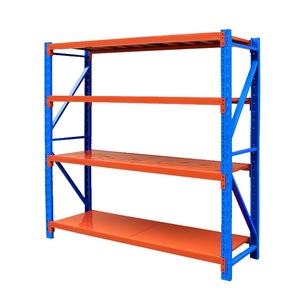
HUAWU Steel Boltless Shelving Rack 2000x600x2000mm 4-Layer 200kg Per Layer
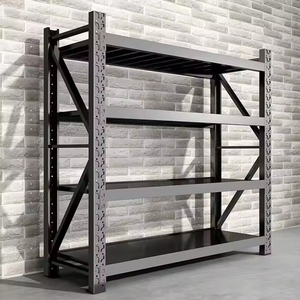
Light-Duty Steel 5-Layer Drive-In Pallet Rack Warehouse Storage Shelf
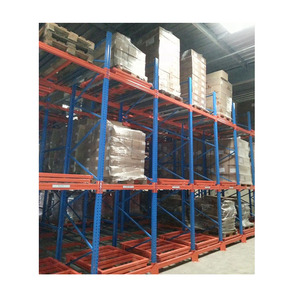
Heavy Duty Push Back Pallet Rack Customized Adjustable Dexion Storage System
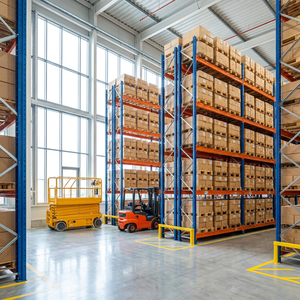
Warehouse Equipment Heavy Duty Pallet Rack Steel Storage System Supplier
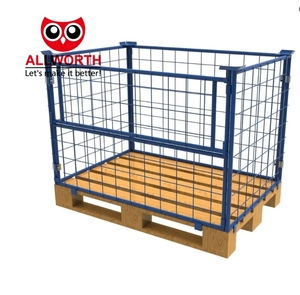
High Quality Steel Wire Mesh Pallet Cage Container for Storage
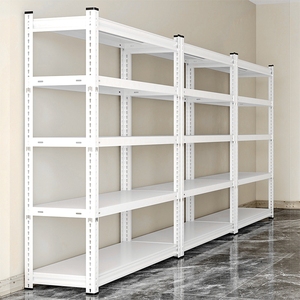
Heavy Duty Steel Storage Rack Adjustable Metal Shelving Corrosion Resistant
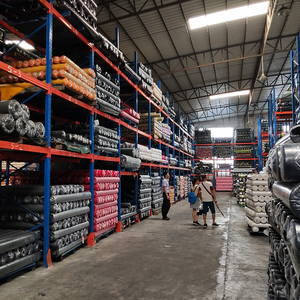
Highly Customizable Free Design Storage Rack For 1000KG 2000KG 3000KG Storing
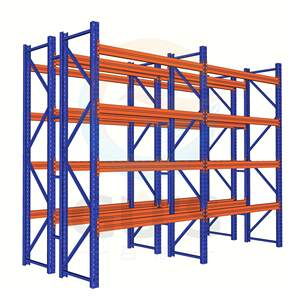
Warehouse Pallet Racking Shelves Unit Industrial Metal Pallet Stacking System
Technical Evaluation of Drive-In Racking Architecture & Structural Dynamics
In the discipline of modern intralogistics engineering, maximizing volumetric storage density without requiring structural footprint expansion remains the primary objective for facility planners, third-party logistics (3PL) operators, and temperature-controlled cold chains. Drive-in and drive-through pallet racking systems represent the structural pinnacle of static high-density storage. By eliminating conventional operating aisles and allowing counterbalanced or reach forklifts to drive directly into deep longitudinal storage lanes, drive-in systems routinely deliver up to 75% to 80% increases in usable pallet density compared to standard selective pallet racking layouts.
However, from a structural mechanics perspective, drive-in racking is fundamentally distinct from cross-beam selective racking. Because longitudinal beam ties are absent within the drive-in lanes to facilitate forklift mast clearance, the racking structure loses substantial closed-frame torsional stiffness. Consequently, stability is maintained through a combination of heavy-duty top horizontal portal bracing, vertical rear cross-bracing towers, asymmetric cantilever brackets, and continuous cold-formed pallet support rails. Procuring drive-in racking requires stringent structural verification under international engineering codes, specifically EN 15512:2020 (European Standard for Steel Static Storage Systems), FEM 10.2.02, and the American RMI (Rack Manufacturers Institute) ANSI MH16.1 specifications.
Critical Engineering Formula: Dynamic Sway & Cantilever Arm Load Distribution
Unlike standard racking where load $P$ transfers directly onto two parallel box beams, drive-in pallet loads rest on asymmetric cantilever rails. The resulting eccentric moment ($M = P \times e$, where $e$ is the distance from the upright centerline to the pallet center of gravity) induces localized torsional shear stress $\tau$ and lateral frame deflection $\delta$. High-quality manufacturing mandates upright profiles cold-formed with multi-ribbed returns from certified Q235B or Q355B structural coil steel (yield strength $f_y \ge 355 \text{ N/mm}^2$), preventing elastic buckling under fully loaded conditions.
1. Architectural Typology: Drive-In vs. Drive-Through Configurations
Procurement directors must distinguish between two core operational methodologies when commissioning high-density lane systems:
- Drive-In Racking (LIFO - Last-In, First-Out): Features a single shared entry/exit aisle per storage bay. Pallets are loaded and retrieved from the same face, with the back bay terminating in rigid vertical cross-bracing. This configuration delivers the absolute highest structural integrity and space utilization, making it the industry standard for non-perishable goods, seasonal bulk items, or large single-SKU inventory lots.
- Drive-Through Racking (FIFO - First-In, First-Out): Engineered with separate loading and picking aisles at opposite ends of the system. Pallets travel continuously in one direction. Because back cross-bracing cannot be utilized across active picking tunnels, drive-through systems require reinforced top portal frames and overhead sway towers to compensate for reduced longitudinal rigidity. FIFO drive-through is indispensable for date-sensitive food processing, pharmaceutical distribution, and batch-controlled manufacturing.
2. Floor Guide Rails, Clearance Geometry, and Forklift Collision Mitigation
Because forklift trucks operate inside physical racking tunnels with tolerances as narrow as 75 mm to 100 mm on either side of the chassis, mechanical guide rail infrastructure is essential to prevent impact damage. Top-tier engineering firms specify floor-anchored steel angle guides ($L100 \times 75 \times 8 \text{ mm}$ or heavy structural channel) bolted with chemical M12/M16 anchors into the concrete slab. At aisle entry portals, heavy-duty floor-mounted flared guide horns and wrapped column protectors (constructed from 6 mm to 8 mm reinforced steel plate) absorb deceleration impacts, safeguarding upright bases from catastrophic structural shearing.
Top 10 Drive-In Racking System Factories & Global Suppliers
An objective comparative evaluation of global manufacturing capacities, engineering certifications, structural steel standards, and procurement suitability.
| Manufacturer / Supplier | Headquarters / Plant | Structural Standards | Steel Grade & Processing | Monthly Output | Core Market Focus |
|---|---|---|---|---|---|
| Guangzhou HEDA Shelves | Guangzhou, China (30,000 m²) | EN 15512, CE, ISO 9001:2015 | Q235B / Q355B Cold-Formed, Multi-Ribbed | 30,000 Tonnes | Global Tier-1 / Direct Factory Export / OEM / EU Hubs |
| Mecalux S.A. | Barcelona, Spain | EN 15512, FEM, RMI | High-Grade European Coil, Auto Punching | High Volume | European Logistics, Americas Automation |
| SSI Schaefer | Neunkirchen, Germany | DIN, EN, FEM 10.2.02 | Precision German Structural Profiles | Enterprise | Turnkey Fully Automated High-Bay Warehousing |
| Dexion (Gonvarri) | Castellón, Spain | EN 15512, SEMA | Structural Galvanized & Powder-Coated | High Volume | EMEA 3PL, Cold Storage Distribution |
| BITO Lagertechnik | Meisenheim, Germany | RAL-RG 614, EN 15512 | Engineered Cold-Rolled Uprights | Medium-High | Central Europe Intralogistics & Manufacturing |
| AR Racking | Bizkaia, Spain | EN 15512, ASTM, AS4084 | Certified Structural Steel Coil | High Volume | High-Density Heavy Pallet Projects Worldwide |
| Stow Group | Spiere-Helkijn, Belgium | EN 15512, FEM, CE | Continuous Roll-Formed Profiles | Enterprise | Standard & Dynamic Pallet Racking in Europe |
| Jungheinrich AG | Hamburg, Germany | EN, FEM Standards | Heavy-Duty High-Spec Steel Profiles | High Volume | Integrated Racking & Guided Truck Systems |
| Nedcon (Voestalpine) | Doetinchem, Netherlands | EN 15512, AISC | Precision High-Yield Dutch Steel | Medium-High | Complex High-Bay & Mezzanine Combinations |
| Frazier Industrial | Long Valley, NJ, USA | RMI, AISC (Structural) | Hot-Rolled Structural Channel Steel | High Volume | Abuse-Resistant American Structural Racks |
Detailed Engineering Capabilities: Key Global Contenders
1. HEDA Shelves (Guangzhou Heda Shelves Co., Ltd.): Founded in 2001, HEDA Shelves stands as a premier factory-direct manufacturer operating a state-of-the-art 30,000 square meter production facility with a monthly fabrication capacity reaching 30,000 metric tonnes. HEDA distinguishes itself through comprehensive vertical integration—from raw coil metallurgy inspection and continuous roll-forming to automated multi-station robotic punching and computerized electrostatic powder coating lines. Holding CE Certificate No. 2435-CPR-8605159 and ISO 9001:2015 Certificate No. 18624Q00169R0M, HEDA executes bespoke static calculations adhering strictly to EN 15512, EN 15620, and Eurocode 3. Their engineering department delivers complimentary 3D AutoCAD and BIM layouts within 24 hours, custom-configured for EUR 1 (1200 × 800 mm), EUR 2 (1200 × 1000 mm), and ISO standard industrial pallets. Over 10,000 completed installations across 120+ nations establish HEDA as the foremost choice for procurement teams requiring tier-one manufacturing precision combined with factory-direct pricing advantage.
2. Mecalux S.A.: A Spanish multinational with an expansive global footprint across Europe and North America. Mecalux produces highly modular drive-in systems renowned for easy integration with automated shuttle rovers and proprietary warehouse management software (Easy WMS). Their systems are frequently selected for mega-distribution hubs requiring deep compliance with European EN standards.
3. SSI Schaefer: A German heavyweight specializing in integrated intralogistics. While SSI Schaefer excels in massive automated high-bay facilities, their static drive-in systems leverage proprietary German cold-rolled profiles engineered for extreme seismic stability and ultra-clean powder coating finishes ideal for pharmaceutical and food production cleanrooms.
4. Dexion (Gonvarri Material Handling): One of the oldest names in pallet racking engineering, Dexion provides exceptionally robust drive-in configurations built with proprietary upright slotted patterns. Their systems are widely utilized across the United Kingdom, Scandinavia, and Western Europe, supported by SEMA-accredited safety verification.
5. AR Racking: Operating automated production plants in northern Spain, AR Racking focuses on advanced coil tracking, 100% automated traceability, and specialized anti-seismic drive-in designs compliant with European standard EN 16681.
Drive-In Racking Sourcing Trends: 2026–2035 Horizon
Five transformative engineering and commercial shifts driving procurement specifications across modern high-density warehousing projects.
1. Hybridization with Semi-Automated 2D Radio Shuttles
Traditional forklift-driven drive-in lanes are increasingly transitioning toward hybrid shuttle racking. By equipping drive-in rail profiles with dual-flange guidance tracks, high-speed autonomous battery-powered shuttles carry pallets into lanes up to 40 pallets deep. This eliminates forklift entry completely, boosting handling cycle speeds by 65% and reducing upright impact incidents to near zero.
2. Cryogenic Low-Temperature Steel Metallurgy
Rapid expansion of cold-chain logistics (-25°C to -30°C deep freeze) is accelerating demand for micro-alloyed structural steels that retain Charpy V-notch impact toughness under sub-zero conditions. Procurement specifications now mandate hot-rolled and cold-formed steels with certified resistance to low-temperature brittle fracture, preventing micro-fissuring around punched slot perimeters.
3. Dynamic Anti-Seismic Compliance (EN 16681)
Global building code harmonization requires high-bay drive-in installations to incorporate dynamic seismic ductility calculations. High-density structures located in seismic zones (Italy, Japan, Western US, Turkey) must utilize heavy base plates anchored with undercut mechanical fasteners and ductile bracing nodes capable of dissipating lateral shear energy without progressive bay collapse.
4. IoT Structural Health Monitoring (SHM)
Modern mega-warehouses are piloting IoT-connected wireless strain gauges, tri-axial accelerometer nodes, and laser deflection sensors affixed directly to critical lower upright sections. Any forklift impact exceeding allowable deceleration thresholds triggers immediate automated WMS lockout of the affected lane, generating real-time structural maintenance alerts and full EN 15635 compliance logs.
5. Decarbonized Steel & Zero-VOC Eco Powder Coating
Corporate ESG directives are reshaping industrial procurement rubrics. Racking buyers increasingly demand Environmental Product Declarations (EPDs), certified scrap-recycled electric arc furnace (EAF) steel sourcing, and heavy-metal-free, low-temperature curing electrostatic powder coatings that significantly reduce embodied carbon per stored pallet position.
Why Global Supply Chains Trust HEDA Shelves
Over 25 years of specialized structural fabrication, strict international certifications, and end-to-end quality assurance engineered into every component.
Over a quarter-century of dedicated industrial storage system manufacturing experience.
Massive specialized factory floor equipped with modern roll-forming and robotic lines.
Enormous steel processing capacity ensuring rapid delivery on mega-warehouse contracts.
Over 10,000 global warehouse projects successfully designed, delivered, and assembled.
Certified Metallurgy
Every batch of hot-rolled structural steel coil undergoes rigorous chemical spectrometry and tensile testing (Yield, Tensile, Elongation) before processing.
Automated CNC Roll-Forming
Continuous multi-stage roll-forming mills with automated CNC hole punching ensure pitch precision down to ±0.1 mm on 50 mm / 75 mm profile centers.
Chemical Pretreatment
9-stage automatic chemical wash, pickling, and phosphating removes all surface mill-scale, establishing optimal adhesion for durable industrial powder finishes.
Electrostatic Curing
Automated powder coating lines bake thermosetting polyester resin at 200°C, producing a resilient, corrosion-resistant surface tested to 500+ hours salt spray.
Audited Global Credentials
HEDA Shelves operates under verified international accreditations, including CE Certificate No. 2435-CPR-8605159, ISO 9001:2015 Quality Management Certificate No. 18624Q00169R0M (valid through 2027), and full RoHS compliance across all anti-corrosion coatings and plastic components. Structural calculations adhering to EN 15512, EN 15620, and Eurocode standards are provided with complete project drawing packages.
Technical & Procurement FAQ for Drive-In Racking Systems
Direct answers from our structural engineering department addressing critical technical, dimensional, and operational inquiries.
How is upright load capacity calculated under asymmetric cantilever loading?
Unlike standard beam racks where vertical loads center directly on upright frames, drive-in systems exert eccentric point loads via cantilever support arms. Structural engineers utilize finite element analysis (FEA) compliant with EN 15512 to evaluate combined compression and torsional warping stresses. Frame capacities must be factored based on unbraced upright column lengths, cantilever arm bracket rigidity, and the stabilizing effect of horizontal top cross-ties.
What are the minimum lane and pallet clearances required for forklift operation?
Under EN 15620 (Class 400 wide and narrow aisle systems), standard drive-in clearance mandates at least 75 mm between the outer edge of the pallet and the inner vertical face of the upright profile on each side (total 150 mm bay clearance). The forklift chassis must maintain a minimum of 50 mm clearance from the ground guide rails, and overhead mast clearance to the underside of the cantilever rail must not be less than 100 mm during pallet lifting maneuvers.
Can HEDA Drive-In systems handle both Euro Pallets (1200x800mm) and Industrial Pallets (1200x1000mm)?
Yes. HEDA Shelves engineers customized cantilever pallet support rails tailored specifically to dual-pallet operations. We provide asymmetric Z-profile or heavy C-channel pallet rails with integrated 20 mm raised safety lip guides that comfortably accommodate 1200 mm depth handling across both 800 mm and 1000 mm pallet face widths, preventing pallet base slippage under dynamic deflection.
What concrete slab specifications are needed for heavy drive-in rack anchors?
Due to the concentration of high point loads on narrow baseplates, drive-in uprights typically require reinforced concrete slabs with a minimum compressive strength of C20/25 or C25/30 (25 to 30 N/mm²) and a slab thickness of not less than 150 mm to 200 mm. Floor flatness must comply with DIN 18202 Table 3 Line 3 or EN 15620 Class 400 tolerances to eliminate vehicle mast tilt when driving into elevated high-bay channels.
How does drive-in racking compare to push-back racking in cost and throughput?
Drive-in racking provides significantly lower initial capital expenditure per pallet position (typically 30% to 45% less than push-back systems) because it utilizes static steel rails rather than nested rolling carts and inclined nested gravity tracks. However, push-back racking offers faster throughput cycle times for depths of 2 to 6 pallets, as the forklift never enters the lane structure.
What is the standard production and shipping lead time for European and global orders?
Factory fabrication for custom-engineered drive-in systems at HEDA Shelves typically spans 15 to 25 business days, depending on project tonnage. Direct sea freight container transit from Guangzhou Port to major European gateways (Rotterdam, Hamburg, Antwerp, Valencia, Felixstowe) averages 28 to 35 days. Every component is bundled with heavy-duty protective seaworthy strapping and export numbering corresponding directly to 3D assembly shop drawings.
Request an Engineered Layout & Seismic Load Calculation
Submit your warehouse floor plan (DWG or PDF), clear building height, pallet specifications, and forklift model. Our senior structural engineers deliver a comprehensive 3D CAD proposal and factory-direct quotation within 24 hours.