Featured Industrial & Dynamic Roller Storage Systems
Engineered for cold storage, 3PL logistics hubs, automated fulfillment centers, and heavy industrial distribution. All components conform to EN 15512, CE certification, and ISO 9001 quality frameworks.
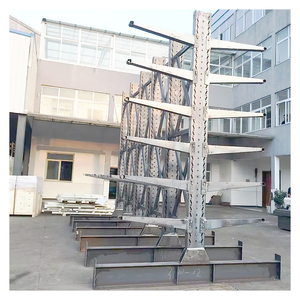
Heavy Duty Warehouse Storage Rack Cantilever System
Specially configured for non-palletized timber, steel extrusions, and heavy conduits. Modular column base with 1,000–3,000 kg arm load thresholds.
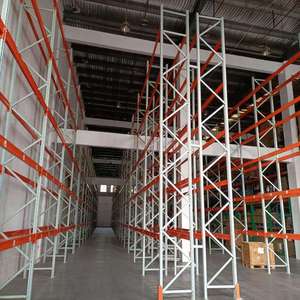
Heavy-Duty Selective Pallet Rack 4-Layer Powder Coated
Epoxy powder-coated uprights with structural step beams, lockable safety pins, and configurable roller bed retrofitting for FIFO live picking.
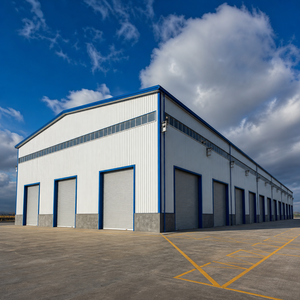
Reach Truck Narrow Racking Galvanized Frame System
Designed for high-bay operations up to 15 meters. Integrates guide rails and inductive guidance to maximize cubic warehouse density up to 60%.
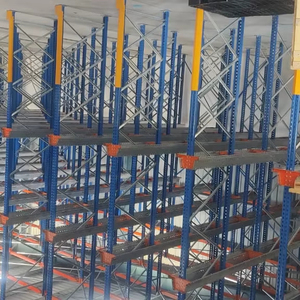
Drive Rack High Density 1200kg Pallet Storage System
Removes dedicated picking aisles to form deep continuous channels. Built from cold-rolled Q235B steel with floor guide tracks for heavy forklift entry.
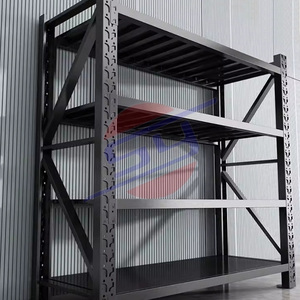
Customizable 4-Tier Metal Pallet Racking Units
Quick-mount slotted upright design allowing 50 mm/75 mm pitch adjustment. Anti-corrosive electrostatic powder treatment tailored for humid or cold logistics.
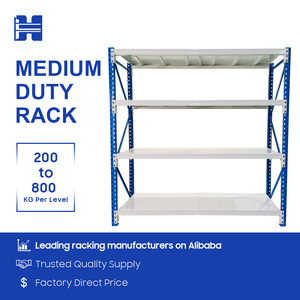
Long Span Wide Span Medium Duty Steel Shelving
Optimized for manual split-case picking operations. Capable of supporting integrated carton-flow skate-wheel tracks for automated batch fulfillment.
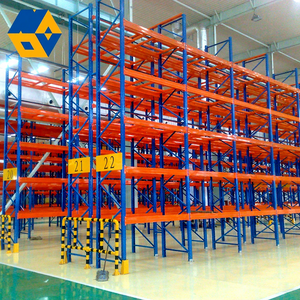
NOVA Industry Automation Equipment Pallet System
High-rigidity upright framing certified for stacker cranes, live roller lanes, and automated shuttle interfaces. High lateral torsional stability.
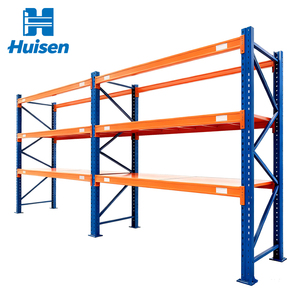
Boltless Adjustable 3000Kg/Layer Metal Shelves
Heavy-gauge interlocking cold-rolled steel channels requiring zero bolts for assembly. Compatible with wire-decking, drop-in panels, and roller trays.
Top 10 Roller Racking & Gravity Flow Manufacturers: Global Engineering Benchmarks
Dynamic live roller racking systems (Gravity Pallet Flow) demand precise structural calculations, kinetic braking friction control, and steel elasticity compliance. Below is an engineering evaluation of leading global manufacturers and export producers.
| Manufacturer / Brand | HQ / Manufacturing Hub | Core System Specialization | Certifications & Standards | Roller Braking Mechanism | Export Lead Time |
|---|---|---|---|---|---|
| 1. HEDA Shelves Co., Ltd. | Guangzhou, China (30,000 m²) | Custom Pallet Flow, Radio Shuttle, VNA Racks | CE (2435-CPR-8605159), ISO 9001, RoHS | Centrifugal Magnetic / Gear-Damped | 15–25 Days Direct |
| 2. Interroll Group | Sant'Antonino, Switzerland | High-Throughput Dynamic Roller Beds | ISO 9001, DIN EN 15512, TÜV | Magnetic Speed Controller (MSC 50) | 6–10 Weeks |
| 3. SSI SCHAEFER | Neunkirchen, Germany | Turnkey Automated Flow & High-Bay AS/RS | EN 15620, FEM 10.2.02, CE | Integrated Friction Governor | 8–12 Weeks |
| 4. Bito-Lagertechnik | Meisenheim, Germany | Live Pallet Storage & Carton Flow Order Picking | RAL-RG 614, EN 15512, ISO 14001 | Self-Lubricated Brake Rollers | 7–9 Weeks |
| 5. Dexion (Gonvarri Material Handling) | Castellón, Spain | Industrial Gravity Flow & Drive-In Systems | FEM Standards, ISO 9001, EN 15095 | Centrifugal Dynamic Brake | 8–11 Weeks |
| 6. Mecalux | Barcelona, Spain | Pallet Flow & Push-Back High Density | CE Mark, ISO 9001, EN 15512 | Hydro-Mechanical Speed Limiter | 6–10 Weeks |
| 7. Stow International | Spiere-Helkijn, Belgium | Heavy-Duty Silo Dynamic Racks | EN 15512, ISO 9001, VDI 4453 | Direct Engagement Planetary Rollers | 7–10 Weeks |
| 8. Frazier Industrial Company | New Jersey, United States | Structural Steel Pallet Flow Racks | RMI Certified, AISC Standards | Continuous Drop-In End Governors | 8–12 Weeks |
| 9. Nedcon (Steel King) | Doetinchem, Netherlands | Custom Modular Gravity Roller Channels | EN 15512, EN 1993-1-3 (Eurocode 3) | Hydraulic Velocity Retarders | 9–13 Weeks |
| 10. Jungheinrich AG | Hamburg, Germany | Automated Logistics & Dynamic Live Racking | CE, ISO 9001, FEM Conformity | Internal Mechanical Brake Rollers | 8–12 Weeks |
*Evaluation parameters encompass raw steel yield stress ratings, seismic damping under EN 1998, kinetic flow deceleration tests, and total project lead times including international ocean logistics.
Technological Advancements in Modern Roller Racking Systems
Modern warehouse roller systems have moved far beyond passive unpowered skate wheels. State-of-the-art intralogistics demands fail-safe kinetic speed management, structural fatigue resilience, and real-time load diagnostics.
Magnetic Eddy-Current Speed Regulation
Traditional mechanical friction brake rollers wear out due to abrasive contact under heavy pallet descent. Next-generation systems integrate contactless eddy-current deceleration, maintaining uniform descent velocity (0.25 to 0.30 m/s) independent of pallet weights ranging from 250 kg to 1,500 kg without mechanical friction wear.
Slope Calibration & Dynamic Tracking
Precision roller channels utilize a calibrated incline gradient between 2.5% and 3.5%, depending on the contact friction coefficient of wood, plastic, or composite pallet bottoms. Advanced split-roller tracks eliminate directional deviation, ensuring pallets dock square against downstream pick-face stops.
Automatic Separation Separators
At the picking face, static hydraulic pressure from downstream queueing pallets can block forklift forks and compromise operator safety. Mechanical time-delay load separators automatically lock trailing pallets 300 mm behind the front pallet, allowing effortless retrieval without cumulative line pressure.
Future Procurement Trends in Warehouse Roller & Live Racking
Global supply chain directors and facility managers are shifting from upfront capital expense (CapEx) metrics toward full-lifecycle Total Cost of Ownership (TCO), space monetization, and energy conservation.
Cold Chain Energy Optimization
With industrial refrigeration power costs increasing annually, warehouses can no longer afford wide forklift aisles inside freezer rooms (-25°C to -30°C). Converting cold storage facilities to dynamic gravity roller lanes reduces chilled air volume by up to 45%, providing return on investment within 18 months.
Hybrid Gravity-Shuttle Integration
Procurement specifications increasingly mandate hybrid interfaces where automated radio shuttles deposit pallet loads onto multi-deep gravity roller picking lanes. This eliminates battery dependency at the dispatch staging dock while preserving uninterrupted pallet feed velocity.
Low-Carbon Steel & CBAM Verification
Cross-border supply chains entering the European Union must account for the Carbon Border Adjustment Mechanism (CBAM). Tier-1 manufacturers like HEDA Shelves utilize high-strength, thin-walled cold-formed steel sections that reduce carbon tariffs while maintaining high load performance.
Engineering & Procurement FAQ for Roller Racking
In-depth technical answers addressing structural tolerance, pallet deflection limits, friction mechanics, and global shipping logistics.
How do you calculate the precise slope gradient for roller racking systems?
The standard incline angle for gravity pallet flow systems ranges between 3.0% and 4.0% (a fall of roughly 30–40 mm per meter of run). The final gradient is determined by three factors: the bottom-deck surface profile of your pallets (smooth vs. rough timber), maximum and minimum pallet loads (e.g., 300 kg vs. 1,200 kg), and warehouse ambient temperature (sub-zero cold storage requires a slightly steeper pitch of 3.8% to 4.2% to overcome roller bearing grease viscosity). Our engineering team performs test glides in our factory laboratory to verify your exact pallets before shipping.
What pallet standards are compatible with HEDA Shelves roller systems?
Our gravity flow roller beds are engineered for standard EUR/EPAL 1 (1200 x 800 mm), EUR 2 (1200 x 1000 mm), GMA 48x40-inch pallets, and custom industrial metal skids. To ensure smooth descent without track jams, bottom skids must run parallel to the direction of flow. Where pallets have irregular bottom boards or high deflection, we supply 3-track or full-width heavy steel roller assemblies with secondary bottom guide flanges.
How do brake rollers operate, and what is their recommended service interval?
Brake rollers utilize centrifugal or hydraulic internal planetary gear assemblies that activate when linear pallet speeds exceed 0.3 m/s. They require no electrical power. Brake rollers are installed at alternating pitch intervals—typically one brake roller for every pallet position in depth. Because our brake rollers feature permanently sealed, dust-tight double-shielded ball bearings, they require zero lubrication, with recommended visual inspections once every 12 months under EN 15635 maintenance protocols.
What floor slab flatness tolerances are required for dynamic live storage installations?
In accordance with DIN 18202 (Table 3, Group 4) and TR34 Free Movement specifications, the floor slab for high-density roller racking must adhere to strict flatness thresholds. A surface deviation of less than 3 mm across a 2-meter straight edge is necessary. Excessive floor level variations can distort structural upright geometry, alter the slope angle across channels, and cause uneven pallet deceleration.
What are the sea freight logistics and ocean export arrangements to Europe and the Americas?
Components are pre-bundled in seaworthy steel cages and moisture-barrier protective wraps with color-coded assembly markers. We offer FOB, CIF, and DDP shipments directly from our Guangzhou terminal to major global deep-water hubs including Rotterdam, Hamburg, Antwerp, Felixstowe, Los Angeles, and Santos. Standard manufacturing lead time is 15–25 business days, with transit times averaging 28–38 days depending on the destination port.
Can HEDA Shelves accommodate custom OEM/ODM roll-forming specifications for distributors?
Yes. Over 40% of our production output serves international distributors and system integrators under OEM and ODM arrangements. We supply customized upright profiles (e.g., 80, 90, 100, 120 mm face widths), custom steel gauges from 1.5 mm to 3.0 mm, special hook-connector geometries, custom RAL powder coat colors, and private-label packaging ready for immediate field installation.
Request Your Custom Warehouse Layout & Static Calculations
Send our senior engineering team your architectural DWG/PDF drawings, building clear heights, and pallet specifications. We provide complete 2D/3D layout designs and export quotations within 24 hours.