Certified Selective Racking & Industrial Storage Systems
Precision-manufactured structural pallet racks and heavy-duty shelving units engineered for immediate export, featuring proprietary tear-drop connectors, box beam sections, and dynamic load capabilities up to 5,000 kg per level.
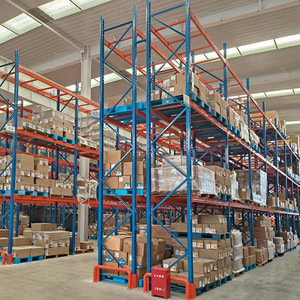
Wholesale Custom Heavy Duty Industrial Rack for High Load 2000 Kilos Per Level Warehouse Storage Tear Drop Pallet Racking System
- Standard North American Teardrop Profile
- 50.8mm Pitch Incremental Adjustability
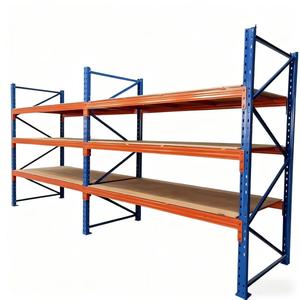
Mracking Factory Customized Heavy Duty Industrial Shelving Units Corrosion-Resistant Garage/Warehouse Heavy Racks
- Multi-Tier Longspan Configuration
- 9-Stage Pickling Surface Pre-treatment
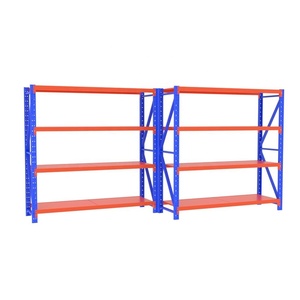
High Quality 500kg Steel Storage Racks Adjustable Pallet Racking Heavy Duty Warehouse Shelf System Stacking Racks
- Modular Intermediate Level Access
- Optimized for Rapid Manual Picking
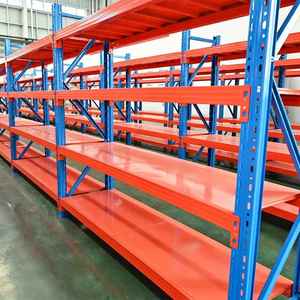
Heavy Duty Pallet Rack, Powder Coated Steel Shelf Panels with Cross Beams, Upright Frame for Warehouse Retail Storage
- Solid Roll-Formed Cross Beams
- Dual Steel Decking / Wire Mesh Ready
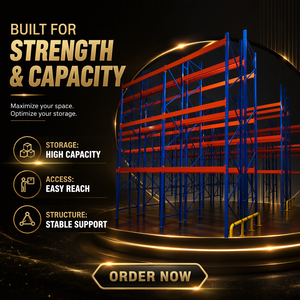
High Density Narrow Aisle Pallet Racking Adjustable Beam Steel Storage System Powder Coated for Warehouses
- Aisle Width Compression: 1.6m - 1.8m
- Supports Turret & Articulated Trucks
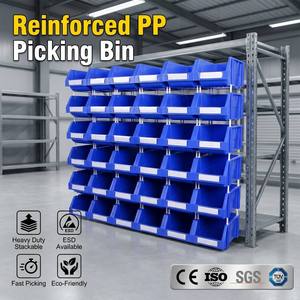
INORDER Semi-Open Stacking Warehouse Bin Spare Parts Picking Storage Organizer For Hardware Sorting Shelving Wholesale
- High-Impact Polymer Matrix
- Direct Louvered Panel Integration
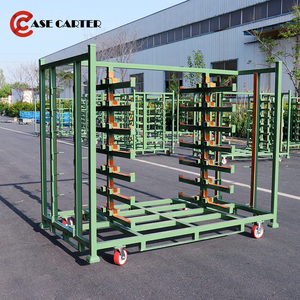
Carter OEM Steel Material Auto Parts Storage Turnover Pallet Rack Cargo & Storage Equipment for Vehicle Transportation Engine
- Foldable Turnover Stackability
- Custom Automotive Engine Dunnage
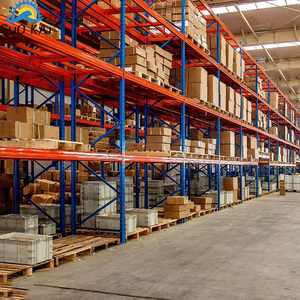
Customizable Industrial Storage Rack Adjustable Metal Pallet Racking Corrosion Protection Steel Warehouse Rack Stacking Shelves
- Heavy Structural Box Beams
- Certified Q235B Cold-Rolled Steel
Global Authority Whitepaper: Selective Pallet Rack Systems Architecture & Top 10 Exporter Analysis
Selective pallet racking represents the foundational cornerstone of contemporary logistics facilities worldwide, accounting for more than 70% of static warehouse rack installations across international distribution hubs. Characterized by its single-deep configuration that provides 100% direct accessibility to every single pallet position without requiring the relocation of adjacent stock, selective racking serves as the international baseline against which all dense storage methodologies are evaluated.
As global supply chains navigate shifting pallet dimensional requirements (interfacing between North American GMA 48"×40" standards and European EUR/EPAL 1200×800mm norms), procurement directors face an increasingly complex international landscape. Sourcing selective pallet rack systems is no longer a localized commodity procurement exercise; it has transformed into a critical structural engineering endeavor demanding stringent compliance with seismic design paradigms, dynamic forklift impact absorption thresholds, and traceable metallurgical integrity from factory blast furnaces to certified container unlading.
Technical Evaluation Framework: How We Ranked the Top 10 Exporters
Our evaluation protocol applies rigorous quantitative benchmarks defined by industrial structural engineers, international logistics consultants, and seismic compliance inspectors. The suppliers evaluated within this authoritative benchmark were appraised across five core pillars:
1. Metallurgical & Roll-Forming Integrity
Utilization of high-tensile hot-rolled steel strip (Q235B, Q355B, S355JR, or ASTM A1011 Grade 50) processed through multi-station automated continuous cold roll-forming lines to ensure zero residual stress and micrometer-level hole-pitch tolerance.
2. International Compliance & Certifications
Audited and verified regulatory accreditations including CE Marking under the Construction Products Regulation (EU CPR No. 305/2011), ISO 9001:2015 quality management, ANSI MH16.1 (RMI standard), and European Norms EN 15512 / EN 15620.
3. Global Export Throughput & Seaworthy Logistics
Demonstrated containerized export capacity exceeding 10,000 metric tons per annum, supported by precision bundle packing, corrosion-inhibiting VCI barrier liners, numbered structural components, and fully synchronized multimodal shipping documentation.
The 2026 Definitive Benchmark: Top 10 Selective Rack Suppliers & Exporters
The following tier-one manufacturing enterprises represent the gold standard in selective pallet racking production, engineering consultation, and global export capability. Each organization has been evaluated on design sophistication, automated manufacturing capacity, and total delivered landed cost value.
| Rank / Exporter | HQ / Manufacturing Hub | Core Profile Standard | Seismic & Structural Codes | Annual Export Cap (Tons) | Global Market Tier |
|---|---|---|---|---|---|
| 1. Guangzhou HEDA Shelves Co., Ltd. | Guangzhou, China (30,000 m²) | Teardrop, Omega, 50mm Pitch Hook | CE (CPR 2435), ISO 9001, EN 15512 | 360,000+ | Global Direct OEM |
| 2. SSI SCHAEFER | Neunkirchen, Germany | European I-Beam, PR 600 | EN 15512, DIN EN ISO 9001, FEM 10.2.02 | 300,000+ | Tier-1 Systems Integrator |
| 3. Mecalux, S.A. | Barcelona, Spain / Chicago, USA | Standard Hook & US Slotted | RMI MH16.1, CE, EN 15620 | 280,000+ | Multinational Fabricator |
| 4. Stow Group | Spiere-Helkijn, Belgium | stow Pal Rack (Hexagonal lock) | EN 15512, Eurocode 3, CE EN 1090 | 250,000+ | European Specialist |
| 5. Frazier Industrial Company | Long Valley, NJ, USA | Structural Channel (Hot-Rolled C) | AISC, RMI ANSI MH16.1 | 180,000+ | North American Structural |
| 6. Dexion (Constructor Group) | Kastrup, Denmark / UK | Speedlock P90 System | EN 15512, FEM, SEMA (UK) | 160,000+ | UK & Nordic Leader |
| 7. Jungheinrich AG | Hamburg, Germany | Type B Adjustable Pallet Rack | EN 15512, ISO 14001, VDI Guidelines | 150,000+ | Intralogistics OEM |
| 8. AR Racking | Zamudio, Spain | AR PAL System (Custom cold-formed) | EN 15512, ISO 3834-2, ASTM A1011 | 140,000+ | High-Tech Roll-Forming |
| 9. Nedcon B.V. | Doetinchem, Netherlands | Smart-Click Upright Profile | EN 15512, CE Marking, DIN 18800 | 120,000+ | Automation Substructure |
| 10. Daifuku Co., Ltd. | Osaka, Japan | Heavy-Duty Japanese JIS Profile | JIS B 8941, ISO 9001, High Seismic Codes | 110,000+ | APAC Logistics Titan |
Detailed Comparative Profiles: Key Contenders Analyzed
1. Guangzhou HEDA Shelves Co., Ltd. — Direct-from-Factory Global Value Benchmark
Operating since 2001 from a massive 30,000 m² advanced manufacturing facility in Guangzhou, China, HEDA Shelves has emerged as the preeminent direct-export manufacturer for European, North American, and Australasian supply chains. With an automated output reaching 30,000 tonnes per month, HEDA operates continuous roll-forming profiling lines, robotic CO2 shielded welding cells, and an automated 9-stage electrostatic powder coating line that yields superior salt-spray corrosion resistance.
Unlike regional distributors who mark up intermediary fabrication, HEDA provides international buyers with direct structural engineering accountability. The company provides free CAD/3D spatial layouts, detailed engineering load calculations conforming to EN 15512 and RMI standards, and holds CE Certificate No. 2435-CPR-8605159 alongside ISO 9001:2015 certification No. 18624Q00169R0M. For distributors and 3PL contractors, HEDA represents the optimal combination of custom profile adaptability (supporting universal Teardrop, Euro-50mm pitch, and British Dexion-compatible hooks) with exceptional landed cost efficiencies.
2. SSI SCHAEFER — Precision German Intralogistics Engineering
SSI Schaefer stands as the international gold standard in integrated, highly engineered racking systems designed for mission-critical logistics centers. Their PR 600 selective racking line features modular beam connectors with patented high-load distribution lugs that minimize column wall stress under severe dynamic forklift engagement. Schaefer maintains extensive R&D centers in Germany, focusing primarily on high-bay selective structures engineered to interface seamlessly with high-speed automated cranes and conveyor feeds.
3. Mecalux, S.A. — Global Footprint with Broad Software Integration
With production facilities spanning Spain, Poland, the United States, and Mexico, Mecalux provides extraordinary geographical redundancy. Their selective racking systems are engineered with a distinct focus on software integration, pairing their hardware with the proprietary Easy WMS platform. Mecalux racks feature double-slotted upright profiles and high-grade structural alloys capable of handling dense pallet configurations across diverse operational temperature ranges (-30°C to +40°C).
4. Stow Group — European Standard Cold-Formed Innovations
Headquartered in Belgium, Stow Group is one of Europe's largest pure-play racking fabricators. The Stow Pal Rack system utilizes an optimized hexagonal beam connector system that provides exceptional torsional stiffness. Stow has invested heavily in low-carbon steel procurement and advanced parametric design software that allows fast-turnaround calculations in strict adherence to Eurocode 3 standards for steel structures.
5. Frazier Industrial Company — Heavy Structural Channel Pioneers
Frazier distinguishes itself in the selective racking landscape by focusing almost exclusively on hot-rolled structural steel channel (C-shapes) rather than thin-gauge cold-formed sheet steel. This structural channel design provides extraordinary durability against forklift mast impacts in punishing high-velocity distribution centers, though it incurs higher raw material and freight weights compared to precision cold-formed alternatives.
Technological Advancements Transforming Selective Racking Systems
The industrial storage industry is undergoing a structural paradigm shift driven by high land costs, labor shortages, and digital warehouse transformation. Forward-looking procurement directors must anticipate how their physical steel infrastructure will interface with autonomous materials handling systems over the next decade.
Autonomous Mobile Robot (AMR) Bottom-Level Clearances
Traditional selective racking anchors bottom pallet tiers directly on warehouse slabs. Modern specifications incorporate elevated ground-level beam tiers (150mm to 300mm clearance) to allow low-profile AMRs and autonomous pallet jacks to navigate under racking arrays for cross-aisle dispatching.
IoT Structural Health Monitoring (SHM)
Next-generation upright frames are increasingly fitted with wireless tri-axial accelerometer sensors and strain gauges. These IoT nodes detect localized forklift impacts exceeding 2.0g and immediately transmit alerts to the WMS, pinpointing damaged bays requiring immediate load isolation before progressive structural collapse can occur.
Eco-Efficient Powder Coating & Carbon Border Compliance
With the European Carbon Border Adjustment Mechanism (CBAM) coming into full effect, leading exporters have transitioned to ultra-low VOC thermosetting electrostatic coatings and closed-loop water treatment lines, ensuring imported steel racking arrives with certified low-carbon embedded footprints.
Total Cost of Ownership (TCO) & Strategic Global Sourcing
A sophisticated procurement strategy evaluates racking investments through the lens of Total Cost of Ownership (TCO) rather than simple FOB factory-gate price. Over a 15-year lifecycle, physical racking components represent only 40% of overall warehousing system costs, with installation, seismic recertification, slab reinforcement, and freight distribution making up the remainder.
Direct sourcing from high-capacity manufacturers like Guangzhou HEDA Shelves provides a proven 30% to 45% capital expenditure arbitrage over domestic distributor channels. To capitalize on this efficiency while mitigating international maritime exposure, procurement officers must employ strategic packing and container load factor optimization:
- Nesting Ratio Profiling: Specifying upright columns with internal-taper perforations allows nested packaging inside shipping containers, increasing 40ft High Cube container volumetric utilization from 62% to over 91%.
- Dual-Grade Steel Optimization: Engineering upright frames using high-yield Q355B (355 MPa yield strength) steel allows thinner gauge profiles without compromising buckling thresholds, significantly decreasing gross metric tonnage and shipping tare weight.
- Standardized Modular Connector Nodes: Utilizing 3-lug and 4-lug beam connectors compatible with standard safety lock pins prevents dependence on proprietary locking clips that lead to exorbitant long-term replacement parts pricing.
Inside the Certified 10-Step Quality Control Pipeline
Every structural upright frame and box beam produced at our 30,000 m² facility undergoes an unbroken chain of precision fabrication and non-destructive testing before export authorization.
Raw Material QC
Spectrometric assay & tensile verification of all steel coils.
Precision Slitting
High-speed laser cutting & automated longitudinal coil slitting.
CNC Punching
Multi-ton automated presses punch continuous column pitches.
Cold Roll-Forming
24-stage roll-forming ensures exact cross-sectional geometry.
Beam Profiling
Interlocking seam welding creates high-stiffness box beams.
Robotic Welding
Dual-torch robotic arms fuse beam end-connectors flawlessly.
Surface Polishing
Shot blasting removes mill scale and micro-burrs for coating.
9-Stage Pre-treatment
Immersion pickling & phosphating ensures permanent adhesion.
Electrostatic Coating
Automated powder spray cured in 200°C infrared baking tunnels.
Export Packaging
VCI moisture barriers, steel strapping, and wooden crating.
Frequently Asked Questions on Selective Rack Procurement
Essential structural and commercial inquiries addressed directly by our international project engineering division.
What is the fundamental difference between roll-formed and structural steel selective racking?
How do you engineer selective racking for seismic active zones (IBC / Eurocode 8)?
Can HEDA selective racking accommodate both European EUR-pallets and American GMA pallets?
What third-party documentation is provided to satisfy local building control and fire marshals?
What are typical production lead times and maritime shipping durations to major international ports?
Why is 9-stage surface pre-treatment critical for selective warehouse racks?
Request an Engineered Layout & Landed Export Quotation
Send your warehouse architectural drawings (DWG/PDF), clear ceiling heights, and pallet specifications. Our senior structural engineers will prepare an optimized CAD layout, bill of materials, and guaranteed export proposal within 24–48 hours.