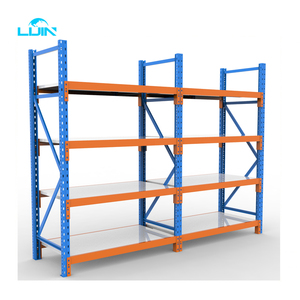
Heavy Duty Adjustable Pallet Racking
Precision cold-rolled high-grade steel system offering up to 4,500 kg capacity per level. Ideal for heavy FMCG and global freight pallet hubs.
Technical SpecsDirect-to-enterprise structural racking frameworks engineered under ISO 9001:2015 and EN 15512 specifications for logistics hubs, distribution centers, and commercial storage.
Precision cold-rolled high-grade steel system offering up to 4,500 kg capacity per level. Ideal for heavy FMCG and global freight pallet hubs.
Technical Specs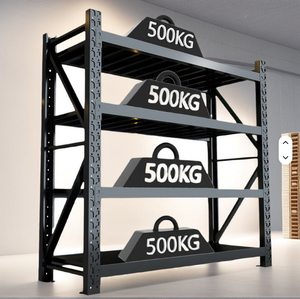
Versatile snap-in powder-coated racking designed for medium-density retail inventory, e-commerce fulfillment, and garage parts staging.
Technical Specs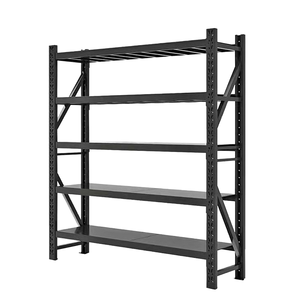
Corrosion-treated slotted angle modular shelving tailored for commercial workshop maintenance bays and high-turnover accessory sorting.
Technical Specs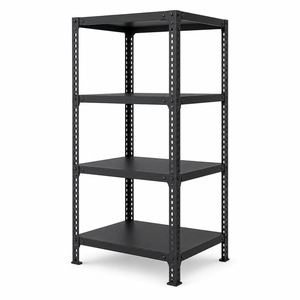
Phosphate-dipped electrostatically coated slotted frameworks built specifically to survive humid warehouse zones and cold-chain staging rooms.
Technical Specs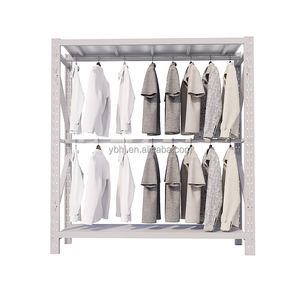
Flexible modular stacking structure engineered for textile rolls, apparel cartons, and fluctuating SKU layouts requiring seasonal reconfiguration.
Technical Specs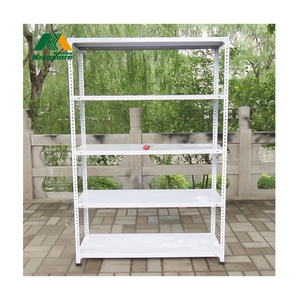
Economic, high-tensile boltless solution for lightweight bin locations, picking galleries, archives, and localized hardware distribution.
Technical Specs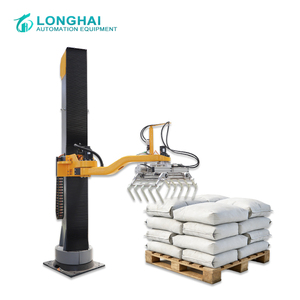
Automated robotic end-of-line material handling integration designed to streamline automated bag palletization directly into high-bay racking systems.
Technical Specs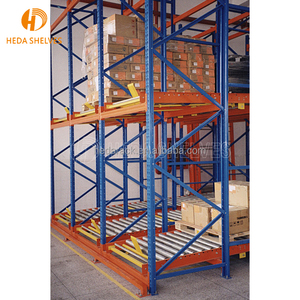
Ergonomic dynamic gravity roller lanes delivering continuous FIFO carton replenishment for rapid piece-picking and fulfillment accuracy.
Technical SpecsIn modern industrial warehousing, storage systems are structural assets critical to life safety and operational throughput. Evaluating tier-one manufacturers requires strict analysis beyond raw quotation rates.
Certified rack engineering begins with verified mill certifications. High-yield cold-rolled steel (Q235B, Q355B, or S355JR equivalents) guarantees consistent tensile yield performance under dynamic loads. Reliable suppliers must demonstrate rigorous deflection control adhering to EN 15512 specifications and ANSI MH16.1 guidelines, preventing catastrophic beam sag or column buckling under asymmetrical loading conditions.
Warehouse environments with micro-climates or condensation require precision surface preparation. Industrial finishing mandates automated shot-blasting, multi-stage acid pickling, and phosphating prior to electrostatic polyester powder coating. For exterior or freezer environments, hot-dip galvanizing compliant with ISO 1461 prevents subterranean leg rust and floor-level anchor shearing over decades of service.
Modern distribution logistics demands validated dynamic analysis for project-specific seismic zones. Premium manufacturers calculate baseplate shear resistance, embedment depth, floor slab compressive strength, and horizontal brace distribution using finite element analysis (FEA), ensuring rack survival without catastrophic joint slippage during lateral ground accelerations.
Aligning supply chain throughput requirements with warehouse architectural constraints.
| Racking Architecture | Pallet Density | Direct Selectivity | Rotation Principle | Optimal Industry Application |
|---|---|---|---|---|
| Selective Pallet Racking | Baseline (Moderate) | 100% Direct Accessibility | FIFO / LIFO Unrestricted | Multi-SKU Retail Hubs, 3PL Distribution, FMCG |
| Drive-In Racking Systems | High (Up to +75% Cube) | Lane Dependent (<15%) | Strict LIFO (FIFO Drive-Through) | Cold Storage Facilities, Beverage & Bulk Seasonal Lines |
| Radio Shuttle Automation | Maximum Footprint Density | Deep-Lane Automated Retrieval | Flexible FIFO or LIFO | Sub-Zero Freezers, High-Throughput Food Production |
| Gravity FIFO Flow Racks | High Dynamic Utilization | Picking Face Accessible | Engineered Strict FIFO | Perishable Logistics, Pharmaceutical Depots |
| Rack-Supported Mezzanines | Vertical Space Doubling | Multi-Tier Manual Access | Zone Picking Compatible | E-Commerce Picking Centers, Industrial Parts Staging |
Anticipating the technological and structural transitions shaping modern fulfillment logistics from 2026 to 2030.
Traditional manual forklifts allowed wider beam and column alignment deviations. As Autonomous Mobile Robots (AMRs), Automated Guided Vehicles (AGVs), and Automated Storage and Retrieval Systems (ASRS) dominate tier-one facilities, structural rack manufacturing requires millimetric tolerances conforming strictly to EN 15620 classes. Facilities must procure heavier, tighter-tolerance steel profiles to prevent robotic arm or shuttle jams.
With sky-high industrial land valuations, greenfield warehouse developments are being replaced by brownfield cube-optimization projects. Multi-tier rack-supported platforms and cantilever-mezzanine hybrids are expanding rapidly. Procuring modular configurations with standardized connection lugs enables facilities to re-engineer picking levels on the fly without structural demolition.
Global procurement teams are prioritizing verifiable Environmental Product Declarations (EPDs) and low-VOC powder coating technologies. Certified manufacturing facilities utilizing recycled scrap fractions, non-toxic pre-treatment washes (RoHS compliant), and ISO 14001 environmental frameworks command priority in international tender evaluations.
Founded in 2001, Guangzhou Heda Shelves Co., Ltd. combines heavy manufacturing scale with deep industrial design expertise to engineer high-performance warehouse ecosystems worldwide.
Equipped with fully automated continuous roll-forming lines, computerized column-punching matrices, robotic laser cutters, and an advanced automated electrostatic powder-coating line capable of handling 30,000 tonnes monthly.
Engineered to satisfy rigorous international codes. Certified under CE (Certificate No. 2435-CPR-8605159), ISO 9001:2015 (No. 18624Q00169R0M), and fully compliant with EN 15512, EN 15620, and RoHS criteria.
Before entering fabrication, every installation receives tailored CAD layouts, structural FEA stress-testing reviews, and detailed 3D spatial simulations designed around your specific pallet sizes, forklift radii, and building height.
Custom upright roll designs, bespoke punch pitches (e.g., 50mm, 75mm), custom RAL architectural color matching, private-label branding, and seaworthy bundle-packing optimized for high-cube container utilization.
Comprehensive step-by-step engineering installation blue-prints, pre-numbered component manifests, real-time video engineering consultation, and available on-site supervisory teams for complex multi-tier mezzanine projects.
Direct supply lines shipping routinely to major hubs worldwide, including Rotterdam, Hamburg, Antwerp, Valencia, Felixstowe, Gdańsk, Los Angeles, and Jebel Ali with competitive FOB, CIF, or DDP terms.
Essential guidance addressing engineering safety standards, project lead times, and customization specifications.
Submit your warehouse floor plan today for a free structural CAD layout design, complete load calculations, and factory-direct pricing tailored to your logistics requirements.
Contact Us