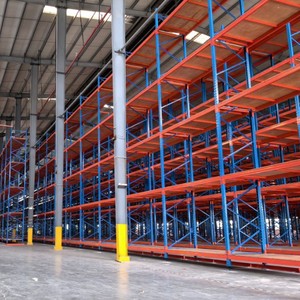
Engineered Industrial Racking Portfolio
High-yield cold-formed steel solutions optimized for structural integrity, spatial ergonomics, and high-density material handling.
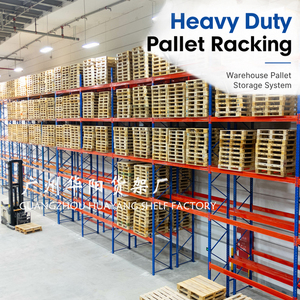
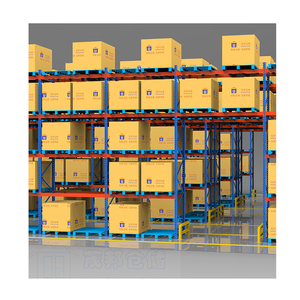
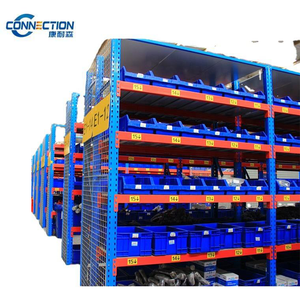
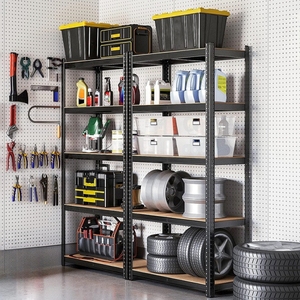
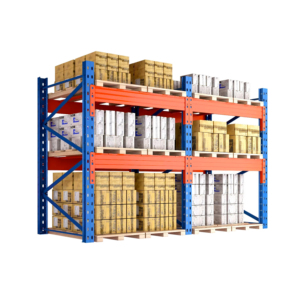
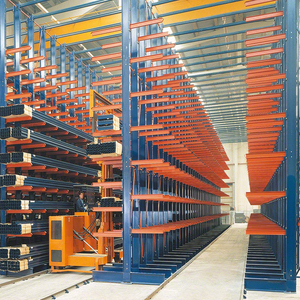
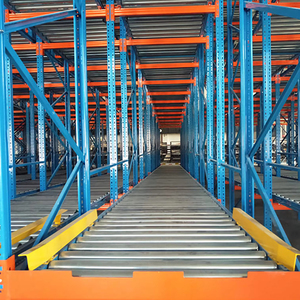
Engineering Excellence in Heavy-Duty Pallet Racking: The Procurement Authority
Modern global logistics networks demand far more than static structural storage. In an era marked by omni-channel distribution, surging real estate costs, and accelerated automation, modern industrial warehouse racking serves as the core physical engine driving throughput velocity. As a top China pallet rack storage solutions manufacturer and global exporter, our engineering infrastructure prioritizes high-tensile cold-rolled steel profiling, finite element structural analysis (FEA), and seamless mechanical integration.
Industrial structural reliability hinges on certified metallurgy. Our production lines utilize certified Q235B and Q355B structural carbon steel, offering exceptional yield strength and elongation characteristics capable of absorbing seismic acceleration and dynamic impact forces from Class I, II, and III industrial forklifts. From standard 100% selective racking configurations to advanced high-density automated shuttle runs, every column, diagonal brace, and load connector is calibrated to mitigate stress concentration and prevent catastrophic buckling under full continuous payload states.
Current Strategic Recommendations: Matching Racking Architecture to Pallet Dynamics
Optimizing warehouse cubic volume requires aligning handling equipment, inventory turnover speed, and SKU density. Selecting an incorrect static infrastructure imposes permanent friction on daily picking workflows. Below are the core architectures engineered in our facility:
Selective Pallet Racking
The definitive benchmark for multi-SKU management. Provides 100% direct selectivity across every pallet position, compatible with standard counterbalance trucks, reaching heights up to 12 meters.
Drive-In / Drive-Through Systems
Eliminates operating aisles to consolidate up to 75% more pallet positions for uniform SKUs. Best suited for cold-storage operations, seasonal buffers, and high-volume batch handling under LIFO or FIFO models.
Dynamic Gravity Flow & Shuttle Lanes
Self-indexing dynamic roller tracks ensure deterministic FIFO stock rotation for perishables and pharmaceuticals. Semi-automated radio shuttle carriages reduce forklift entry risks inside storage channels.
Future Procurement Trends: The Next Decade in Industrial Intralogistics
Procurement engineers and supply chain executives must plan for structural longevity that anticipates future operational shifts. Over the coming decade, we project three primary trends reshaping structural steel racking procurement:
1. Universal AMR and ASRS Compatibility: Conventional racking is giving way to hybrid installations capable of interfacing with Autonomous Mobile Robots (AMRs) and Automated Storage and Retrieval Systems (ASRS). Structural racking tolerances are narrowing from traditional millimeter thresholds down to microscopic dimensional tolerances (per FEM 9.831/9.832 standards) to facilitate optical sensor alignment and laser-guided retrieval cranes.
2. Advanced Metallurgical Carbon Auditing: International supply chain compliance, particularly the European Carbon Border Adjustment Mechanism (CBAM), is accelerating the demand for low-embodied-carbon structural steel. Chinese manufacturers operating closed-loop electric arc furnaces (EAF) and utilizing zero-VOC electrostatic thermoset powder coatings will hold significant regulatory advantages over legacy fabricators.
3. Dynamic Structural Sensorization: The emergence of smart racking involves the integration of load sensors, strain gauges, and impact telemetry embedded directly into upright bases. These monitoring systems feed load variance telemetry directly to Warehouse Management Systems (WMS), alerting facilities to over-capacity risks or forklift structural impacts prior to material failure.
Global Engineering Verification & Corporate Manufacturing Authority
Operating a vertically integrated 30,000 square meter intelligent manufacturing plant in Guangzhou, China, our enterprise bridges heavy structural engineering and precision metal fabrication. Backed by automated continuous cold-bending rolling mills, multi-axis automated CNC punching machines, and automated continuous pickling and phosphating lines, we deliver consistent metallurgical uniformity across every batch.
Our international export division guarantees compliance with stringent market regulations. Holding full CE certification under the Construction Products Regulation (Certificate No. 2435-CPR-8605159) and an active ISO 9001:2015 Quality Management System registration, our structural frameworks satisfy both European EN 15512 / EN 15620 guidelines and American RMI ANSI MH16.1 specifications. Complete with in-house static calculations, finite-element safety models, seaworthy bundling protocols, and on-site engineering supervision, we guarantee seamless execution from initial 3D DWG modeling through final commercial handover.
Industrial Procurement FAQ: Technical Specifications & Overseas Deployment
How do you ensure structural load compliance with European EN 15512 and US RMI standards?
Every project undergoes rigorous computerized structural calculation factoring in dead loads, live loads, seismic zones, wind loading (for rack-clad buildings), and impact coefficients. We supply comprehensive structural calculation reports, steel mill material test certificates (MTCs), and CE declarations of performance (DoP) validated by certified independent third-party inspection agencies.
Can the racking profiles adapt to regional pallet variants (EUR/EPAL vs. GMA/US Standard)?
Yes. Our upright frames and beam connectors are engineered with multi-pitch flexibility (typically 50mm, 75mm, or 76.2mm increments). Beam lengths are specifically calculated to preserve standard 100mm horizontal flue clearances and 75mm vertical margins whether running European standard EUR 1 (1200 × 800 mm), industrial EUR 2 (1200 × 1000 mm), or American GMA (48 × 40 in) configurations.
What surface pre-treatment is deployed to prevent corrosion during ocean transport?
Our components pass through an automated 9-stage pre-treatment cycle, including high-pressure chemical degreasing, acid pickling to eliminate scale, hot-water washing, and zinc phosphating. Finished components are cured with lead-free, UV-resistant polyester epoxy powder at 200°C, producing a dense coating (60–90 microns) that withstands salt-spray testing up to 500 hours without surface pitting.
What is the typical production lead time and ocean container packaging standard?
Standard production runs require 15 to 25 business days depending on tonnage. Upright profiles and step beams are bundled using non-marking steel strapping, heavy-gauge corner protection boards, and damp-proof polyolefin shrink-wrapping. Small accessories, baseplates, and hardware are crated in seaworthy wooden cases with moisture-absorbing desiccants, optimized for break-bulk or 40-foot high-cube (HQ) container stowage.